The landscape of generative artificial intelligence reached a pivotal turning point in the final quarter of 2025 as Google and OpenAI unveiled their most sophisticated image synthesis models to date. This high-stakes rivalry, characterized by the release of Google Gemini’s Nano Banana Pro and OpenAI’s GPT Image 1.5, represents more than a mere incremental update; it signals the maturation of AI-generated media from experimental novelties into industrial-grade creative tools. As the year draws to a close, the tech industry is witnessing a strategic divergence in how these two giants approach the problem of visual creation, with Google prioritizing surgical precision and photorealism while OpenAI doubles down on conversational fluidity and stylistic versatility.
The competition intensified in late November 2025 when Google DeepMind announced Nano Banana Pro, a specialized branch of the Gemini ecosystem designed specifically for high-fidelity visual output. Less than three weeks later, in mid-December, OpenAI responded with GPT Image 1.5, an overhaul of its multimodal architecture that seeks to correct the long-standing criticisms of its predecessor. The proximity of these releases has forced creative professionals, marketing agencies, and enterprise stakeholders to evaluate which philosophy best aligns with their operational needs.
Technical Architectures and Core Capabilities
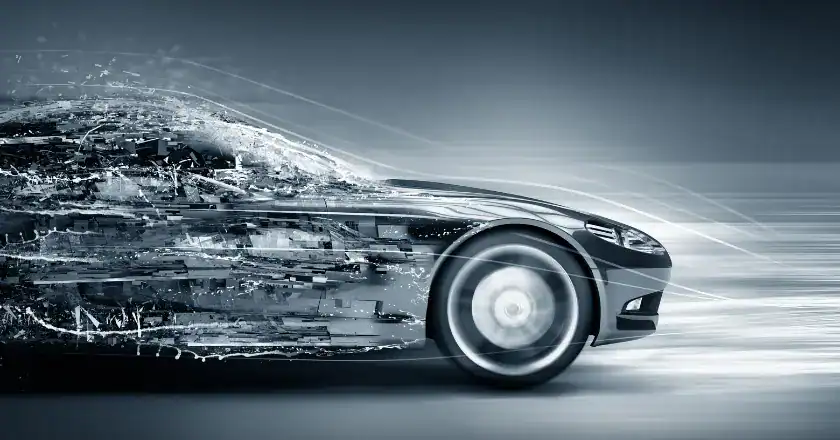
Google’s Nano Banana Pro distinguishes itself through a focus on what engineers call "hyper-realism and consistency." Unlike earlier iterations of diffusion models that often struggled with anatomical accuracy, Nano Banana Pro utilizes a refined training set that emphasizes commercial-grade aesthetics. One of the most significant technical achievements of this model is its handling of human subjects. Early benchmarks and user feedback indicate that the "uncanny valley" effect—the sense of unease caused by near-human but imperfect digital recreations—has been significantly mitigated. The model excels at rendering complex textures such as skin pores, fabric weaves, and natural lighting refractions, making its output nearly indistinguishable from professional stock photography.
In contrast, OpenAI’s GPT Image 1.5 leverages the company’s dominance in natural language processing to offer an unmatched user experience. By integrating the image generation engine directly into the ChatGPT interface, OpenAI allows for a seamless "collaborative" creation process. While Nano Banana Pro functions as a precision instrument for the intentional creator, GPT Image 1.5 acts as a creative partner. Its strength lies in its ability to interpret abstract concepts and translate them into vivid, albeit sometimes more stylized, visual representations. The 1.5 update specifically addressed the speed of inference, with OpenAI reporting a 35% reduction in generation time compared to the 1.0 version, allowing users to cycle through ideas at a rapid pace.
A Chronology of the 2025 AI Image Race
The road to the current duopoly was paved by a series of aggressive developments throughout the year. To understand the significance of the current race, one must look at the timeline of events that led to the December showdown:
- February 2025: Google integrates Gemini 2.0 into its Workspace suite, providing the first glimpse of "Nano" architecture—a lighter, more efficient model designed for edge computing and rapid response.
- May 2025: During its annual developer conference, OpenAI previews "Project Canvas," a multimodal interface that hints at the deep integration of image and text later seen in GPT Image 1.5.
- August 2025: Midjourney and Stable Diffusion face increasing pressure as corporate users demand better copyright indemnity and "clean" training data, setting the stage for Google and OpenAI to capture the enterprise market.
- November 21, 2025: Google officially launches Nano Banana Pro. The name, while whimsical, refers to a new "split-core" processing method that allows for "Banana-style" curved iterations, where the model can adjust specific image segments without recalculating the entire frame.
- December 14, 2025: OpenAI releases GPT Image 1.5 to ChatGPT Plus and Enterprise users, marketing it as the most "intuitive" creative tool ever built.
Performance Metrics and User Feedback
Initial data from beta testers and early adopters suggests a clear divide in performance metrics. In a study conducted by independent creative analysts, Nano Banana Pro scored a 94/100 in "Prompt Adherence for Technical Specifications," whereas GPT Image 1.5 scored 82/100. However, in "Creative Interpretation and Stylistic Variety," GPT Image 1.5 led with a 91/100 compared to Google’s 78/100.
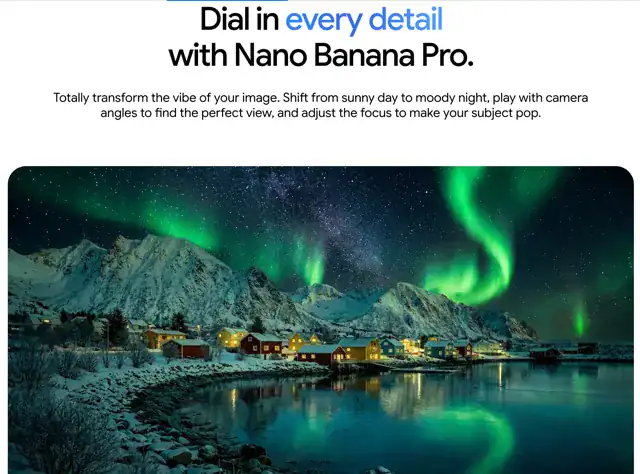
One of the most praised features of Nano Banana Pro is its "elemental iteration" capability. Professional users have noted that they can select a specific part of a generated image—for instance, the watch on a model’s wrist—and request a change to that specific item without altering the model’s pose, the background, or the lighting conditions. This solves a major pain point in AI workflows where users previously had to rely on complex "in-painting" techniques or risk losing a near-perfect image to a total regeneration.

GPT Image 1.5, while struggling with that level of granular control, has made significant strides in background coherence. Previous versions often produced "hallucinated" artifacts in the periphery of images, such as distorted buildings or impossible shadows. The 1.5 update has largely stabilized these elements, though it still occasionally falters when rendering human hands or complex mechanical structures. Users have reported that while GPT Image 1.5 is faster, it requires more "conversational steering" to achieve a result that is ready for professional publication.
Industry Reactions and Market Analysis
The release of these tools has sent ripples through the creative industry. Major stock photography agencies, which were already pivoting toward AI-integrated libraries, have begun to adopt Nano Banana Pro as their preferred engine for generating high-volume, commercially viable assets. The ability to produce "stock-like" images that meet strict legal and aesthetic standards gives Google a significant edge in the B2B sector.
"What we are seeing is the end of the ‘generalist’ AI era," says Sarah Jenkins, a senior analyst at TechVision Research. "Google is positioning Nano Banana Pro as a tool for the ‘Finishers’—the people who need a final, high-quality product. OpenAI is positioning GPT Image 1.5 for the ‘Starters’—the people who are in the ideation phase and need to see five different concepts in thirty seconds."
Legal experts are also weighing in on the commercial implications. Both Google and OpenAI have introduced robust watermarking and metadata protocols (such as C2PA standards) to ensure that AI-generated content can be identified. This transparency is crucial for marketing departments that must navigate evolving disclosure laws. Google’s commitment to providing legal "safe harbors" for images generated with Nano Banana Pro has made it particularly attractive to Fortune 500 companies wary of copyright litigation.

The Problem of Realism vs. Creativity
A recurring theme in user feedback is the trade-off between realism and creative "flare." Nano Banana Pro is often described as "clinical." Its outputs are technically perfect but can sometimes lack the artistic soul or unexpected "happy accidents" that users find in OpenAI’s model. GPT Image 1.5 tends to take more risks with color palettes and compositions, which appeals to illustrators and concept artists who use AI as a mood-boarding tool.
However, the "clinical" nature of Google’s model is exactly what the professional photography market has been requesting. For a marketing campaign requiring a diverse group of people in a corporate setting, the consistency of lighting and facial features provided by Nano Banana Pro reduces the need for expensive post-production retouching. OpenAI’s struggle with "hallucinated" details—such as a person having six fingers or a background tree growing out of a car—remains a hurdle for users who require "zero-artifact" results.
Broader Implications for the Creative Workforce
As these tools become more capable, the conversation regarding the displacement of creative labor has intensified. Rather than replacing designers, however, early evidence suggests these tools are shifting the nature of the work. The role of the "Prompt Engineer" is evolving into that of an "AI Director." Creative professionals are now expected to curate and refine AI outputs rather than building images from scratch.
The efficiency gains are undeniable. A task that previously took a graphic designer four hours—finding a stock photo, masking it, adjusting the lighting, and adding elements—can now be accomplished in ten minutes using Nano Banana Pro’s iteration tools. This democratization of high-end visual production is expected to lower the barrier to entry for small businesses and independent creators, though it puts pressure on entry-level designers to develop more strategic, high-level conceptual skills.
Looking Ahead to 2026
The race between Google and OpenAI shows no signs of slowing. Industry insiders suggest that the next frontier will be "Temporal Consistency," or the ability to generate short video clips that maintain the exact same characters and environments across frames. While Nano Banana Pro and GPT Image 1.5 are currently focused on static imagery, the underlying architectures are clearly being prepared for the leap into generative video.
As 2025 concludes, the "dominance" of the market remains split. Google holds the crown for technical precision and professional reliability, while OpenAI maintains its lead in user engagement and creative flexibility. For the end-user, this competition is a net positive, providing a diverse set of tools that can handle everything from a quick social media post to a multi-million dollar advertising campaign. The "AI Image Race" has moved past the question of whether AI can create art, and is now firmly focused on which AI can create the most useful, reliable, and commercially viable reality.