The advent of sophisticated sensor technology and computational photography has transformed the iPhone from a casual communication device into a primary tool for serious street photographers. While traditional street photography was long the domain of heavy DSLRs and expensive rangefinders, the portability and unobtrusiveness of the smartphone have ushered in a new era of urban documentation. For the modern photographer, the ability to capture high-contrast, evocative black and white imagery lies not just in the hardware, but in the strategic application of compositional principles and real-time digital filters. As mobile sensors continue to close the gap with professional-grade equipment, mastering the nuances of monochrome street photography has become an essential skill for visual storytellers.
The shift toward mobile street photography is supported by industry data indicating that over 90% of all photographs taken globally are now captured on smartphones. This democratization of the medium has forced a reevaluation of what constitutes professional gear. For many, the iPhone’s "Noir" filter and ProRAW capabilities offer a digital darkroom that fits in a pocket, allowing for immediate artistic decisions in the field. To achieve professional results, photographers must move beyond casual snapshots and adopt a rigorous methodology that emphasizes light, geometry, and the unique properties of the monochrome spectrum.
The Evolution of the Street Photography Medium
The history of street photography is inextricably linked to the evolution of camera technology. In the early 20th century, the introduction of the 35mm Leica camera allowed pioneers like Henri Cartier-Bresson to capture "the decisive moment" with unprecedented speed. The transition from film to digital in the late 1990s further accelerated this process, but it was the launch of the iPhone in 2007 that truly decentralized the art form.
By 2016, with the introduction of dual-lens systems and advanced image signal processors, the smartphone became a viable tool for artistic expression. Today, the iPhone 15 and 16 Pro series utilize 48-megapixel sensors and a "Photonic Engine" to preserve fine detail and dynamic range. This technical progression has facilitated a resurgence in black and white photography, as the lack of color allows the viewer to focus on the raw structural elements of a city: its shadows, its people, and its architecture.
Real-Time Visualization: The Power of Native Filters
A fundamental shift in the professional workflow involves the move from post-capture conversion to real-time visualization. While many amateurs shoot in color and decide to convert to black and white later, professional mobile photographers increasingly utilize the iPhone’s native "Noir" filter during the act of shooting. This approach allows the photographer to "see" in monochrome, instantly identifying how light interacts with surfaces without the distraction of color.
Technically, the iPhone’s filters are non-destructive, meaning the underlying RAW or HEIC data retains full color information should the photographer choose to revert the image. However, the psychological benefit of composing in black and white cannot be overstated. When the color is removed from the viewfinder, the brain prioritizes shapes, lines, and textures. This real-time feedback loop enables the photographer to adjust exposure levels and angles to emphasize the high-contrast "chiaroscuro" effect that defines classic street photography.
Minimalist Compositions and the Psychology of Negative Space
In an urban environment often characterized by visual clutter, the most effective black and white photos are those that embrace minimalism. Data from visual cognitive studies suggest that the human eye is more easily drawn to a subject when it is surrounded by "negative space"—areas of the frame that are intentionally left empty. In monochrome photography, negative space often takes the form of expansive skies, blank walls, or deep shadows.
Finding these open spaces requires a strategic approach to urban exploration. Public squares, minimalist parks, and modern architectural sites provide the necessary canvas. By isolating a single human subject within a vast, empty frame, the photographer creates a sense of scale and solitude. The objective is to eliminate "visual noise," ensuring that the viewer’s attention is directed solely toward the intended focal point. This technique is particularly powerful in black and white, as the absence of color further simplifies the scene, turning a busy city into a series of stark, geometric relationships.
Structural Geometry: Leading Lines and Patterns
The urban landscape is a labyrinth of geometric opportunities. Professional street photography relies heavily on "leading lines"—visual paths such as roads, bridges, railings, and road markings that guide the viewer’s eye through the image. In a black and white context, these lines become the skeleton of the photograph. When lines converge in the distance, they create a sense of three-dimensional depth on a two-dimensional screen.
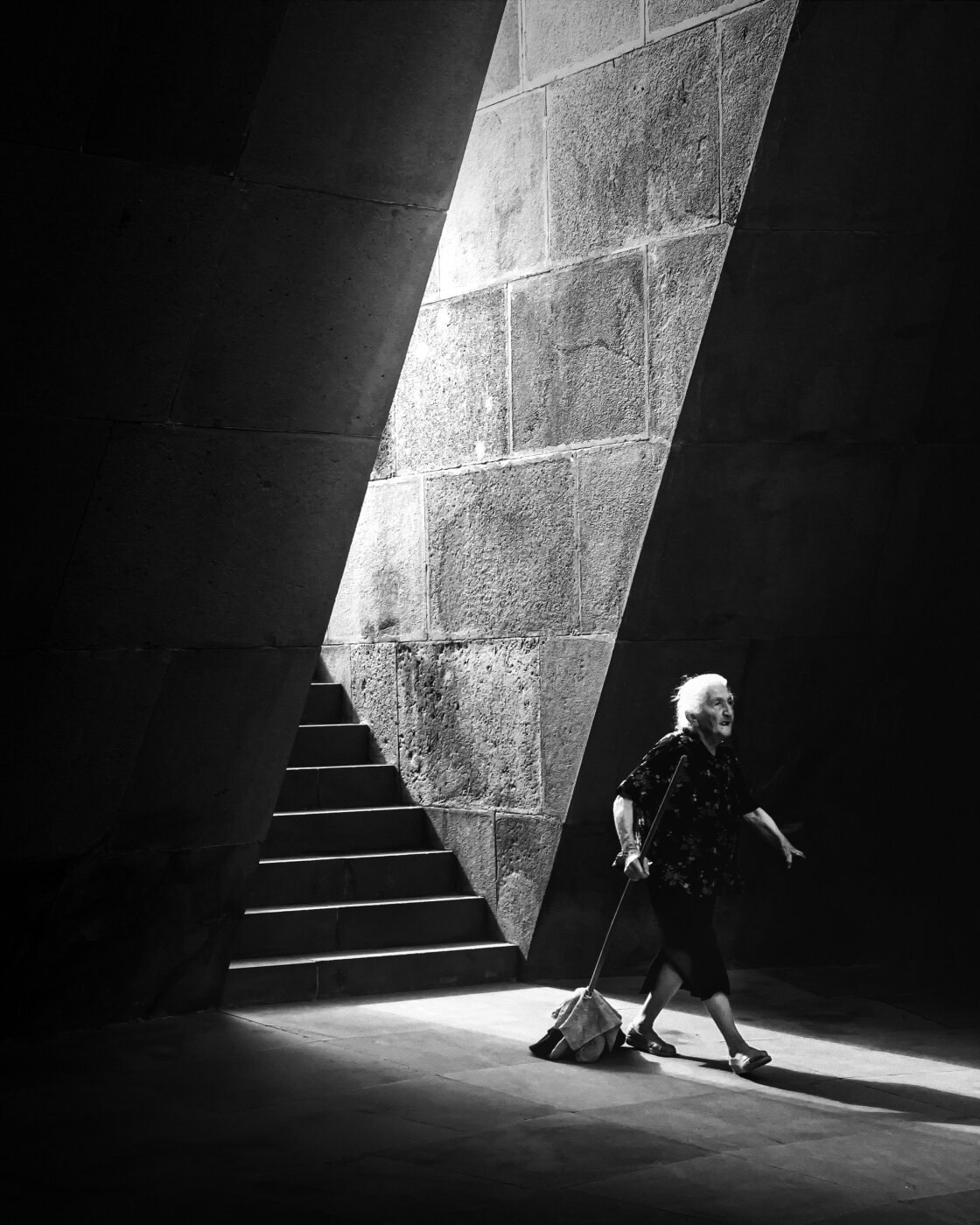
Patterns and repetition offer another layer of visual interest. Modern architecture, with its rows of windows, pillars, and repetitive facades, provides a rhythmic background for street scenes. When a human subject breaks this pattern, it creates a "visual disruption" that is highly engaging. Photographers often use tools like Google Maps Street View to scout locations for such patterns before ever arriving on-site, a practice that mirrors the preparation of professional location scouts in the film industry.
Architectural Framing and Burst Mode Precision
Framing is a compositional technique where the photographer uses elements within the scene—such as archways, doorways, or windows—to create a "frame within a frame." This technique adds layers to the image and focuses the viewer’s gaze. In monochrome, the structural strength of an archway or a tunnel is emphasized, creating a bold, graphic look.
To capture the perfect subject placement within these frames, professionals rely on "Burst Mode." By capturing several frames per second as a subject walks through a frame, the photographer can select the exact millisecond where the subject’s stride and posture are most aesthetically pleasing. This level of precision was once difficult to achieve with manual film cameras but is now a standard feature of the iPhone’s computational suite.
The Technical Execution of Silhouettes and Shadows
High-contrast lighting is the hallmark of dramatic black and white street photography. Silhouettes, created by shooting toward a light source so the subject appears as a dark outline, evoke a sense of mystery and anonymity. The "Golden Hour"—the period shortly after sunrise or before sunset—is the ideal time for this, as the low angle of the sun provides a bright backdrop while leaving the subject in deep shadow.
Shadows themselves can become the primary subject of a photo. Long, distorted shadows cast across a sidewalk can create more intrigue than the physical person casting them. To execute these shots effectively, the photographer must manually adjust the iPhone’s exposure. By swiping down on the screen to reduce exposure, the photographer can "crush" the shadows into pure black, increasing the dramatic tension of the image. This technique requires an understanding of the sensor’s dynamic range, ensuring that while the shadows are dark, the highlights do not become "blown out" or lose all detail.
The Digital Darkroom: Post-Processing and Content Authenticity
While the initial capture is critical, the "cleaning up" of a street photo in post-processing is where the final artistic vision is realized. Professional mobile photographers often bypass the basic filters of social media apps in favor of robust editors like Adobe Lightroom Mobile or specialized tools like TouchRetouch.
Key adjustments typically include:
- Contrast Enhancement: Increasing the delta between the darkest and lightest areas to add "punch."
- Tonal Balancing: Adjusting highlights and shadows to ensure detail is visible in critical areas.
- Object Removal: Utilizing "healing" tools to remove distracting elements like trash cans, street signs, or unwanted pedestrians that detract from a minimalist composition.
- Cropping: Re-framing the image to correct tilted horizons or to improve the mathematical balance of the composition (e.g., the Rule of Thirds).
Industry Perspective and Broader Implications
The rise of high-quality iPhone street photography has significant implications for the broader media landscape. Traditional photojournalism has begun to embrace the smartphone for its ability to capture candid moments without the intimidating presence of a large camera. Statements from various press agencies indicate a growing acceptance of mobile-captured imagery, provided the technical quality meets publication standards.
Apple’s continuous investment in "Pro" features—such as the ability to shoot in 48MP ProRAW—demonstrates a clear intent to cater to the professional market. This shift suggests a future where the distinction between "mobile" and "professional" photography continues to blur. For the individual artist, this means the barrier to entry for creating world-class imagery has never been lower, provided they possess the compositional knowledge to leverage the technology effectively.
In conclusion, the mastery of black and white street photography on the iPhone is a blend of traditional artistic principles and modern technical savvy. By focusing on light, geometry, and minimalist storytelling, photographers can utilize the device in their pocket to produce images that stand alongside the classics of the genre. As urban environments continue to evolve, the mobile lens remains the most agile tool for documenting the complexities of the human condition in timeless monochrome.