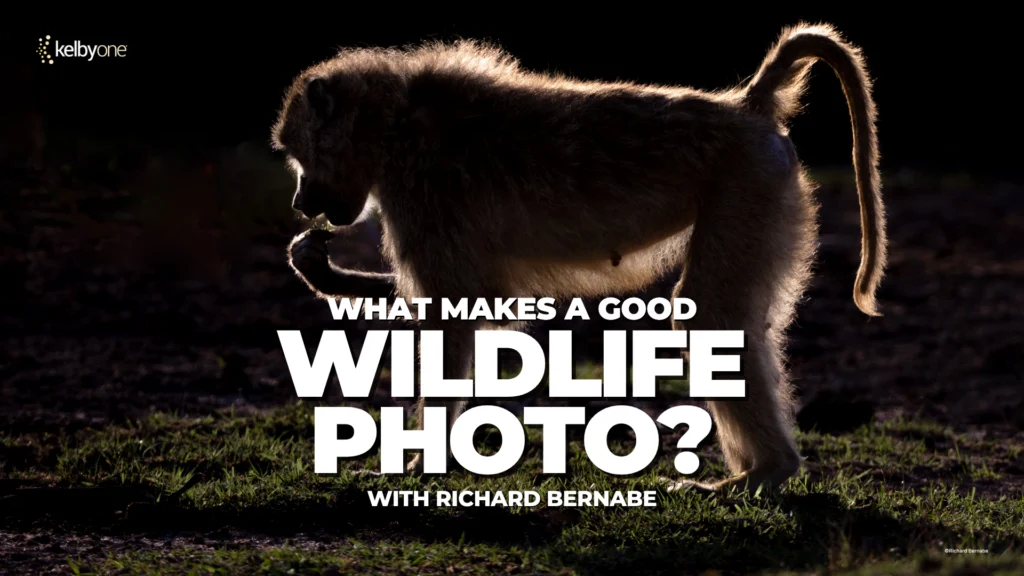
In a significant development for the global photography community, legendary wildlife photographer Richard Bernabe has collaborated with renowned educator Scott Kelby to launch an illuminating new course on the KelbyOne platform, titled "What Makes A Good Wildlife Photo?" This comprehensive online program moves beyond conventional discussions of camera settings and gear, delving deep into the artistic and decision-making processes that transform a mere sighting into an unforgettable photographic narrative. The initiative underscores a growing trend in photographic education towards conceptual understanding and visual storytelling, aiming to elevate the craft of wildlife photography to new artistic heights.
The announcement of this course has been met with considerable anticipation, given the esteemed reputations of both Bernabe and Kelby. Richard Bernabe is widely recognized for his evocative landscape and wildlife imagery, distinguished by its profound sense of place, masterful use of light, and the emotional resonance he achieves with his subjects. His work often transcends mere documentation, seeking to capture the spirit and essence of the wild, making him an ideal mentor for those aspiring to create impactful wildlife art. Scott Kelby, as President of KelbyOne, editor-in-chief of Photoshop User magazine, and a prolific author, has been at the forefront of photography and post-processing education for decades, known for his accessible teaching style and ability to distill complex concepts into actionable insights. Their combined expertise promises a unique educational experience.
A Deep Dive into the Creative Process
The core of the "What Makes A Good Wildlife Photo?" course revolves around an in-depth exploration of Bernabe’s extensive portfolio. Participants will journey through some of his most iconic captures, from the elusive jaguars of the Brazilian Pantanal to the majestic polar bears navigating the icy landscapes of Svalbard, and the iconic lions roaming the vast plains of Kenya’s Masai Mara. Crucially, the course does not just present these breathtaking images; it meticulously dissects the stories behind their creation, focusing intensely on the critical decisions Bernabe made in the field. This approach offers an unparalleled glimpse into the mind of a master photographer, revealing the confluence of intuition, experience, and artistic vision required to produce truly exceptional wildlife photographs.
One of the primary objectives of the course is to shift the focus from technical specifications to artistic principles. While understanding aperture, shutter speed, and ISO is foundational, Bernabe and Kelby emphasize that these are merely tools. The true artistry lies in how a photographer interacts with their environment, interprets light, and composes a scene to evoke emotion and tell a compelling story. This pedagogical philosophy aligns with broader trends in art education, where conceptual understanding and critical thinking are prioritized over rote memorization of technical data.
Key Techniques and Artistic Principles Unveiled
The curriculum is structured around several fundamental photographic principles, each illustrated with Bernabe’s real-world examples. These include:
- The Power of Low Angles: The course extensively covers how shooting from a low vantage point can dramatically alter the perspective, often placing the viewer "eye-to-eye" with the subject. This technique creates a sense of intimacy and connection, emphasizing the animal’s presence and power, and often simplifying cluttered backgrounds by using the sky or a distant horizon as a clean backdrop. For instance, an image of a jaguar taken at ground level can convey its stealth and formidable nature far more effectively than one shot from a standing human height.
- Gesture and Light as Storytellers: Bernabe demonstrates how the subtle nuances of an animal’s gesture – a turn of the head, a flick of a tail, the intensity of a gaze – can imbue an image with profound energy and emotion. Coupled with the strategic use of light, these elements become powerful narrative tools. The quality and direction of light can define mood, highlight textures, and create dramatic shadows, transforming a static scene into a dynamic visual story. Understanding golden hour light, backlighting for rim effects, or soft, diffused light for intimate portraits are critical skills explored in detail.
- The Art of Cropping and Composition: Beyond the initial capture, post-processing decisions like cropping are presented not as mere adjustments but as integral compositional choices. The course illustrates how judicious cropping can eliminate distractions, refine the subject-to-frame relationship, and powerfully pull the viewer’s eye into the heart of the photograph. This emphasizes that composition is an ongoing process, extending from the moment of exposure to the final edit.
- Environmental Context vs. Isolation: A crucial lesson addresses the perennial dilemma in wildlife photography: when to isolate the subject for maximum impact, and when to include more of its environment to tell a stronger, more contextual story. Bernabe’s portfolio offers examples where the vastness of the Pantanal wetlands or the starkness of the Arctic tundra are as much a part of the story as the animals inhabiting them, providing scale, habitat information, and a sense of the challenges faced by these creatures. This strategic inclusion of environment can transform a portrait into an ecological narrative.
The Context of Online Photography Education
The launch of this course on KelbyOne is indicative of the robust growth in online educational platforms catering to specialized interests like wildlife photography. In an era where digital content consumption is paramount, platforms like KelbyOne offer unparalleled access to expert instruction that might otherwise be geographically or financially prohibitive. Data from various educational technology reports indicate a steady increase in professionals and enthusiasts opting for online courses to enhance their skills, with photography being one of the most popular creative disciplines. KelbyOne, with its extensive library of tutorials covering everything from software mastery to genre-specific techniques, has established itself as a leading resource in this landscape. The ability to watch lessons at one’s own pace, revisit challenging concepts, and even sample initial content (like the free first lesson offered for this course) significantly democratizes high-level photographic education.
Richard Bernabe’s Legacy and Approach
Richard Bernabe’s career spans decades, marked by a consistent dedication to showcasing the natural world with reverence and artistic flair. He is not merely a photographer but also an author, adventurer, and advocate for conservation. His philosophical approach to wildlife photography often emphasizes patience, observation, and an understanding of animal behavior, which he believes are as crucial as technical proficiency. "Finding an incredible animal is one thing," Bernabe has often remarked in various interviews and workshops. "Turning that encounter into an incredible photograph is something else entirely." This sentiment forms the bedrock of the new KelbyOne course, aiming to bridge that gap for aspiring and professional photographers alike. His work is characterized by a blend of epic landscapes and intimate animal portraits, frequently employing natural light to create dramatic and emotionally resonant scenes.
The Broader Impact: Beyond the Frame
The implications of a course like "What Makes A Good Wildlife Photo?" extend beyond individual skill enhancement. By fostering a deeper understanding of visual storytelling and artistic intent in wildlife photography, it indirectly contributes to broader conservation efforts. Compelling wildlife photographs have historically played a vital role in raising awareness about endangered species, habitat destruction, and the beauty of biodiversity. When images move beyond mere documentation to evoke empathy and wonder, they become powerful tools for advocacy. Photographers trained to create more impactful and emotionally resonant images are better equipped to contribute to this critical mission.
Furthermore, the emphasis on looking "beyond camera settings and gear" encourages a more mindful and artistic approach to photography. In a world saturated with digital images, the ability to create photographs that truly "connect with the viewer" becomes paramount. This course champions the idea that true photographic mastery lies not in owning the latest equipment, but in cultivating a discerning eye, understanding light, and mastering composition – timeless principles that apply across all genres of photography.
Course Availability and Accessibility
The "What Makes A Good Wildlife Photo?" course is now available on the KelbyOne platform. In line with KelbyOne’s commitment to accessible education, the first lesson is offered free of charge, allowing prospective students to experience the quality of instruction and the depth of content before committing to a full subscription. This introductory access serves as a testament to the confidence Bernabe and Kelby have in the course’s ability to inspire and educate.
This collaboration between Richard Bernabe and Scott Kelby represents a significant contribution to the field of online photography education. By dissecting the creative process of a master, the course offers a unique pathway for photographers to transcend technical proficiency and cultivate the artistic vision necessary to create truly impactful and memorable wildlife imagery. It is a timely reminder that while technology evolves, the fundamental principles of art and storytelling remain the enduring bedrock of compelling photography.