The evolution of mobile imaging technology has fundamentally altered the landscape of contemporary street photography, transforming the ubiquitous smartphone into a sophisticated tool for high-art monochrome documentation. As the digital era progresses, the preference for black and white aesthetics remains a cornerstone of the genre, valued for its ability to strip away the distractions of color and emphasize the raw structural elements of the urban environment. Recent data from photography platforms such as Flickr and Instagram indicate that while color photography dominates social feeds, monochrome images continue to command higher engagement in professional and fine-art circles, particularly when captured through the lens of an iPhone. This shift is largely attributed to the device’s portability and the increasing sophistication of its native software filters and exposure controls, which allow photographers to emulate the high-contrast looks of classic film stocks like Tri-X or Ilford HP5.
The Technical Shift: Seeing in Monochrome
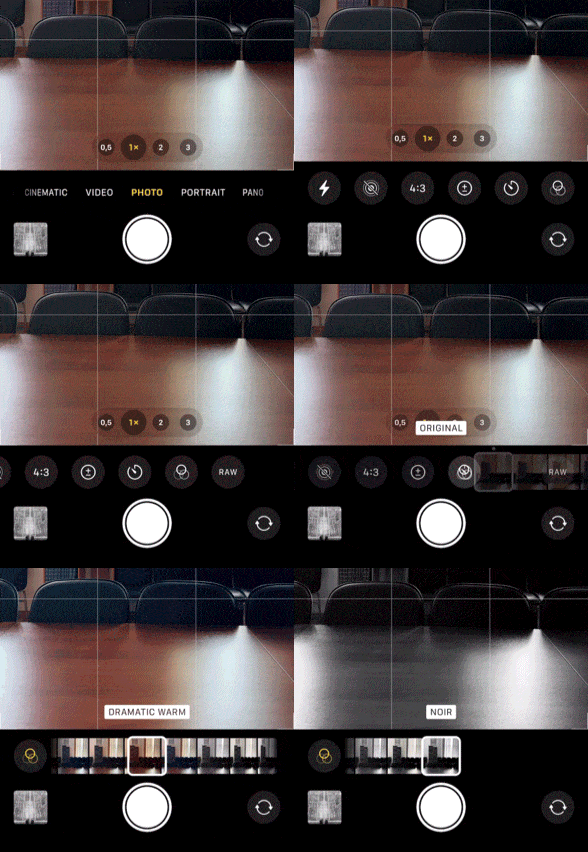
A primary methodology adopted by modern mobile street photographers involves a departure from the traditional "shoot in color, convert later" workflow. Technical experts and seasoned street photographers, such as Maksim Kyshtymov, advocate for utilizing the iPhone’s native "Noir" filter during the capture phase. This non-destructive approach allows the photographer to visualize the world in terms of luminance and shadow rather than hue. When the color is removed from the viewfinder, the brain is forced to process the scene through its fundamental components: light, shadow, pattern, shape, and line.
The iPhone’s Camera app facilitates this through a streamlined interface. By swiping up on the camera screen or tapping the chevron at the top, users can access the Filters icon—represented by three overlapping circles. Selecting the "Noir" filter provides a high-contrast, moody preview that highlights how light interacts with surfaces. Because the iOS architecture treats these filters as metadata rather than permanent pixel changes, the "original" color data remains preserved, offering the photographer the flexibility to revert to color in the Photos app post-capture if the monochrome treatment proves unsuccessful. This dual-utility represents a significant technological advantage over traditional film, where the choice of stock was a permanent commitment made before the first frame was exposed.
The Philosophy of Minimalism and Negative Space
In the dense, often chaotic environment of the modern city, the most effective street photography often relies on the strategic use of minimalism. Journalistic analysis of award-winning street images reveals a recurring theme: the isolation of a single human subject within a vast, uncluttered frame. This technique leverages "negative space"—the empty areas surrounding a subject—to direct the viewer’s eye with surgical precision.
Finding such spaces in an urban sprawl requires both patience and pre-planning. Many photographers now utilize digital tools like Google Maps and Street View to scout locations such as expansive public squares, parks, and minimalist cultural sites before ever stepping foot on the pavement. The objective is to find a "stage" with clean lines and minimal visual noise, then wait for the "actor"—a solitary pedestrian—to enter the frame. By positioning the subject in the center or following the rule of thirds, the photographer creates a sense of scale and solitude that is heightened by the lack of color, which might otherwise distract the viewer with vibrant advertisements or multicolored vehicles.
Architectural Geometry and Leading Lines
The urban landscape is a repository of geometric potential. For the street photographer, architectural elements serve as "leading lines," a compositional tool designed to guide the viewer’s gaze toward the focal point of the image. Roads, bridges, tunnels, and even simple road markings function as visual vectors. In black and white, these lines become more pronounced, as the contrast between light-colored concrete and dark shadows creates a clearer path for the eye to follow.
Advanced composition techniques involve positioning the camera so that these lines originate from the corners of the frame, creating a sense of "converging perspective" that adds three-dimensional depth to a two-dimensional medium. While straight lines are the most common, curved leading lines—such as those found in spiral staircases—offer a more organic, fluid aesthetic. Photographers are encouraged to seek high-vantage points, shooting downward to capture the rhythmic spiral of a staircase, ideally with a human subject positioned at the base to provide a sense of proportion and a final destination for the viewer’s journey through the frame.
Pattern Recognition and the Rhythms of the City
Repetition is a powerful psychological trigger in visual arts. The human brain is naturally inclined to seek patterns, and modern architecture provides these in abundance. Facades of glass and steel, rows of identical windows, and the rhythmic placement of pillars or arches create a sense of order and predictability. In monochrome photography, these patterns become the primary subject.
The methodology for capturing these "urban rhythms" involves a two-step process: first, identifying a repetitive architectural backdrop, and second, introducing a "pattern breaker"—usually a person. The juxtaposition of a rigid, geometric building with the organic, unpredictable form of a human being creates a narrative tension. Photographers often experiment with symmetry, shooting head-on to create a balanced, formal image, or from an oblique angle to create a sense of dynamic movement. The use of Instagram and other social discovery tools has created a global database of "pattern-rich" buildings, allowing photographers to curate their routes through a city based on the specific aesthetic qualities of its architecture.
The Mechanics of Architectural Framing
Framing is a compositional technique where the photographer uses elements within the scene to create a "frame within a frame." Archways, doorways, and windows are the most common tools for this purpose. This technique is particularly effective in black and white because the absence of color reinforces the silhouette of the frame, making it a bold, structural border that encapsulates the subject.
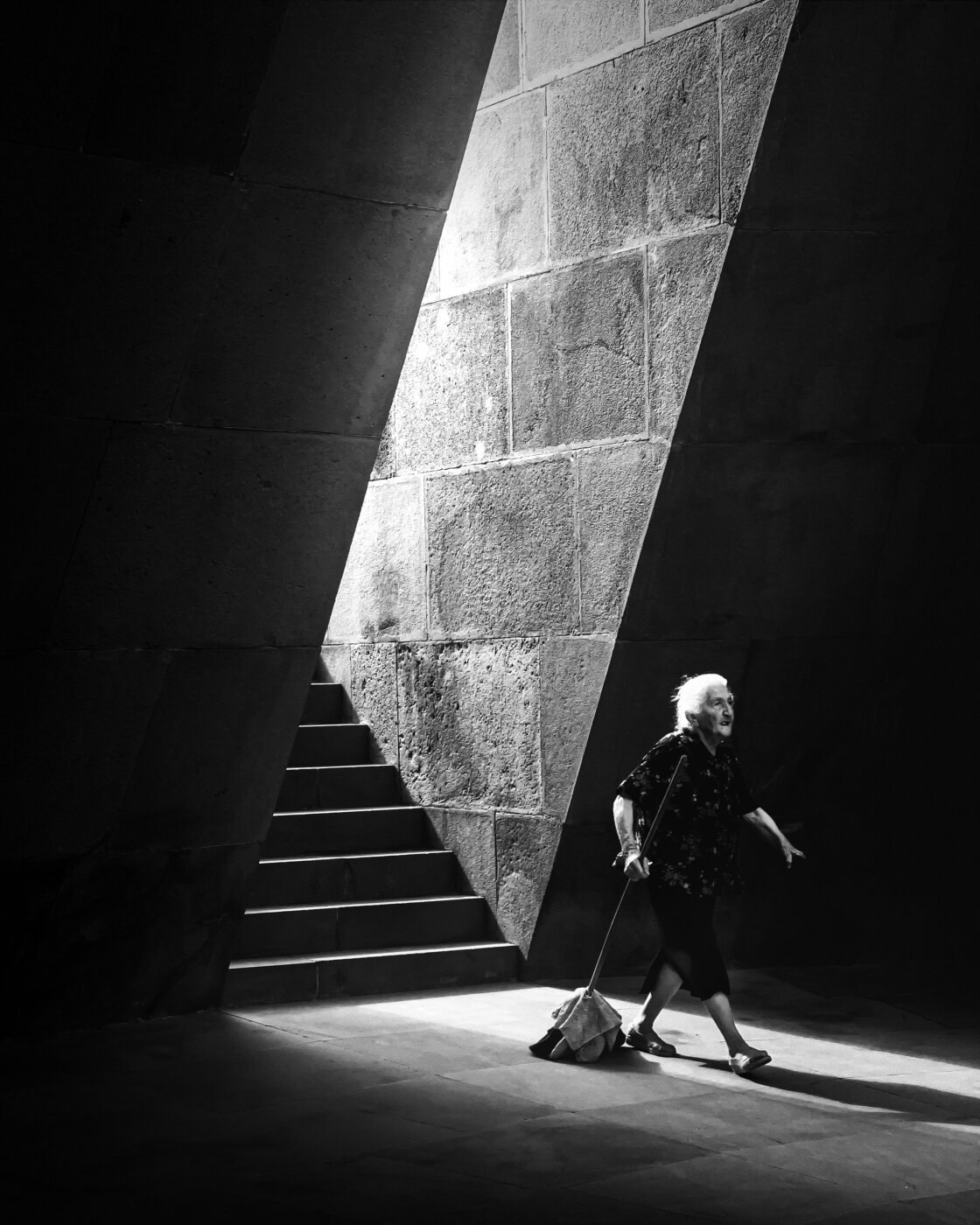
Technically, this often requires the use of "Burst Mode" to capture the "decisive moment"—a term coined by photography legend Henri Cartier-Bresson. On the iPhone, dragging the shutter button to the left or holding the volume-up button triggers a rapid succession of shots. This is crucial when a subject is walking through a frame, as it allows the photographer to select the exact micro-second where the person’s stride and position are most aesthetically pleasing.
Furthermore, shooting from a dark interior toward a bright exterior requires careful exposure management. The iPhone’s exposure compensation tool—accessed by tapping the +/- icon—allows the photographer to manually darken the image. This ensures that the highlights in the "frame" are not blown out, preserving detail in the most illuminated parts of the scene while allowing the foreground frame to fall into deep, dramatic shadow.
Light Physics: Silhouettes and the Golden Hour
The most dramatic black and white street photos are often those that utilize silhouettes. A silhouette occurs when the subject is placed between the camera and a bright light source, resulting in a dark, detail-less outline. This technique introduces a layer of mystery and anonymity, inviting the viewer to project their own narrative onto the faceless subject.
The chronology of a successful silhouette shoot is often dictated by the sun’s position. The "Golden Hour"—the period shortly after sunrise or before sunset—is the optimal time for this work. During these windows, the sun is low on the horizon, providing a backlighting effect that is difficult to achieve during the harsh midday sun. However, urban environments offer alternative light sources; illuminated shop windows or bright street lamps can serve as effective backdrops for nighttime silhouettes. To achieve a true silhouette on an iPhone, users must tap to focus on the brightest part of the background and then swipe down on the screen to lower the exposure until the subject is completely black.
The Narrative Power of Shadows
While many photographers avoid harsh sunlight, street photographers often embrace it for the long, distorted shadows it produces. Shadows can act as secondary subjects, mirroring the movements of the people who cast them or creating entirely new, abstract shapes on the pavement.
In monochrome, the relationship between light and shadow is the fundamental "language" of the image. By reducing exposure, the photographer can turn shadows into "ink-black" voids, adding a cinematic, film-noir quality to the work. This technique is especially effective when the shadow of the photographer themselves is included in the frame, a meta-narrative device that places the artist within the world they are documenting.
Post-Processing: The Digital Darkroom
The final stage of the iPhone street photography workflow occurs in the digital darkroom. While the native "Noir" filter provides a strong foundation, professional results often require fine-tuning in specialized apps like Adobe Lightroom or the built-in Photos editor.
Key adjustments typically include:
- Contrast and Tonal Range: Increasing contrast to make whites brighter and blacks deeper.
- Highlight and Shadow Recovery: Ensuring that detail is maintained in the brightest areas while allowing shadows to remain rich.
- Cropping and Straightening: Correcting minor compositional errors, such as tilted horizons or distracting elements at the edge of the frame.
- Healing and Retouching: Using tools like Lightroom’s "Healing" brush or the "TouchRetouch" app to remove unsightly objects like trash cans, signs, or distracting background pedestrians.
The philosophy behind these edits is "cleanliness." A minimalist street photo is only effective if it is free from visual clutter. The ability to "heal" away a stray cigarette butt or a distant crane allows the photographer to achieve a level of perfection that was once the exclusive domain of studio-based artists.
Broader Impact and Expert Perspective
The democratization of high-quality street photography has significant implications for the art world. Maksim Kyshtymov, whose journey from DSLR and mirrorless systems to the iPhone mirrors a broader industry trend, notes that the "portability of the iPhone offers a sense of freedom that heavy gear cannot match." This sentiment is echoed by photojournalists who find that a smartphone is less intimidating to subjects than a professional camera, allowing for more authentic, candid captures of urban life.
As the iPhone continues to evolve with larger sensors and more sophisticated computational photography algorithms, the line between "mobile photography" and "professional photography" continues to blur. For the street photographer, the device represents the ultimate realization of the "always-ready" camera, ensuring that the next "decisive moment" is never missed. In the realm of black and white, where the focus remains on the timeless elements of light and composition, the iPhone has proven itself to be not just a convenience, but a legitimate instrument of high-art expression.