Lensrentals, a prominent provider of photographic and videographic equipment, has released its comprehensive annual report detailing the most common customer purchases in 2025, offering a unique perspective that complements their earlier report on rental trends. This analysis delves into the equipment professionals and enthusiasts are choosing to permanently add to their arsenals, highlighting brand loyalty, market shifts, and the enduring appeal of certain gear amidst rapid technological advancements. The data, compiled from Lensrentals’ extensive inventory and "Keeper Program," serves as a vital indicator of long-term investment patterns within the dynamic imaging industry.
The release of this purchase data follows closely on the heels of Lensrentals’ widely anticipated annual rental report, which provided insights into the most frequently rented equipment, market share fluctuations among brands, and emerging preferences. While rental data illuminates short-term project needs and exploratory usage, purchase data offers a deeper understanding of equipment considered essential for long-term ownership, reflecting significant capital investment and professional commitment. This dual perspective is particularly valuable in an industry characterized by high-value assets and rapid innovation cycles.
The Distinction Between Rental and Ownership: A Strategic Approach
Lensrentals, as its name suggests, primarily operates within the equipment rental sphere, a business model that provides professionals with flexible access to a vast array of cutting-edge and specialized gear without the prohibitive upfront costs of ownership. This model allows creators to test equipment, meet diverse project demands, and adapt to evolving technologies. However, the company also facilitates ownership through its "Keeper Program," an initiative designed for customers who develop an affinity for a rented item. Under this program, renters can opt to purchase the exact gear they’ve been using, often with a significant portion, or even the entirety, of their rental fees credited towards the purchase price, subject to specific terms and conditions.
This dual approach provides Lensrentals with a unique vantage point on market dynamics. While rentals typically reflect transient needs—a specific lens for a challenging shoot, a high-end camera for a short-term project, or a drone for aerial footage—purchases often indicate a foundational investment. These are the tools that professionals deem indispensable for their daily workflow, reliable workhorses that justify the expenditure. Analyzing both sets of data allows for a more holistic understanding of the industry’s health and direction, revealing where professionals are comfortable renting and where they see the necessity of ownership.
Dominant Purchases: Complementary Gear and Enduring Classics
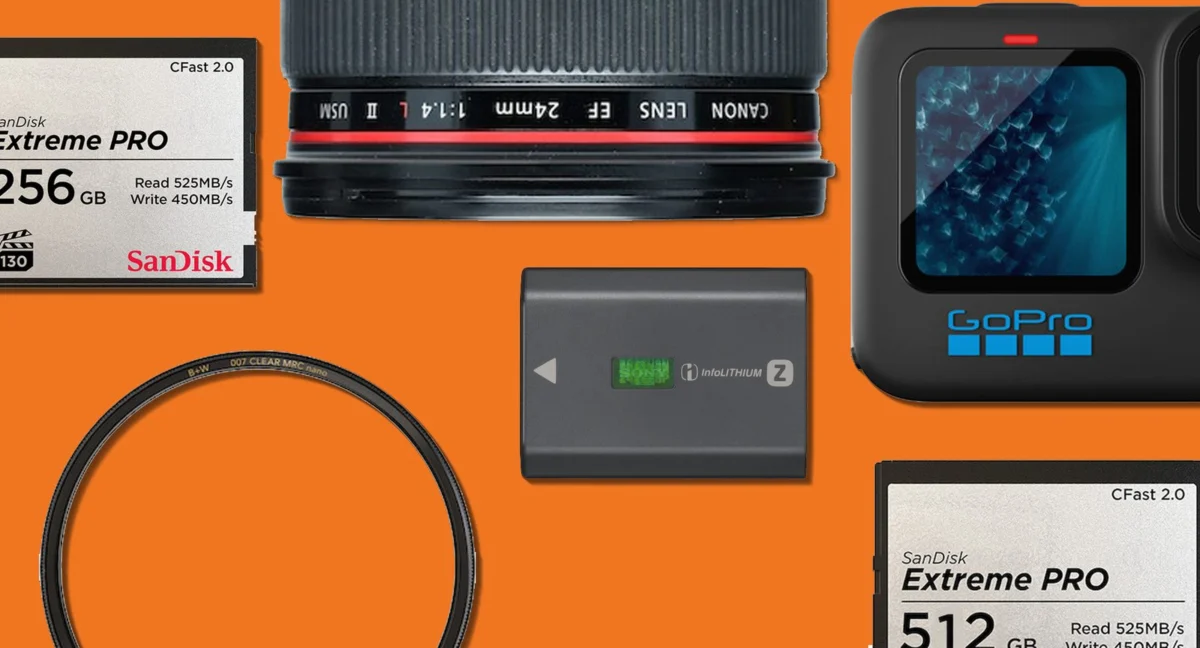
A granular examination of the most common purchases by quantity reveals a clear pattern: a significant proportion consists of complementary accessories rather than primary camera bodies or lenses. Items such as CFast cards, camera batteries, and UV filters consistently lead the purchase charts. This trend is logical; these are consumable or frequently used accessories that are integral to a seamless workflow. Professionals often prefer to own a reliable stock of these items to ensure availability, compatibility, and peak performance, rather than renting them repeatedly or relying on potentially less familiar third-party accessories. The continuous demand for high-speed CFast cards underscores the increasing data rates of modern cameras, especially in 4K and 8K video production, where storage performance is critical. Similarly, owning multiple batteries is a fundamental aspect of reliable field operation, minimizing downtime.
Beyond these essential accessories, the data highlights one particular high-value item that stands out: the Canon EF 24-70mm f/2.8L II. This lens consistently ranks among the most rented items, demonstrating its versatility and widespread utility across various photographic and videographic disciplines. Its emergence as the most-purchased high-value item, however, provides a compelling insight into market trends. The EF 24-70mm f/2.8L II is a quintessential professional zoom lens, renowned for its exceptional optical quality, robust build, and constant f/2.8 aperture, making it suitable for a broad spectrum of applications from photojournalism to event coverage and studio work.
The sustained purchasing interest in this EF-mount lens, particularly as Canon continues its strategic pivot towards the mirrorless RF lens lineup, suggests a fascinating market dynamic. With Canon’s focus on developing and promoting RF-mount cameras and lenses, the secondary market for high-quality EF glass has seen a re-evaluation. Many professionals, especially those with existing Canon DSLR systems or those seeking cost-effective, proven performance, perceive EF lenses like the 24-70mm f/2.8L II as an exceptional bargain. Its established reputation for reliability and performance, coupled with potentially more attractive pricing compared to its RF-mount equivalent, positions it as a smart, long-term investment for many. Industry analysts suggest this trend reflects a practical approach by professionals, balancing cutting-edge technology adoption with economic prudence, especially for workhorse lenses that deliver consistent results.
The remainder of the most-purchased list, while not detailed in the initial summary, is reported to align with previous years’ data, indicating a stable demand for established, reliable equipment that has proven its worth in professional settings. This consistency underscores a market that, while innovative, still values dependability and return on investment in its core tools.
Brand Market Share by Revenue: A Three-Year Perspective (2023-2025)
The brand market share for purchases, calculated by revenue, reveals significant shifts and enduring strengths across the photography and videography landscape over the past three years. This data offers a crucial barometer of brand loyalty and investment confidence among Lensrentals’ clientele.
| Brand | 2023 Market Share | 2024 Market Share | 2025 Market Share |
|---|---|---|---|
| Canon | 28.43% | 22.99% | 23.55% |
| Sony | 28.83% | 21.60% | 16.60% |
| DJI | 7.22% | 10.04% | 9.95% |
| Nikon | 3.93% | 4.69% | 4.90% |
| Blackmagic | 2.41% | 2.58% | 3.43% |
| Leica | 1.63% | 2.39% | 3.25% |
| Fuji | 1.29% | 2.80% | 3.24% |
| Aputure | 2.38% | 2.33% | 3.01% |
| SmallHD | 1.58% | 2.32% | 2.83% |
| Panasonic | 2.05% | 2.20% | 2.76% |
| Sigma | 3.09% | 2.50% | 2.42% |
| Teradek | 1.02% | 0.92% | 2.83% |
Canon’s Enduring Hegemony:
Canon maintains its position as the leading brand in terms of purchase revenue for 2025, capturing 23.55% of the market. This reflects a slight rebound from its 2024 share of 22.99%, though still below its 2023 peak of 28.43%. Canon’s consistent leadership, both in rentals and purchases, underscores its deep-rooted ecosystem, robust product lineup, and strong brand loyalty among professionals. The brand’s strategic transition to the RF mirrorless system, while causing some market adjustments, has not fundamentally eroded its core customer base’s willingness to invest in its products, particularly given the perceived value of its legacy EF glass.
Sony’s Notable Retreat:
In contrast to Canon’s stability, Sony experienced a significant decline in purchase market share. Starting at 28.83% in 2023, it dropped to 21.60% in 2024 and further to 16.60% in 2025. This substantial 12.23 percentage point decrease over two years is the most striking trend in the data. While Sony has been a trailblazer in the mirrorless revolution and remains a strong contender in rentals, this data suggests a potential shift in long-term ownership patterns. Industry observers speculate that this could be due to several factors: increased competition from Canon and Nikon’s mature mirrorless offerings, market saturation among early adopters of Sony’s mirrorless systems, or perhaps a perception among some professionals that Sony’s rapid product cycles encourage renting rather than purchasing, to avoid rapid depreciation. Alternatively, the initial surge in Sony purchases may have stabilized, with fewer new users converting to full ownership compared to previous years.
DJI’s Aerial Ascent:
Perhaps the most surprising revelation is DJI’s robust performance, securing the third-highest purchase market share at 9.95% in 2025, maintaining its strong position from 10.04% in 2024, and significantly up from 7.22% in 2023. This places DJI ahead of traditional camera giants like Nikon and Fujifilm. This trend is a clear indicator of the mainstream integration of drones and gimbals into professional photography and videography workflows. As aerial cinematography, precise camera stabilization, and remote operation become indispensable for diverse projects, professionals are increasingly viewing DJI equipment not as niche tools, but as core components of their owned kit. The reliability, ease of use, and innovative features of DJI products likely contribute to this preference for ownership, particularly for frequently utilized gear that demands immediate availability.
Nikon’s Gradual Recovery:
Nikon demonstrates a steady, albeit modest, growth in purchase market share, increasing from 3.93% in 2023 to 4.90% in 2025. This gradual upward trajectory signals a positive response to Nikon’s continued development and refinement of its Z-series mirrorless system. After a challenging period, Nikon appears to be steadily rebuilding trust and market share, with professionals increasingly willing to invest in its evolving ecosystem.
Emerging and Niche Strengths:
Several other brands show notable movements. Blackmagic Design, known for its high-performance video cameras and production tools, saw its share rise from 2.41% to 3.43%, underscoring the growing demand for accessible cinema-grade equipment. Leica, a premium brand, also experienced growth from 1.63% to 3.25%, indicating continued investment in high-end, specialized optics. Fujifilm, with its distinctive color science and retro-inspired designs, nearly tripled its share from 1.29% to 3.24%, reflecting its strong appeal to a dedicated segment of photographers and videographers.
Aputure (lighting), SmallHD (monitors), and Panasonic (cameras and lenses) exhibit consistent presence and modest gains, reinforcing the importance of auxiliary equipment in a professional setup. Sigma, a popular third-party lens manufacturer, saw a slight decline from 3.09% to 2.42%, possibly indicating a tightening market for third-party options as first-party mirrorless lens lineups mature.
Teradek’s Leap in Wireless Solutions:
A standout performer in 2025 is Teradek, whose market share jumped dramatically from 0.92% in 2024 to 2.83% in 2025. This significant surge, almost a threefold increase, points to the accelerating adoption and critical importance of reliable wireless video transmission systems on modern film and video sets.
New Product Acquisitions: A Glimpse into Future Workflows
The final segment of Lensrentals’ purchase data for 2025 focuses on the most commonly purchased gear that entered their inventory within the year. This category is particularly insightful as it highlights cutting-edge products that professionals are immediately adopting for long-term ownership, signaling future trends and evolving industry needs.
At the apex of this list is the Teradek 6G V Antenna. This specific accessory, designed to enhance the performance of Teradek’s renowned wireless video transmission systems, is not merely an incidental purchase. Its prominence underscores a fundamental shift in professional production workflows. Wireless transmission has become an indispensable component on film sets, facilitating real-time monitoring for directors, cinematographers, and clients, improving set efficiency, and enabling dynamic camera movements without the constraints of cables. The fact that an antenna, a crucial component of such a system, tops the list of new product purchases, further emphasizes that professionals are not just experimenting with wireless solutions via rentals, but are committing to owning robust and reliable setups.
This trend is further corroborated by the Teradek Wireless Antenna for Bolt 500/1000, which secured the second spot among the most popular overall purchases. The collective demand for these Teradek components illustrates a clear priority for fast, reliable, and high-quality wireless transfer capabilities in contemporary video production. It signifies an investment in seamless communication and monitoring, which translates directly into enhanced productivity and creative freedom on set. The industry’s move towards increasingly complex and mobile productions necessitates such advanced connectivity, and professionals are clearly voting with their wallets for solutions that promise efficiency and uncompromising performance.
Broader Implications for the Industry
The 2025 purchase data from Lensrentals offers several critical implications for manufacturers, professionals, and the wider photography and videography market:
- Enduring Brand Loyalty vs. Evolving Ecosystems: Canon’s sustained lead highlights the power of an established ecosystem and brand trust. While the transition to mirrorless systems presents challenges, core users remain committed. Sony’s decline, conversely, suggests that while innovation attracts initial interest and rental activity, long-term ownership might be influenced by competitive pressures, pricing strategies, or user perceptions of product longevity and value retention.
- The Rise of Workflow-Centric Investments: DJI’s ascent and Teradek’s surge unequivocally demonstrate that investments are increasingly flowing into tools that enhance workflow efficiency, mobility, and collaboration. Drones, gimbals, and wireless transmission systems are no longer niche items but essential owned components for modern content creation. This shift emphasizes that professionals prioritize solutions that streamline operations and expand creative possibilities.
- Strategic Value in Legacy Gear: The strong purchase numbers for the Canon EF 24-70mm f/2.8L II indicate a savvy approach by professionals seeking proven quality at potentially more accessible price points. As manufacturers push new-generation mirrorless systems, the market for high-quality legacy DSLR lenses presents a compelling value proposition, particularly for those not ready or able to fully transition their entire kit.
- Rental Market as a Proving Ground: The data reinforces the symbiotic relationship between renting and purchasing. The fact that many top-purchased items also appear on rental lists suggests that the rental market serves as an invaluable testing ground, allowing professionals to evaluate equipment thoroughly before making significant ownership commitments. This reduces risk for buyers and provides manufacturers with real-world feedback.
- Focus on the Entire Production Chain: The consistent demand for complementary products like batteries, memory cards, and filters, alongside specialized items like Aputure lights and SmallHD monitors, underscores that successful productions rely on a comprehensive suite of tools, not just cameras and lenses. Professionals are investing in a complete, reliable ecosystem that supports every stage of their creative process.
In conclusion, Lensrentals’ 2025 purchase data paints a picture of a dynamic industry where traditional brand loyalties coexist with a strong drive towards workflow optimization and specialized tools. While Canon maintains its dominant position in long-term investments, Sony faces new challenges, and brands like DJI and Teradek are rapidly gaining ground by addressing critical operational needs. The insights gleaned from this report are invaluable for understanding where professionals are placing their trust and capital, shaping the future trajectory of the photography and videography equipment market as the year draws to a close.