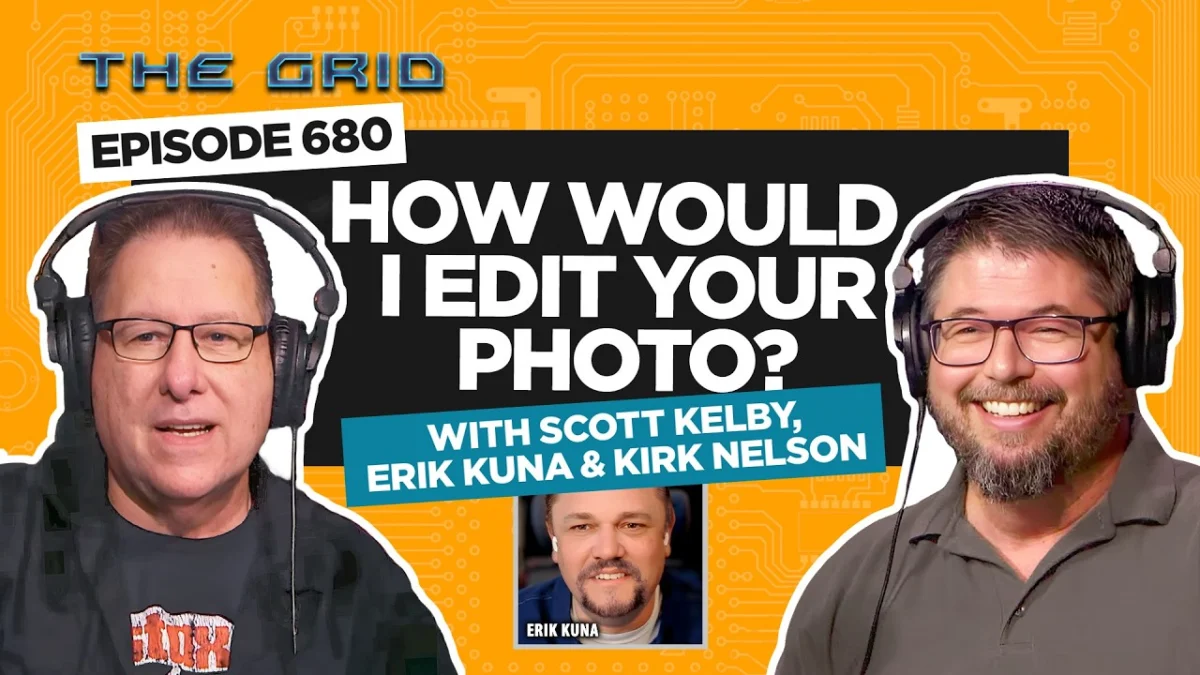
This week, the long-running and influential photography education program, "The Grid," delivered a highly anticipated episode featuring the return of its fan-favorite segment, "How Would I Edit Your Photo?" In an engaging and highly practical session, host Scott Kelby, joined by in-studio expert Kirk Nelson (The Pixel Pro) and remote contributor Erik Kuna, meticulously deconstructed and refined viewer-submitted photographs. The episode, a masterclass in digital image manipulation using Adobe Lightroom and Photoshop, offered a rare glimpse into the professional workflow of industry leaders, demonstrating actionable techniques for photographers of all skill levels. Before diving into the intricate world of pixels and adjustments, the show playfully veered from its customary "food news" segment, delivering an unexpected twist by breaking from its long-standing tradition of discussing chicken sandwiches, a moment of levity that underscored the show’s characteristic blend of education and entertainment.
The Enduring Appeal of "The Grid" and Its Educational Mission
"The Grid," a cornerstone of online photography education, has cultivated a dedicated global audience through its consistent delivery of practical advice, expert interviews, and live demonstrations. Launched years ago by Scott Kelby, a towering figure in the photography and publishing world, the show quickly established itself as an indispensable resource. Kelby, known for his prolific authorship of best-selling photography books, his role as Editor-in-Chief of Photoshop User magazine, and co-founder of KelbyOne (an online training platform), brings decades of experience and a uniquely accessible teaching style to "The Grid." His ability to distill complex technical concepts into understandable, actionable steps has been a hallmark of the show’s success.
The "How Would I Edit Your Photo?" format itself embodies the show’s commitment to real-world application. Rather than theoretical discussions, viewers witness direct problem-solving on images submitted by their peers, making the lessons immediately relatable and impactful. This interactive approach not only demystifies professional editing workflows but also addresses common challenges faced by amateur and seasoned photographers alike, ranging from compositional flaws to technical imperfections and creative dilemmas. The segment’s popularity stems from its ability to provide tailored, expert feedback that goes beyond generic tutorials, offering specific solutions to actual photographic issues. This direct engagement fosters a sense of community and provides tangible value, reinforcing why "The Grid" has maintained its relevance in a rapidly evolving digital landscape.
A Collaborative Masterclass: The Experts in Action
The recent episode showcased a dynamic collaborative effort among three distinct voices in the photography world. Scott Kelby, at the helm, guided the narrative and initiated many of the edits, articulating his rationale behind each decision. His approach is often characterized by efficiency and an understanding of the aesthetic impact of subtle adjustments. Joining him in the studio was Kirk Nelson, widely known as The Pixel Pro. Nelson, an accomplished photographer and educator in his own right, provided invaluable in-the-moment assistance, often taking over specific editing tasks to demonstrate alternative techniques or to delve deeper into particular software features. His hands-on contributions brought an additional layer of expertise and practical demonstration, enriching the learning experience with diverse perspectives on problem-solving.
Complementing the in-studio dynamic was Erik Kuna, participating remotely. Kuna, a renowned expert in live broadcasting, photography, and aerial imaging, contributed critical insights focusing on composition, creative direction, and the nuanced balance required in post-processing. His commentary often served as a vital counterpoint, reminding viewers that technical proficiency must always serve the overarching story and emotional impact of an image. Kuna’s emphasis on the delicate interplay between enhancing a photo’s narrative and avoiding edits that might inadvertently detract from it resonated deeply, providing a holistic view of the editing process that transcends mere technical execution. This three-pronged expert attack ensured a comprehensive exploration of each submitted image, covering technical fixes, artistic choices, and foundational compositional principles. The synergy between Kelby, Nelson, and Kuna highlighted the multifaceted nature of professional photo editing, demonstrating how different specializations converge to achieve a polished, impactful final image.
Deconstructing the Editing Workflow: Techniques Unveiled
The core of the episode lay in its detailed deconstruction of various editing challenges. Each viewer-submitted image presented a unique set of problems, allowing the experts to showcase a wide array of Lightroom and Photoshop techniques. This practical application of software tools is what truly distinguishes "The Grid" as an educational platform.
-
Cropping for Stronger Impact: The session began with fundamental yet often overlooked techniques like intelligent cropping. The experts demonstrated how strategic cropping can dramatically alter the viewer’s perception, eliminating distractions, improving compositional balance (e.g., applying the rule of thirds or leading lines), and enhancing the subject’s prominence. They highlighted that cropping isn’t merely about cutting parts away but about refining the narrative and creating a more compelling visual frame. This often involves making difficult choices about what to exclude to strengthen what remains.
-
Precise Masking for Targeted Adjustments: Masking, a cornerstone of non-destructive editing, was extensively covered. The experts illustrated how precise masks (e.g., luminosity masks, color range masks, or subject/sky masks in modern Lightroom) allow photographers to apply adjustments to specific areas of an image without affecting others. This is crucial for tasks such as brightening a face, darkening a distracting background, or enhancing the colors of a particular element. The emphasis was on meticulous selection to ensure natural-looking transitions and seamless integration of edits.
-
Controlling Harsh Light: Many submitted photos struggled with challenging lighting conditions, particularly harsh sunlight creating deep shadows and blown-out highlights. The experts demonstrated techniques for recovering detail in both shadows and highlights, using tools like the Highlights and Shadows sliders in Lightroom, or more advanced dodging and burning techniques in Photoshop. They also showed how graduated filters and radial filters could be employed to balance exposure across an unevenly lit scene, mimicking the effect of professional lighting equipment in post-production.
-
Removing Distractions for Clarity: A common issue in real-world photography is the presence of distracting elements in the frame. The episode provided practical solutions for eliminating these. Techniques like the Spot Healing Brush, Clone Stamp Tool, and Photoshop’s Content-Aware Fill were deployed to seamlessly remove unwanted objects, sensor dust spots, or even entire background elements that detracted from the main subject. The goal was always to guide the viewer’s eye to the intended focal point without visual interruptions.
-
Dialing in Color for Mood and Accuracy: Color plays a pivotal role in setting the mood and conveying emotion in an image. The experts demonstrated how to achieve accurate white balance, make nuanced adjustments to hue, saturation, and luminance for specific colors, and apply color grading techniques to evoke a particular aesthetic. This included discussions on split toning to add warmth to highlights and coolness to shadows, or vice versa, to create a sophisticated and cohesive color palette.
-
Knowing When to Push an Edit Further—or Pull It Back: Perhaps one of the most critical, yet often overlooked, aspects of post-processing is the judgment call of knowing when an edit is complete. The experts repeatedly emphasized the balance between enhancing an image and over-processing it. They discussed how to avoid the "plastic" or artificial look that can result from excessive adjustments, advocating for a natural aesthetic that respects the original capture while elevating its visual appeal. This segment underscored that the best edits are often those that are unnoticeable, simply making the image look its best without drawing attention to the editing itself. It’s about serving the photograph’s story, not competing with it.
The Pedagogy of Practicality: Why This Format Resonates
The success of "How Would I Edit Your Photo?" and indeed "The Grid" as a whole, lies in its commitment to practical, unscripted, and immediately applicable knowledge. The unscripted nature of the show allows for genuine problem-solving, mirroring the unpredictable challenges photographers face daily. Viewers are not merely shown a polished, pre-recorded tutorial but rather an authentic demonstration of expert thought processes, including moments of deliberation and decision-making. This transparency is invaluable.
The "ohhh, that’s how you fix that" moments described in the article are not incidental; they are the direct result of this pedagogical approach. By breaking down complex tasks into manageable steps and explaining the "why" behind each action, the experts enable viewers to grasp concepts that might otherwise seem daunting. This method fosters deeper understanding and retention, allowing viewers to immediately apply newly acquired skills to their own photography. In an era saturated with online content, the emphasis on direct applicability and real-world scenarios sets "The Grid" apart, solidifying its position as a leading educational resource.
Broader Implications for Photography Education and the Industry
This episode of "The Grid" also subtly highlights several significant trends within the broader photography industry and education landscape. The continued dominance of Adobe Lightroom and Photoshop, as evidenced by their central role in the demonstrated edits, underscores their status as industry standards. With a combined market share that vastly overshadows competitors in professional image editing, proficiency in these tools remains critical for both aspiring and established photographers. Their continuous evolution, incorporating AI-powered features and streamlined workflows, necessitates ongoing education for users to remain current and efficient.
Furthermore, the popularity of interactive, live-streamed content like "The Grid" reflects a larger shift in how creative skills are learned. Traditional workshops and lengthy online courses are increasingly complemented by shorter, more dynamic, and community-driven learning experiences. This democratization of expert knowledge, made possible by platforms like YouTube and dedicated educational sites like KelbyOne, has lowered barriers to entry for many, enabling photographers globally to access high-quality instruction regardless of their geographic location or financial constraints.
The emphasis on foundational editing skills, even in an age where AI can automate many tasks, is another crucial takeaway. While AI tools can certainly expedite processes like sky replacement or subject selection, the human eye for composition, the nuanced understanding of light and color, and the artistic judgment of "when to push or pull" an edit remain indispensable. "The Grid" reinforces that technology serves as a powerful tool, but it is the photographer’s vision and skill that ultimately transform an image.
Conclusion: A Continuing Legacy of Excellence
The latest episode of "The Grid," bringing back the beloved "How Would I Edit Your Photo?" format, stands as a testament to the enduring value of practical, expert-led photography education. Through the combined expertise of Scott Kelby, Kirk Nelson, and Erik Kuna, viewers were treated to a comprehensive and engaging masterclass in digital image refinement. From the initial unexpected "food news" twist to the detailed breakdown of cropping, masking, light control, distraction removal, and color grading, the episode was replete with actionable insights. It reinforced the notion that effective post-processing is a blend of technical proficiency, artistic vision, and discerning judgment. For photographers seeking to elevate their craft, the replay of this episode, available for immediate viewing, offers a direct pathway to understanding and implementing professional-grade editing techniques, solidifying "The Grid’s" reputation as an essential resource in the dynamic world of photography. The show continues to empower its audience, providing the tools and knowledge necessary to transform ordinary captures into extraordinary visual stories.