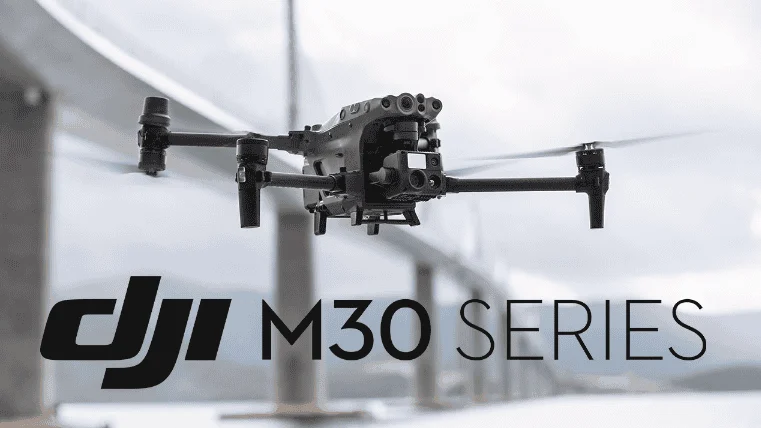
The landscape of industrial and public safety drone operations has undergone a transformative shift as the DJI Matrice 30 (M30) series gains the technical and regulatory capacity to fly over crowds and densely populated areas. This advancement is primarily facilitated by the integration of the PRS-M30 parachute system, developed by Aerial Vehicle Safety Solutions (AVSS). For years, the commercial drone industry has faced significant hurdles regarding "Operations Over People" (OOP), with stringent safety requirements often necessitating complex waiver processes from aviation authorities. However, the combination of DJI’s robust M30 airframe and the sophisticated recovery technology from AVSS provides a standardized solution that meets the rigorous safety benchmarks required for urban and event-based deployments. This development marks a pivotal moment for public safety agencies, infrastructure inspectors, and emergency responders who require the ability to navigate complex environments without compromising the safety of individuals on the ground.
The Technical Evolution of the DJI M30 Platform
The DJI M30 series was originally engineered to bridge the gap between the compact portability of the Mavic series and the heavy-duty capabilities of the Matrice 300 RTK. Weighing significantly less than its larger counterparts, the M30 still packs a comprehensive sensor suite, including a 48-megapixel zoom camera, a 12-megapixel wide-angle camera, and a laser rangefinder. The "T" model adds a 640×512 radiometric thermal camera, making it an essential tool for search and rescue (SAR) and firefighting operations.
Despite these impressive specifications, the inherent risks of mechanical or electrical failure have historically limited where these drones could fly. An uncontrolled descent of a several-kilogram aircraft into a crowd could result in catastrophic injury. To mitigate this, the integration of the AVSS PRS-M30 system serves as a redundant safety layer. The PRS-M30 is not merely a passive canopy; it is an intelligent recovery system featuring an autonomous triggering mechanism. If the drone experiences an abnormal flight attitude or a power failure, the system detects the anomaly in milliseconds and deploys the parachute. Crucially, the system includes a Flight Termination System (FTS) that immediately cuts power to the drone’s motors, preventing the parachute lines from becoming entangled in spinning propellers and ensuring a stable, vertical descent.
Regulatory Framework and the ASTM F3322-18 Standard
To understand the significance of the DJI M30’s ability to fly over crowds, one must look at the regulatory environment established by the Federal Aviation Administration (FAA) in the United States and similar bodies globally, such as EASA in Europe. Under the FAA’s Part 107 rules, specifically the "Operations Over People" amendment effective as of April 2021, drones are categorized based on the risk of injury they pose.
The DJI M30, when equipped with the AVSS parachute, aims to comply with Category 2 and Category 3 requirements. These categories require the operator to demonstrate that the aircraft will not cause injury above certain kinetic energy thresholds upon impact. The PRS-M30 allows the M30 to meet these standards by drastically reducing its terminal velocity during a fall. The system has undergone rigorous testing to comply with the ASTM F3322-18 standard, which requires a minimum of 45 successful test deployments across various failure scenarios, including manual deployment and automatic deployment during motor failure. By adhering to these international standards, the DJI M30 moves from being a restricted industrial tool to a versatile urban asset.
Chronology of Safety Integration in the UAS Industry
The path to achieving flight authorization over crowds has been a multi-year journey of engineering and collaboration.
- March 2022: DJI officially launches the Matrice 30 series, marketing it as a "weatherproof" and "portable" powerhouse for enterprise users.
- Mid-2022: AVSS begins the research and development phase for a dedicated parachute system tailored specifically to the M30’s unique center of gravity and flight controller architecture.
- Early 2023: Initial testing phases for the PRS-M30 are completed, demonstrating a high success rate in "dead-stick" scenarios where all propulsion is lost at high altitudes.
- Late 2023: AVSS secures third-party validation for ASTM F3322-18 compliance, a critical step for operators seeking FAA waivers or operating under standard scenarios in various jurisdictions.
- April 2025: The integration becomes a gold standard for public safety departments, with many agencies adopting the M30/AVSS bundle as their primary response vehicle for metropolitan areas.
Impact on Public Safety and Emergency Response
The practical implications of this technology are most visible in the field of public safety. Law enforcement agencies often use drones for "Drones as First Responders" (DFR) programs. In a DFR model, a drone is launched from a central rooftop location the moment a 911 call is received. To reach the scene of an emergency quickly, the drone must often fly "as the crow flies," which inevitably involves crossing over streets, sidewalks, and residential areas.
Without a certified parachute system, these flight paths would be legally restricted or would require the drone to take a circuitous route to avoid people, wasting precious seconds. With the DJI M30 and the PRS-M30, a drone can maintain a direct line of sight to the incident while remaining in full compliance with safety regulations. In the event of a technical malfunction over a crowded protest or a street festival, the parachute ensures the drone drifts slowly to the ground, providing bystanders ample time to move and reducing the force of impact to non-lethal levels.
Industrial and Infrastructure Applications in Urban Centers
Beyond emergency services, the ability to fly over crowds unlocks significant economic value in the industrial sector. Infrastructure inspections—such as checking the structural integrity of bridges, high-rise facades, or urban power lines—traditionally require extensive ground-level cordoning. Closing off city streets or sidewalks to create a "safe zone" for drone flight can cost thousands of dollars in permits and lost productivity.
The DJI M30’s new safety status allows for more flexible inspection schedules. Engineers can deploy the drone to inspect a bridge during active traffic or examine a skyscraper’s HVAC system while pedestrians walk below, provided they are operating under the safety umbrella of the AVSS system. The drone’s 360-degree obstacle avoidance sensors further complement the parachute by preventing collisions with buildings or wires in the first place, creating a multi-tiered safety ecosystem.
Data Accuracy and Multi-Sensor Capabilities
Safety is the prerequisite, but data is the objective. The DJI M30’s multi-sensor payload is uniquely suited for the missions that the parachute system enables. During a large-scale public event, the M30’s zoom camera allows operators to monitor crowd density and identify potential "crush" points from a safe altitude. The thermal sensor on the M30T can detect heat signatures in low-light conditions, which is invaluable for finding missing persons in urban parks or identifying overheating electrical components in a city’s power grid.
The integration with DJI FlightHub 2 allows this data to be streamed in real-time to a command center. When the drone is flying over a crowd, the mission commander can see the live telemetry, including the status of the parachute system. This level of transparency ensures that if a "caution" light appears on the pilot’s remote, the mission can be aborted or the drone can be diverted to a clear area before a critical failure occurs.
Industry Reactions and Expert Analysis
Industry analysts view the M30’s certification for flight over crowds as a maturing of the UAS (Unmanned Aerial Systems) market. "We are moving away from the ‘Wild West’ era of drone flight," says a prominent aviation safety consultant. "The integration of AVSS technology into the DJI ecosystem demonstrates that manufacturers are prioritizing public trust. It’s no longer just about how high or fast a drone can fly; it’s about how safely it can fail."
Public safety officials have echoed this sentiment. Many departments have noted that the presence of a visible parachute pod on the drone helps ease public anxiety regarding "surveillance drones." When the public understands that the device has an automated safety "airbag," the social license to operate drones in urban spaces expands.
Future Implications for Urban Air Mobility
The success of the DJI M30 and AVSS partnership serves as a blueprint for the future of Urban Air Mobility (UAM). As the industry moves toward larger cargo drones and even passenger-carrying air taxis, the lessons learned from small UAS parachute integration will be foundational. The data gathered from thousands of hours of M30 flights over populated areas will provide regulators with the empirical evidence needed to further refine safety standards.
Furthermore, the "plug-and-play" nature of the PRS-M30 suggests a future where safety components are modular and standardized across different drone platforms. This would allow fleet managers to move safety systems between aircraft as needed, optimizing costs while maintaining a high safety ceiling.
Conclusion: A New Standard for Drone Operations
The ability of the DJI M30 to fly over crowds represents more than just a technical achievement; it is a holistic solution to one of the most persistent challenges in the drone industry. By combining DJI’s advanced flight performance and sensor technology with AVSS’s proven recovery systems, the M30 series has become the premier choice for missions where failure is not an option and public safety is paramount.
As urban environments become more crowded and the demand for real-time aerial data grows, the importance of such safety integrations will only increase. The DJI M30, bolstered by the PRS-M30 parachute, stands as a testament to the industry’s commitment to innovation, regulation, and, above all, the protection of the communities it serves. This evolution ensures that drones are no longer seen as a risk to be managed, but as a vital, safe, and integrated component of modern urban infrastructure.