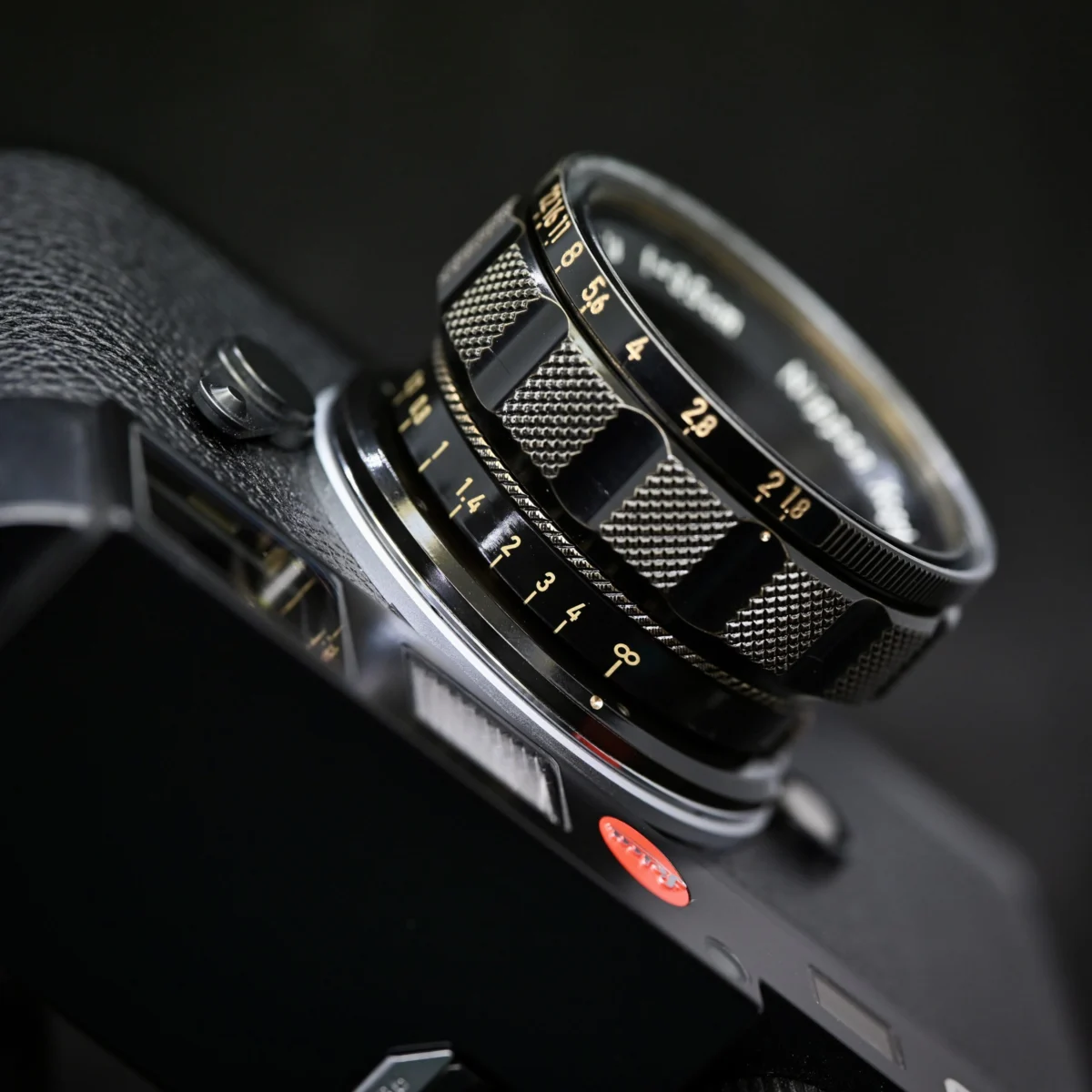
The history of underwater imaging is inextricably linked to the Nikonos series, a specialized line of 35mm amphibious cameras produced by Nikon between 1963 and 2001. For nearly four decades, the Nikonos system served as the industry standard for marine biologists, professional divers, and hobbyist photographers, offering a unique combination of ruggedness and optical precision that few contemporary systems could match. The discontinuation of the line in the early 21st century marked the end of an era for analog marine photography, yet the lenses developed for the system remain highly regarded for their specific engineering solutions to the challenges of aquatic optics.
The Genesis of the Nikonos System
The Nikonos was not an original Nikon design but an evolution of the "Calypso," a camera designed by Belgian engineer Jean de Wouters and championed by the legendary oceanographer Jacques-Yves Cousteau. Nikon acquired the designs in the early 1960s, recognizing the growing demand for a camera that could withstand the pressures of the deep without requiring a bulky external housing.
The first model, the Nikonos I, debuted in 1963. It utilized a unique O-ring sealing system and a rugged outer shell that allowed it to be submerged to depths of 50 meters (approximately 160 feet). Over the following decades, Nikon released four subsequent iterations of the rangefinder-style body: the Nikonos II (1968), the Nikonos III (1975), the Nikonos IV-A (1980), and the Nikonos V (1984). While the first three models were entirely mechanical, the IV-A and V introduced electronic shutter control and Through-The-Lens (TTL) flash metering, significantly improving the success rate of underwater exposures.

In 1992, Nikon pushed the boundaries of the series with the Nikonos RS, the world’s first underwater Single-Lens Reflex (SLR) camera. Unlike its predecessors, the RS featured an integral autofocus system and a dedicated lens mount, though its high cost and the impending digital revolution limited its commercial lifespan to just a few years.
The Physics of Underwater Optics
The primary challenge in underwater photography is the difference in refractive indices between air and water. When a standard lens designed for air is used behind a flat glass port underwater, the water acts as a supplementary lens element. This phenomenon results in several optical degradations:

- Magnification: The field of view is narrowed by approximately 25%. A 35mm lens on land effectively becomes a 47mm lens underwater.
- Refraction Errors: Light rays entering at an angle are bent more severely, leading to significant chromatic aberration and edge distortion.
- Loss of Sharpness: The virtual image created by the water-air interface is curved, making it difficult for flat-field lenses to maintain corner-to-corner sharpness.
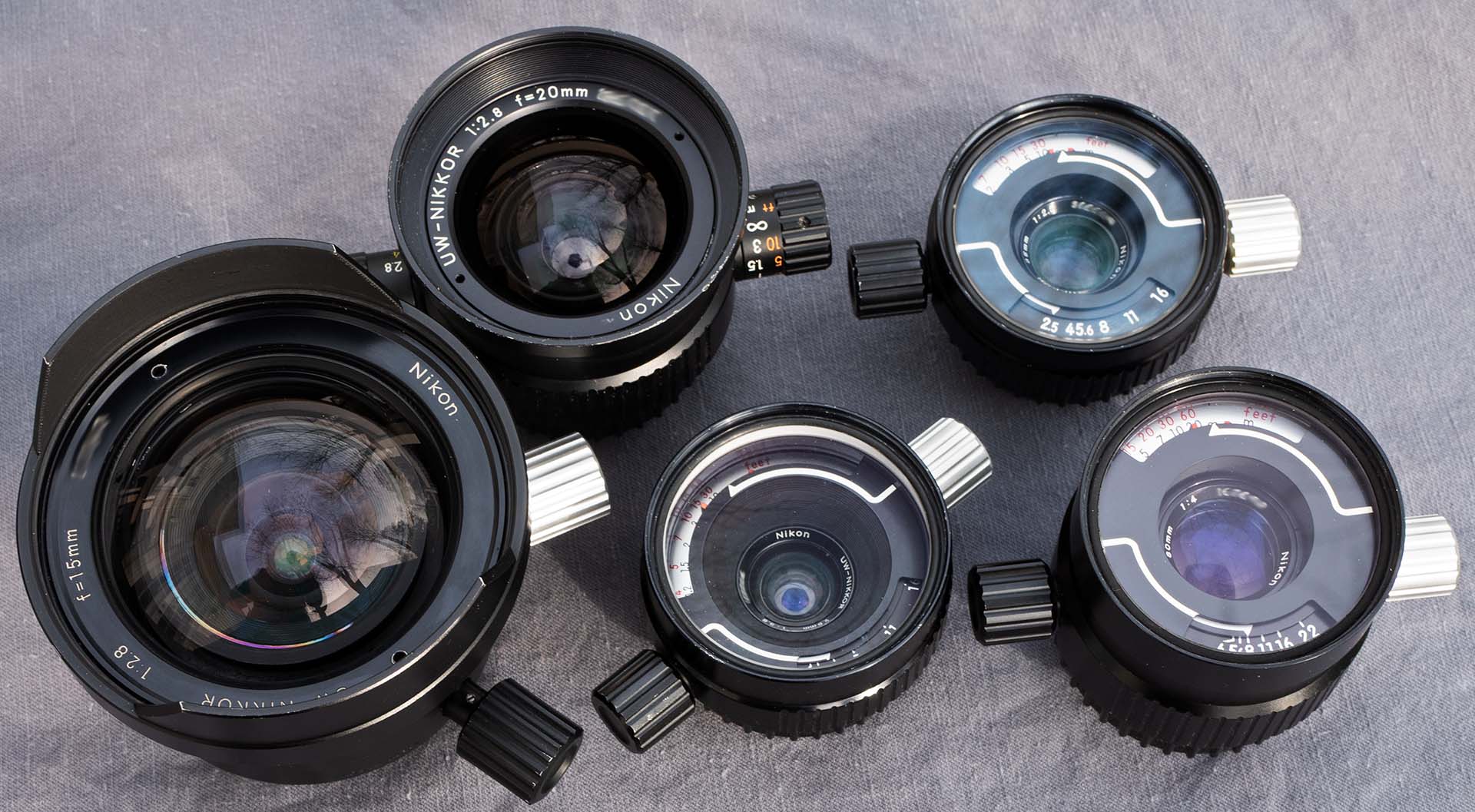
To combat these issues, Nikon developed two distinct categories of lenses: "Amphibious" lenses, which could be used both on land and underwater, and "Underwater-Only" (UW) lenses, which utilized a water-contact front element to correct for refraction.
The Underwater-Only (UW-Nikkor) Series
The UW-Nikkor lenses are widely considered the pinnacle of the system’s optical achievements. These lenses were designed with a front element that remained in direct contact with the water, effectively neutralizing the refractive effects of the aquatic environment. Because they were corrected specifically for the density of water, they cannot be focused when used in air, appearing blurred and distorted on land.
The 15mm f/2.8 UW-Nikkor
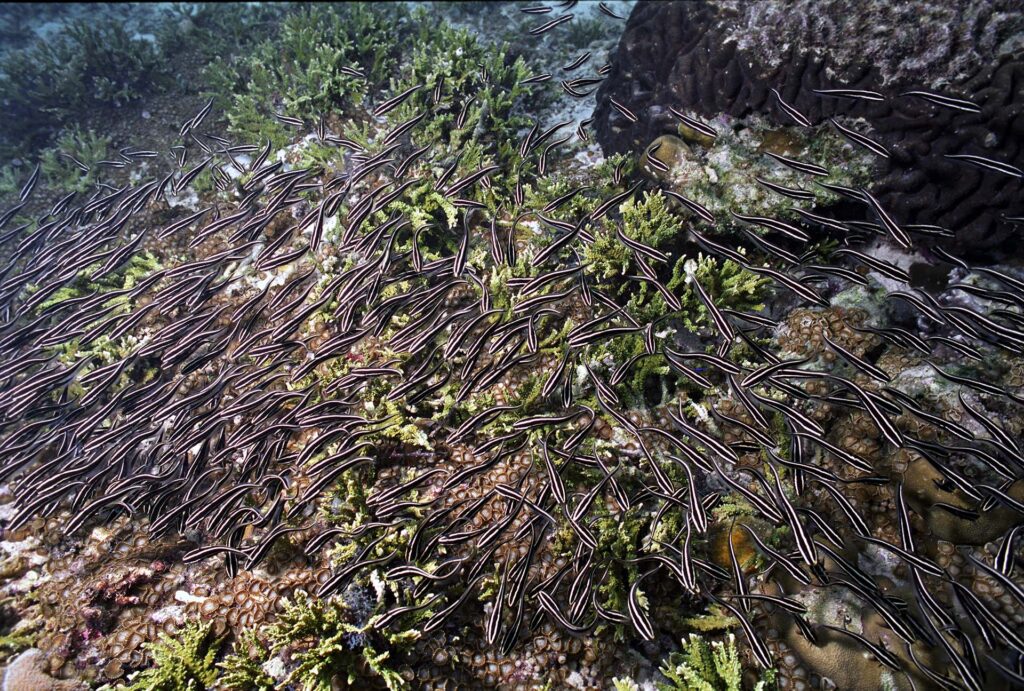
The 15mm f/2.8 is often cited as the most essential lens for serious underwater photographers. In the turbid environment of the ocean, minimizing the amount of water between the camera and the subject is critical for clarity. The 15mm provided an expansive 94-degree field of view, allowing photographers to capture large reef structures or megafauna from a very close distance.
Nikon produced two versions of this lens. The early version, designed for the Nikonos I through III, featured a near-symmetrical Biogon-style design with 8 elements in 4 groups. However, the deep protrusion of this lens into the camera body blocked the internal light meters of the later Nikonos IV-A and V. Consequently, Nikon redesigned the lens with a retrofocal formula to accommodate TTL metering. While the retrofocal version was significantly larger, it maintained the exceptional sharpness and lack of distortion for which the 15mm was known.
The 20mm f/2.8 and 28mm f/3.5 UW-Nikkors
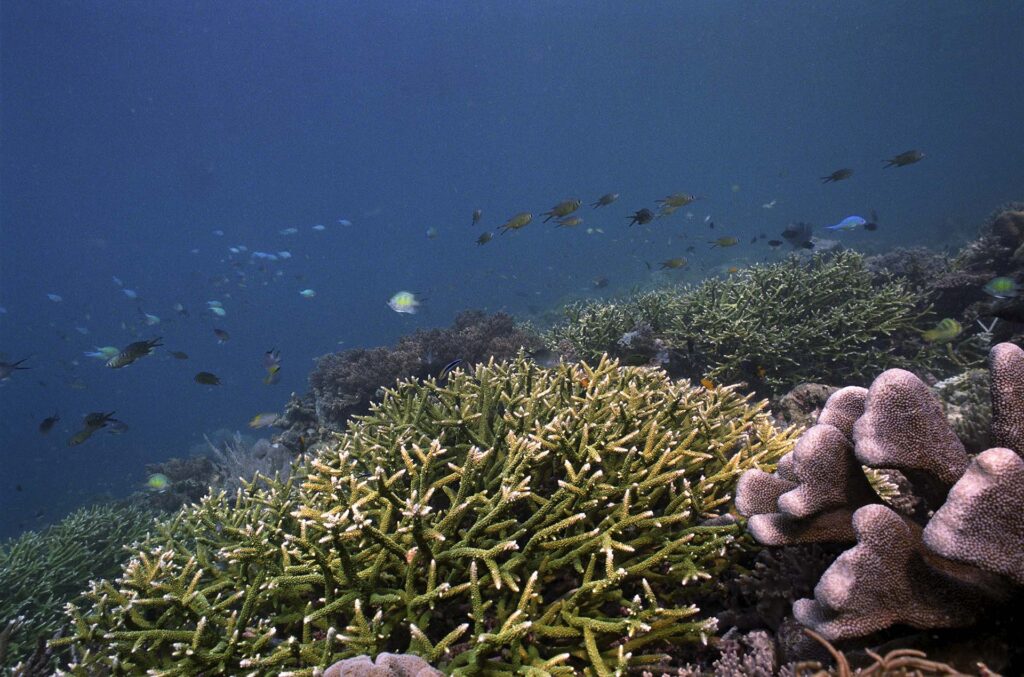
For subjects requiring a tighter frame, the 20mm (78-degree field of view) and 28mm (59-degree field of view) offered excellent alternatives. The 20mm f/2.8 was a later addition to the lineup, offering a compromise between the ultra-wide 15mm and the standard 28mm. It was particularly favored for its compact size and compatibility with the Nikonos V’s metering system.
The 28mm f/3.5 was often the entry point for underwater specialists. While its field of view was more modest, it was renowned for its extreme sharpness. When stopped down, the 28mm UW-Nikkor could resolve fine details of coral polyps and marine life with clinical precision.

The Amphibious (W-Nikkor) and Land Lenses
The "W" in W-Nikkor stood for "waterproof," indicating lenses that utilized a flat glass port, allowing them to be used in any environment.
The 35mm f/2.5 W-Nikkor
The 35mm f/2.5 was the "kit lens" of the Nikonos world. Based on a classic Planar-type design, it was the most versatile lens in the system. On land, it functioned as a standard wide-angle lens, ideal for boat deck photography or rainy environments. Underwater, due to the refractive magnification of the flat port, it functioned as a 46.5-degree "normal" lens. While it suffered from some edge distortion when used submerged at wide apertures, it remains a favorite among "street" photographers today who use Nikonos cameras for their weather-sealed properties.

The 80mm f/4.0 W-Nikkor
The 80mm was the longest lens available for the rangefinder Nikonos bodies. It was primarily intended for land-use or for photographing shy marine life from a distance. However, using an 80mm lens on a camera without a coupled rangefinder presented significant challenges. Photographers had to estimate the distance to the subject and set the focus manually on the lens scale. Because the depth of field for an 80mm lens is much shallower than that of a 15mm lens, focus errors were common. Furthermore, the simple four-element construction led to noticeable chromatic aberration when used with high-contrast color films.
The LW-Nikkor 28mm f/2.8
The LW-Nikkor was a unique outlier: a "Land-Only" waterproof lens. It was designed for use in splash-prone environments—such as on a boat, in heavy rain, or during industrial work—but it was not rated for submersion. It lacked the specialized seals required for depth pressure and was intended to provide a high-quality wide-angle option for the Nikonos body when used above the surface.
Specialized Macro and Third-Party Support
Because the Nikonos was a rangefinder system, it lacked the native ability to focus on small subjects at close range. To solve this, Nikon developed a close-up kit consisting of a supplemental lens that snapped onto the front of the 28mm, 35mm, or 80mm lenses. To aid in framing and focus, the kit included a "framer"—a wire bracket that extended in front of the lens. Anything inside the wire frame at the specified distance would be in focus.
The professional demand for Nikonos equipment also birthed a secondary market of high-end accessories. Companies like Sea & Sea and Helix produced extension tubes and specialized strobes that expanded the capabilities of the system. Extension tubes were placed between the camera body and the lens, allowing for 1:1, 1:2, or 1:3 magnification ratios, enabling photographers to capture the minute details of nudibranchs and crustaceans.
Chronology of Major Nikonos Milestones
- 1961: Introduction of the Calypso camera by La Spirotechnique.
- 1963: Nikon releases the Nikonos (later known as the Nikonos I) after acquiring the Calypso rights.
- 1968: Nikonos II is launched with improved film transport and a simplified rewind crank.
- 1975: Nikonos III arrives, featuring a more robust construction and improved frame counter.
- 1980: Nikonos IV-A introduces Aperture Priority auto-exposure and a hinged back for easier film loading.
- 1984: The Nikonos V is released, becoming the most popular and enduring model in the series, featuring full manual control and advanced TTL flash support.
- 1992: Launch of the Nikonos RS, the world’s first underwater AF SLR.
- 2001: Nikon officially announces the discontinuation of the Nikonos line, citing the shift toward digital photography.
Broader Impact and Modern Legacy
The legacy of the Nikonos system extends far beyond the realm of film photography. The engineering lessons learned in sealing the Nikonos bodies and correcting its lenses paved the way for modern action cameras and waterproof digital compacts.
Today, there is a significant resurgence of interest in Nikonos cameras among analog enthusiasts. The Nikonos V, in particular, is prized for its "indestructible" feel and the unique aesthetic of its UW lenses. While digital housings for modern SLRs have surpassed the Nikonos in terms of ease of use and depth capability, the "Nikonos look"—characterized by the rich color saturation of Fuji and Kodak films paired with high-quality Nikkor glass—remains a benchmark in marine art.
The system’s discontinuation in 2001 was a response to the rapid decline of the film market, but the lenses remain compatible with the original bodies, and a small network of specialized technicians continues to service the O-rings and internal electronics. For the modern photographer, the Nikonos represents a tactile, deliberate approach to the sea, requiring a deep understanding of optics, light, and the physical environment of the ocean.