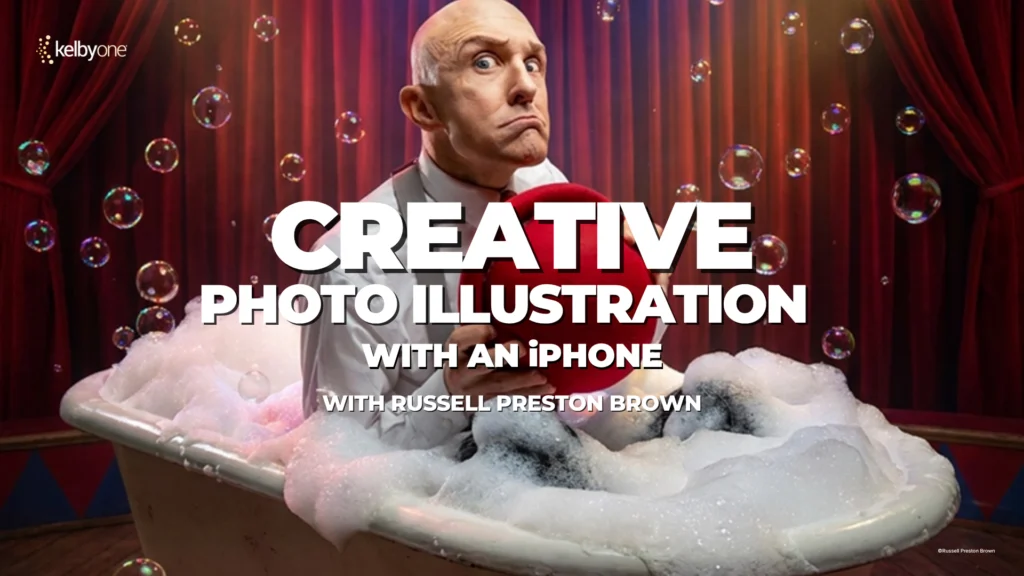
In an era defined by ubiquitous digital imagery and rapidly advancing technology, the fundamental principles of visual storytelling remain paramount. A groundbreaking new class from Adobe, led by the esteemed creative director Russell Preston Brown, is poised to redefine how aspiring and established artists approach photo illustration, demonstrating that sophisticated visual narratives can originate from remarkably accessible tools. This innovative course, which begins with the seemingly modest setup of an iPhone, a single continuous light source, and a tripod, culminates in highly refined digital artworks, leveraging the formidable capabilities of Adobe Lightroom, Photoshop, and the transformative power of generative artificial intelligence (AI) through Adobe Firefly and Generative Fill. The curriculum underscores a pivotal shift in the creative landscape: a strong foundational photograph, combined with imaginative post-processing, can transcend its original capture to become a completely distinct and compelling piece of art.
Democratizing Creativity: The iPhone as a Professional Tool
The class fundamentally challenges the long-held notion that professional-grade photography necessitates an expensive array of specialized equipment. Russell Preston Brown, a figure synonymous with demystifying complex creative processes for decades within the Adobe ecosystem, starts his instruction with an iPhone, specifically highlighting its capacity to capture 48-megapixel raw images. This choice is not merely a simplification; it is a strategic embrace of computational photography, a field that has seen exponential growth and sophistication in recent years. Modern smartphones, particularly premium models like the latest iPhones, integrate advanced sensor technology with powerful image processing algorithms, enabling them to capture a wealth of visual data previously reserved for high-end digital single-lens reflex (DSLR) or mirrorless cameras. The ability to shoot in raw format on a smartphone is a game-changer, providing photographers with maximum flexibility in post-production by preserving a wider dynamic range and color information, essential for detailed manipulation in software like Lightroom and Photoshop.
This approach reflects a broader trend towards the democratization of creative tools. As of 2023, global smartphone penetration exceeded 80%, with billions of devices equipped with increasingly capable cameras. This widespread availability has not only fostered a new generation of visual communicators but has also forced professional creative software developers to adapt, ensuring their platforms seamlessly integrate with mobile-first workflows. Brown’s class serves as a potent example of this evolution, illustrating that technical prowess and artistic vision, rather than sheer equipment cost, are the true determinants of creative output.
Mastering Light with Minimalist Gear
The core photographic segment of the class focuses on an essential yet often overlooked aspect of visual artistry: the deliberate manipulation of light. Brown employs a single continuous light source and a tripod to photograph professional bubbleologist Kirk Marsh, demonstrating how to achieve various classic lighting patterns—split, Rembrandt, loop, and butterfly—with remarkable precision. This minimalist setup is instructive, emphasizing that an understanding of light’s properties and its interaction with a subject is more critical than the quantity or complexity of lighting gear.
- Split Lighting: Characterized by half the face being lit and the other half in shadow, creating a dramatic and often mysterious effect.
- Rembrandt Lighting: Distinguished by a small triangle of light on the shadowed side of the face, typically under the eye, named after the Dutch master painter. It adds depth and dimension.
- Loop Lighting: A softer, more flattering light where the shadow of the nose creates a small loop that points towards the corner of the mouth, keeping both sides of the face well-lit.
- Butterfly Lighting: Named for the butterfly-shaped shadow created under the nose, this pattern uses a light source placed directly in front of and above the subject, often used for glamorous portraits.
The use of a tripod is equally crucial. In a single-light setup, precise placement of both the light and the camera is paramount for consistent and reproducible results. A tripod ensures stability, critical for sharp raw captures and for maintaining exact framing across multiple shots, which can be invaluable for compositing or ensuring uniformity in a series. By starting with these foundational lighting techniques, Brown instills in students a profound appreciation for how light shapes form, texture, and mood, skills that are transferable regardless of the camera system or post-production tools employed. Kirk Marsh, with his unique profession as a bubbleologist, offers a dynamic and visually rich subject. Bubbles introduce ephemeral, iridescent, and reflective elements that interact uniquely with light, providing complex and captivating textures that push the boundaries of photographic capture and subsequent digital enhancement.
The Transformative Power of AI in Post-Production
Where Brown’s class truly ventures into contemporary innovation is in the post-production phase, moving the captured photographs into Adobe Lightroom and Photoshop. This is where the "fun really starts," as the instructor notes, with the introduction of Adobe Firefly and Generative Fill. These generative AI tools represent a paradigm shift in photo manipulation, enabling artists to augment and transform images in ways that were previously either impossible, prohibitively time-consuming, or required advanced artistic skills beyond traditional photography.
Adobe Firefly, a family of creative generative AI models, powers features like Generative Fill within Photoshop. This technology allows users to seamlessly add content, extend images, or remove elements with simple text prompts. In the context of Brown’s class, students learn how to:
- Add Non-Existent Lighting: Imagine a scene captured with a single light source, but the artistic vision calls for a more complex interplay of light and shadow, perhaps a dramatic rim light or an ethereal glow from an unseen source. Generative Fill can intelligently "paint in" these additional lighting effects, matching the existing light, perspective, and texture of the image. This moves beyond simple dodging and burning, allowing for the creation of entirely new, photorealistic light sources and their corresponding effects, enhancing the narrative and emotional impact of the illustration.
- Create Elements for the Scene: This is perhaps one of the most revolutionary aspects. Without altering the original subject captured in camera, artists can use Generative Fill to expand the background, introduce new objects, or even change the entire environment. For instance, a plain studio backdrop can be transformed into a fantastical landscape, an urban street, or an abstract realm, all while maintaining seamless integration with the photographed subject. This empowers photographers to move beyond the confines of their shooting location, giving them unparalleled creative freedom to realize their imaginative concepts directly within their photographs.
The integration of these AI tools streamlines the creative workflow, shifting the artist’s focus from laborious manual editing to conceptualization and direction. Instead of spending hours meticulously cloning, painting, or compositing elements, creators can now articulate their vision through text prompts, allowing the AI to generate initial concepts that can then be refined. This not only accelerates the creative process but also opens up new avenues for experimentation and ideation.
Chronology of Creative Tool Evolution and Adobe’s Role
The evolution of creative tools, particularly in photography and digital art, provides essential context for understanding the significance of Brown’s new class.
- Early Digital Era (1990s-early 2000s): The advent of digital cameras began to challenge film photography. Adobe Photoshop, first released in 1990, quickly became the industry standard for image manipulation. Early versions offered powerful tools for retouching, compositing, and basic illustration, but required significant manual effort and technical skill.
- Rise of Non-Destructive Editing (2000s): The introduction of Adobe Lightroom in 2007 marked a pivotal moment, offering photographers a streamlined, non-destructive workflow for organizing, editing, and processing large volumes of images. This complemented Photoshop by handling the initial stages of photographic enhancement.
- Mobile Photography Revolution (2010s): The launch of the iPhone in 2007, and subsequent improvements in smartphone cameras, democratized photography like never before. Adobe responded by developing mobile versions of its apps, extending professional editing capabilities to handheld devices.
- Cloud Integration (2010s-present): Adobe Creative Cloud, launched in 2012, transformed software distribution into a subscription model, ensuring users always had access to the latest versions and cloud-based sync across devices. This fostered collaborative workflows and constant feature updates.
- AI Integration (2020s): Building on years of research in machine learning and computer vision (under the Adobe Sensei umbrella), the company began integrating generative AI capabilities. The public release of Firefly and Generative Fill in 2023 marked a significant leap, fundamentally altering the possibilities for image creation and manipulation.
Russell Preston Brown has been a consistent presence throughout much of this timeline, known for his engaging teaching style and ability to break down complex Photoshop techniques into accessible lessons. His latest class is a testament to his commitment to staying at the forefront of creative technology, guiding artists through the newest frontiers of digital artistry.
Statements and Implications for the Creative Industry
While specific statements from Adobe or Russell Preston Brown beyond the class description are not provided, we can infer their perspectives based on Adobe’s strategic direction and Brown’s public persona:
An Adobe spokesperson might emphasize: "Adobe is continuously committed to empowering creators at every level by integrating cutting-edge technology into intuitive workflows. Russell Preston Brown’s new class exemplifies this mission, showcasing how generative AI, combined with fundamental photographic principles, unlocks unprecedented creative potential and makes sophisticated photo illustration accessible to a wider audience. This is about augmenting human creativity, not replacing it."
Russell Preston Brown, known for his enthusiastic and practical approach, would likely articulate: "My passion has always been to show artists that the most powerful tools are imagination and a deep understanding of core principles. This class demonstrates that you don’t need a massive budget or a complex studio to create breathtaking photo illustrations. With just an iPhone and the incredible power of Adobe’s AI tools like Generative Fill, the boundaries of what’s possible are truly limitless. It’s about transforming what you see into what you envision."
Kirk Marsh, the professional bubbleologist and model, might reflect: "It was a truly fascinating experience to be part of a shoot that blended traditional photography with such advanced digital transformation. Seeing how the bubbles, light, and my performance could be taken from a simple capture and reimagined into entirely new artistic contexts through Russell’s vision and the Adobe tools was inspiring. It highlights the collaborative magic that happens when artistry meets technology."
Broader Impact and Future Outlook
The implications of this class and the underlying technological advancements are far-reaching for the creative industry:
- Accessibility and Empowerment: By demonstrating professional results with accessible tools, the class empowers a broader demographic of creators. Students, hobbyists, and professionals with limited budgets can now aspire to produce high-quality photo illustrations, fostering greater diversity in artistic output.
- Shift in Creative Skillset: The emphasis is shifting from purely technical execution (e.g., precise masking, manual cloning) to conceptualization, artistic direction, and effective prompt engineering for AI tools. Artists will need to develop a keen eye for what makes a good AI-generated image and how to guide the AI to achieve their specific vision.
- Enhanced Efficiency and Experimentation: Generative AI significantly reduces the time required for complex image manipulation, allowing artists to iterate faster, experiment with more ideas, and focus on the narrative and aesthetic aspects of their work. This can lead to more innovative and diverse creative outputs.
- Ethical Considerations and Authenticity: While not explicitly addressed in the class description, the rise of generative AI inevitably brings discussions about authenticity, authorship, and the ethical use of AI in creative works. Adobe has been at the forefront of addressing these concerns with initiatives like Content Credentials, which provide transparency about how digital content is created and modified. The class implicitly encourages responsible use by building on a strong photographic foundation rather than generating images from scratch.
- Future of Education in Creative Arts: This course signals a crucial trend in creative education: the need for curricula to rapidly adapt and integrate new technologies. Learning foundational principles alongside cutting-edge AI tools will be essential for preparing the next generation of artists and designers.
Russell Preston Brown’s new class is more than just a tutorial; it is a declaration of the new possibilities in digital art. It serves as a compelling example of how merging strong photographic fundamentals with the transformative power of generative AI can elevate simple captures into extraordinary photo illustrations. For those eager to explore these new frontiers, the availability of two free lessons from the course provides an accessible entry point into this evolving landscape of creative expression, inviting them to witness firsthand how imagination, an iPhone, and Adobe’s advanced tools can unlock unprecedented artistic freedom.