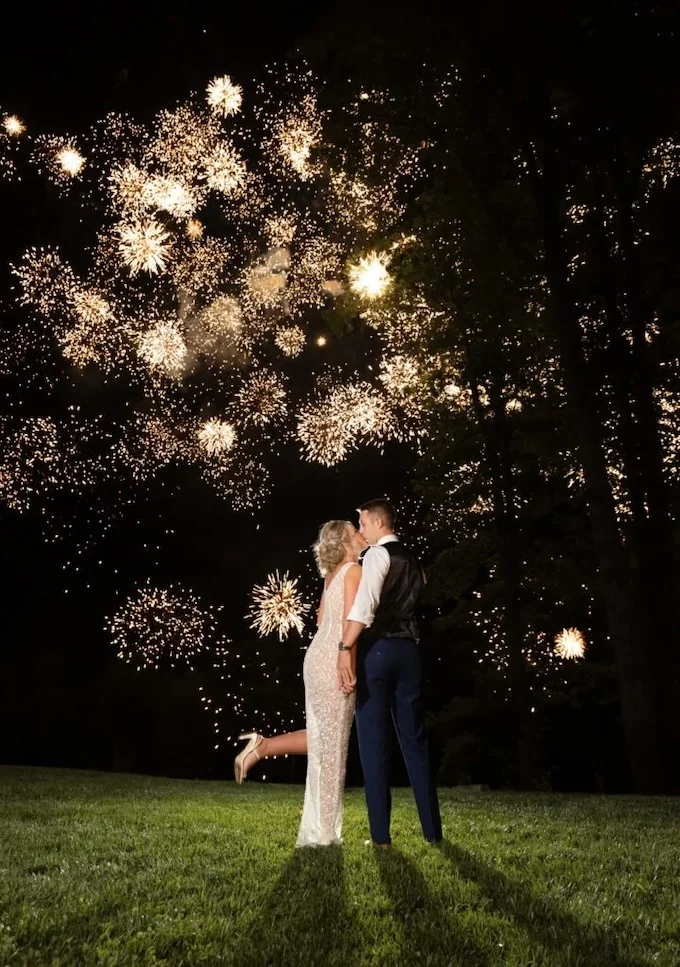
Fireworks are no longer confined to the spectacle of the Fourth of July. Their dazzling displays have become a cherished element at theme parks, sporting events, and, perhaps surprisingly, at the heart of many weddings. For photographers, these pyrotechnic wonders offer an unparalleled opportunity to create truly epic couples portraits, imbuing them with a unique and unforgettable backdrop. However, achieving such breathtaking shots requires a blend of technical expertise and creative planning, going beyond the standard considerations for capturing intimate portraits. This guide delves into the essential tips and innovative ideas for photographing couples amidst a fireworks display, ensuring your images explode with the same flash and excitement as a grand finale.

The fleeting nature of fireworks, often lasting a mere five to eight minutes, demands efficiency and meticulous preparation. Success hinges on having a clear plan, knowing your shooting location intimately, and executing your technical setup with precision. The following strategies will equip photographers to harness the power of fireworks for truly memorable couples sessions.
Strategic Location Scouting: The Foundation of a Spectacular Shot
When a wedding timeline includes a fireworks display, photographers must prioritize identifying the optimal vantage point as early as possible. This proactive approach allows for thorough location scouting, ensuring the best possible angle for capturing the couple against the celestial canvas. Key allies in this information-gathering process include the couple themselves, the wedding planner, and the venue management. Their insights can pinpoint the precise launch site and projected trajectory of the fireworks.

The definition of the "best" angle is subjective and depends on the desired photographic outcome. An expansive, open area might be ideal for a wide shot that emphasizes the vastness of the sky filled with fireworks, with the couple as contemplative observers. Conversely, a location offering natural or architectural foreground elements, such as trees or buildings, can be leveraged to frame the composition, adding depth and context. The art of composition is paramount when integrating fireworks into couples portraits. Therefore, dedicating ample time to scouting potential shooting spots is not merely a suggestion but a critical step in the planning process.
Mastering Dynamic Range: RAW Files and Precision Exposure Settings
The challenge of photographing fireworks lies in the extreme lighting conditions. The ambient light is invariably low, while the brilliance of the fireworks themselves poses a significant risk of overexposure, potentially blowing out highlights if exposure settings are not carefully managed. To maximize the chances of retaining crucial detail in both the dark shadows of the night and the bright bursts of light, photographers must prioritize capturing RAW files and meticulously adjusting exposure settings to achieve the widest possible dynamic range.

RAW Files vs. JPEG: The Unseen Advantage
The decision to shoot in RAW format is fundamental when dealing with the high-contrast environment of fireworks. RAW files capture a wealth of image data, providing photographers with significantly more flexibility during post-production. This expanded latitude allows for more effective recovery of details in both the shadow and highlight regions of the image. In contrast, compressed JPEG files, while convenient for immediate use, drastically reduce the dynamic range of the captured information, making it considerably more difficult to salvage details lost to over or underexposure.
Baseline Exposure Settings for Fireworks Portraits
A recommended starting point for exposure settings when photographing couples with fireworks involves a delicate balance:

- Aperture (f-stop): A mid-range aperture, such as f/8, is often a good choice. This setting offers a sufficient depth of field to keep both the couple and a reasonable portion of the background in focus, while also providing a good balance for light gathering.
- Shutter Speed: This is where experimentation is key. A shutter speed in the range of 5 to 10 seconds is generally effective for capturing the trails and luminosity of fireworks. This longer exposure allows the camera sensor to gather enough light from the ambient surroundings and the fireworks themselves. However, it necessitates the use of a tripod to prevent camera shake. For capturing the couple’s details without significant motion blur from the fireworks, shorter exposures (e.g., 2-5 seconds) might be considered, though they will reveal less of the firework’s ephemeral beauty.
- ISO: Keeping the ISO as low as possible (e.g., ISO 100-400) is advisable to minimize digital noise. However, if the ambient light is extremely dim and a longer exposure is not feasible without overexposing the fireworks, a slightly higher ISO might be necessary. Careful monitoring of the histogram is crucial here.
The Histogram: Your Visual Guide to Exposure
Beyond these baseline settings, photographers must become intimately familiar with their camera’s histogram. This graphical representation of tonal distribution is invaluable for preventing clipping in either the shadows or highlights. An ideal histogram for fireworks portraits will show a distribution of data across the spectrum, avoiding excessive spikes on the far right (indicating blown-out highlights) or the far left (indicating crushed shadows). The goal is to capture as much detail as possible within the camera’s capabilities.

Harmonizing White Balance: Achieving a Cohesive Look
Establishing the correct white balance is crucial for creating a visually cohesive image. When photographing fireworks, the "Tungsten" white balance setting often serves as an excellent starting point. This setting is designed to counteract the warm, orange hue often associated with artificial lighting. If external lights are being used to illuminate the couple, such as strobes or continuous lights, incorporating a CTO (Color Temperature Orange) gel onto the light source and setting the camera’s white balance to approximately 3200 Kelvin can help synchronize the light temperature. Ultimately, the precise white balance setting should be adjusted to align with the photographer’s creative vision for the final portraits.
Selecting the Right Lens: Crafting the Narrative
The choice of lens for fireworks couples portraits is dictated by several compositional considerations. The desired field of view will determine whether a wide-angle or a telephoto lens is more appropriate. For couples portraits, maintaining communication and a sense of connection between the photographer and the subjects is paramount. Using a very wide zoom lens can sometimes make it challenging to effectively communicate with the couple, especially if they are positioned at a distance.

Conversely, a zoom lens can be advantageous for tighter shots, where it can effectively compress the scene and make the fireworks appear larger and more dominant in the frame. On the other hand, a wide-angle lens excels at capturing the grandeur of the fireworks alongside the couple, ensuring that the full spectacle is incorporated into the image. It is also worth noting that photographers can opt for a wider shot and subsequently crop the image in post-production if necessary, offering a degree of flexibility.
Embracing Long Exposure: Painting with Light
To effectively capture the ephemeral beauty of fireworks, photographers will invariably need to employ slower shutter speeds. The longer the exposure, the more light the sensor can gather, resulting in a more pronounced depiction of the fireworks’ luminous trails and bursts. Exposures ranging from five to ten seconds are often ideal, as they allow the light to paint across the sky, creating dynamic streaks. Shorter exposures, typically in the two-to-five-second range, will reveal less detail in the fireworks but can be useful for freezing the motion of the couple.

Crucially, long exposures demand absolute camera stability. The use of a sturdy tripod is non-negotiable to eliminate any hint of camera shake. Further mitigating unwanted motion can be achieved by utilizing a cable release, a remote control, or the camera’s self-timer function, with a two-second delay often proving sufficient.
Illuminating the Subjects: The Art of Subject Lighting
While the primary focus of fireworks photography is often the pyrotechnics themselves, in the context of couples portraits, the subjects must be intentionally and artfully lit. The advantage here is that, with sufficient time before the fireworks commence, photographers can meticulously set up their lighting and dial in flash power and exposure settings to achieve the desired balance between ambient light and artificial illumination.

The initial approach to lighting the couple should mirror standard portrait practices. The goal is to establish a harmonious balance between the light illuminating the subjects and the ambient light from the fireworks. A common and effective setup involves positioning the light source at approximately a 45-degree angle relative to the couple and the camera, with a slightly top-down orientation. Adding a backlight can enhance the separation of the subjects from the background, defining their silhouettes. Alternatively, using a snoot or grid can help control light spill, focusing the illumination precisely on the couple. The specifics of the lighting setup will ultimately be guided by the photographer’s creative vision and artistic direction.
The Precision of Manual Focus
Autofocus systems can often struggle in low-light conditions and when faced with rapidly moving subjects like fireworks. Therefore, switching the lens to manual focus is a critical step. If the camera offers a live view function, it can be invaluable for precisely focusing on the couple. It’s advisable to establish focus on the couple before the fireworks begin, potentially using autofocus for this initial setup, and then diligently confirming that manual focus is engaged and locked for the duration of the shoot.

The Art of the Composite: Layering for Perfection
For photographers seeking ultimate control over the final image, creating a composite is a powerful technique. This method involves combining multiple exposures to achieve a flawless result. The cornerstone of this approach is the consistent use of a tripod. The process begins with capturing a perfectly exposed and posed portrait of the couple. Subsequently, multiple individual shots of the fireworks are taken.
Post-Processing with Lightroom
Once the shooting is complete, the images are imported into photo editing software, such as Adobe Lightroom. It is essential to apply identical editing adjustments to all the photographs intended for the composite. A streamlined workflow involves editing the primary couple portrait first and then utilizing Lightroom’s batch editing capabilities to apply those same modifications to the subsequent fireworks exposures. This ensures color and tonal consistency across all layers.

Assembling the Masterpiece in Photoshop
The edited images are then transferred to Adobe Photoshop for the compositing process. The images should be stacked within a single document. By setting the blend mode of the upper layers to "Lighten," the brightest pixels—corresponding to the fireworks—will become visible. Layer masks are then employed to meticulously edit out any unwanted elements from each layer, seamlessly integrating the fireworks into the couple’s portrait.
Capturing the Sparkle: Photographing Sparklers at Weddings
While not technically fireworks, sparklers are a popular and often integral part of wedding celebrations, particularly during grand exits. Their inclusion in couples sessions warrants specific photographic considerations.

The Advantage of Longer Sparklers
When recommending sparklers for wedding photos, photographers should advocate for the use of longer sparklers, such as the 36-inch variety, over their shorter counterparts (e.g., 10-inch). The extended burn time of larger sparklers provides a more generous window for posing the couple and capturing a greater number of distinct photographs, enhancing the efficiency of the session.
Adjusting for Low Light: ISO and Aperture
Sparklers, while visually striking, are not powerful light sources. This necessitates either supplementing with an external light source or adjusting camera settings to compensate for the low ambient light. The movement of the subjects also plays a role in setting exposure. Generally, photographers will need to increase the ISO and utilize a wider aperture to achieve a brighter initial exposure.

Recommended Settings for Sparkler Photography:
-
Moving Subjects:

- Aperture: f/2.8 – f/4 (for a shallow depth of field and good light gathering)
- Shutter Speed: 1/100 sec – 1/200 sec (to freeze motion)
- ISO: 400 – 1600 (or higher, depending on ambient light and desired brightness)
-
Static Subjects:
- Aperture: f/5.6 – f/8 (for a greater depth of field)
- Shutter Speed: 1 second – 5 seconds (allows for light trails and more ambient capture)
- ISO: 100 – 800 (adjust as needed for brightness)
It is essential to adjust these settings based on the specific lighting conditions and the desired effect.

Safety First: The Indispensable Safety Bucket
When working with sparklers, safety must be the paramount concern. As fire is involved, a designated and readily accessible safety bucket filled with water is indispensable. This provides a secure and immediate place to extinguish used sparklers, mitigating any potential fire hazards.
Conclusion: Igniting Unforgettable Memories
The strategic integration of fireworks and sparklers into couples portraits offers a unique pathway to capturing truly spectacular and emotionally resonant images. By meticulously planning locations, mastering technical settings, and embracing creative post-processing techniques, photographers can transform fleeting moments of pyrotechnic brilliance into enduring visual narratives. The following inspirational images, provided by talented photographers, serve as a testament to the breathtaking possibilities that arise when love meets the luminous explosion of fireworks.

The ongoing evolution of wedding photography consistently seeks to push creative boundaries, and the incorporation of dynamic elements like fireworks represents a significant trend. As technology advances and photographers refine their techniques, we can anticipate even more innovative and awe-inspiring couples portraits emerging from these dazzling displays. The ability to blend the intimacy of a couple’s bond with the explosive beauty of fireworks is a testament to the power of photography to capture moments that are both deeply personal and universally spectacular.