Fireworks are no longer confined to the jubilant celebrations of the Fourth of July. Their dazzling spectacle now graces the skies at theme parks, electrifies sporting events, and, perhaps most surprisingly to some, illuminates the most intimate moments of weddings. For photographers, this vibrant pyrotechnic display presents an unparalleled opportunity to craft truly epic couples portraits, set against a backdrop of unparalleled brilliance and excitement. However, achieving these breathtaking shots requires more than just pointing a camera at the sky; it demands a strategic approach, blending the art of portraiture with the technicalities of capturing ephemeral light. This guide delves into the essential tips and creative ideas for photographers aiming to capture the flash and fervor of a grand finale within their couples’ sessions, transforming a fleeting moment into a lasting masterpiece.

The fleeting nature of fireworks—often lasting a mere five to eight minutes, if not shorter—underscores the critical need for efficiency and meticulous planning. To ensure success, photographers must be prepared, knowing precisely where to position themselves and what actions to take when the moment arrives. This proactive approach is paramount to harnessing the dynamic spectacle of fireworks and integrating it seamlessly into romantic couples’ portraits.
Strategic Location Scouting: The Foundation of a Stunning Shot
The initial and arguably most crucial step in photographing fireworks for a couples’ session is to scout the ideal location. If a wedding or engagement shoot is slated to include a fireworks display, photographers should proactively seek information regarding the planned ignition points. This intelligence can be gathered from various sources, including the couple themselves, their wedding planner, or the venue’s event coordinator. Understanding the trajectory and approximate location of the fireworks will allow for precise positioning to capture the most impactful compositions.

The definition of the "best" angle is subjective and depends entirely on the photographer’s artistic vision. Some may seek a wide-open vista, aiming to capture the fireworks filling the entire sky while the couple gazes on, creating a sense of awe and scale. Others might opt for locations offering foreground elements—such as silhouetted trees, architectural structures, or natural landscapes—to frame the shot, adding depth and context. Effective framing is paramount to successfully integrating fireworks into couples’ portraits, making scouting an indispensable part of the pre-shoot checklist. A well-chosen vantage point can elevate a good photograph to an extraordinary one, ensuring the couple remains the focal point while the fireworks provide a spectacular, dynamic canvas.
Maximizing Dynamic Range: The Technical Blueprint for Success
Photographing fireworks inherently presents a challenging lighting scenario. The ambient light is typically low, creating a stark contrast with the intense, often overwhelming brightness of the fireworks themselves. Without careful consideration of exposure settings, these brilliant bursts can easily result in blown-out highlights, losing all discernible detail. To maximize the chances of retaining crucial details in both the couple’s portraits and the explosive pyrotechnics, it is imperative to shoot in RAW format and meticulously dial in exposure settings to achieve the widest possible dynamic range.

RAW Files vs. JPEG: The Unseen Advantage
The choice between shooting in RAW or JPEG format is a fundamental decision that significantly impacts post-production capabilities. RAW files capture the unprocessed data directly from the camera’s sensor, offering unparalleled flexibility in post-processing. This means photographers have a much greater latitude to recover details in both the deepest shadows and the brightest highlights without introducing artifacts or degrading image quality. In contrast, JPEG files are compressed, meaning that much of the subtle tonal information is discarded during the conversion process. Opting for RAW files is essential when dealing with the extreme contrast inherent in fireworks photography, ensuring that delicate details in the couple’s attire and the intricate patterns of the explosions are preserved.
Exposure Settings: A Starting Point for Brilliance
While specific settings can vary based on ambient light conditions, camera capabilities, and the intensity of the fireworks, a general starting point for exposure can be established to balance the scene. A common recommendation is to set the aperture to f/8 or f/11 for a good depth of field, ensuring both the couple and the fireworks are acceptably sharp. The ISO should be kept as low as possible, typically between 100 and 400, to minimize digital noise, though this may need to be increased slightly in very dark conditions. The shutter speed is the most critical element for capturing fireworks; a range of 5 to 10 seconds is often ideal for capturing the trails of light and the full bloom of the explosions. However, shorter exposures (2-5 seconds) can also be effective for capturing sharper, more defined bursts.

A crucial tool for monitoring exposure is the camera’s histogram. Photographers should constantly refer to this graph to ensure the data isn’t heavily clustered on the far right side, which indicates blown-out highlights. Conversely, an excessive amount of data clustered on the far left signifies underexposed shadows. The goal is to achieve a balanced histogram that captures the full spectrum of light without clipping either the highlights or the shadows. This careful management of exposure is the bedrock of successfully photographing fireworks alongside human subjects.
Mastering White Balance: Achieving Harmonious Color
Color accuracy in challenging lighting conditions can be a significant hurdle. When photographing fireworks, which emit a wide spectrum of colors, managing white balance is key to achieving natural-looking skin tones for the couple while also rendering the fireworks’ vibrant hues accurately. A good starting point for white balance in low-light conditions, especially when fireworks are the primary light source, is often the "Tungsten" preset or a Kelvin setting around 3200K. This setting typically compensates for the warm tones of artificial lights and can help neutralize the often cooler, greenish cast that can occur when shooting in very low light with mixed light sources.

If artificial lighting is used to illuminate the couple, such as strobes or continuous lights, it becomes essential to balance the color temperature of these lights with the ambient light from the fireworks. This can often be achieved by using color temperature orange (CTO) gels on the artificial light sources and then adjusting the camera’s white balance setting to approximately 3200 Kelvin. Fine-tuning the white balance in post-production, especially when shooting in RAW, offers the most control to achieve the desired artistic vision, ensuring that the couple appears natural and the fireworks retain their dazzling chromatic intensity.
Lens Selection: Framing the Spectacle
The choice of lens plays a pivotal role in shaping the composition and storytelling of firework couples’ portraits. The desired field of view—whether wide or tight—will heavily influence this decision. For couples’ portraits, maintaining clear communication with the subjects is vital. Using an ultra-wide-angle lens, while capable of capturing expansive scenes, can sometimes make it challenging to interact effectively with the couple, especially if they are positioned at a distance.

However, a zoom lens can offer versatility. When set to a wider focal length, it can capture a broader scene, incorporating the environment and the fireworks. Conversely, zooming in can compress the perspective, making the fireworks appear larger and more dominant in the frame, which can create a dramatic effect. A prime wide-angle lens (e.g., 24mm or 35mm) is often a favored choice as it strikes a balance between capturing a significant portion of the scene and allowing for closer interaction with the couple. It’s also worth remembering that while shooting wide and then cropping in post-production is a viable strategy, it’s generally more advantageous to nail the composition in-camera whenever possible. The goal is to create a harmonious blend where the couple is the clear subject, and the fireworks enhance, rather than overwhelm, the portrait.
Embracing Long Exposures: Capturing the Dance of Light
To effectively capture the mesmerizing trails and expansive blooms of fireworks, photographers will almost certainly need to employ slower shutter speeds. Long exposures are the key to allowing the camera’s sensor to gather enough light over a period of time to render the fireworks as streaks and bursts of color across the night sky. Exposures ranging from five to ten seconds are often ideal, as they provide ample time for the light to trace its path, creating a sense of motion and dynamism. Shorter exposures, perhaps in the two-to-five-second range, can capture more defined, individual explosions but will show less of the sweeping light trails.

Crucially, any photography involving long exposures necessitates the use of a sturdy tripod to eliminate camera shake. Even the slightest tremor can result in a blurry, unusable image. To further minimize motion introduced by pressing the shutter button, photographers can utilize a cable release, a remote control, or the camera’s built-in self-timer (a two-second delay is usually sufficient). These tools ensure that the camera remains perfectly still from the moment the exposure begins until it concludes, resulting in sharp, professional-quality images that showcase the full grandeur of the fireworks.
Illuminating Your Subjects: The Art of Balancing Light
Traditionally, when photographing fireworks, the primary focus is solely on the pyrotechnic display, with any human subjects often left in darkness or cropped out entirely. However, for couples’ portraits, illuminating the subjects intentionally and skillfully is paramount. The good news is that with careful planning and when time permits before the fireworks commence, photographers can meticulously set up their lighting, fine-tuning flash power and exposure settings to achieve a harmonious balance between the artificial light on the couple and the ambient light of the fireworks.

The foundational principle is to light the couple as if fireworks were not present, ensuring their portraits are well-exposed and flattering. This typically involves positioning the primary light source—whether a strobe or a continuous light—at a roughly 45-degree angle to the couple, relative to the camera, and at a slightly elevated, top-down position. This creates natural-looking dimensionality. To further define the subjects against the dark background, a backlight can be introduced. Alternatively, modifiers like snoots or grids can be employed to control light spill, focusing the illumination precisely on the couple and preventing unwanted light from affecting the background or the fireworks. The specific lighting setup will ultimately be dictated by the photographer’s creative direction and the desired mood of the portrait.
The Precision of Manual Focus: Ensuring Sharpness
Autofocus systems can often struggle in the low-light, high-contrast environment presented by fireworks. The rapid movement and intense brightness can cause autofocus to hunt erratically, leading to missed shots and out-of-focus subjects. To circumvent this, photographers must switch their lenses to manual focus. If the camera offers a Live View function, this can be invaluable for precisely focusing on the couple. It’s advisable to achieve initial focus on the couple using autofocus before the fireworks begin, then carefully switch to manual focus and lock it in place. This ensures that the couple remains tack-sharp throughout the entire exposure, even as the dynamic light show unfolds behind them.

The Art of the Composite: Building a Masterpiece in Post-Production
For photographers seeking ultimate control over the final image, creating a composite is a powerful technique. This method involves combining separate exposures of the couple and the fireworks into a single, cohesive image. The cornerstone of this approach is the consistent use of a tripod to maintain precise camera positioning across all exposures.
The process begins by capturing a perfectly exposed and posed portrait of the couple, ensuring their lighting is ideal and their expressions are captured as desired. Following this, multiple exposures of the fireworks are captured independently. This allows for the selection of the most visually striking fireworks to be incorporated into the final composition.

Streamlining with Lightroom
The post-production workflow for composites typically begins in photo editing software such as Adobe Lightroom. It is essential to edit the batch of images intended for the composite in a consistent manner to ensure a seamless blend. A highly efficient method is to first edit the portrait of the couple to perfection, meticulously adjusting exposure, color, and contrast. Once satisfied, these edits can be applied as a batch to all the subsequent fireworks exposures, ensuring a uniform look and feel across all elements of the composite.
Assembling in Photoshop
The next stage involves moving the edited images into Adobe Photoshop. Here, all the selected images—the couple’s portrait and the various fireworks shots—are stacked into a single document. The blend mode of the fireworks layers is then set to "Lighten." This critical setting ensures that only the brightest pixels (the fireworks) from the top layers are visible, effectively layering the explosions over the couple’s portrait. Layer masks are then used to selectively erase any unwanted elements from each layer, allowing the photographer to precisely control which fireworks appear and how they are integrated with the couple’s portrait. This meticulous process allows for the creation of an image that is both technically sound and artistically compelling, capturing the magic of fireworks in a way that might be impossible in a single exposure.

Beyond Fireworks: Photographing Sparklers for Dynamic Exits
While not technically large-scale fireworks, sparklers are a popular and often integral part of wedding celebrations, particularly for dramatic grand exits. Their unique visual appeal and accessibility make them a fantastic element for couples’ portraits. Photographers can leverage these smaller pyrotechnics to create engaging and memorable images.
The Advantage of Larger Sparklers
When recommending sparklers for wedding photos, photographers should strongly encourage the couple to opt for larger variants, such as the 36-inch varieties, over their smaller 10-inch counterparts. The extended burn time of larger sparklers provides a significantly greater window of opportunity for posing the couple, capturing multiple shots, and ensuring everyone is well-positioned and their expressions are captured effectively. This extended duration is invaluable for achieving dynamic and well-composed images.

Boosting ISO and Wide Apertures for Sparkler Magic
Sparklers, as a light source, are relatively dim and can be challenging to work with. To compensate, photographers often need to increase their ISO sensitivity and utilize a wide aperture. Boosting the ISO allows the camera sensor to capture more light in a shorter period, which is beneficial for freezing motion and achieving a brighter exposure. A wider aperture (a lower f-number like f/1.8 or f/2.8) also allows more light to enter the lens, contributing to a brighter image and often creating a pleasing bokeh effect in the background.
The specific settings will depend on whether the subjects are moving or static. For moving subjects, such as during a grand exit, faster shutter speeds are necessary to freeze motion, necessitating higher ISO and wider apertures. For static subjects, where the couple is posing, slower shutter speeds can be used to allow more of the sparkler’s light to register, potentially creating beautiful light trails.

-
For Moving Subjects (e.g., Grand Exits):
- Aperture: f/1.8 – f/2.8 (or as wide as possible)
- ISO: 800 – 3200 (or higher, depending on ambient light and camera capability)
- Shutter Speed: 1/60s – 1/200s (to freeze motion)
-
For Static Subjects (e.g., Posed Portraits):

- Aperture: f/2.8 – f/5.6 (for good depth of field)
- ISO: 400 – 1600 (adjust based on desired brightness)
- Shutter Speed: 1s – 5s (to capture light trails and motion)
These settings serve as a starting point and should be adjusted based on the specific lighting conditions and the desired creative outcome.
Safety First: The Essential Water Bucket
When working with any form of pyrotechnics, safety must be the absolute priority. Sparklers, by their nature, involve open flames and hot embers. Therefore, it is imperative to have a large bucket of water readily accessible at all times. This bucket serves as a safe and convenient place to extinguish used sparklers, preventing any potential fire hazards and ensuring the safety of the couple, the wedding party, and the venue. This simple precaution is non-negotiable for responsible firework and sparkler photography.

Conclusion: Crafting Unforgettable Moments
Photographing fireworks and sparklers for couples’ portraits offers a unique avenue for photographers to inject unparalleled excitement and visual drama into their work. By meticulously planning, understanding the technical nuances of exposure and lighting, and embracing creative post-production techniques, photographers can transform fleeting moments of pyrotechnic splendor into timeless, breathtaking portraits. The images captured under a sky ablaze with color become not just photographs, but enduring testaments to love, celebration, and the magic of shared experiences.
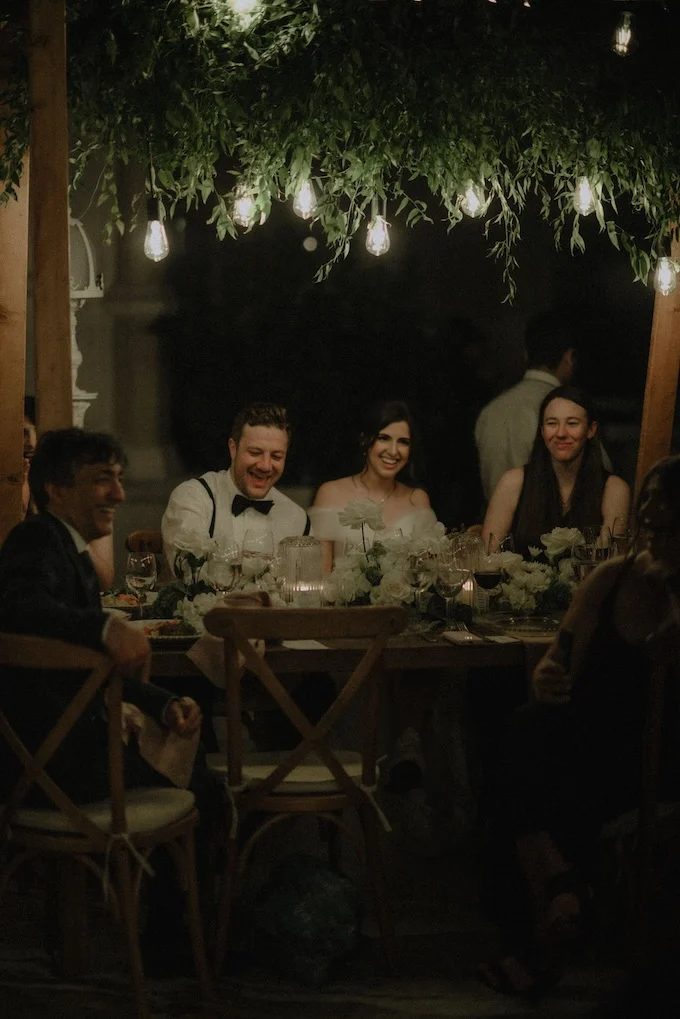
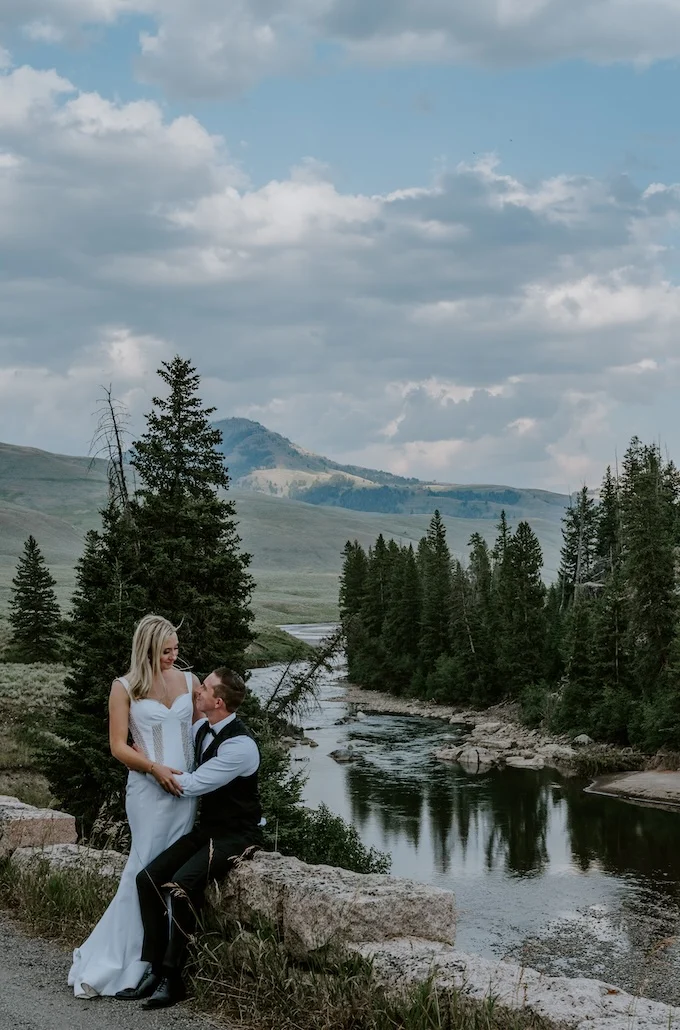
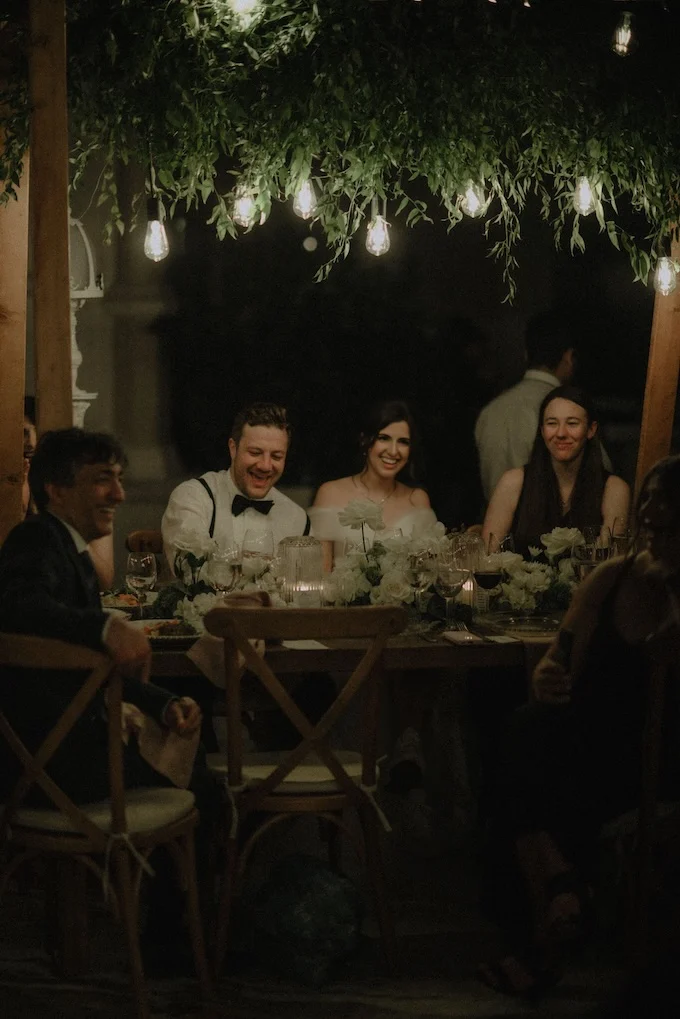
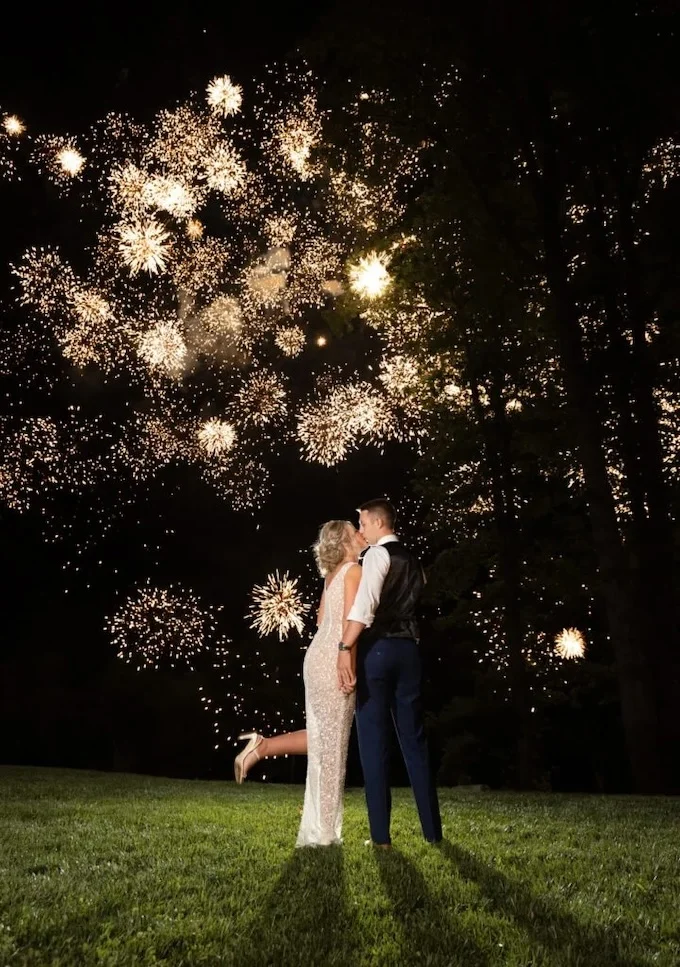
The gallery of inspirational images provided showcases the diverse and spectacular results achievable when these techniques are skillfully applied. From grand, sweeping vistas of fireworks illuminating a couple against a darkened landscape to intimate portraits where the glow of sparklers frames a tender embrace, the possibilities are as boundless as the night sky itself. These visual examples serve as a testament to the power of combining technical expertise with artistic vision, demonstrating how fireworks can elevate a couples’ portrait session from the ordinary to the extraordinary. The key lies in preparation, precision, and a passion for capturing those moments that truly sparkle.