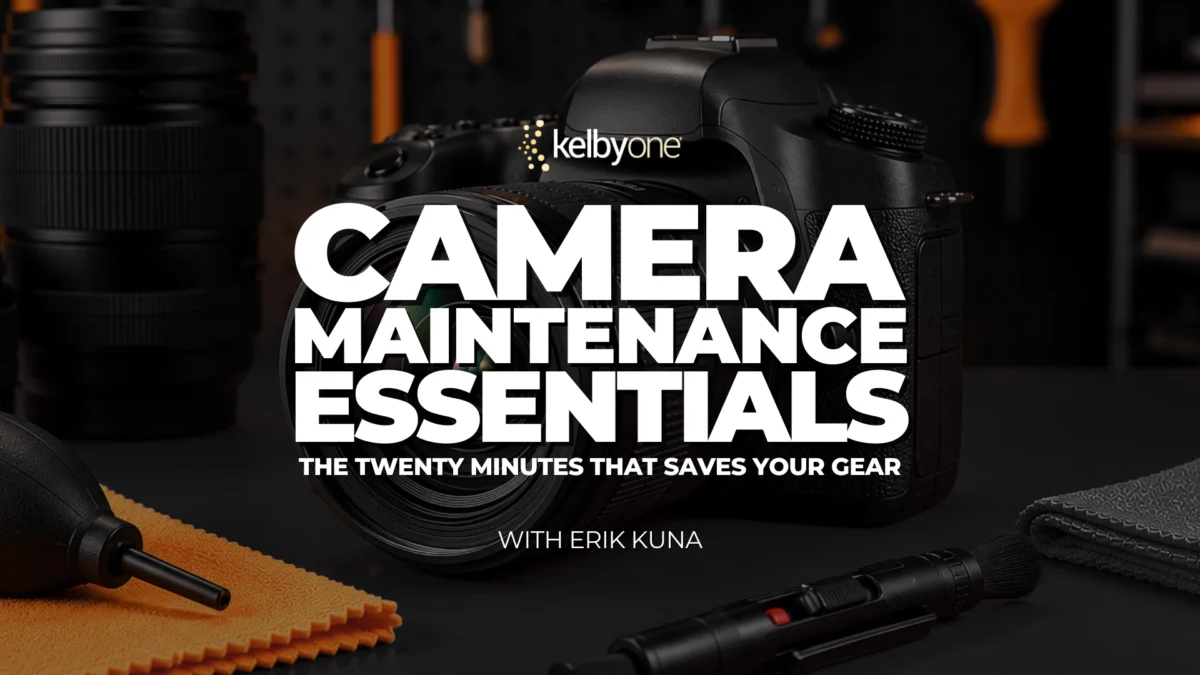
The digital photography landscape, while offering unparalleled creative freedom, presents a unique set of challenges regarding equipment upkeep, a reality often overlooked until performance degradation or image artifacts become undeniable. Neglecting proper camera maintenance can lead to premature wear, costly repairs, and ultimately, a shortened lifespan for high-value photographic gear. Recognizing this prevalent issue within the global photography community, KelbyOne, a leading online platform for photography and Photoshop education, has unveiled a new, highly anticipated course titled "Camera Maintenance Essentials: The Twenty Minutes That Saves Your Gear." This comprehensive program, led by acclaimed photographer and educator Erik Kuna, aims to equip photographers of all levels with the knowledge and practical skills necessary to safeguard their investments and maintain optimal image quality.
The Unseen Threat: Why Proactive Camera Maintenance is Imperative
In the demanding world of photography, whether professional or amateur, equipment reliability is paramount. Dust, moisture, and general wear and tear are constant adversaries to delicate camera components. Sensor dust, perhaps the most common and frustrating issue, manifests as unsightly spots or smudges on images, particularly visible in shots with smaller apertures or clean, uniform backgrounds like skies. While post-processing can sometimes mitigate these blemishes, it is a time-consuming workaround and not a solution to the root cause. Beyond sensor dust, lenses can accumulate grime, fingerprints, and even develop fungus in humid conditions, leading to decreased sharpness, contrast, and overall image degradation. Mechanical parts, such as shutter mechanisms and aperture blades, can become sluggish or fail entirely if not properly cared for. The financial implications of neglecting maintenance are substantial; professional cleaning services or component replacements can easily cost hundreds of dollars, often rivaling the price of entry-level equipment or significant portions of a new lens. Moreover, unexpected gear failure during a critical shoot can result in lost opportunities and reputational damage for professionals. Industry reports frequently highlight that a significant percentage of camera repairs could be avoided with regular, preventative maintenance, underscoring the economic and practical value of proper care.
Erik Kuna: A Master of the Craft and Conservation
At the heart of KelbyOne’s new maintenance curriculum is Erik Kuna, a photographer whose career spans over 15 years, marked by extensive experience shooting in some of the most challenging and unforgiving environments imaginable. From the dusty, arid landscapes to humid, tropical settings, and the unpredictable conditions of live events, Kuna has accumulated a wealth of practical knowledge regarding equipment resilience and care. His hands-on experience has forged a deep understanding of how various environmental factors impact camera performance and longevity.
Kuna’s credentials extend beyond mere field experience; he has personally performed over 1,000 sensor cleanings throughout his career, a testament to his meticulous approach and profound understanding of camera internals. Crucially, he boasts an impeccable record, having achieved this without causing damage to a single sensor – a feat that instills significant confidence in his instructional capabilities. This remarkable safety record is particularly relevant given the delicate nature of camera sensors, where even minor mishandling can result in permanent and costly damage. His expertise is not merely theoretical; it is built upon years of practical application and problem-solving in real-world scenarios, making him an ideal instructor for such a critical and often intimidating subject. Kuna’s role as an educator within the KelbyOne ecosystem further solidifies his position as a trusted authority, enabling him to translate complex technical procedures into accessible, actionable steps for a diverse audience.
The KelbyOne Platform: A Hub for Photographic Education
KelbyOne has established itself as a premier online educational platform, offering a vast library of courses covering photography, Photoshop, and Lightroom. Founded by Scott Kelby, a prominent figure in the photography and digital imaging world, the platform is renowned for its high-quality instruction, practical approach, and user-friendly interface. The addition of "Camera Maintenance Essentials" aligns perfectly with KelbyOne’s mission to empower photographers with comprehensive skills, moving beyond mere creative techniques to encompass the practical realities of owning and operating professional-grade equipment. The platform’s commitment to delivering expert-led content ensures that members receive instruction from individuals with genuine, verifiable experience in their respective fields. In an era where photographic technology evolves rapidly, and the investment in gear continues to be significant, KelbyOne’s focus on practical, actionable knowledge like camera maintenance becomes increasingly vital. This course is a strategic expansion of their offerings, addressing a fundamental need that often goes unfulfilled by purely creative photography tutorials.
Course Curriculum: A Deep Dive into Practical Preservation
Erik Kuna’s "Camera Maintenance Essentials" is structured to provide a thorough, step-by-step guide, demystifying the process of camera care. The curriculum is meticulously designed to cover the most critical aspects of equipment upkeep, ensuring participants gain both theoretical understanding and practical confidence.
Identifying Sensor Dust: The course begins by teaching photographers how to accurately detect the presence and location of sensor dust. This involves specific techniques such as shooting a plain, evenly lit background at a small aperture (e.g., f/22) and analyzing the resulting image. Kuna guides students on how to interpret dust patterns, distinguishing them from lens aberrations or other image artifacts, a crucial first step before any cleaning is attempted.
Step-by-Step Sensor Cleaning: This is arguably the most critical and often intimidating segment of the course. Kuna breaks down the sensor cleaning process into manageable, precise steps. He covers both dry cleaning methods, utilizing specialized air blowers (not canned air, which can leave residue), and wet cleaning methods, which involve sensor cleaning swabs and solutions. Emphasis is placed on choosing the correct tools for different sensor types (full-frame, APS-C, Micro Four Thirds) and the paramount importance of safety protocols. Students learn the proper technique for swabbing, ensuring even coverage and avoiding streaks or damage. The course rigorously details the pre-cleaning checks, the actual cleaning procedure, and post-cleaning verification, ensuring a comprehensive and risk-averse approach.
Comprehensive Lens Care: Lenses, being optical instruments, require specialized attention. Kuna educates on the proper cleaning of front and rear lens elements, using appropriate microfibre cloths and cleaning solutions designed for optical surfaces. He addresses common issues like fingerprints, smudges, and environmental grime, and provides guidance on preventative measures to avoid scratches. Furthermore, the course delves into the often-overlooked aspects of lens barrel cleaning, maintaining smooth zoom and focus rings, and proper lens cap usage and storage to prevent dust and moisture ingress, especially critical in preventing lens fungus.
Avoiding Damaging Everyday Products: A significant portion of the course is dedicated to debunking common misconceptions and warning against the use of household items that can inadvertently cause severe damage to photographic equipment. Kuna highlights specific products to avoid, such as generic glass cleaners, paper towels, clothing fabrics, or harsh solvents, explaining why their chemical composition or abrasive texture makes them unsuitable for delicate camera components. This section is vital for preventing accidental damage that often stems from a lack of awareness rather than intentional neglect. Instead, he advocates for purpose-built cleaning solutions and tools, emphasizing that the small investment in proper cleaning supplies far outweighs the cost of potential repairs.
Preventative Measures and Best Practices: Beyond reactive cleaning, the course instills a proactive mindset. It covers best practices for camera storage (e.g., humidity control, dust-free environments), handling techniques to minimize exposure to elements, and routine checks that can prevent minor issues from escalating into major problems. This holistic approach ensures that photographers are not just fixing problems but actively preventing them.
The Economic and Environmental Imperative of Gear Longevity
The financial argument for meticulous camera maintenance is compelling. In 2023, the global camera market size was estimated to be in the tens of billions of dollars, with individual professional-grade camera bodies and lenses often costing thousands. Extending the operational life of such investments directly translates into significant cost savings for photographers, allowing them to defer expensive upgrades or replacements. For professional photographers, reliable equipment is a business asset; downtime due to repairs means lost income and potential client dissatisfaction. By reducing the frequency of repairs and extending the useful life of gear, photographers can reallocate funds towards other business aspects, such as marketing, software, or further skill development.
Beyond the immediate financial benefits, there’s a growing environmental imperative. The production of electronic devices, including cameras, consumes considerable resources and energy, and contributes to electronic waste (e-waste) when discarded. By extending the lifespan of camera gear through proper maintenance, photographers contribute to reducing their environmental footprint. This aligns with broader global sustainability efforts, promoting a more circular economy where products are used for longer, thereby minimizing waste and resource depletion. KelbyOne’s initiative, therefore, not only serves the immediate needs of its photographic community but also subtly contributes to a larger environmental consciousness within the industry.
Industry Context and the Evolution of Maintenance Needs
The requirements for camera maintenance have significantly evolved with the transition from film to digital. Film cameras primarily needed internal cleaning to remove dust from the film gate and mirror box, but the film itself acted as the imaging surface, which was replaced with each roll. Digital cameras, however, feature a stationary, highly sensitive imaging sensor that directly captures light. This sensor is incredibly prone to attracting dust due to static electricity and air currents during lens changes. Early digital cameras often required professional sensor cleaning, but as technology advanced and awareness grew, DIY cleaning methods became more accessible, albeit still requiring precision and specialized tools.
The increasing sophistication of modern cameras, with their complex autofocus systems, in-body image stabilization (IBIS), and weather sealing, means that while some aspects are more robust, others are even more delicate and require specific handling. For instance, IBIS mechanisms are highly sensitive and can be damaged by improper cleaning techniques. The advent of mirrorless cameras, where the sensor is directly exposed when the lens is removed, has further amplified the need for meticulous sensor care. Erik Kuna’s class speaks directly to these contemporary needs, providing updated, relevant techniques that account for the nuances of current photographic technology. The class also reflects a broader trend in the photography industry towards empowering users with more control over their equipment maintenance, moving away from exclusive reliance on expensive service centers for routine issues.
Expert Perspectives and KelbyOne’s Commitment
While no direct statements from KelbyOne officials or Erik Kuna were provided in the original text beyond the course description, their motivations can be logically inferred. A KelbyOne spokesperson would likely emphasize the platform’s dedication to providing comprehensive, practical education that addresses real-world challenges faced by photographers. They would highlight the value of expert instruction in a field where misinformation can lead to costly mistakes. The course exemplifies KelbyOne’s commitment to delivering actionable skills that directly benefit its members, enhancing their creative journey by ensuring their tools are always in peak condition.
Erik Kuna, from his perspective, is driven by a passion for sharing knowledge gained over years of arduous field experience. His motivation stems from seeing countless photographers struggle with preventable gear issues or pay exorbitant fees for simple cleanings. He understands the anxiety associated with handling delicate camera components and aims to demystify the process, empowering photographers to take control of their equipment’s well-being. His emphasis on safety and proper technique is a direct reflection of his own meticulous approach and commitment to preventing damage. The class is not just about cleaning; it’s about instilling confidence and fostering a sense of ownership over one’s photographic tools.
The broader photography industry generally concurs with the critical importance of regular maintenance. Leading camera manufacturers often publish guidelines for basic user-level cleaning, though they typically recommend professional service for deeper issues. Educational initiatives like Kuna’s class fill a crucial gap, providing detailed, hands-on guidance that goes beyond basic recommendations, offering a practical bridge between user maintenance and professional servicing.
Accessibility and a Call to Action
The "Camera Maintenance Essentials" course is now available exclusively to members of KelbyOne. The original article highlights an embedded video where Erik Kuna provides an introductory overview of the class, serving as a compelling teaser for the comprehensive content within. The core message that "it only takes a little time, and knowing how to do it correctly can help keep your gear working reliably for years" encapsulates the course’s value proposition. It positions maintenance not as a chore, but as a brief, strategic investment that yields substantial long-term returns in terms of gear performance, longevity, and financial savings. Photographers interested in mastering these vital skills are encouraged to visit the KelbyOne website (kel.by/kunacamera) to access the full course and embark on a journey towards becoming proficient custodians of their valuable photographic equipment.
In conclusion, Erik Kuna’s new KelbyOne course is more than just a tutorial on cleaning; it is a foundational program designed to instill confidence, promote responsible equipment ownership, and significantly extend the operational life of valuable photographic gear. In an era where photographic technology continues to advance, the ability to properly maintain one’s tools remains an indispensable skill for every serious photographer, ensuring both artistic expression and economic prudence are well-served.