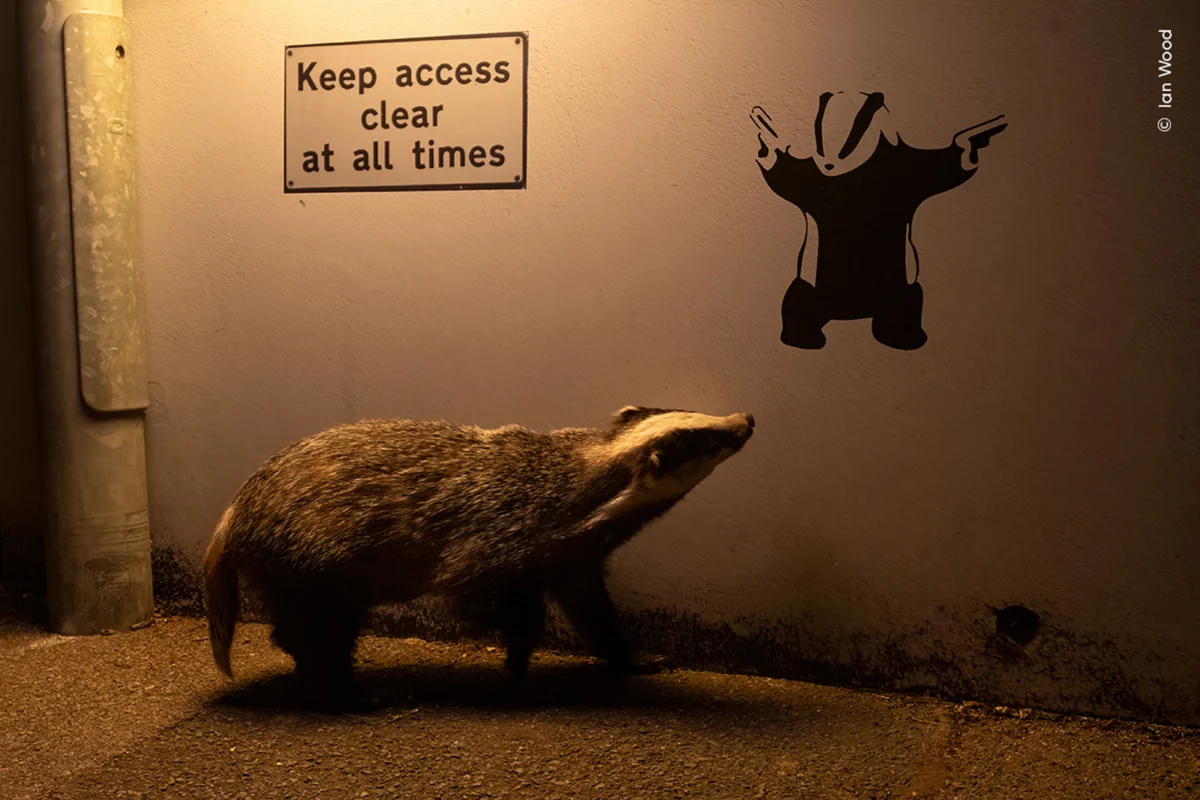
The striking image, depicting an ambling badger pausing to glance at familiar graffiti, resonated deeply with wildlife enthusiasts globally, securing the top spot in a highly competitive public vote. This prestigious recognition underscores the burgeoning interest in the delicate balance between urban environments and the wildlife that increasingly inhabits them, while also highlighting critical conservation challenges.
A Moment Frozen in Time: The Winning Photograph
Ian Wood’s "No Access" is more than just a photograph; it’s a narrative of coexistence and observation. The image presents a Eurasian badger (Meles meles), a species synonymous with the British countryside, in an unexpected urban setting. Bathed in the stark, artificial glow of a lamppost, the badger ambles along a pavement beside a wall emblazoned with the titular graffiti. The animal’s upward gaze towards the writing creates a moment of curious interaction, prompting viewers to consider the boundaries, both literal and metaphorical, between human and animal worlds.
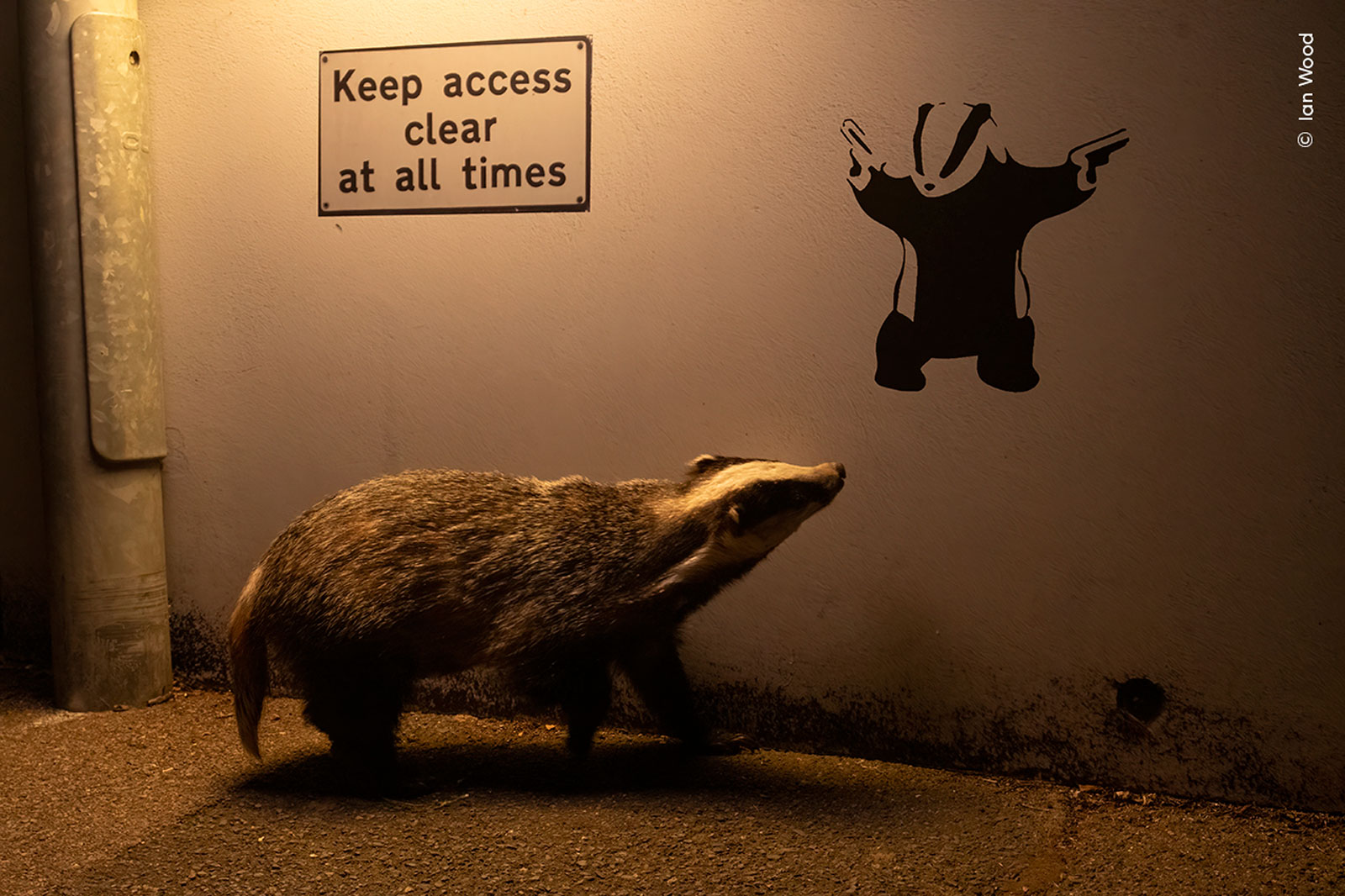
The setting itself in St Leonards-on-Sea, a coastal town in East Sussex, provides crucial context. Wood’s meticulous planning led to this perfectly timed shot. He observed local residents leaving food scraps for foxes on the pavement, which in turn attracted badgers from a nearby sett. Recognizing the unique opportunity to document this urban foraging behavior, Wood set up a small hide on the edge of the road one late night, patiently waiting for the nocturnal creature to appear. The resulting photograph is a testament to the photographer’s dedication, capturing the badger in its element, illuminated solely by the ambient street lighting. This intimate portrayal of urban wildlife showcases not only the adaptability of species like the badger but also the often-unseen natural drama unfolding on our doorsteps.
The People’s Choice Award: A Global Voice for Wildlife Photography
The Wildlife Photographer of the Year People’s Choice Award, now in its tenth year, stands as a democratic counterpoint to the main competition’s expert judging panel. This edition saw an unprecedented level of public engagement, with over 76,000 wildlife photography and nature enthusiasts from around the world casting their votes for their favorite image. This record-breaking participation highlights the global reach and emotional impact of wildlife photography, empowering the public to directly champion images that move them.
The award is an integral part of the broader Wildlife Photographer of the Year competition, which is developed and produced by the Natural History Museum, London. The competition itself boasts a venerable history, spanning six decades, and has grown to become one of the most prestigious photography competitions globally. Its mission is deeply rooted in inspiring and impactful storytelling, utilizing photography’s unique emotive power to connect people with nature and foster advocacy for our planet. The People’s Choice category, specifically, aims to engage a wider audience, allowing a global community to celebrate images that resonate most personally, often bringing attention to poignant or aesthetically captivating moments in the natural world.

Official Acclaim and the Broader Message
Dr. Douglas Gurr, Director of the Natural History Museum, lauded Wood’s winning image, stating, "Ian’s flawlessly timed image offers a unique glimpse of nature’s interaction with the human world, underscoring the importance of understanding urban wildlife. His exceptional photograph serves as a powerful reminder that local nature and wildlife, often just outside our homes, can inspire and captivate us." Dr. Gurr’s statement emphasizes the educational and inspirational value of such photographs, particularly in a world where human-wildlife interfaces are becoming increasingly common. The image serves as a visual prompt for urban dwellers to acknowledge and appreciate the biodiversity thriving in their immediate surroundings.
However, beyond its aesthetic appeal and narrative charm, Ian Wood’s photograph carries a profound and urgent conservation message. Upon receiving the award, Wood expressed overwhelming gratitude for the "outpouring of badger love" but quickly shifted to a more somber reflection. "Finding out that it has won is truly humbling. However, there is a darker side to this image," Wood revealed. He elaborated on his personal mission of re-wilding in rural Dorset, where he works to enhance habitats for a diverse array of wildlife. This passion for conservation directly informed his concern regarding the ongoing badger cull in England.
The Shadow of the Badger Cull: A Conservationist’s Plea
The "darker side" Wood refers to is the contentious badger cull, a government policy implemented in parts of England since 2013, primarily aimed at controlling Bovine Tuberculosis (bTB) in cattle. The policy involves the licensed killing of badgers, which are considered a reservoir for the disease. While proponents argue the cull is a necessary measure to protect agricultural livelihoods, it has been met with widespread scientific and public opposition. Conservation organizations, scientists, and animal welfare groups have consistently raised concerns about the efficacy of the cull, citing insufficient evidence that it significantly reduces bTB in cattle, and highlighting its devastating impact on badger populations.
Estimates vary, but tens of thousands of badgers have been culled since the policy’s inception. Badgers are a protected species under the Protection of Badgers Act 1992, making their persecution illegal without specific licenses. The ongoing cull has led to a significant decline in badger numbers in affected areas, disrupting their social structures and potentially leading to wider ecological imbalances.
Wood’s statement reflects these concerns, articulating a fear that "unless the cull is stopped, we’ll only see badgers in urban settings in several parts of England." This stark prediction underscores a critical implication: if rural badger populations continue to be decimated, urban areas might become increasingly important refuges for the species. While urban environments can offer food sources and relative safety from direct persecution, they also present new challenges for badgers, including road traffic, habitat fragmentation, and conflict with humans. Wood’s hope is that his winning image will "raise awareness of the damaging effect of the badger cull and help push for change," transforming a moment of photographic triumph into a catalyst for conservation action.
Beyond the Winner: The Highly Commended Images
The People’s Choice Award shortlist comprised 25 nominated images, carefully selected by the Natural History Museum and an international judging panel from nearly 60,000 entries submitted for the sixtieth Wildlife Photographer of the Year competition. While "No Access" took the top honor, four other images received "Highly Commended" status, capturing the imaginations of wildlife lovers worldwide:
-
"Earth and Sky" by Francisco Negroni (Chile): This unforgettable photograph captures a rare double lenticular cloud formation, dramatically illuminated at nightfall by the lava flowing from the Villarrica volcano in Chile. Negroni’s image is a spectacular fusion of terrestrial power and atmospheric wonder, showcasing the raw, untamed forces of nature. The vibrant reds and oranges of the lava juxtaposed with the ethereal clouds create a truly otherworldly scene, a reminder of our planet’s dynamic geological and meteorological processes.
-
"Edge of Night" by Jess Findlay (Canada): Findlay’s action shot freezes a ghostly barn owl in motion as it exits through the hayloft window of a derelict barn to hunt. The image perfectly encapsulates the elusive nature of nocturnal predators and the beauty of their silent flight. The decaying architecture of the barn provides a poignant backdrop, suggesting the encroaching human presence even in the habitats of wild creatures. The soft light catching the owl’s feathers creates a sense of fleeting magic, highlighting the delicate balance between life and decay.
-
"Whiteout" by Michel d’Oultremont (Belgium): This image features a stoat, perfectly camouflaged, sitting up to observe its snow-covered territory. D’Oultremont’s composition emphasizes the stoat’s remarkable adaptation to its environment, blending seamlessly with the snowy landscape. The stoat’s alertness, juxtaposed with the serene white backdrop, speaks to the constant vigilance required for survival in harsh conditions. The photograph is a masterful study in natural concealment and the subtle beauty of winter wildlife.

-
"Spiked" by David Northall (South Africa): Northall’s arresting photograph depicts a bloodied yet determined honey badger returning to finish off a Cape porcupine, which had bravely defended itself earlier. This image offers a raw and visceral glimpse into the brutal realities of the natural food chain. It’s a powerful portrayal of resilience and the relentless drive for survival, capturing a moment of intense struggle between two formidable species. The bloodied snout of the badger and the visible quills of the porcupine tell a dramatic story of predator and prey.
These highly commended images, alongside Wood’s winning entry, collectively represent the diverse artistry and profound storytelling capabilities within contemporary wildlife photography. They showcase not only technical skill but also an intimate understanding of animal behavior and ecological contexts.
Exhibition and Future of the Competition
All five acclaimed images – "No Access" and the four Highly Commended photographs – are currently on display. They can be viewed online on the Natural History Museum’s website and are featured on interactive voting screens within the flagship Wildlife Photographer of the Year exhibition at the Natural History Museum, London. The exhibition offers visitors a chance to immerse themselves in these captivating stories from the natural world and will run until June 29, 2025.

Looking ahead, the Natural History Museum is already deeply involved in the next iteration of this global phenomenon. Images entered into the sixty-first Wildlife Photographer of the Year competition are currently undergoing rigorous evaluation by an international panel of experts. The winners of this upcoming competition are anticipated to be announced at the annual awards ceremony, scheduled to take place at the Natural History Museum, London, in October 2025. This continuous cycle of discovery and celebration ensures that new compelling narratives from the wild are brought to the forefront, maintaining public engagement and fostering a deeper appreciation for the planet’s biodiversity.
The Enduring Power of Wildlife Photography
Ian Wood’s "No Access" is more than a winning photograph; it is a powerful symbol of the intersections between human and wild domains, and a poignant reminder of the conservation battles being fought. The Wildlife Photographer of the Year competition, through its various categories and the democratic People’s Choice Award, consistently demonstrates photography’s unique ability to connect individuals with the natural world. By bringing stunning visuals and compelling stories to a global audience, it not only celebrates the beauty of wildlife but also serves as a crucial platform for raising awareness, inspiring action, and ultimately, advocating for the protection of our planet’s invaluable natural heritage. The image of a badger observing human graffiti encapsulates a silent dialogue between species, urging us to reflect on our shared spaces and responsibilities.