In the contemporary landscape of visual marketing and commercial branding, the precision of vehicle graphics has transitioned from a specialized craft to a high-tech industrial standard. The integration of Art Station vehicle templates within the SignSilo ecosystem represents a pivotal development for sign makers and graphic designers who require surgical accuracy in their workflow. As commercial fleets increasingly serve as mobile billboards, the demand for high-fidelity vector outlines that correspond exactly to a vehicle’s physical dimensions has never been higher. This synergy between detailed templates and a comprehensive asset library is reshaping how professional wrap shops approach design, production, and installation.
The Evolution of Vehicle Wrap Design: A Historical Context
The methodology of applying graphics to vehicles has undergone a radical transformation over the last four decades. In the 1980s and early 1990s, vehicle branding was largely limited to hand-painted lettering or simple cut-vinyl decals. Designers often had to take manual measurements of every door panel, fender, and hood, a process prone to human error and significant time loss.
The advent of large-format digital printing in the late 1990s and early 2000s catalyzed the "wrap revolution." However, the digital tools of that era often lacked the precision required for complex curves and recessed areas. The introduction of standardized vehicle templates, such as those developed by Art Station, provided a solution to this technical bottleneck. By offering 1:20 scale vector drawings of thousands of vehicle makes and models, these templates allowed designers to visualize a 360-degree wrap in a virtual environment before a single inch of expensive vinyl was printed.
Today, the industry has moved beyond simple outlines. Professionals now require a holistic design environment where templates are merely the foundation for a much larger architectural structure of visual assets.
Technical Specifications: The Anatomy of a Professional Template
Art Station vehicle templates are favored by industry veterans primarily due to their technical integrity. Unlike low-resolution raster images, these templates are built as multi-layered vector files, typically compatible with industry-standard software including Adobe Illustrator, CorelDRAW, and FlexiSign.
Key technical features include:
- 1:20 Scale Precision: This industry-standard scale ensures that designs can be accurately enlarged to full size (1:1) without loss of quality or distortion.
- Multi-View Perspectives: Templates provide five distinct views—front, rear, driver side, passenger side, and roof—ensuring that branding remains consistent across all surfaces.
- Layered Components: High-quality templates separate vehicle features such as door handles, windows, lights, and trim into distinct layers. This allows designers to "mask" graphics behind hardware or account for "no-print" zones during the layout phase.
- Dimension Lines: Integrated measurement markers allow for quick verification against the physical vehicle, reducing the likelihood of production errors that can cost shops thousands of dollars in wasted material.
SignSilo: Integrating Templates into a Broader Design Ecosystem
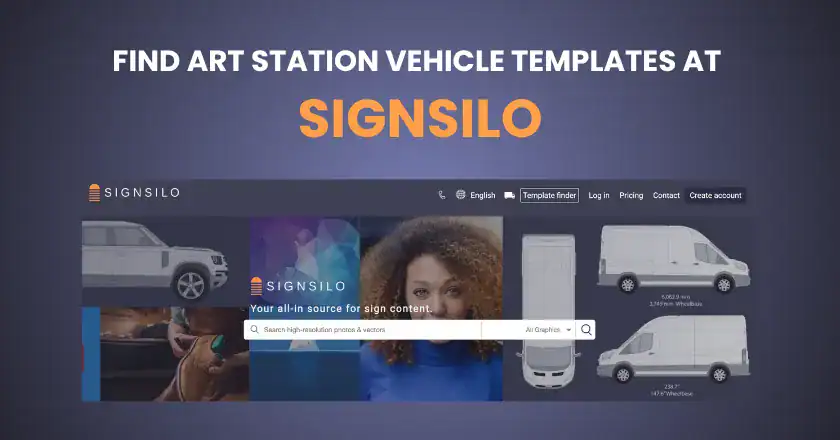
While Art Station provides the technical blueprint, SignSilo functions as the warehouse of creative materials. The modern wrap designer rarely works with a template in isolation; they require a constant stream of high-resolution imagery, textures, and specialized graphics.
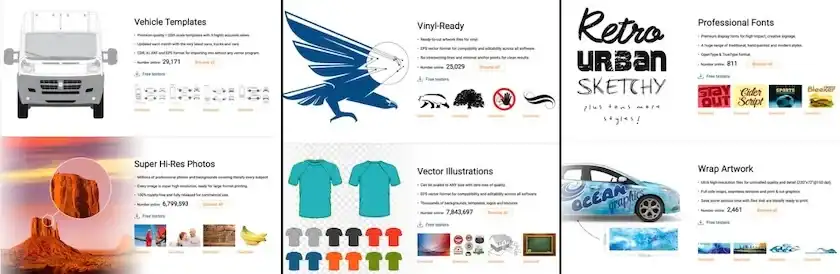
SignSilo has positioned itself as a specialized stock agency for the sign-making industry, offering an ecosystem that includes:
- High-Resolution Photography: Over 5 million images optimized for large-format printing.
- Vinyl-Ready Vectors: More than 600,000 vector illustrations designed specifically for plotters and vinyl cutters.
- Wrap-Ready Artwork: Seamless patterns, carbon fiber textures, and "splatter" effects that are pre-configured for vehicle contours.
- Specialized Fonts: Typography libraries curated for legibility on moving vehicles.
- AI-Powered Tools: Emerging features that allow for rapid background removal and image upscaling, essential for maintaining clarity on large van panels or semi-trailers.
Economic Impact and Market Trends
The global vehicle wrap market is experiencing a period of robust growth. According to industry analysis, the market was valued at approximately $4.7 billion in 2021 and is projected to expand at a compound annual growth rate (CAGR) of over 22% through 2030. This growth is driven by the increasing cost-effectiveness of mobile advertising compared to static billboards.

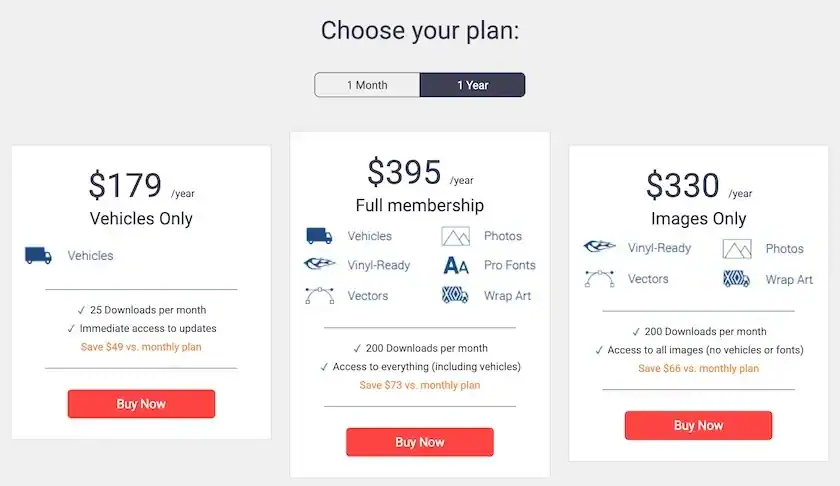
For a sign shop, the economic benefits of using a subscription-based service like SignSilo are quantifiable. The "pay-per-file" model, once the industry standard, often led to unpredictable overhead costs. Subscription models provide a fixed monthly or annual expense, allowing shops to bid on large fleet contracts with greater financial certainty.
Furthermore, the reduction in "re-work" is a significant factor in profitability. A single measurement error on a commercial van can result in a wasted roll of premium cast vinyl, costing upwards of $500 in materials alone, not including the labor hours for removal and re-application. By utilizing verified Art Station templates, shops can reduce these errors by an estimated 30-40%.
The Workflow: From Concept to Installation
The professional workflow using Art Station and SignSilo typically follows a rigorous, data-driven chronology:
1. The Discovery and Selection Phase:
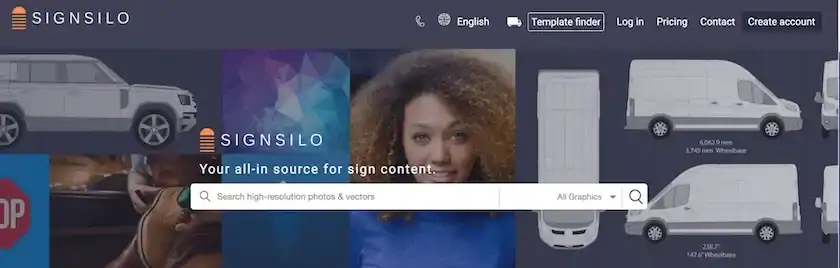
The designer identifies the specific vehicle year, make, model, and trim level. Using the SignSilo search engine, they download the corresponding Art Station template.
2. The Conceptual Layout:
Using the vector outline, the designer pulls assets from the SignSilo library—such as a high-resolution corporate logo or a specialized background texture. Because the template is layered, the designer can ensure that critical information (like phone numbers or QR codes) does not fall on a door handle or a deep body crease.
3. Client Proofing and Revision:
The design is presented to the client as a professional proof. The accuracy of the Art Station template allows the client to see exactly how the wrap will interact with the vehicle’s windows and trim, leading to faster approvals.
4. Pre-Press and Scaling:
Once approved, the 1:20 scale file is scaled to 1:1. The designer adds "bleeds"—extra graphic areas that wrap around door edges—to ensure full coverage.
5. Production and Installation:
The file is sent to the RIP (Raster Image Processor) software and printed onto high-grade vinyl. The installers use the original template printout as a guide for placement, ensuring the physical application matches the digital vision.
Official Responses and Industry Perspectives
Industry professionals often emphasize that the quality of the template is the "silent partner" in a successful wrap. Lead designers at major branding agencies have noted that as vehicle designs become more aerodynamic and complex, the margin for error has shrunk.
"We no longer live in a world of flat-sided trucks," says one industry consultant. "Modern electric vehicles and SUVs have compound curves that can distort a logo if the template isn’t 100% accurate. Having Art Station templates integrated into a platform like SignSilo means we aren’t jumping between five different websites to find a template, then a photo, then a texture. It’s about the compression of the design cycle."
Representatives from SignSilo have indicated that their focus remains on "workflow optimization." By bundling vehicle templates with a massive stock library, they aim to serve the "prosumer" and professional segments of the market who require high-volume output without sacrificing artistic quality.
Broader Implications for Fleet Branding
The impact of these tools extends beyond the individual sign shop to the corporate boardroom. For companies managing national fleets of hundreds or thousands of vehicles, consistency is the primary challenge. A service technician in Seattle must drive a vehicle that looks identical to one in Miami.
The use of standardized Art Station templates ensures that branding remains uniform regardless of where the vehicle is wrapped. It allows corporate marketing departments to distribute "master files" that are guaranteed to fit the fleet’s specific vehicle models. This level of standardization is crucial for brand integrity and helps large corporations maintain a professional image across diverse geographic markets.
Conclusion: The Future of Sign Making
As the sign-making industry continues to embrace digital transformation, the reliance on high-precision assets will only intensify. The combination of Art Station vehicle templates and SignSilo’s vast creative library provides a blueprint for the future of the trade—one where technical accuracy and creative freedom coexist.
In an era where time-to-market is a critical competitive advantage, the ability to rapidly produce accurate, high-impact vehicle designs is a necessity. By streamlining the path from a blank template to a finished, wrapped vehicle, SignSilo and Art Station are not just providing tools; they are providing the infrastructure for the next generation of mobile advertising. For the professional sign maker, this integration represents the pinnacle of design efficiency, ensuring that every curve of a vehicle is accounted for and every pixel of a graphic is perfectly placed.