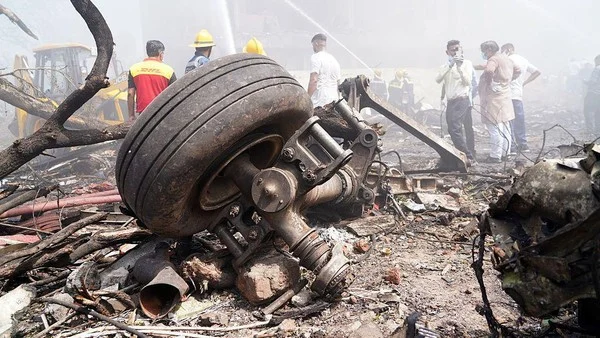
The global aviation community remains in a state of profound shock following the catastrophic crash of Air India flight AI-171 on June 12, 2025, an event that has claimed the lives of nearly everyone on board and prompted one of the most complex forensic investigations in recent Indian history. The Boeing 787 Dreamliner, a cornerstone of modern long-haul aviation known for its advanced composite materials and sophisticated electronic systems, went down in the vicinity of Sardar Vallabhbhai Patel International Airport in Ahmedabad during the final stages of its journey from London Heathrow. Of the 245 individuals on board, including a seasoned flight crew and cabin staff, only one survivor has been pulled from the wreckage, a development that medical professionals have described as nothing short of a miracle. As the nation mourns, the focus has shifted decisively toward the debris field, where the recovery and subsequent opening of the aircraft’s "black boxes" have marked the formal commencement of a deep-dive technical inquiry.
The recovery of the Flight Data Recorder (FDR) and the Cockpit Voice Recorder (CVR) represents the most critical milestone in the aftermath of the tragedy. These devices, which are engineered to withstand extreme G-forces, intense heat, and high-pressure underwater environments, are currently being housed at a specialized laboratory in New Delhi. Under the watchful eye of the Directorate General of Civil Aviation (DGCA) and supported by technical observers from the United States’ National Transportation Safety Board (NTSB) and engineers from Boeing, the process of extracting data has begun. The investigation aims to reconstruct the final thirty minutes of the flight with millisecond precision, seeking to understand whether a mechanical failure, a software glitch, or human factors contributed to the aircraft’s sudden loss of altitude and subsequent impact.
Chronology of Flight AI-171
To understand the magnitude of the investigation, one must look at the timeline of the ill-fated flight. Air India AI-171 departed London Heathrow at its scheduled time, carrying a mix of business travelers, families, and tourists. For the majority of the nine-hour journey, the flight proceeded without incident. Radar tracking data indicates that the Boeing 787 maintained a steady cruise altitude of 37,000 feet as it traversed European and Middle Eastern airspace.
The first signs of potential trouble emerged as the aircraft entered the Ahmedabad Flight Information Region (FIR). According to preliminary radar logs, the aircraft began its standard descent toward Ahmedabad at approximately 6:15 AM local time. Weather conditions at the time were reported as moderate, with some seasonal monsoon cloud cover but nothing that would typically endanger a modern wide-body jet. At 6:42 AM, as the aircraft was maneuvering for its final approach to Runway 23, air traffic control (ATC) noticed an erratic altitude reading. Seconds later, the aircraft disappeared from the secondary surveillance radar. Ground witnesses reported seeing the aircraft in a steep bank before it disappeared behind a line of trees, followed by a massive plume of smoke. Emergency services were dispatched within minutes, but the intensity of the post-crash fire hampered initial rescue efforts.
The Technical Significance of the Black Boxes
The term "black box" is a misnomer that has persisted in popular culture; in reality, these devices are coated in high-visibility heat-resistant orange paint. The FDR is designed to record at least 88 different flight parameters, including airspeed, altitude, vertical acceleration, and engine performance. Perhaps most importantly for this specific case, it records the position of the flight control surfaces, such as the flaps and slats. The CVR, meanwhile, captures all sounds in the cockpit, including the conversations between the pilot and co-pilot, radio transmissions, and any automated cockpit alarms that may have been triggered during the emergency.
The analysis in New Delhi is following a strict four-stage protocol. First, the devices undergo a "clean and dry" process to ensure that no debris or moisture interferes with the electronic pins. Second, the memory chips are carefully extracted from their "crash-survivable memory units." Third, the raw data is converted into a readable format using proprietary software provided by the manufacturer. Finally, the audio from the CVR is synchronized with the data from the FDR to create a unified timeline. This synchronization is vital; it allows investigators to hear exactly what the pilots were saying at the exact moment a specific mechanical sensor triggered an alert.
Preliminary Focus: The Flap System Hypothesis
While the investigation is in its infancy, early theories have gravitated toward a potential malfunction in the aircraft’s flap system. Flaps are movable panels on the trailing edge of the wings that increase lift and drag, allowing an aircraft to fly at the lower speeds required for landing without stalling. If the flaps fail to deploy, or worse, if they deploy asymmetrically—where one side extends further than the other—it can cause a violent and uncommanded roll that is extremely difficult for a pilot to counteract at low altitudes.
In the case of AI-171, preliminary maintenance records and ground observations suggest that the crew may have been struggling with a "flaps-up" landing configuration or a mechanical jam. If the FDR confirms an asymmetry or a total failure of the secondary flight controls, it would prompt a global safety review of the Boeing 787 fleet. Boeing has stated that they are "providing technical assistance at the request of and under the direction of the investigating government authorities," though they have cautioned against premature conclusions until the data from the black boxes is fully verified.

Official Responses and Diplomatic Coordination
The tragedy has prompted high-level responses from both the Indian and British governments. The Indian Minister of Civil Aviation issued a statement emphasizing that the investigation would be "transparent, thorough, and uncompromising." The Minister noted that the government’s priority is to provide support to the grieving families while ensuring that the aviation industry learns every possible lesson from this disaster.
In Washington, the NTSB’s involvement is standard procedure for any crash involving an American-manufactured aircraft. Their "Go-Team," consisting of experts in powerplants, structures, and flight recorders, is working alongside Indian officials to ensure that the investigation adheres to the standards set by the International Civil Aviation Organization (ICAO). This international cooperation is essential for maintaining the integrity of the findings, particularly given the Boeing 787’s status as a flagship of modern aviation technology.
The Human Toll and the Sole Survivor
Amidst the technical data and geopolitical maneuvers, the human element of the AI-171 tragedy remains the most poignant. The 244 fatalities include several prominent members of the Gujarati diaspora returning from the UK, as well as young students and families. The sole survivor, currently listed in critical but stable condition at a specialized trauma center in Ahmedabad, has become a focal point of national hope. While this individual is currently unable to provide a statement, investigators hope that, in time, their testimony might provide a "cabin-side" perspective on the final moments of the flight—specifically regarding whether there were signs of engine trouble or unusual vibrations felt by the passengers.
The process of victim identification is also underway, utilizing DNA sequencing and dental records. The Indian government has set up a dedicated coordination center at the airport to assist families arriving from London and other parts of India, providing counseling services and facilitating the repatriation of remains.
Broader Implications for Global Aviation
The crash of AI-171 has sent ripples through the global aviation market. Shares in Boeing and major aerospace suppliers saw a sharp decline in the days following the accident, reflecting investor anxiety over potential fleet-wide groundings or expensive retrofits. For Air India, a carrier that has been undergoing a massive transformation and modernization program under the Tata Group, the accident is a significant setback that raises questions about maintenance protocols and crew training during periods of rapid expansion.
Safety analysts suggest that if the investigation points toward a systemic mechanical issue, it could lead to a global Airworthiness Directive (AD). This would require airlines operating the Boeing 787 to conduct immediate inspections of their flap actuators and electronic control units. Furthermore, the incident has reignited debates about the reliance on highly automated systems in modern cockpits. If the pilots were fighting against an automated system that was receiving faulty data, it would mirror some of the challenges seen in other major aviation incidents over the past decade.
Looking Forward: The Path to the Final Report
The public and the families of the victims are understandably anxious for answers, but the DGCA has cautioned that a final report could take twelve to eighteen months to complete. The "preliminary report," which usually contains factual data without analysis or probable cause, is expected within thirty days.
The analysis of the Air India AI-171 black boxes is more than just a technical exercise; it is a quest for justice for those who perished and a necessary step in the evolution of flight safety. Every piece of data recovered from the scorched orange containers in New Delhi will be used to build a safer future for the millions of people who take to the skies every day. As the investigation continues, the world watches, waiting to understand how a state-of-the-art aircraft could fall from the sky so close to its destination, and what must be done to ensure such a tragedy never happens again.