NatureTTL is proud to present the latest installment in its "From Amateur to Professional" interview series, spotlighting the remarkable journey of South African-born wildlife photographer, Victor Soares. Now based in the United Kingdom, Soares has dedicated nearly two decades to capturing the natural world, transitioning from an engineering career to leading acclaimed photography tours across Europe and Africa. His work, characterized by its profound emotional depth and technical excellence, has garnered widespread recognition, earning accolades and publications in leading international outlets and associations. This in-depth feature explores the pivotal moments, challenges, and evolving philosophy that shaped Soares into the professional he is today, offering aspiring photographers a unique glimpse into the dedication required to transform a passion into a thriving career. Readers are invited to explore the progression of his images, delve into his origins, and understand the intricate path from amateur enthusiast to established professional. For more insights and inspiration from this series, subscribing to our free newsletter is highly recommended.
Early Beginnings: A Childhood Steeped in Nature
Victor Soares’s lifelong affinity for wildlife began in the expansive landscapes of South Africa, where he was born and raised. Surrounded by unparalleled biodiversity, nature became not just a backdrop but a sanctuary and a source of endless fascination. "Growing up in South Africa, I was surrounded by it and cherished it," Soares recounts. "It was my escape from a dramatic world, and I especially loved the birds." This early immersion cultivated a deep respect and curiosity for the natural world, particularly the myriad bird species that populate the region. Soares spent countless hours observing, often armed with nothing more than binoculars, striving to get closer to the subjects that captivated him.
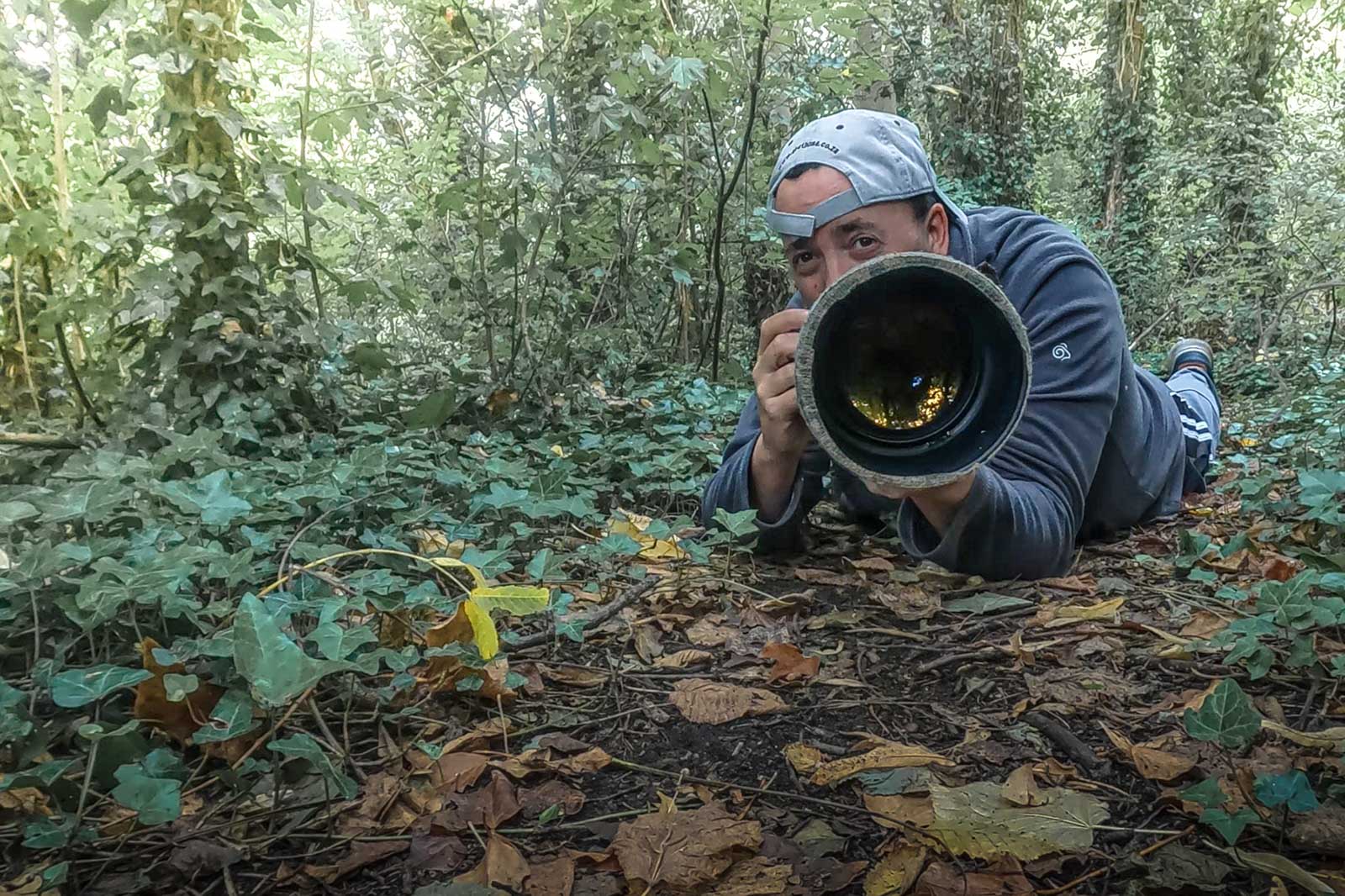
However, the leap into wildlife photography was, by his own admission, a serendipitous event. The year 2004 marked a significant turning point in the history of photography with the increasing accessibility and advancements in digital single-lens reflex (DSLR) cameras. These devices began democratizing photography, moving it from the niche realm of film enthusiasts to a broader consumer market. Soares, always drawn to cutting-edge technology, purchased his first DSLR, a Canon 300D, primarily to document holiday memories. This move, while seemingly mundane at the time, unknowingly laid the groundwork for his future career.
A pivotal moment occurred after a trip to Kruger National Park, one of Africa’s largest and most iconic wildlife reserves, boasting an extraordinary concentration of wildlife including the "Big Five." Upon returning, Soares visited a local photo lab to get prints developed. The owner, Johan Combrink, himself a wildlife photography enthusiast, had his own striking images displayed throughout the shop. As Combrink handed over Soares’s holiday photos with a polite "nice pictures" comment, Soares found himself blurting out a spontaneous desire: "…but I want to take photos like that," pointing to an impressive shot of a Cattle Egret. Combrink’s unexpected response—"Then come back here tomorrow with your camera, and I will show you a few things"—ignited a passion that has burned brightly ever since.
This chance encounter blossomed into an invaluable mentorship. Soares spent "countless days" in Combrink’s shop, absorbing knowledge about camera techniques, post-processing, and even receiving motivational coaching during inevitable periods of self-doubt. Combrink’s generosity and expertise, offered without expectation of payment, proved instrumental in Soares’s formative years as a photographer. "I have Johan to thank for getting me started in this field, and I will forever be grateful," Soares affirms, underscoring the profound impact of mentorship in nurturing nascent talent.
The Evolution of Craft: From Amateur Shots to Sharpened Vision

Soares’s early photographic endeavors, while filled with enthusiasm, reflected the typical learning curve of a beginner. He recalls his very first image with the Canon 300D: a Cormorant in flight, ambitious yet "blurry, distant, and shot in terrible light." This initial attempt, like many from that period, no longer exists, as he made a conscious decision in 2007 to purge his early archives and start fresh with new equipment.
The opportunity for a fresh start came in 2007, when a friend gifted him a Canon Rebel XT (known as the Canon EOS 350D outside North America), a popular entry-level DSLR at the time. During a New Year’s trip to Kruger Park with his girlfriend (now wife), he captured one of his first images with the new camera that he genuinely liked: a Steenbok. This small, delicate antelope, known for its shy nature, presented a challenge that Soares met with improved, though still developing, skill.
Reflecting on the Steenbok image today, Soares offers a candid self-critique that highlights his growth: "I liked the image. I love these antelope, but I knew that I should have done better with the photo. At least, I captured the animal in focus!" He points out technical shortcomings: a cropped foot, an aperture of f/8 (which limited background blur), and the use of Aperture Priority (Av) mode rather than his current preference for Manual mode. The limitations of early digital cameras also meant he was hesitant to push ISO beyond 400 due to concerns about excessive noise. Despite these technical imperfections, the image was a significant improvement and served as a crucial source of motivation, reinforcing his burgeoning interest in wildlife photography. It represented a tangible step forward, demonstrating that practice and learning were yielding results.
Defining Moments and Iconic Captures: The Yawning Fox

Over nearly two decades, Soares has accumulated a vast portfolio, but certain images hold particular significance. One such photograph, a captivating shot of a yawning fox, stands out as an enduring favorite. This image, captured in a small park in Sutton, London, after his move to the UK in 2016 and then to London in 2018, represents a convergence of personal fascination and photographic opportunity.
Having grown up in South Africa where red foxes exist only in fables, Soares developed a keen interest in them after moving to the UK and encountering them in person. When a friend informed him about a group of foxes in a local park, Soares seized the chance. Among the five resident foxes, one individual was notably accustomed to human presence, allowing for relatively close approaches.
The moment itself was serendipitous. "This is her, and on this occasion, she jumped over a small hedge, sat in a bed of leaves, and surprisingly gave a huge yawn just as I got into position," Soares recounts. The instant he saw the image on his camera’s back screen, he knew he had something special. The true magic, however, unfolded when he viewed it on a larger monitor. The photograph revealed astonishing detail: the visible vapor of the fox’s cold breath, the rich tapestry of autumn colors in the background, and the intricate details of her teeth mid-yawn. The shallow depth of field effectively isolated the subject, creating a "thrown-out background" that accentuated the fox’s "pose, her position, her grace."
For Soares, this image transcends mere technical proficiency; it embodies a childhood fantasy brought to life. "In Africa, red foxes only ever featured in fairytales. Here in the UK, those fairytales came to life, and I never dreamed of capturing such a cool image of a childhood fantasy!" This photograph not only showcases his technical mastery but also his ability to capture an intimate, emotive moment that resonates deeply on a personal level.

Returning to Roots and Evolving Perspectives: Safaris and Deer Ruts
Soares’s photographic journey is also marked by a conscious revisiting of subjects and locations, a practice that highlights his continuous growth and refined approach. While living in South Africa, game parks were a frequent haunt, providing a rich training ground for his burgeoning skills. His relocation to the UK has made these visits less frequent, yet each return to an African safari is now imbued with a heightened sense of appreciation and a more sophisticated photographic strategy.
His early experiences taught him the fundamentals of shooting from a vehicle, identifying wildlife, and anticipating animal behavior. Now, with years of experience, his approach is far more nuanced. "When I have the chance to go back on safari, I’m much more conscious of things I may have taken for granted when I lived there: the sun’s direction, the quality of light, what’s in the background, what might spoil the foreground, and the angles to shoot from," he explains. This demonstrates a shift from simply capturing an animal to consciously crafting an image, considering every element within the frame. Furthermore, his understanding of animal behavior has deepened, allowing him to better predict actions and capture more compelling narratives. "When an animal behaves in a certain way, what does it mean, and how do those actions affect other animals? Every time I go on safari, I learn something new," he adds, emphasizing the continuous learning aspect inherent in wildlife photography.
Beyond African safaris, Soares has found new photographic playgrounds in the UK, particularly during the annual deer rut. This spectacular natural event, occurring in autumn, involves male deer competing for mates, often through bellowing displays and intense fights. Initially, Soares enjoyed the sheer spectacle of the rut. However, his evolving vision now seeks out more evocative and artistic elements. He looks for specific atmospheric conditions, such as "cold mornings creating ‘bellow steam’" or the interplay of "autumn light breaking through the trees." He also pays closer attention to the interactions among female deer, though the dominant stags remain a primary draw. Soares’s dedication extends to the often-overlooked fallow deer, whose "intense" fights provide "epic photography" opportunities, showcasing his commitment to exploring diverse subjects and finding unique perspectives within familiar events.

The Leap to Professionalism: A Career Redefinition
The idea of becoming a professional photographer had "been brewing in my subconscious for many years," Soares reveals. However, the practicalities of making such a transition, especially from a stable engineering career, presented significant hurdles. Engineering, by his own admission, offered a far more lucrative income than the often-precarious profession of photography. Many photographers, he notes, pursue it professionally more as an extension of a hobby rather than a primary income source. Despite entering competitions with varying degrees of success, his focus remained divided between his engineering work and his photographic passion.
The landscape of professional photography is notoriously competitive, with many talented individuals vying for limited opportunities. The financial stability offered by engineering made the "jump" seem daunting. However, circumstances took an unexpected turn in early 2024. In a company-wide decision to reduce staff, Soares learned his position would be made redundant. While initially a "shock decision" and "hard" news, this abrupt change presented an unforeseen opportunity.
"Although I took the news hard, it was an opportunity to focus entirely on wildlife photography," Soares reflects. This forced pivot, rather than a gradual transition, provided the impetus he needed. Crucially, this decision was met with unwavering support from his wife, who he credits as "instrumental in supporting this decision and remains my biggest fan and strongest supporter." Thus, in early 2024, Victor Soares officially transitioned into full-time professional wildlife photography, embarking on a new chapter defined by his passion.

Milestones and Motivation: The NHM Recognition
While Soares identifies many "turning points" rather than a single "eureka moment," a significant milestone occurred in 2012. That year, one of his images reached the final round of the Natural History Museum’s Photography Awards. This prestigious competition, then known as the Veolia Environmental Awards (and now globally recognized as the Wildlife Photographer of the Year, or WPY), is one of the most respected showcases for wildlife photography worldwide, attracting tens of thousands of entries annually. In 2012, the competition received over 48,000 submissions, making Soares’s achievement particularly noteworthy.
Reaching the final round was a powerful validation of his photographic skill. "It was a moment in my photographic career where I felt, ‘Maybe I am good enough… maybe,’" Soares recalls. This external recognition served as an "enormous feather in my cap," bolstering his confidence and solidifying his belief in his artistic vision. Although the image did not progress to be displayed at the Natural History Museum, the achievement remains a cherished memory and a testament to his burgeoning talent. He remembers the excitement of receiving the email, immediately calling his wife to celebrate, and then frantically emailing organizers for next steps, only to be calmly reminded to "just read the email." This humorous anecdote highlights the raw emotion and significance of that moment in his journey.
Adapting Techniques and Artistic Vision

Soares’s photographic process has undergone continuous evolution over the years, driven by a desire to experiment and adapt. He actively seeks inspiration from the work of other photographers, embracing modern techniques and diverse styles. "Probably the most significant change for me is how I capture images and process the ones I like," he notes.
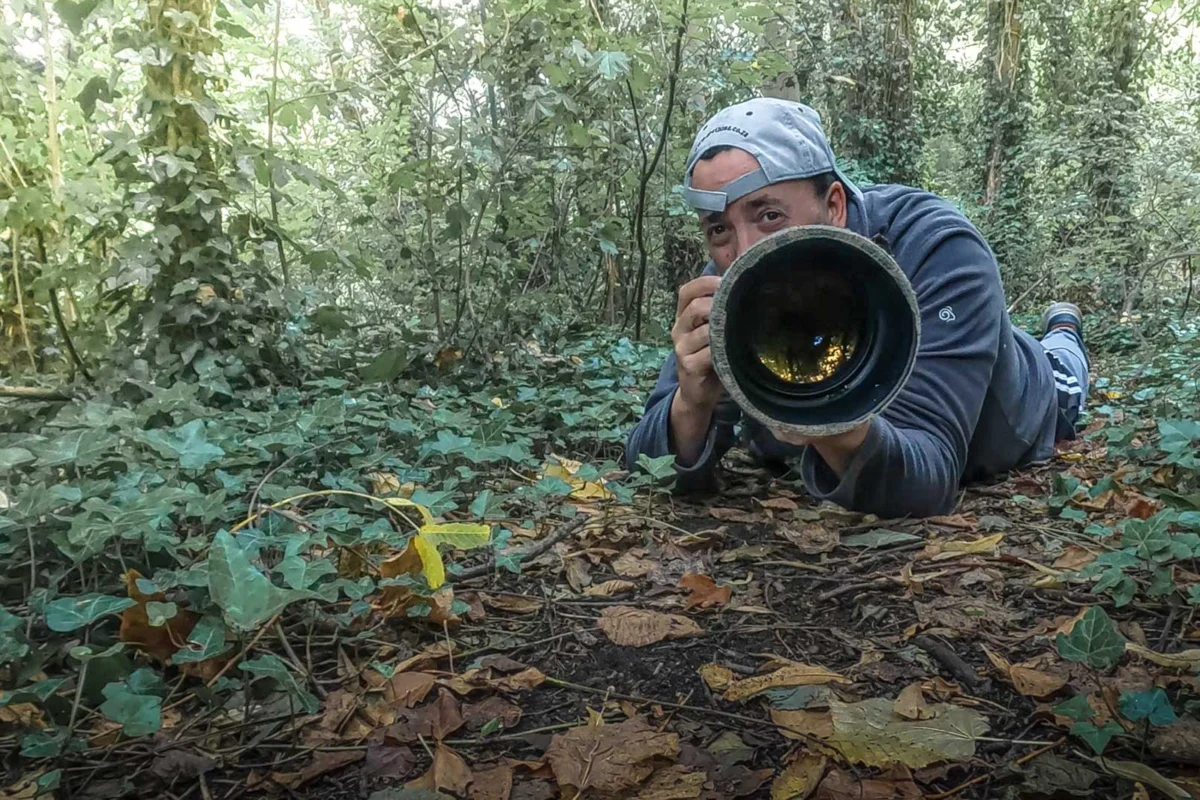
A hallmark of his current style is a preference for "low-down photography (as low as possible) with a very shallow depth of field." This technique, often requiring specialized and expensive lenses, allows him to create images with a distinct aesthetic, where the subject is sharply in focus against a beautifully blurred background. His enduring favorite lens, the 300mm f/2.8, is a testament to this preference, known for its exceptional sharpness and ability to produce stunning bokeh. Soares explains his philosophy: "I photograph what I find interesting without worrying too much about whether the subject is sharp from front to back. The point of interest is in focus and it stands out."
Beyond technical execution, Soares prioritizes capturing emotion in his subjects. He strives to "portray a creature’s emotion," whether it be "calm, anger, fear, cunning, eagerness, desperation, resolve." While acknowledging this is often easier with mammals than birds due to more expressive facial features and body language, he believes that conveying emotion "adds a certain element of reality to the animal," creating a deeper connection with the viewer. This artistic approach elevates his photographs beyond mere documentation, transforming them into evocative narratives of the natural world.
Overcoming Challenges: Perseverance and Continuous Learning

The journey from amateur to professional is rarely smooth, and Soares candidly shares his biggest challenge: "finding the motivation to keep going." The pervasive presence of "impressive work from others" can be daunting, leading to feelings of inadequacy. It’s easy to fall into the trap of believing one "will never be as good as your heroes and role models." Soares offers a poignant insight into this psychological hurdle: "What I have learnt is that you place these photographers on that pedestal yourself; that’s why they are role models. They will probably always seem better than you, in your eyes anyway, and you will continue to strive towards that."
His advice to aspiring photographers facing similar struggles is simple yet profound: "Keep going. Persevere." He emphasizes the importance of embracing feedback, both positive and negative, as opportunities for growth. "Don’t be afraid of comments and criticism, and continue to learn from everyone." In today’s fast-paced world, balancing family, work, and societal pressures can make sustained dedication to a passion seem impossible. Yet, Soares insists on the necessity of perseverance, viewing photography not as a destination but as an ongoing "process and a journey that has no destination." This mindset encourages continuous learning and enjoyment of the creative process itself.
Timeless Advice: The Virtue of Patience
When asked what advice he would impart to his younger self, Soares unequivocally states: "Be patient." This seemingly simple counsel unpacks into a multifaceted philosophy crucial for any aspiring creative. In an era demanding "immediate results" and constant advancement, he observes a tendency to overlook "the basics, the essentials, the critical things."

Soares admits to falling into this trap himself, initially measuring progress by new camera features rather than foundational skills. "If a new camera had a higher frames-per-second rate, I thought I was quicker. If it had more focus points, I assumed I could focus better," he confesses. This highlights a common misconception: that technology alone can compensate for a lack of fundamental understanding. He clarifies that these features are only truly beneficial if the photographer already possesses the underlying skills to utilize them effectively.
The pursuit of rapid progress, while fueling ambition, can lead to "extreme frustration when results don’t come as quickly as desired." With age and experience, Soares has cultivated a greater sense of patience, recognizing that photographic mastery is built on a solid understanding of art and science. "Photography has advanced rapidly, and so many new features are introduced daily that we often forget to learn the essentials properly," he states. His enduring advice is to "Take time to learn the art and basics of photography – they will endure much more than any feature ever will."
Patience extends beyond technical learning into the very practice of wildlife photography. "Many of the best images come from patience," he asserts. Capturing the action-filled and impressive shots often seen in professional portfolios is typically the result of "hours spent watching and observing the wild." The ability to "be patient and waiting for the best moments is essential" underscores the deep connection between patience, observation, and successful wildlife imaging.
The Ongoing Journey: A Commitment to Growth

After nearly two decades behind the lens, Victor Soares’s journey is far from over. His philosophy remains one of perpetual learning and engagement. "I learn something new almost every day," he states, a testament to his humility and open-mindedness. He actively participates in a camera club, valuing the diverse perspectives and technical insights shared by other members. He avidly consumes photography articles and magazines, staying abreast of industry news, tips, and techniques. Furthermore, he continues to go shooting with other photographers, enjoying their camaraderie while benefiting from their varied approaches.
Soares offers a final, powerful piece of advice: "Don’t be afraid to ‘put yourself out there’." Showcasing one’s photography, even in its early stages, and being open to critique is paramount for growth. "Listen to those comments and use them to grow and learn. Both positive and negative feedback are opportunities to reflect and develop – listen to them equally." This embrace of constructive criticism, coupled with an insatiable curiosity and a deep love for the natural world, continues to drive Victor Soares’s evolution as a professional wildlife photographer, inspiring countless others to pursue their own creative passions with dedication and perseverance.