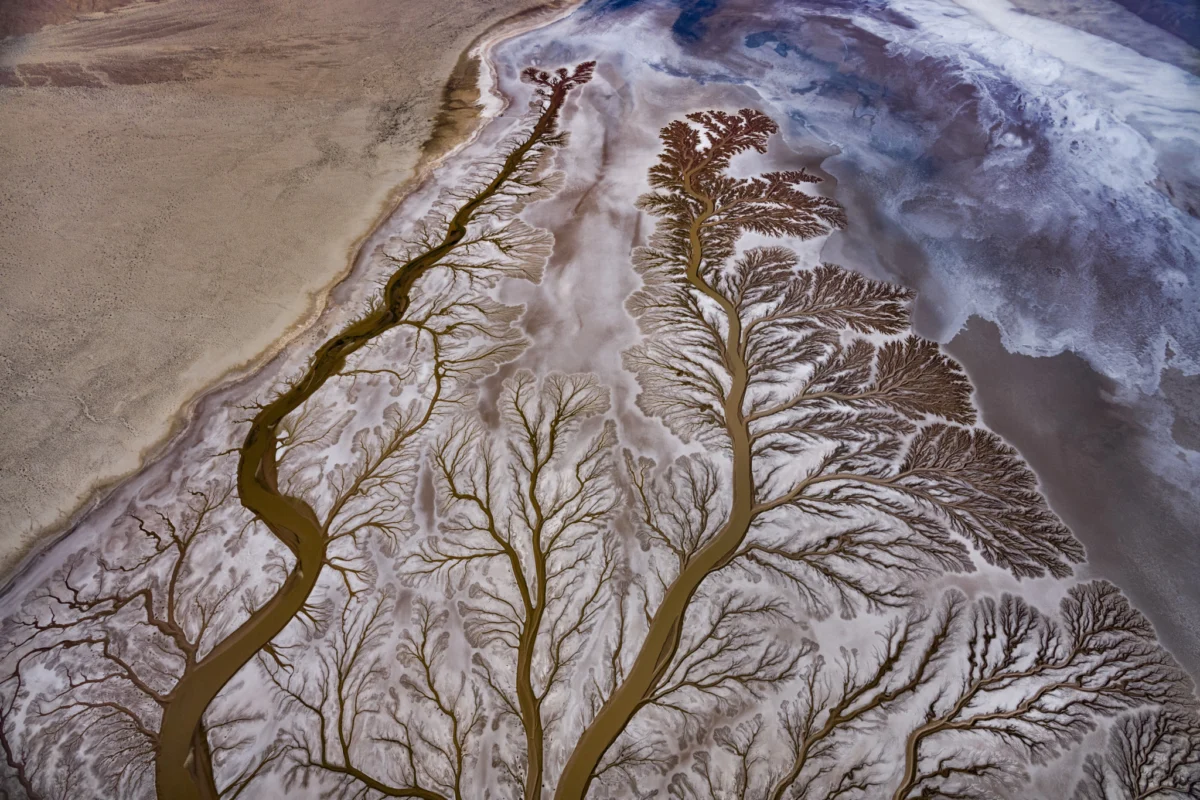
The stark, breathtaking beauty of the Colorado River Delta, viewed from a pilot’s perspective, presents a complex narrative of ecological resilience and human intervention. What appears as a vast, intricate tapestry of life from the sky is, in reality, a testament to both the enduring power of nature and the profound impact of human activities on vital water systems. This landscape, once a vibrant delta where a mighty river met the sea, has become a symbol of a region grappling with the consequences of over-allocation and the longest drought in over a millennium, yet it is also a beacon of hope for environmental restoration.
A Lifelong Quest for Connection and Understanding
The photographer, whose journey began in Canada’s far north, reflects on a childhood marked by an early and profound connection with the natural world. At the age of nine, entrusted with operating a snowmobile alone, this solitary exploration fostered an intimate understanding of wild animals and their habitats. This formative experience laid the groundwork for a lifelong pursuit of understanding the interconnectedness of life, a sentiment that would later guide his perspective on the Colorado River Delta. "I slowly began to understand the weave of this great fabric of life, and it was illuminating – I fell in love," the photographer recalls, hinting at the deep emotional resonance he found in observing and documenting natural systems. This early immersion in the wild instilled a deep appreciation for the delicate balance of ecosystems, a perspective that became crucial when faced with the stark realities of the delta.
The Aerial Revelation: A Canvas of Life and Loss
The initial aerial survey of the Colorado River Delta, conducted at an altitude of 10,000 feet, revealed a landscape far more expansive and intricate than anticipated. The expected "little fingers coming out of the river" transformed into a vista of "five miles of sheer beauty, a landscape on a scale so vast and wide that at first I didn’t know how to photograph it." This overwhelming scale presented a unique challenge: to capture not only the aesthetic grandeur but also to convey a message of life and renewal amidst a backdrop of ecological distress.
As the pilot, Rodrigo, and the photographer experimented with varying altitudes, from 200 to 1,000 feet, the delta revealed itself as a "three-dimensional canvas of poetry and art." The intricate patterns observed from these lower altitudes evoked the "tree of life," a "quilted mosaic of silt and sediment – veins, capillaries, and branches woven intricately together, the lungs of the Earth." This poetic description underscores the vital role such deltas play in the broader ecological health of a region, serving as critical interfaces between terrestrial and marine environments. The photographer’s quest became to translate these "patterns of life into photographic moments that could live on people’s walls," aiming to translate the profound visual language of the delta into a format accessible for public contemplation and understanding.
The Colorado River’s Journey: From Abundance to Aridity
The story of the Colorado River is a compelling case study in the challenges of managing a vital water resource in the face of escalating demand. Originating in the Rocky Mountains, the river’s 1,500-mile journey traverses seven U.S. states – Wyoming, Colorado, Utah, New Mexico, Arizona, Nevada, and California – before reaching northwestern Mexico. Historically, it was a lifeline that sustained diverse ecosystems and human populations, culminating in its confluence with the Sea of Cortez.
However, since the 1950s, the river’s trajectory has been one of increasing diversion and dwindling flow. The escalating demands of a growing human population and intensive industrial and agricultural development have significantly diminished the river’s volume. This over-allocation, coupled with the relentless grip of a severe drought, has resulted in the river frequently failing to reach the sea. The current regional drought is particularly alarming, described as the "worst drought in 1,200 years," a historical anomaly that exacerbates the existing pressures on the river system. This prolonged period of diminished precipitation and increased evaporation has pushed the Colorado River Basin to a critical tipping point, impacting water availability for millions of people and vast agricultural lands.
A Historical Perspective on Water Management
The Colorado River system is governed by a complex framework of agreements known as the "Law of the River," a series of compacts, court decrees, and legislation that have dictated water allocation since the early 20th century. These agreements, largely established during a period of unusually wet years, have often underestimated the river’s natural variability and the long-term impacts of climate change. The fundamental allocation of water rights, which grants senior water rights holders priority, has made it challenging to adapt to the current hydrological realities.
The development of major infrastructure, including Hoover Dam and Glen Canyon Dam, transformed the river’s natural flow and created vast reservoirs like Lake Mead and Lake Powell. While these projects provided essential water storage and hydroelectric power, they also altered the river’s sediment transport and ecological dynamics downstream. The historical emphasis on maximizing water use for agriculture and urban development, particularly in the arid Southwest, has created a system that is inherently vulnerable to drought.
The Dawn of Restoration: A Binational Effort
Despite the grim prognosis, a flicker of hope has emerged through a concerted and unprecedented binational restoration effort. In recent years, the Colorado River Delta has witnessed a resurgence of water flow, a direct result of collaborative initiatives involving conservation organizations, the governments of the United States and Mexico, and local communities in the Mexicali Valley. This "Minute 319" agreement, signed in 2012 and later extended and expanded, facilitated environmental flows, allowing a managed release of water down the river to the delta.
These deliberate releases, often referred to as "pulse flows," have been instrumental in rehydrating sections of the delta, supporting the growth of native vegetation, and providing habitat for migratory birds and other wildlife. The agreement represents a paradigm shift in water management, recognizing the ecological value of the river’s natural course and the importance of restoring degraded ecosystems. The success of these efforts has reignited optimism for the future of the delta and the broader Colorado River Basin.
Supporting Data and Ecological Indicators
The ecological impact of the Colorado River’s diminished flow has been severe. Before the widespread diversions, the delta once supported a rich and diverse ecosystem, including vast wetlands, riparian forests, and a thriving estuarine environment where the river met the Sea of Cortez. The reduction in freshwater flow and the subsequent increase in salinity led to the degradation of these habitats, threatening numerous species.
The recent environmental flows have begun to show measurable positive impacts. Studies have documented the return of various bird species to the revitalized areas, including shorebirds, waterfowl, and species that rely on the delta’s unique habitat. The germination of native plant species, such as cottonwoods and willows, along the riverbanks signifies a crucial step in habitat recovery. For instance, the Delta Restoration Project, a collaborative initiative, has reported significant increases in vegetation cover and biodiversity in areas where water has been reintroduced. Data from monitoring stations indicate a temporary but significant improvement in soil moisture and the re-establishment of shallow water areas, critical for the survival of many species.
Official Responses and Future Outlook
The binational restoration efforts represent a significant step forward in addressing the ecological crisis in the Colorado River Delta. Officials from both the U.S. Bureau of Reclamation and Mexico’s National Water Commission (Conagua) have hailed these collaborations as crucial for the long-term health of the river and the surrounding ecosystems. The agreements have not only facilitated water releases but also fostered joint monitoring and research initiatives, providing a more comprehensive understanding of the delta’s ecological needs and responses.
The success of these binational efforts hinges on continued cooperation and adaptation. The ongoing drought conditions necessitate a long-term strategy that balances human water needs with ecological imperatives. Future agreements will likely need to incorporate more robust provisions for water conservation, efficiency improvements in agriculture and urban use, and a greater understanding of the impacts of climate change on water availability. The "Minute 320" agreement, which builds upon the success of its predecessors, further solidifies the commitment to binational cooperation in managing the Colorado River.
Broader Implications: A Model for Arid Region Management
The story of the Colorado River Delta’s struggle and subsequent tentative revival offers critical lessons for the management of arid and semi-arid regions worldwide. The delta’s transformation from a once-vibrant ecosystem to a degraded landscape, and now to a site of experimental restoration, highlights the interconnectedness of water, human development, and ecological health.
The implications of this narrative extend beyond the immediate region. As climate change intensifies, leading to more frequent and severe droughts in many parts of the world, the principles of integrated water resource management and binational cooperation become increasingly vital. The Colorado River Delta’s journey underscores the importance of:
- Re-evaluating Water Allocation: Traditional water allocation frameworks, often established in different climatic eras, may no longer be sustainable. A shift towards more flexible and adaptive management approaches is essential.
- Investing in Ecosystem Restoration: Recognizing the intrinsic value and critical ecological services provided by healthy ecosystems, such as deltas and wetlands, is paramount. Restoration efforts, though often costly and complex, can yield significant long-term environmental and economic benefits.
- Fostering International Cooperation: Transboundary water resources require collaborative management. The success of the Colorado River Delta’s restoration is a testament to what can be achieved when nations work together towards common environmental goals.
- Embracing Scientific Data and Innovation: Continuous monitoring, research, and the application of scientific knowledge are crucial for understanding complex environmental challenges and developing effective solutions.
The photographer’s initial awe at the delta’s "sheer beauty" is now tempered by the profound understanding of its fragility and the complex challenges it faces. The "terrible beauty" he perceived is a reflection of a landscape that, while visually stunning, bears the scars of past exploitation. However, the ongoing efforts to revive it offer a powerful narrative of hope and resilience, suggesting that with dedicated collaboration and a renewed respect for natural systems, even the most challenged environments can embark on a path toward renewal. The future of the Colorado River Delta, like the river itself, remains a dynamic and evolving story, dependent on the collective will to sustain its fragile rebirth.