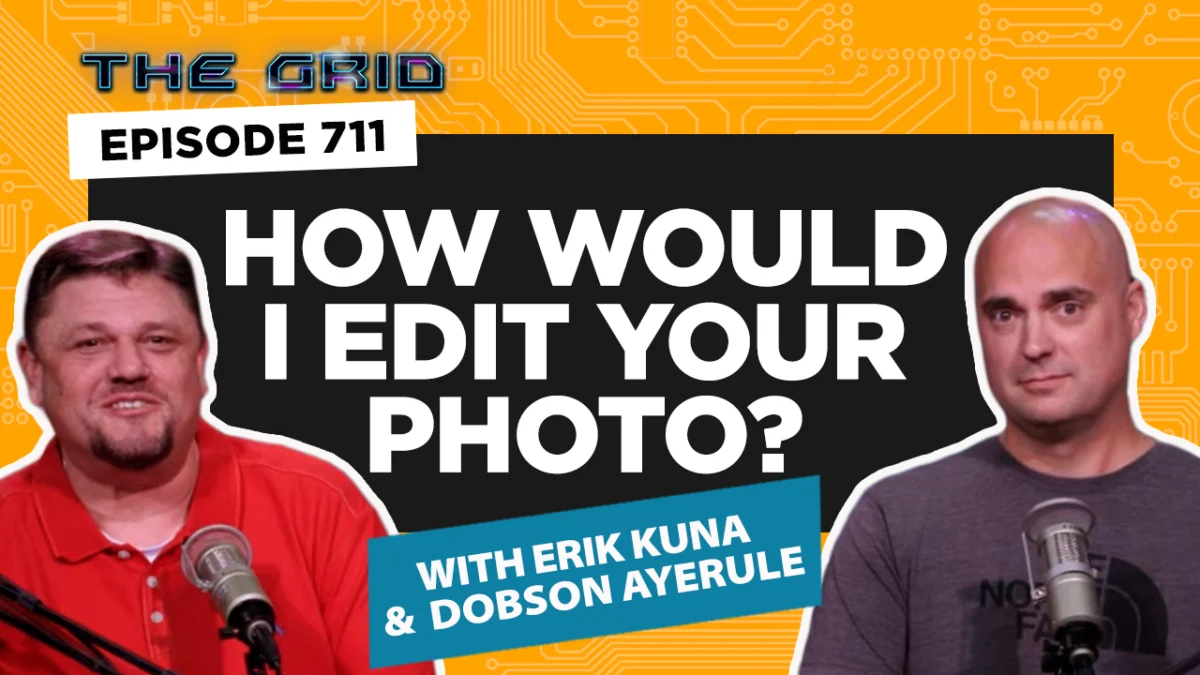
In a recent pivotal episode of KelbyOne’s renowned weekly show, The Grid, Erik Kuna, a respected figure in the photography education sphere, adeptly assumed the primary editorial role. With KelbyOne co-founder Scott Kelby currently in Florence, Italy, leading an intensive photography workshop, Kuna stepped into the spotlight, collaborating with fellow instructor Dobson Ayerule. The episode, titled "How Would I Edit Your Photo?", provided viewers with an in-depth, practical masterclass in image post-processing, tackling a diverse array of viewer-submitted photographs spanning wildlife, street, landscape, memorial, and cityscape genres. This installment underscored the critical interplay between photographic capture and digital enhancement, emphasizing the strategic decisions that transform a mere image into a compelling visual narrative.
The Enduring Legacy of The Grid and KelbyOne
The Grid is a cornerstone of KelbyOne’s extensive educational offerings, a platform that has firmly established itself as a global leader in online photography, Photoshop, and Lightroom training. Launched by Scott Kelby and his team, KelbyOne originated from the Kelby Media Group, evolving into a comprehensive subscription service that provides members with access to thousands of online courses, tutorials, and resources. Its mission is to make professional-level photography education accessible to enthusiasts and professionals worldwide, fostering a vibrant community of learners.
The Grid, specifically, has been a weekly fixture for over a decade, serving as a dynamic, interactive forum for discussing contemporary photography topics, reviewing gear, sharing tips, and dissecting editing techniques. Typically hosted by Scott Kelby, known for his approachable teaching style and vast industry experience, the show frequently features guest experts, fostering a collaborative learning environment. Kelby’s temporary absence, while on location teaching a specialized workshop in the historically and artistically rich setting of Florence, Italy, highlights KelbyOne’s commitment to both online and in-person immersive educational experiences. These workshops are often highly sought-after, offering participants hands-on learning from industry titans in inspiring locales, further enriching their photographic journeys.
Erik Kuna, a seasoned photographer, educator, and integral part of the KelbyOne team, is no stranger to the demands of professional-level instruction. His expertise primarily lies in Lightroom, Photoshop, and the intricate workflows of digital asset management and post-processing. Kuna’s ability to simplify complex concepts and his practical, results-driven approach have made him a popular instructor among KelbyOne members. Dobson Ayerule, another accomplished photographer and instructor, complements Kuna’s technical prowess with his keen eye for composition, light, and storytelling, often offering alternative perspectives that enrich the learning experience for viewers. Their combined presence on "How Would I Edit Your Photo?" ensured a robust and multi-faceted exploration of image enhancement.
Deconstructing the "How Would I Edit Your Photo?" Masterclass
The episode unfolded as a systematic dissection of real-world photographic challenges, presented through the lens of viewer-submitted images. This format is a hallmark of The Grid‘s interactive approach, allowing instructors to address common issues faced by photographers across various genres. The chronological flow of the episode saw Kuna and Ayerule meticulously reviewing each photograph, first identifying its strengths and weaknesses, then demonstrating a step-by-step editing process using Adobe Lightroom.
The central guiding principle articulated by Erik Kuna throughout the session was profoundly simple yet fundamentally critical: "Where do you want the viewer’s eye to go?" This question serves as the bedrock of effective visual communication. In photography, the successful conveyance of a message or emotion hinges on directing the viewer’s gaze strategically within the frame. Kuna consistently circled back to this concept, illustrating how every editing decision—from a subtle crop to a dramatic color grade—must serve the ultimate purpose of guiding the eye and reinforcing the image’s intended narrative. This emphasis aligns with established principles of visual psychology and composition, where elements like leading lines, contrast, brightness, and color saturation are all tools to control attention.
A Deep Dive into Lightroom’s Transformative Toolkit
Kuna’s demonstration provided a comprehensive overview of how a professional leverages Lightroom’s powerful suite of tools to address specific photographic deficiencies and enhance artistic intent. The techniques showcased included:
-
Cropping: Beyond merely adjusting aspect ratio, cropping was presented as a potent compositional tool. Kuna illustrated how strategic cropping could eliminate distracting elements, improve subject placement (e.g., adhering to the rule of thirds or golden ratio), and dramatically reframe the narrative of an image. In several instances, a well-executed crop transformed a cluttered or imbalanced shot into a focused and impactful composition, proving that sometimes less is indeed more.
-
Lightroom’s AI Masking Tools: This segment highlighted the revolutionary advancements in artificial intelligence within photo editing software. Kuna demonstrated the precision and efficiency of AI-powered masks (such as "Select Subject," "Select Sky," and "Select Background"), as well as traditional brush, radial, and gradient masks. These tools allow photographers to make localized adjustments to specific areas of an image without affecting others. For example, enhancing the brightness and sharpness of a wildlife subject while subtly darkening the background to create separation, or selectively adjusting the color temperature of a sky to evoke a particular mood. The integration of AI has significantly democratized complex masking, enabling even novice editors to achieve results that previously required meticulous manual selection.
-
White Balance: The importance of accurate white balance for achieving natural and pleasing colors was thoroughly explored. Kuna demonstrated how correcting color casts, whether from artificial lighting or environmental conditions, can dramatically alter the perception of an image. Beyond mere correction, he also touched upon using white balance creatively to evoke warmth, coolness, or a specific atmospheric quality, thereby influencing the emotional resonance of the photograph.
-
Vignettes: Often used subtly, vignettes—the darkening or lightening of an image’s edges—were shown to be effective in drawing the viewer’s eye towards the center of the frame, where the primary subject often resides. Kuna demonstrated how a carefully applied vignette can create a sense of depth, focus, and a classic aesthetic, while cautioning against overuse which can make an image appear dated or unnatural.
-
Dehaze: This powerful tool, particularly valuable for landscape and cityscape photography, was showcased for its ability to cut through atmospheric haze and restore clarity, contrast, and color saturation. Kuna illustrated how Dehaze can reveal hidden details in distant elements, making an image appear sharper and more vibrant, especially in conditions where atmospheric interference degrades image quality.
-
Color Grading: Moving beyond basic color correction, Kuna delved into color grading, a sophisticated technique used to establish a consistent aesthetic and emotional tone across an image or series of images. He demonstrated how adjusting shadows, midtones, and highlights with specific color tints can evoke various moods, from cinematic drama to nostalgic warmth, further enhancing the storytelling aspect of the photograph.
-
Selective Adjustments: Throughout the episode, the principle of selective adjustment was paramount. Whether using masks, brushes, or radial filters, Kuna emphasized the ability to fine-tune specific areas—brightening eyes, sharpening textures, softening skin, or cooling down overly warm tones—without impacting the overall image. This precision editing is what distinguishes amateur processing from professional refinement.
Addressing Inherent Photographic Challenges: What Lightroom Can and Cannot Fix
A critical segment of the episode focused on the limitations of post-processing, underscoring the adage that "you can’t polish a turd." Erik Kuna and Dobson Ayerule engaged in candid discussions about common photographic challenges that, while sometimes ameliorated in Lightroom, are fundamentally best addressed during the capture phase.
-
Blown Highlights: This is a classic example. When areas of an image are so overexposed that they lose all detail, becoming pure white, there is often little to no data for Lightroom to recover. Kuna explained that while minor highlight recovery is possible, severely blown-out areas are irrecoverable, emphasizing the importance of proper exposure metering and, in challenging lighting conditions, techniques like exposure bracketing (capturing multiple exposures and blending them).
-
Distracting Edges: While cropping can often eliminate distracting elements at the frame’s periphery, some distractions might be integral to the composition but still detract. Ayerule often chimed in here, discussing how awareness of the background and edges before pressing the shutter is crucial. Techniques like changing perspective, adjusting depth of field to blur backgrounds, or simply waiting for an opportune moment can prevent such issues, which are harder to "fix" convincingly in post-production without resorting to extensive cloning or content-aware fill, which can sometimes look unnatural.
-
Flat Light: Images captured in flat, diffuse light often lack contrast, depth, and drama. While Lightroom’s Dehaze, contrast sliders, and selective adjustments can add some pop and dimensionality, they cannot fundamentally recreate the magic of dynamic, directional light. The instructors highlighted that understanding and utilizing available light—or even shaping it with reflectors or artificial sources—is a primary skill for photographers. Editing can enhance good light, but it struggles to invent it from scratch.
This nuanced discussion reinforced a core tenet of photography: while post-processing is an incredibly powerful tool for refinement and artistic expression, it is not a substitute for solid fundamental photographic skills. The best editing decisions often begin long before the image ever reaches the computer screen, rooted in careful observation, thoughtful composition, and mastery of light.
Broader Impact and Implications for the Photography Community
The "How Would I Edit Your Photo?" episode with Erik Kuna and Dobson Ayerule serves as more than just a tutorial; it’s a testament to several significant trends within the contemporary photography landscape.
Firstly, it highlights the democratization of advanced photographic education. Platforms like KelbyOne, through accessible online content such as The Grid, empower countless individuals to elevate their skills, regardless of geographical location or prior experience. The format of using viewer-submitted photos creates a relatable learning experience, as participants can see their own common challenges addressed by experts.
Secondly, the episode underscores the continuous evolution of editing software and the increasing role of AI. Lightroom’s AI masking tools, for instance, are not merely incremental improvements; they represent a paradigm shift in efficiency and capability, allowing photographers to focus more on creative vision rather than laborious technical execution. This technological advancement means that the skill set of a modern photographer must now encompass not just capture but also a sophisticated understanding of digital workflow and software capabilities.
Thirdly, the emphasis on the synergy between capture and post-processing is crucial. The discussion about what can and cannot be fixed in Lightroom reinforces the enduring importance of foundational photography principles: understanding light, mastering composition, and making deliberate choices in the field. This integrated approach ensures that photographers view editing not as a "fix-it" solution for poor captures, but as an essential final stage of artistic creation that enhances and completes the initial vision.
Finally, the episode contributes to the community-building aspect that KelbyOne champions. By featuring viewer submissions and providing practical, actionable feedback, The Grid fosters an environment where learning is collaborative and encouraging. This interactive model helps photographers feel connected, inspired, and supported in their artistic endeavors, reinforcing the idea that photography is a journey of continuous learning and growth.
In conclusion, Erik Kuna’s adept stewardship of The Grid in Scott Kelby’s absence, ably assisted by Dobson Ayerule, delivered an invaluable masterclass in photographic post-processing. The "How Would I Edit Your Photo?" episode was a compelling demonstration of how strategic editing, guided by the fundamental question of viewer attention, can profoundly transform images. It meticulously detailed the practical application of Lightroom’s powerful tools while simultaneously advocating for the indispensable role of strong photographic fundamentals in achieving truly impactful and memorable visuals. The replay of this informative session remains an essential resource for any photographer seeking to refine their editing skills and deepen their understanding of the complete photographic workflow from initial concept to final polished image.