The pervasive challenge of achieving natural-looking illumination in photography, particularly in portraiture and event coverage, frequently stems from the placement of light sources. Photographers often encounter the disheartening reality that images captured with a camera’s built-in flash or a speedlight directly mounted on the hot shoe tend to appear harsh, unidimensional, and aesthetically uninspiring. This phenomenon is not merely a subjective perception but a direct consequence of fundamental principles of light and shadow, which dictate how depth and texture are rendered in a two-dimensional medium. The core issue, as professionals have long understood, lies not inherently with the flash unit itself, but critically, with the direction from which the light originates.
The Science of Flatness: Deconstructing On-Camera Flash
When a flash unit is positioned immediately above the camera lens, the light it emits travels along virtually the same axis as the lens’s perspective. This direct, frontal illumination inherently minimizes or entirely eliminates shadows on the subject. In the absence of discernible shadows, the intricate contours and three-dimensional forms of a subject – such as the nuanced curves of a face, the folds of clothing, or the textures of an environment – are flattened. The result is a photograph that lacks depth, appearing two-dimensional and often starkly artificial. This effect is compounded by several optical and physical phenomena.
Firstly, the inverse square law dictates that light intensity diminishes rapidly with distance. A direct flash often overpowers ambient light, especially in dimly lit environments, leading to a brightly lit subject against a dramatically underexposed, dark, and often unappealing background. This creates a disconnect between the subject and its surroundings, further contributing to the artificial appearance. Secondly, direct flash is prone to creating harsh, specular highlights – bright, often blown-out reflections on skin, glasses, or shiny surfaces – which can be distracting and unflattering. It also frequently causes the dreaded "red-eye" effect in portraits, where the flash reflects off the retina, making subjects appear demonic. The overall effect often mimics the unflattering, stark illumination of a security light or an interrogation room, stripping subjects of their natural warmth and vitality.
Historically, the evolution of flash photography, from volatile flash powder to bulky magnesium wire flashes and eventually to modern electronic strobes, has consistently grappled with the challenge of light quality. Early built-in flashes were a marvel of convenience, making low-light photography accessible, but their design prioritized portability and simplicity over sophisticated lighting control. This inherent design limitation has persisted, making direct, on-axis flash a necessary evil for many photographers seeking quick, convenient illumination, despite its well-documented aesthetic drawbacks.
The Art of Dimension: Why Off-Camera Lighting Transforms Images
In stark contrast to the flattening effect of direct flash, directional light – light that originates from an angle relative to the camera lens – is the cornerstone of compelling photography. The human eye is naturally accustomed to perceiving light from various angles: from the sun above and to the side, through windows, or from lamps within a room. This naturalistic illumination creates a rich interplay of light and shadow that defines shape, reveals texture, and imparts a sense of three-dimensionality and depth. Professional photographers have long understood that manipulating the direction of light is one of the most powerful tools for enhancing an image dramatically.
By moving a flash unit even a short distance away from the camera’s axis, a photographer immediately introduces directional light, which yields several profound improvements:
- Creation of Form-Defining Shadows: Shadows are not merely areas of darkness; they are essential visual cues that communicate an object’s shape and volume. Directional light casts shadows that sculpt the subject, defining facial features, muscle tone, and the contours of objects, making them appear robust and real rather than flat.
- Enhanced Texture and Detail: When light grazes a surface from an angle, it accentuates the subtle undulations, pores, and textures that would be obliterated by direct frontal light. This "raking light" brings out the tactile qualities of skin, fabric, and environmental elements, adding richness and authenticity to the image.
- Depth and Separation: Shadows also play a crucial role in separating the subject from the background. A slight shadow cast by the subject onto the background, or a differential in lighting between the subject and its environment, creates a sense of spatial separation, preventing the subject from merging visually with the backdrop.
- Mood and Atmosphere: The quality and direction of light are paramount in establishing the mood of a photograph. Side lighting can create dramatic, edgy effects; light from above can be classic and elegant; and soft, diffused light can evoke intimacy. Off-camera flash allows photographers to sculpt light to match their creative vision, mimicking the nuanced beauty of natural light sources.
- Control Over Highlights and Reflections: By repositioning the flash, photographers can control where highlights fall and minimize unflattering specular reflections, resulting in more pleasing and natural-looking skin tones and surfaces.
The ability to control the direction, quality, and intensity of light is not merely a technical advantage; it is a fundamental artistic principle that allows photographers to imbue their images with emotion, narrative, and a captivating sense of reality. This deliberate manipulation of light transforms ordinary scenes into extraordinary visual statements, elevating photographs from mere records to compelling works of art.
The Practical Dilemma: Traditional Off-Camera Setups
Despite the undeniable artistic and technical superiority of off-camera flash, its traditional implementation often presents significant logistical and practical hurdles. Achieving sophisticated lighting setups typically necessitates a considerable array of equipment beyond the camera and flash unit itself. A standard off-camera lighting kit might include:
- Wireless Triggers: Essential for communicating between the camera and the remotely located flash. These often come in transmitter and receiver pairs, adding to the complexity and potential points of failure.
- Light Stands: Robust and stable stands are required to position the flash units at various heights and angles, often needing sandbags for counterweight, especially outdoors or in high-traffic areas.
- Light Modifiers: To soften, shape, or diffuse the flash output, photographers commonly employ softboxes, umbrellas, beauty dishes, grids, or snoots. Each modifier serves a specific purpose, and carrying a selection adds considerable bulk.
- Batteries: External flash units and wireless triggers require their own power sources, necessitating a supply of spare batteries or dedicated power packs.
- Additional Bags: All this equipment translates into multiple, often heavy, gear bags, adding to the photographer’s burden.
The deployment of such a comprehensive lighting system is inherently time-consuming. Setting up light stands, attaching modifiers, positioning flashes, connecting triggers, and then fine-tuning power levels and angles can take precious minutes, or even longer, depending on the complexity of the desired lighting scheme. This elaborate setup and subsequent breakdown are manageable in a controlled studio environment where time is less of a constraint. However, in dynamic, fast-paced photographic scenarios, these requirements become significant impediments.
Consider a wedding photographer navigating a bustling reception hall, a photojournalist capturing fleeting moments at an event, or a travel photographer working in rapidly changing light conditions. In such contexts, the need for speed, agility, and minimal equipment is paramount. The time spent assembling and adjusting a multi-component lighting setup can mean missing critical moments, disrupting the flow of an event, or simply becoming too cumbersome to be practical. Many photographers, faced with this trade-off between convenience and lighting quality, reluctantly choose to keep their flash on-camera, sacrificing the aesthetic potential of their images for the sake of efficiency. This dilemma highlights a clear market demand for innovative solutions that bridge the gap between sophisticated lighting control and practical, portable workflow.
Innovating Solutions: The Platypod Bracket & Bounce System
Addressing the long-standing challenge of integrating professional-grade off-camera flash effects into a portable and rapid-deployment workflow, the Platypod Bracket & Bounce system emerges as a thoughtful and effective innovation. Designed specifically to circumvent the logistical difficulties associated with traditional off-camera lighting setups, this system allows photographers to achieve directional lighting without the need for cumbersome light stands, multiple bags, or extensive setup times.
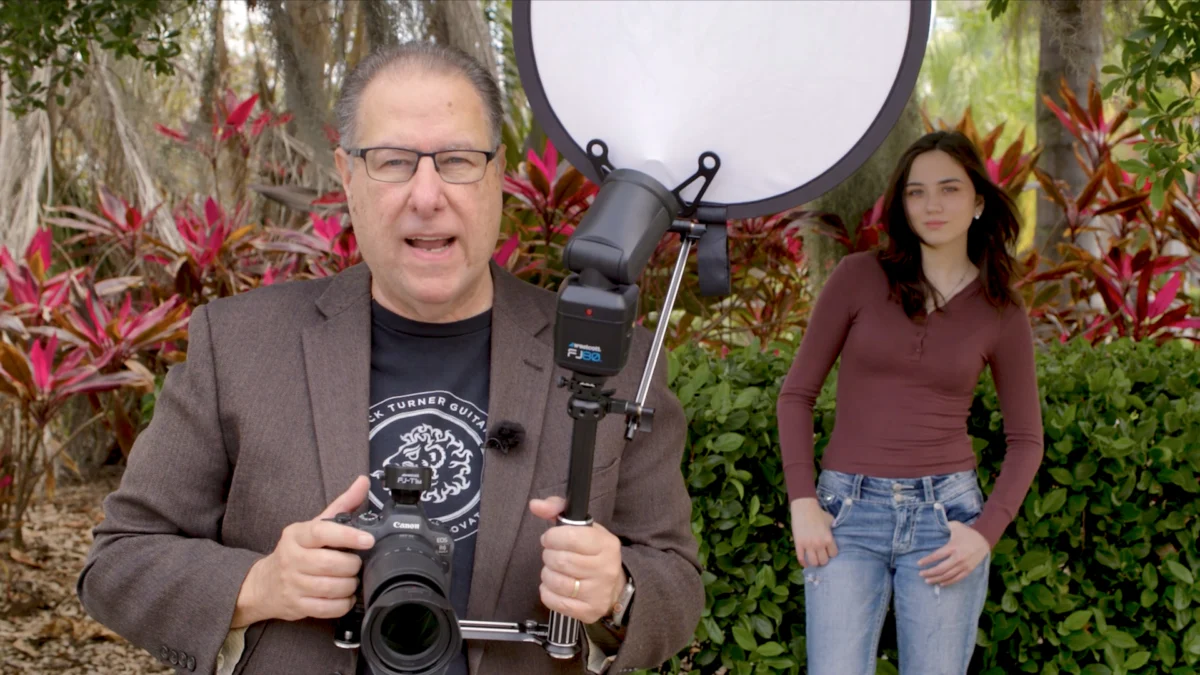
The core ingenuity of the Platypod Bracket & Bounce lies in its ability to enable off-axis flash while keeping the flash unit physically attached to the camera system. Instead of detaching the flash and placing it on a remote stand, the system utilizes a compact, articulating bracket that extends the flash away from the camera’s hot shoe, typically to the side. This simple yet profound design modification immediately transforms the direct, frontal light into directional light, introducing the crucial elements of shadows, depth, and texture that are absent with on-camera flash.
Key design principles underscore the system’s effectiveness:
- Compact and Lightweight: Unlike bulky light stands and modifiers, the Bracket & Bounce system is engineered for minimal footprint and weight. This makes it an ideal companion for photographers who prioritize portability, whether they are trekking through remote landscapes, navigating crowded urban events, or simply seeking to reduce their gear load.
- Quick to Deploy: The system attaches swiftly to the camera rig, allowing photographers to transition from on-camera to off-axis lighting in mere seconds. This speed is invaluable in fast-moving environments where decisive moments cannot wait for elaborate setups.
- Integrated Workflow: By keeping the flash physically connected to the camera, the system maintains a cohesive workflow. This reduces the chances of misplacing components, simplifies adjustments, and allows for a more intuitive shooting experience compared to managing separate, wirelessly triggered units.
- Versatile Bounce Capabilities: The articulated design often allows the flash head to be angled upwards or sideways, facilitating bounce flash – a technique that diffuses light by reflecting it off ceilings or walls. This further softens the light quality, creating even more natural and flattering illumination, especially indoors.
The Platypod Bracket & Bounce system is particularly well-suited for a diverse range of photographic applications where agility and quality are paramount. Event photographers can quickly adapt to changing lighting conditions, wedding photographers can capture intimate moments with refined light without disrupting the scene, and photojournalists can enhance their visual storytelling with more nuanced illumination on the fly. Environmental portraitists can sculpt light to better integrate their subjects into their surroundings, elevating the overall aesthetic without the overhead of a full studio setup. By providing a practical means to achieve dramatically improved lighting without dramatically increasing the size or complexity of a photographer’s kit, the Platypod Bracket & Bounce system effectively bridges the long-standing gap between convenience and professional image quality, empowering photographers to produce superior results in a wide array of demanding situations.
Expert Validation: Scott Kelby’s Perspective
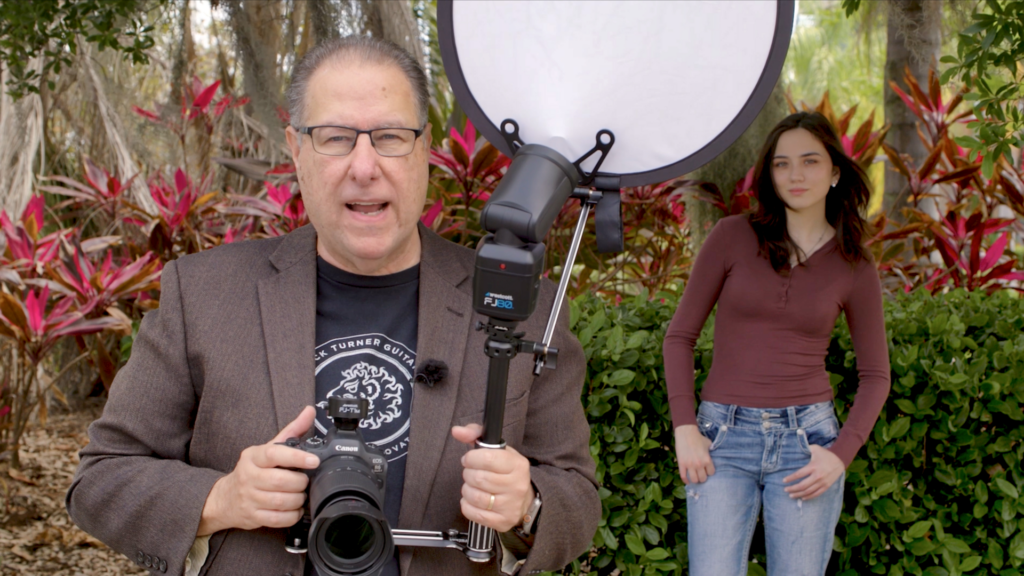
The efficacy and practical advantages of the Platypod Bracket & Bounce system have garnered significant attention, notably from renowned photography educator and author, Scott Kelby. With decades of experience teaching photographers globally and authoring numerous best-selling books on Photoshop and photography, Kelby’s insights carry considerable weight within the industry. His endorsement and detailed demonstration of the system serve as a powerful validation of its utility and impact.
In a dedicated video featured on PlatypodTV, Kelby articulates precisely why he has adopted the Bracket & Bounce system as a valuable tool in his arsenal. He meticulously explains the fundamental flaws inherent in direct on-camera flash, echoing the points about flatness, harshness, and the lack of dimension. More importantly, he visually demonstrates the transformative difference that even a slight repositioning of the flash, enabled by the Platypod system, can make.
Kelby’s demonstration typically highlights:
- The Stark Contrast: He presents side-by-side comparisons, vividly illustrating how the same subject, photographed with on-camera flash versus the Bracket & Bounce system, dramatically changes in terms of depth, shadow quality, and overall aesthetic appeal. The "before" images clearly exhibit the undesirable characteristics of flat lighting, while the "after" shots showcase a professional, sculpted look.
- Ease of Use: Kelby emphasizes the system’s rapid deployment and intuitive operation, underscoring how quickly photographers can transition to better lighting without interrupting their workflow. This resonates deeply with photographers who often work under time pressure.
- Professional Results, Simplified: His commentary reinforces the idea that achieving a "professional look" in flash photography doesn’t always require an elaborate, multi-light setup. Instead, a simple, intelligent modification to flash placement can yield significant dividends, making high-quality lighting more accessible.
- The "Why" Behind the "What": Beyond merely showing the "how," Kelby excels at explaining the "why." He delves into the principles of light and shadow, making complex photographic concepts understandable and actionable for photographers of all skill levels.
Kelby’s video is more than just a product review; it is an educational masterclass in understanding the critical role of light direction. For photographers who have long struggled with the limitations of their on-camera flash and wondered why their photos lacked that coveted professional polish, his explanation provides clear, actionable insights into the underlying causes and a practical, accessible solution. His authoritative voice and clear demonstrations solidify the Platypod Bracket & Bounce system’s position as a game-changer for those seeking to elevate their flash photography without compromising on portability or speed.
Visual Evidence: A Comparison in Illumination
The most compelling argument for the effectiveness of off-camera flash, and specifically for solutions like the Platypod Bracket & Bounce system, lies in direct visual comparison. The stark differences observed between images captured with on-camera flash and those illuminated with a properly positioned off-axis flash are often dramatic and immediately apparent, even to an untrained eye.

When analyzing comparative images, such as those provided by Platypod:
- On-Camera Flash Results: The image typically displays characteristics consistent with direct, frontal lighting. The subject’s face appears flat, lacking definition and contour. Shadows, if present, are harsh and fall directly behind the subject, creating an unflattering "mug shot" effect. Skin tones might appear overly bright or shiny, and any texture in clothing or hair is often minimized. The background, especially if the ambient light was low, may be noticeably darker than the subject, creating a disjointed appearance. The overall impression is one of artificiality and a lack of depth.
- With Bracket & Bounce Results: The image captured using the Bracket & Bounce system showcases a profound transformation. The subject’s face gains a three-dimensional quality, with subtle shadows defining the cheekbones, jawline, and nose. These shadows are soft and graded, transitioning smoothly from light to dark, mimicking natural illumination. Highlights are more controlled, appearing as gentle luminous areas rather than harsh reflections. The background often integrates more harmoniously with the subject, as the directional light provides better control over the overall scene’s exposure balance. Texture in hair, clothing, and the environment becomes more pronounced, adding richness and detail. The overall mood is more sophisticated, natural, and engaging, reflecting a professional standard of lighting.
This visual evidence is crucial because it translates complex lighting theory into tangible, undeniable results. It demonstrates that a relatively small, inexpensive, and easy-to-implement adjustment to flash placement can yield a monumental improvement in image quality, validating the core principle that light direction is paramount in photographic artistry. These comparisons effectively illustrate how the Platypod Bracket & Bounce system empowers photographers to move beyond the limitations of basic flash and achieve a level of illumination that was once the exclusive domain of more elaborate, time-consuming setups.
Broader Implications and the Future of Portable Lighting
The advent of compact and efficient lighting solutions like the Platypod Bracket & Bounce system carries significant implications for the broader photography industry and for individual practitioners. This innovation speaks to a persistent demand for tools that democratize access to professional-level techniques without sacrificing practical workflow considerations.
Democratization of Professional Lighting: Historically, achieving sophisticated lighting required considerable investment in bulky equipment and a significant learning curve. Solutions like the Bracket & Bounce lower this barrier, making the nuanced benefits of directional light accessible to a wider demographic, including advanced hobbyists, aspiring professionals, and content creators. This empowerment allows more photographers to produce high-quality, visually engaging content, fostering creativity and raising the overall standard of imagery across various platforms.
Impact on Workflow Efficiency: For working professionals, particularly those in fast-paced fields like event, wedding, and photojournalism, efficiency is directly tied to profitability and client satisfaction. By significantly reducing setup and breakdown times and streamlining gear management, systems like Platypod’s Bracket & Bounce enable photographers to be more agile, capture more moments, and deliver consistent, high-quality results under pressure. This operational advantage translates into increased productivity and a more seamless client experience.
Creative Empowerment: When photographers are freed from the logistical constraints of complex lighting setups, their creative energy can be directed more fully towards artistic vision and execution. The ability to quickly and easily manipulate light allows for greater experimentation, encouraging photographers to explore new lighting styles and push the boundaries of their visual storytelling. This freedom can lead to more distinctive and impactful imagery.
Market Response and Innovation: The success of such compact lighting solutions signals a clear market trend towards accessories that prioritize portability, versatility, and ease of use without compromising performance. This demand will likely spur further innovation from manufacturers, leading to more integrated, intelligent, and user-friendly lighting tools in the future. We may see more modular systems, enhanced wireless capabilities, and designs that further blend professional-grade results with everyday convenience.
In conclusion, the fundamental principle that light direction dictates the quality of photographic output remains immutable. While on-camera flash offers unparalleled convenience, its inherent limitations in rendering depth and texture have long presented a challenge to photographers striving for professional aesthetics. Solutions like the Platypod Bracket & Bounce system represent a crucial evolution in photographic tools, providing an elegant and practical means to overcome these limitations. By making directional light more accessible and efficient, these innovations empower photographers to consistently achieve compelling, dimensional, and truly professional-looking images, reinforcing the timeless truth that understanding and controlling light is the ultimate key to photographic mastery.