The evolution of mobile technology has fundamentally altered the landscape of contemporary photojournalism and street photography, transforming the ubiquitous smartphone into a sophisticated tool for high-contrast visual storytelling. As urban environments become increasingly complex, photographers are returning to the timeless medium of black and white to distill the chaos of the city into structured, emotive compositions. By utilizing the advanced optics and computational photography capabilities of the iPhone, both professionals and enthusiasts are discovering that the most effective camera is indeed the one that remains constantly accessible.
The Resurgence of Monochromatic Urban Documentation
Black and white photography has long been the standard for street photography, popularized by mid-20th-century masters such as Henri Cartier-Bresson and Robert Frank. In a modern context, the removal of color serves a functional purpose: it eliminates "chromatic noise," allowing the viewer to focus on the raw elements of light, shadow, texture, and geometry. Industry data suggests that monochromatic imagery often retains a higher degree of perceived "authenticity" in documentary contexts, as it emphasizes the narrative over the aesthetic distractions of vibrant color palettes.
For the modern iPhone user, the transition to black and white is no longer a matter of post-production afterthought but a deliberate creative choice made at the point of capture. The integration of high-dynamic-range (HDR) sensors and sophisticated image signaling processors (ISPs) in recent iPhone models—particularly from the iPhone 12 Pro through the current iPhone 15 and 16 iterations—has provided the necessary latitude to capture deep blacks and bright highlights without losing essential detail.
Technical Foundation: The Native Black and White Workflow
A critical departure from amateur mobile photography involves the decision to shoot in black and white natively. While many users capture images in color and apply filters retrospectively, professional workflows emphasize the importance of "seeing" in monochrome.
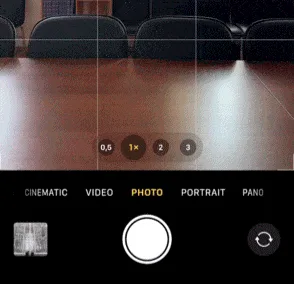
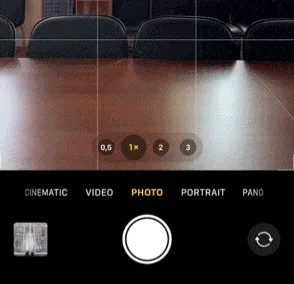
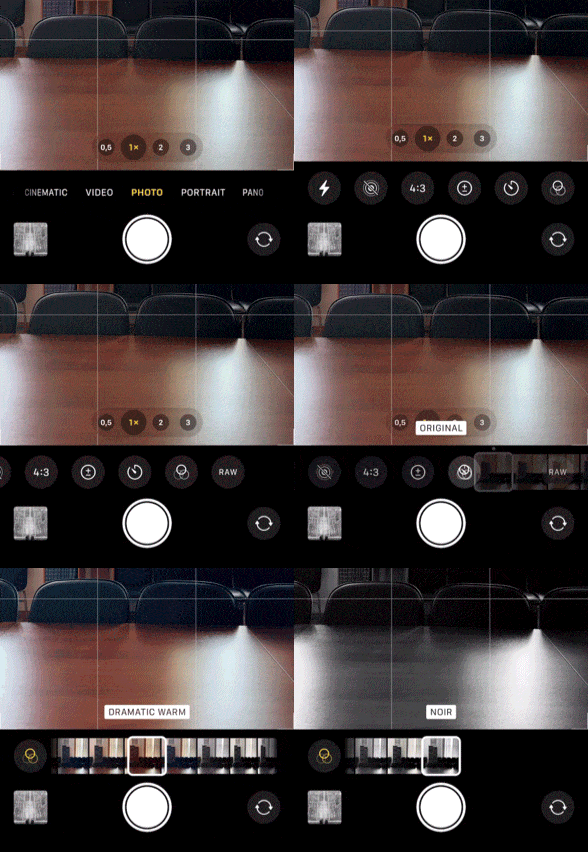
To facilitate this, the iPhone Camera app includes a dedicated "Noir" filter. By swiping up on the camera interface and selecting the three-circle filter icon, users can engage a high-contrast monochromatic preview. This real-time visualization is essential for identifying how different light temperatures and textures will translate into grey values. Crucially, these filters are non-destructive; the iPhone captures the full color data in the background (especially when shooting in Apple ProRAW), allowing the photographer to revert to color or adjust the tonal range during the editing phase without degrading image quality.
Strategic Composition: Minimalism and the Utility of Negative Space
In the dense architectural landscape of a modern metropolis, the primary challenge for the street photographer is the management of clutter. Minimalism has emerged as a dominant trend in mobile photography, characterized by the use of "negative space"—the empty areas surrounding a subject.
Data from visual psychology studies indicate that the human eye is drawn to the point of highest contrast within a simplified frame. To achieve this, photographers are increasingly scouting locations using tools like Google Maps Street View to identify open plazas, parks, and minimalist architectural sites before ever arriving on the scene. The strategy involves finding a clean, expansive background and waiting for a single human subject to enter the frame. By centering the subject or adhering to the rule of thirds within a vast "empty" space, the photographer creates a powerful focal point that demands the viewer’s undivided attention.
Architectural Integration: Leading Lines and Geometric Rhythm
The urban environment is a grid of potential leading lines—structural elements that guide the viewer’s eye toward the intended subject. Roads, bridges, tunnels, and even road markings serve as the scaffolding of a successful street photo.
The Role of Converging Perspectives
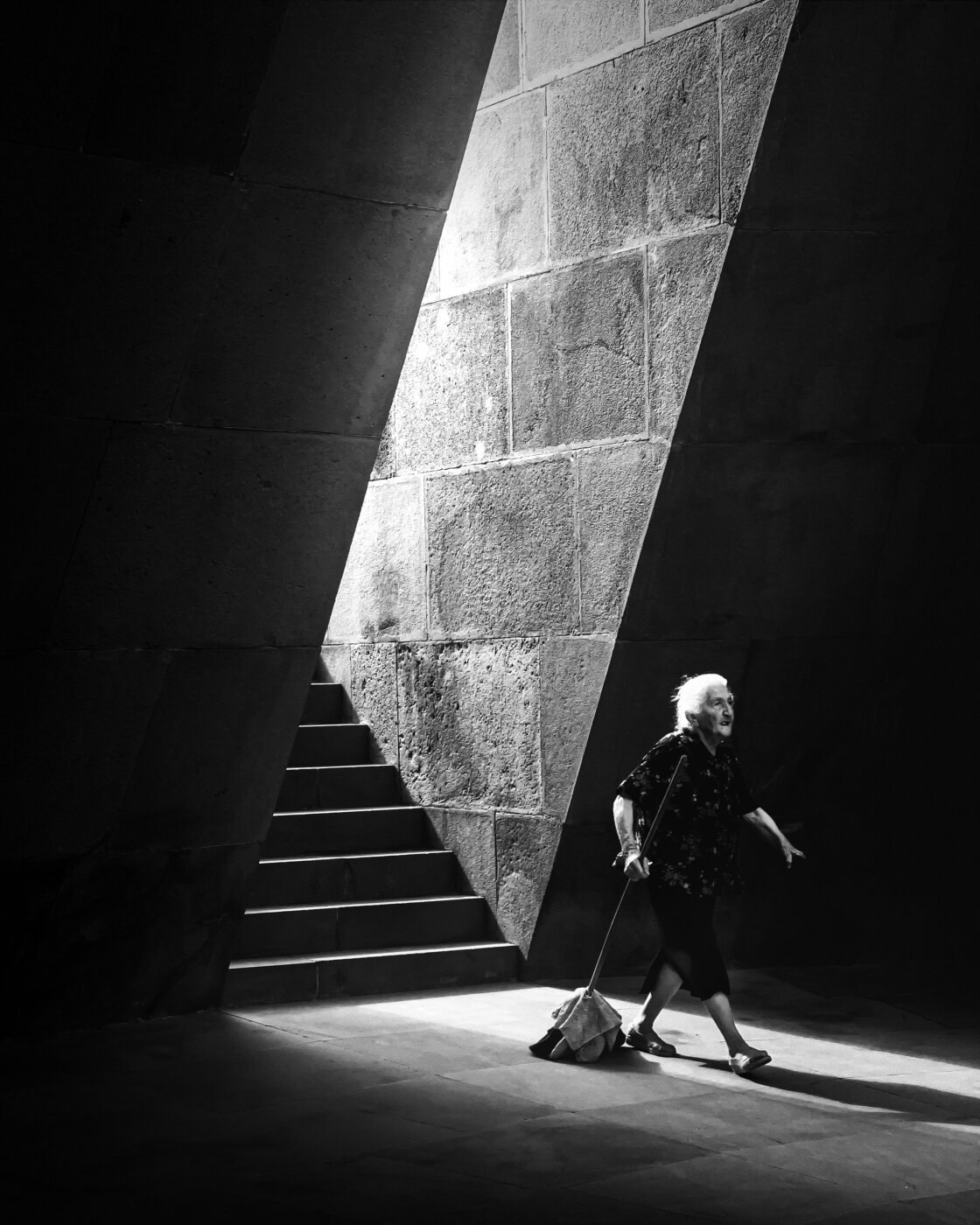
When a photographer positions themselves so that architectural lines start from the corners of the frame and converge toward the center, they create a sense of three-dimensional depth on a two-dimensional screen. In black and white, these lines become even more pronounced as the lack of color emphasizes the contrast between the structure and the sky.
Pattern Recognition in Modernism
Modern architecture often utilizes repetitive facades, pillars, and windows. These patterns create a rhythmic quality in a photograph. Capturing these patterns requires a high degree of precision; photographers often utilize the iPhone’s built-in grid tool to ensure perfect symmetry. When a human subject is introduced into a repetitive pattern, they act as a "pattern break," providing a necessary anchor for the image and adding a layer of human interest to an otherwise sterile architectural study.
Advanced Framing and the Physics of Light
Framing is a compositional technique where the photographer uses elements within the scene—such as archways, doorways, or windows—to create a "frame within a frame." This method is particularly effective in black and white, where the structural frame can be rendered as a dark silhouette, pushing the viewer’s gaze toward the lighter subject in the center.
Utilizing Burst Mode for Temporal Precision
Street photography is often defined by the "decisive moment." To ensure this moment is captured, the use of Burst Mode is indispensable. By dragging the shutter button to the left or utilizing the volume-up button, an iPhone can capture up to 10 frames per second. This allows the photographer to select the exact millisecond when a subject’s stride or posture perfectly aligns with the architectural environment.
Exposure Compensation and Shadow Play
One of the most powerful tools in the iPhone’s arsenal is the exposure compensation slider (the +/- icon). In street photography, "correct" exposure is often subjective. By manually reducing exposure by -1 or -2 stops, a photographer can deepen shadows into pure black, creating a dramatic, high-contrast look. This technique is essential for two specific styles:
- Silhouettes: By shooting toward a light source (the sun, a brightly lit window, or a street lamp) and lowering the exposure, the subject is reduced to a mysterious dark outline.
- Shadow Photography: During the "Golden Hour"—the period shortly after sunrise or before sunset—the low angle of the sun creates elongated shadows. In black and white, the shadow of a person can often be more visually compelling than the person themselves.
Post-Processing: The Final Polish of Digital Negatives
While the initial capture is vital, the "cleaning" of a street photo in post-production is what separates professional-grade imagery from snapshots. The mobile editing ecosystem has matured significantly, with apps like Adobe Lightroom Mobile and TouchRetouch offering desktop-class features.
Tonal Adjustment
The built-in Photos app on iOS provides robust tools for adjusting contrast, highlights, and shadows. Increasing the contrast in a black and white image adds a "punchy" feel, while adjusting the "Black Point" ensures that the darkest areas of the image are truly black, providing a solid foundation for the rest of the tonal range.
Digital Cleanup and Object Removal
Minimalism often requires the removal of distracting elements that could not be avoided during the shoot—such as trash cans, stray signs, or photobombing pedestrians. Tools like the "Healing" brush in Lightroom or the dedicated removal algorithms in TouchRetouch allow photographers to maintain the purity of their compositions. As computational photography continues to advance, these AI-driven tools have become nearly indistinguishable from manual cloning and stamping, preserving the integrity of the original scene while enhancing its visual impact.
Broader Implications: The Democratization of the Visual Archive
The shift toward iPhone street photography represents a significant democratization of the medium. As noted by Maksim Kyshtymov, a designer and iPhone photography specialist, the portability of the smartphone grants a level of freedom and anonymity that traditional DSLR or mirrorless cameras cannot match. In many urban environments, a large professional camera can be perceived as intrusive, whereas a smartphone allows the photographer to blend into the crowd, capturing more candid and authentic moments of human life.
This accessibility has led to a massive increase in the documentation of urban life, creating a vast, real-time visual archive of the 21st century. The implications for social history and urban planning are profound, as these monochromatic glimpses into city life provide a record of how humans interact with their built environments.
Conclusion: The Future of the Pocket Studio
As iPhone hardware continues to evolve—with rumors of even larger sensors and improved periscope zoom lenses on the horizon—the gap between mobile and traditional photography will continue to narrow. However, the core principles of black and white street photography remain rooted in the artist’s ability to see light and structure. By mastering the eight techniques of native B&W shooting, minimalism, leading lines, patterns, framing, silhouettes, shadows, and precise editing, the modern photographer can leverage the iPhone not just as a communication device, but as a powerful studio for capturing the timeless essence of the street. The transition from color to monochrome is more than an aesthetic shift; it is a commitment to a deeper, more structured way of witnessing the world.