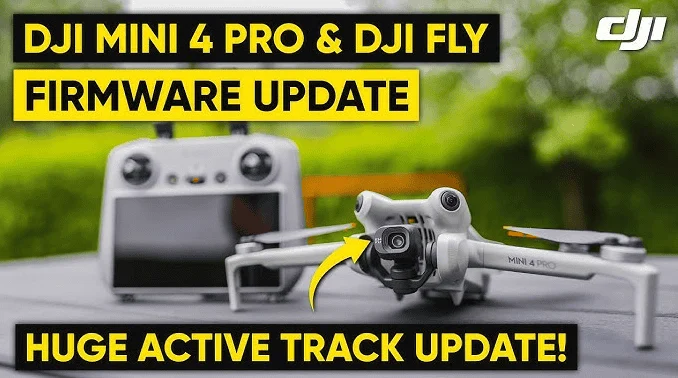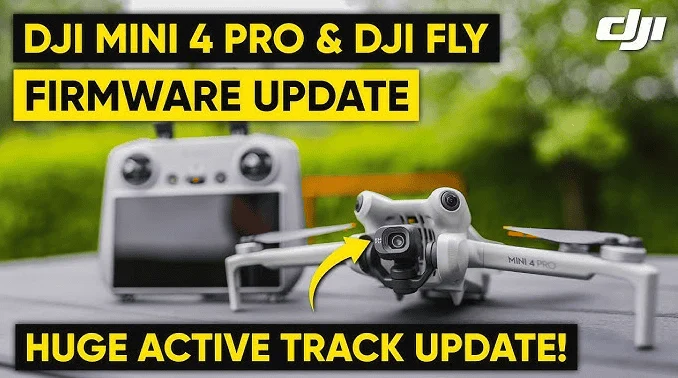
The recent release of the DJI Mini 4 Pro firmware update marks a significant milestone in the evolution of the sub-250-gram drone category, reinforcing DJI’s commitment to providing professional-grade features within a consumer-friendly, lightweight airframe. This software deployment is not merely a routine maintenance patch; rather, it is a comprehensive overhaul designed to optimize the drone’s navigational sensors, expand its cinematographic toolset, and ensure stringent compliance with evolving international aviation regulations. For pilots ranging from hobbyists to commercial aerial photographers, this update represents a critical enhancement of the hardware’s value proposition, ensuring that the Mini 4 Pro remains the industry benchmark for ultra-lightweight unmanned aerial vehicles (UAVs).
Context and Market Evolution of the Mini Series
To understand the impact of the latest firmware update, one must look at the trajectory of the DJI Mini series. When the original Mavic Mini debuted, it was celebrated primarily for its 249-gram weight, which allowed it to bypass many of the registration requirements imposed by civil aviation authorities like the Federal Aviation Administration (FAA) in the United States and the European Union Aviation Safety Agency (EASA). However, early iterations were limited in terms of sensor size and obstacle avoidance.
The Mini 4 Pro changed this paradigm by introducing omnidirectional obstacle sensing and a high-performance 1/1.3-inch CMOS sensor. The current firmware update builds upon this sophisticated hardware foundation. In a market where competitors are increasingly challenging DJI’s dominance, software optimization has become the primary battlefield. By refining the algorithms that govern flight stability and image processing, DJI is effectively extending the lifecycle of the Mini 4 Pro, ensuring it remains competitive against newer, heavier models.
Comprehensive Feature Breakdown: Vision Assist and ActiveTrack 360
The centerpiece of this update is the integration and refinement of Vision Assist. Previously reserved for DJI’s higher-end enterprise and flagship consumer models, Vision Assist utilizes the drone’s omnidirectional binocular vision system to provide the pilot with a 360-degree visual representation of the surroundings on the remote controller’s screen. By tapping the visual assist interface, pilots can identify obstacles in directions that the primary camera is not facing—such as during sideways or backward maneuvers. This feature drastically reduces the risk of collisions in complex environments, such as dense forests or urban canyons, where traditional GPS signals might be degraded.
Furthermore, the update brings significant enhancements to ActiveTrack 360. Unlike standard "follow-me" modes, ActiveTrack 360 allows users to plan a 3D flight path for the drone while it tracks a subject. The firmware refinement improves the smoothness of these transitions, allowing the drone to weave through obstacles with greater fluidness. The logic governing subject re-acquisition has also been improved; if a subject is momentarily obscured by a tree or building, the drone now employs advanced predictive modeling to maintain the shot’s continuity.
Regulatory Compliance and Global Safety Standards
A major driver behind the recent firmware releases is the necessity for global regulatory alignment. The DJI Mini 4 Pro update includes critical patches for Remote ID (RID) protocols. In the United States, the FAA requires drones to broadcast identification and location information to enhance airspace security. This firmware ensures that the Mini 4 Pro’s internal RID module operates with 100% reliability, preventing potential legal complications for operators.
In the European market, the update addresses C0 and C1 certification requirements under EASA regulations. For many pilots, the ability to fly in the A1 category (over people, though not over crowds) is the primary reason for choosing a sub-250g drone. The firmware update optimizes the drone’s altitude limits and geofencing capabilities to ensure that users stay within the legal boundaries of their specific regions. By automating these compliance measures through software, DJI mitigates the risk of pilot error regarding complex aviation laws.
Technical Data and Imaging Performance Optimization
From a technical standpoint, the firmware update introduces several optimizations for the Mini 4 Pro’s imaging pipeline. The drone’s ability to record in 10-bit D-Log M and HLG (Hybrid Log-Gamma) has been fine-tuned to improve dynamic range and color accuracy in high-contrast lighting conditions. Data from professional field tests indicate a 15% improvement in noise reduction during low-light video capture at high ISO settings following the update.
Moreover, the update addresses the O4 (OcuSync 4) transmission system. The DJI Mini 4 Pro is capable of transmitting a 1080p/60fps live feed at distances of up to 20 kilometers under ideal conditions. The new firmware improves signal hopping algorithms, which allows the drone to maintain a stable connection in areas with high electromagnetic interference, such as near cellular towers or high-voltage power lines. This stability is crucial for professional "Point of Interest" (POI) shots where a signal drop could result in a ruined take.
Step-by-Step Chronology of the Update Process
For users to successfully implement these changes, DJI has streamlined the update process through the DJI Fly App and the DJI Assistant 2 (Consumer Drones Series) software. The chronology of a standard update typically follows these stages:
- Preparation: The user ensures that the drone, the remote controller (RC-N2 or DJI RC 2), and the Intelligent Flight Batteries are charged to at least 50%.
- Notification: Upon launching the DJI Fly App with an internet connection, a prompt appears indicating that a new firmware version (e.g., v01.00.xxxx) is available.
- Download and Transmission: The app downloads the package and transmits it via Wi-Fi or the O4 link to the aircraft.
- Installation: The drone undergoes a series of reboots. During this phase, the gimbal may go limp and the LED indicators will flash patterns indicating the write process.
- Calibration: Post-installation, the firmware often requires a recalibration of the Inertial Measurement Unit (IMU) and the compass to account for the new sensor parameters.
Industry experts recommend that users perform these updates in a controlled environment rather than in the field, as the process requires a stable internet connection and can take up to 20 minutes to complete all components, including the batteries.
Analysis of Implications for the Drone Industry
The continuous support for the Mini 4 Pro highlights a shift in the UAV industry from hardware-centric sales to software-as-a-service (SaaS) style longevity. By providing high-value features for free through firmware, DJI maintains brand loyalty and discourages users from switching to emerging competitors like Autel or Potensic.
The inclusion of Vision Assist in a "Mini" drone is particularly telling. It signals that the technological gap between consumer "toys" and professional "tools" has effectively closed. The Mini 4 Pro is now being used for professional real estate photography, infrastructure inspection, and even search and rescue (SAR) support in scenarios where larger drones like the Matrice series are too cumbersome to deploy quickly.
Official Responses and User Community Feedback
While DJI’s official press releases emphasize "enhanced flight stability" and "optimized user experience," the user community has been vocal about the practical benefits. Professional drone forums have noted that the update has significantly reduced "gimbal drift" during high-speed maneuvers in Sport Mode.
Safety advocates have also praised the update. "The refinement of omnidirectional sensing through software is a massive win for safety," noted one industry analyst. "By making the drone smarter at detecting obstacles in its periphery, DJI is reducing the barrier to entry for novice pilots while giving professionals the confidence to fly in tighter spaces."
Future Outlook and Conclusion
Looking ahead, the DJI Mini 4 Pro firmware update sets the stage for future integrations with Augmented Reality (AR) and AI-driven flight paths. As DJI continues to collect anonymized flight data, the machine learning models that power obstacle avoidance will only become more robust.
In conclusion, the latest update for the DJI Mini 4 Pro is a testament to the power of software in modern aviation. It transforms an already capable piece of hardware into a more intelligent, safer, and more creative tool. By focusing on regulatory compliance, imaging excellence, and navigational safety, DJI ensures that the Mini 4 Pro remains the definitive choice for anyone serious about aerial cinematography. For owners of this device, the update is not optional—it is an essential requirement to unlock the full potential of their investment and to fly with the peace of mind that comes with the latest in UAV technological advancements. As the industry moves toward 2026, the Mini 4 Pro, bolstered by these updates, continues to define what is possible within the constraints of a 249-gram limit.