The global agricultural sector is currently undergoing a profound technological metamorphosis, transitioning from traditional labor-intensive practices to a high-tech era defined by "Agriculture 4.0." At the forefront of this revolution is the deployment of Unmanned Aerial Vehicles (UAVs), commonly known as drones. Once reserved for military reconnaissance and later popularized as recreational gadgets for aerial photography, drones have now become indispensable tools for modern farmers seeking to optimize yields, reduce costs, and implement sustainable practices. This shift represents a move away from the era of heavy machinery and manual field surveys toward a digital ecosystem where data-driven decisions are made from the sky.
The Evolution of Aerial Technology in Modern Farming
The integration of drones into agriculture did not happen overnight. It is the result of a multi-decade evolution in remote sensing and automation. In the 1980s, Japan was a pioneer in this field, utilizing remote-controlled helicopters like the Yamaha R-MAX for crop dusting. However, these early machines were expensive, difficult to operate, and lacked the sophisticated sensors available today. The real turning point occurred in the early 2010s with the miniaturization of GPS technology, the improvement of lithium-polymer battery life, and the development of affordable multispectral sensors.
Today, the agricultural drone market is one of the fastest-growing segments of the UAV industry. According to recent market analysis reports, the global agricultural drone market was valued at approximately $1.5 billion in 2023 and is projected to reach over $5.7 billion by 2030, growing at a compound annual growth rate (CAGR) of over 20%. This growth is driven by a pressing need to feed a global population expected to reach 9.7 billion by 2050, requiring a 60% to 100% increase in food production amidst dwindling arable land and a changing climate.
Core Functional Applications: Beyond the Bird’s-Eye View
The utility of drones in agriculture extends far beyond simple visual inspections. They serve as multi-functional platforms capable of performing complex tasks that were previously impossible or prohibitively expensive.
1. Precision Crop Monitoring and Soil Analysis
One of the most significant advantages of drone technology is the ability to conduct high-resolution field mapping. Equipped with multispectral and thermal sensors, drones can capture data across different light wavelengths. This allows farmers to calculate the Normalized Difference Vegetation Index (NDVI), a graphical indicator that identifies the health of vegetation. By analyzing the amount of near-infrared light reflected by leaves, drones can detect "invisible" stress in plants—such as nutrient deficiencies, water stress, or early-stage pest infestations—weeks before they become visible to the human eye.
2. Automated Spraying Systems
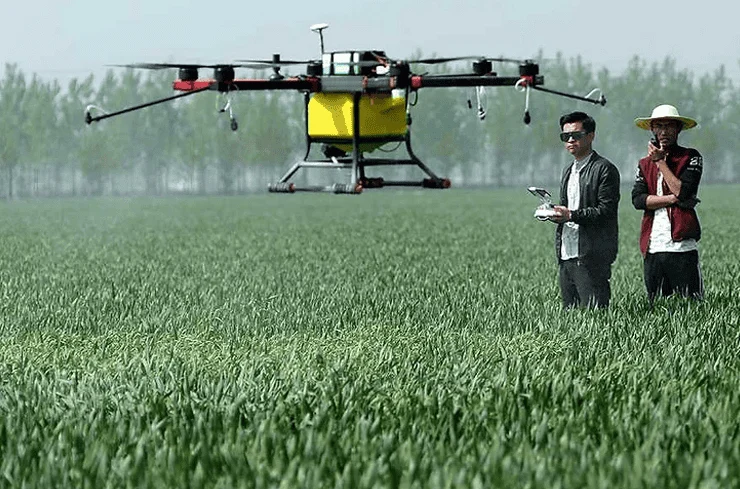
Traditional crop spraying, whether done by hand or by tractor, is often inefficient. Tractors can compact the soil and damage crops, while manual spraying exposes workers to potentially harmful chemicals and results in significant waste. Agricultural drones, such as the DJI Agras series or XAG platforms, are equipped with sophisticated spraying systems that use ultrasonic sensors and LiDAR to maintain a constant height above the crop. These drones can apply fertilizers, herbicides, and pesticides with surgical precision. Data suggests that drone spraying is up to 40 times faster than manual labor and can reduce chemical consumption by 30% due to the targeted nature of the application.
3. Seeding and Reforestation
In a newer application of the technology, drones are being used to plant seeds in areas that are difficult to reach by traditional means. Automated "seed pods" containing nutrients and moisture-retaining soil are fired into the ground by drones. This is particularly effective for reforestation efforts and for planting cover crops in hilly or muddy terrain where tractors cannot operate safely.
The Economic and Operational Impact: Data-Driven Efficiency
The adoption of UAVs provides a clear economic advantage through the reduction of "input" costs. In traditional farming, a "blanket approach" is often used, where the entire field receives the same amount of water and fertilizer. Drones enable "variable rate application," allowing farmers to apply resources only where they are needed.
Supporting data from field trials indicates that precision drone monitoring can increase crop yields by an average of 5% to 15% by allowing for earlier intervention in pest and disease outbreaks. Furthermore, the operational efficiency gained by replacing manual scouting with aerial surveys can reduce labor costs by nearly 20% on large-scale industrial farms. For smallholder farmers, particularly in developing regions, drone-as-a-service (DaaS) models are emerging, allowing them to rent drone services for specific tasks without the high upfront cost of purchasing the hardware.
Overcoming Challenges: The Path to Universal Adoption
Despite the clear benefits, the widespread adoption of drones in agriculture faces several hurdles. The primary challenge remains the initial investment cost. A professional-grade agricultural drone equipped with multispectral cameras and autonomous flight software can cost between $10,000 and $50,000. For many farmers, especially those in developing economies, this capital expenditure is a significant barrier.
Technical limitations also persist. Current battery technology typically limits flight times to 20–40 minutes, necessitating multiple battery swaps for large-scale operations. Additionally, the massive amount of data generated by a single drone flight requires high-speed internet and sophisticated software to process into actionable insights—infrastructure that is often lacking in rural areas.
Regulatory frameworks are another critical factor. Organizations like the Federal Aviation Administration (FAA) in the United States and the European Union Aviation Safety Agency (EASA) have strict rules regarding "Beyond Visual Line of Sight" (BVLOS) operations. In many jurisdictions, drone operators must hold specific pilot certifications, and the use of heavy spraying drones is subject to rigorous safety and environmental regulations.
Stakeholder Perspectives and Industry Reactions
The agricultural community has shown a mix of cautious optimism and enthusiastic support for these changes. "The drone is no longer a toy; it is a vital piece of farm equipment, much like the tractor was a century ago," states a representative from a leading agricultural technology consortium. Industry experts argue that the integration of Artificial Intelligence (AI) with drone data will be the next leap forward, allowing for fully autonomous farm management systems.
Government agencies are also beginning to recognize the potential of UAVs to bolster national food security. Several countries have initiated subsidy programs to help farmers purchase drones, viewing the technology as a way to make the agricultural sector more attractive to a younger, tech-savvy generation. This "youth-in-agriculture" movement is seen as essential for replacing an aging farming workforce.
Future Implications: Sustainability and Climate Resilience
Looking ahead, the role of drones will likely expand as the world grapples with the effects of climate change. As weather patterns become more unpredictable, the ability to monitor soil moisture levels in real-time and manage irrigation with extreme precision will be vital for water conservation. Drones also contribute to a lower carbon footprint for the industry; electric drones produce zero operational emissions compared to diesel-powered tractors and crop-dusting planes.
The "Internet of Things" (IoT) in agriculture will see drones acting as mobile nodes in a larger network of ground sensors and satellites. This interconnectedness will provide a holistic view of the farm ecosystem, from the chemical composition of the soil to the micro-climates affecting individual rows of crops.
Conclusion: A New Horizon for Global Agriculture
The rise of drones in the agricultural sector signifies a fundamental shift in how humanity interacts with the land. By bridging the gap between high-level satellite imagery and ground-level manual labor, UAVs provide a level of granular detail that was previously unattainable. They represent the ultimate tool for precision—allowing for the management of plants rather than just fields.
While challenges regarding cost, regulation, and technical training remain, the trajectory of the technology is clear. As drones become more autonomous, affordable, and integrated with AI, they will transition from being a competitive advantage for early adopters to a standard requirement for any viable farming operation. In the sky above the world’s fields, a new era of efficiency and sustainability is taking flight, ensuring that the ancient practice of farming remains resilient in the face of modern global challenges. The future of agriculture is not just rooted in the earth; it is increasingly defined by the innovations soaring above it.