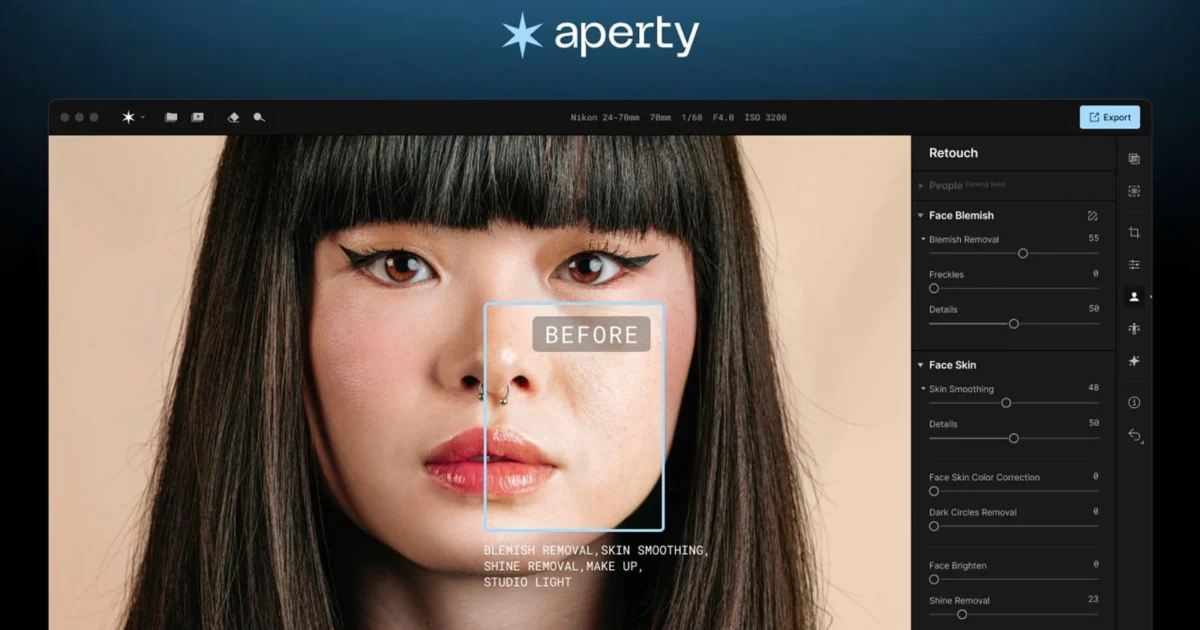
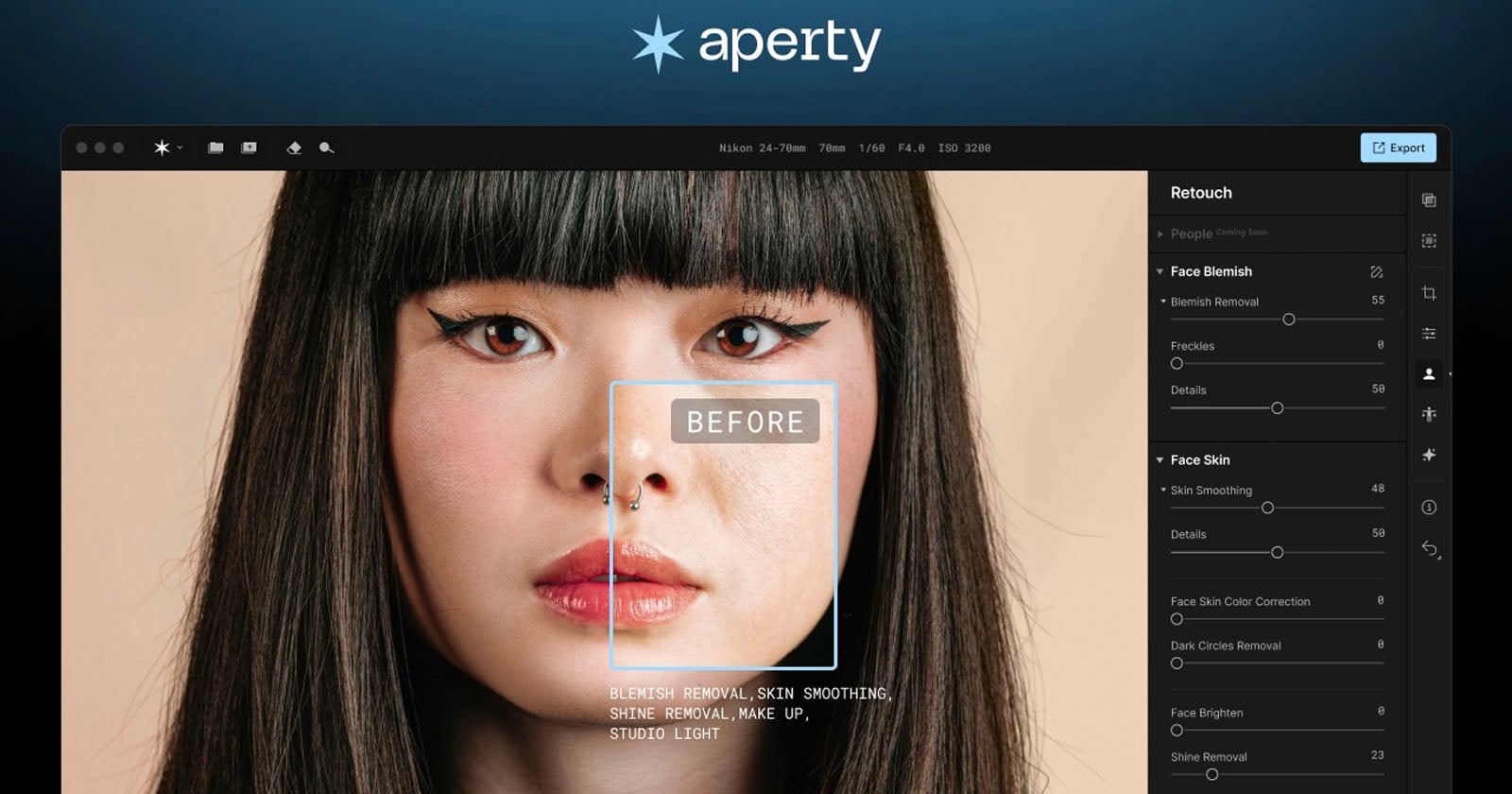
Skylum, a prominent developer in the photo editing software industry, has announced the abrupt discontinuation of its specialized AI Portrait Editor, Aperty, effective November 4. This decision comes less than a year after the application’s launch in 2024, when the company had explicitly promised purchasers a robust five, and later clarified as three, years of ongoing updates and development. The move has sparked considerable concern and frustration among Aperty users who invested in lifetime licenses under the expectation of long-term support, highlighting a recurring pattern of product lifecycle management from the company formerly known as MacPhun.
The Abrupt Farewell: Aperty’s Untimely End
In an email circulated to its user base, Skylum officially communicated its decision to "say goodbye to Aperty," stating that the application would cease operations on November 4. The company acknowledged the perceived value of Aperty to "thousands of other photographers," asserting that the decision was "not an easy one to make." However, Skylum framed the discontinuation as a strategic necessity, explaining, "sometimes you have to let go of something good to build something genuinely special."
The core rationale provided by Skylum centers on a strategic pivot towards its flagship product, Luminar. The company articulated its desire to "build products that bring joy to photography and editing, not just do the job well," and confirmed its intention to "focus on Luminar… enhancing it with new features and technologies that will help photographers release their creative vision to the world." Skylum further indicated that Luminar already integrates Aperty’s portrait-editing capabilities and pledged to improve these features, aiming for Luminar to become "an ultimate editing tool for photographers of every kind." While existing Aperty owners will technically retain the ability to use the software, Skylum’s statement strongly implies that the application will receive no further updates or support, effectively rendering it an orphaned product.
A Chronology of Promises and Disappointment
Aperty was introduced in 2024 as a dedicated AI-powered portrait editor, designed to streamline and enhance the retouching process for photographers. At its launch, Skylum presented a compelling value proposition, including the offer of lifetime licenses that came with a significant commitment: five years of updates. This promise was later referenced as three years in various communications, still representing a substantial period of anticipated support for a software product. The company also alluded to releasing a detailed roadmap for upcoming Aperty updates in 2025, a plan that will now clearly never materialize.
The first signs of Aperty’s impending fate began to surface in the preceding weeks. As early as September 20, members of the Aperty user community observed and reported a palpable shift in the product’s availability and support. Screenshots circulating within user groups, such as the Aperty Community on Facebook, depicted customer support representatives informing users that Aperty was "currently not available for purchase." A Skylum representative, identified as Serhii Leskov, expressed apologies for any disappointment, stating, "We expect to share more official information and updates regarding the product in the coming weeks." Concurrently, the standalone Aperty Instagram account, which served as a dedicated channel for product updates and community engagement, mysteriously disappeared, further fueling user speculation and concern. These informal indicators preceded the official discontinuation announcement, leaving many users feeling blindsided and neglected.
The discrepancy between the initial promise of multiple years of updates and the actual support lifecycle is particularly stark. For instance, the last update to Aperty was released in March, preceded by one in January. Before that, a seven-month gap separated updates. This infrequent update schedule, coupled with the now-confirmed cessation of all future updates, falls drastically short of the promised three-to-five-year commitment, significantly eroding user confidence and trust. Lifetime licenses, which were sold for approximately $250, represented a substantial investment for many photographers who expected sustained value and functionality over an extended period. The premature end of Aperty means that these users are left with an unsupported application that will inevitably face compatibility issues with future operating systems, lack new features, and potentially pose security risks over time.
Skylum’s Recurring Pattern of Product Lifecycle Management
The discontinuation of Aperty is not an isolated incident but rather fits into a discernible pattern of product strategy and lifecycle management that has characterized Skylum, and its predecessor, MacPhun, for several years. The company has a history of introducing new standalone applications that often supersede or effectively replace existing products, frequently requiring existing customers to purchase the new version rather than receiving it as a direct update or upgrade.
A notable example occurred in 2021 with the launch of Luminar Neo. This release generated considerable backlash among Skylum’s customer base because it effectively sunsetted previous iterations, Luminar and Luminar AI. Customers who had invested in these earlier versions were pressured to purchase the new Luminar Neo, rather than receiving a seamless update or discounted upgrade path that might typically be expected for loyal users. This strategy, perceived by many as a forced migration, caused widespread confusion and frustration, leading to significant criticism regarding customer loyalty and long-term product support.
Prior to that, a similar transition was observed with Aurora HDR, a specialized high dynamic range imaging software. Skylum eventually integrated many of Aurora HDR’s capabilities into its broader Luminar platform, effectively discontinuing standalone support for Aurora HDR and guiding users towards Luminar 4. These repeated instances suggest a business model where Skylum prioritizes the development and promotion of new, often standalone, applications, only to later consolidate features into its core Luminar offering, leaving earlier adopters of the specialized tools in a precarious position. This approach, while potentially streamlining internal development and marketing efforts, consistently generates friction and distrust within its customer base, who often feel their initial investments are devalued prematurely.
The Broader Context of AI and Software Development
The rapid evolution of artificial intelligence, particularly in the realm of image processing, presents both immense opportunities and significant challenges for software developers. The specialized nature of AI-powered tools like Aperty, designed specifically for portrait retouching, reflects a trend towards highly targeted applications that leverage advanced algorithms for specific tasks. However, this fast-paced environment also means that technologies can become integrated or superseded quickly.
For companies like Skylum, balancing the development of niche, specialized tools with the maintenance and enhancement of a flagship product like Luminar is a complex strategic decision. Maintaining multiple distinct software products, each with its own development roadmap, support infrastructure, and marketing efforts, can be resource-intensive. In a market where AI capabilities are increasingly expected as standard features within broader editing suites, consolidating specialized functionalities into a single, comprehensive platform often appears to be a logical business move.
From an industry perspective, this consolidation reflects a broader trend. Many major software developers are integrating advanced AI features directly into their core applications rather than maintaining separate, dedicated tools. This approach aims to provide users with a more seamless and powerful all-in-one solution, reducing the need for multiple subscriptions or purchases. However, the execution of such transitions is critical. When companies fail to honor explicit promises regarding product longevity and updates, especially for "lifetime" licenses, they risk not only losing individual customers but also damaging their overall brand reputation and credibility within the competitive software market.
Implications for Users and Industry Trust
The discontinuation of Aperty carries significant implications for its user base. Photographers who purchased lifetime licenses for $250 did so under the explicit assurance of years of ongoing support and updates. For these users, Aperty represented a significant investment in a tool they expected to rely on for a considerable period. The premature withdrawal of support means their investment has been devalued, as the software will eventually become obsolete, incompatible with newer operating systems, or simply lack the cutting-edge features that new AI developments will bring. While they can technically continue to use the current version, the lack of future updates translates to a static, increasingly outdated tool in a dynamic technological landscape.
Beyond the immediate financial impact, there is a profound erosion of consumer trust. Software companies thrive on the goodwill and loyalty of their users, often built on promises of innovation, reliability, and long-term support. When these promises are broken, particularly regarding "lifetime" licenses and multi-year update commitments, it creates a perception of unreliability and a lack of respect for customer investment. This can make potential customers hesitant to purchase future products from the company, especially those offered with similar long-term assurances.
The Aperty situation also highlights a broader ethical concern within the software industry: the balance between agile development and long-term commitment. In a rapidly evolving tech landscape, companies may feel compelled to pivot quickly, but doing so at the expense of previously made commitments can have lasting negative repercussions. It underscores the importance of transparency and realistic expectations in product roadmaps and licensing agreements.
Looking Ahead: The Future of Luminar and Skylum
Skylum’s decision to discontinue Aperty is framed as a strategic move to concentrate resources on Luminar, with the goal of making it an "ultimate editing tool." This consolidation suggests that Skylum believes its future lies in a single, powerful, and comprehensive AI-driven photo editor, rather than a fragmented portfolio of specialized applications. The company has explicitly stated that Luminar already incorporates Aperty’s portrait-editing capabilities and has committed to further enhancing these features within its flagship product.
For existing Aperty users, this means that while their standalone application will no longer be supported, the underlying AI technology and features they valued are expected to be refined and integrated into Luminar. However, this does not necessarily translate into a seamless transition for all Aperty owners, especially those who may not own Luminar or prefer a dedicated, simplified interface for portrait work. It also raises questions about potential upgrade paths or compensatory measures for those who feel their initial Aperty investment was rendered moot.
Ultimately, the Aperty discontinuation is a stark reminder of the volatile nature of software development in the AI era. While Skylum aims to strengthen its core offering, the immediate fallout involves a segment of its customer base feeling let down. The long-term success of this strategy will depend not only on the technological advancements delivered within Luminar but also on Skylum’s ability to rebuild and maintain trust with its user community through consistent communication, transparent policies, and reliable product support moving forward. The company’s repeated patterns of product transitions necessitate a careful evaluation of its commitment to long-term customer satisfaction as it navigates the competitive landscape of AI-powered photo editing.