Owls, with their enigmatic presence and silent flight, have long captivated human imagination, embodying a sense of ancient wisdom and untamed wilderness. This inherent mystique makes them an irresistible subject for photographers worldwide, who seek to immortalize their captivating characteristics, profound beauty, and effortless grace through the lens. Owl photography transcends mere documentation; it is an artistic endeavor that deepens our fascination and understanding of these intriguing nocturnal predators, offering a unique window into their secretive lives. Successful and ethical owl photography, however, demands more than just technical skill; it necessitates a profound respect for wildlife, extensive knowledge of their habitats and behaviors, and an unwavering commitment to minimizing disturbance.
Understanding Owl Ecology: The Foundation of Successful Photography
The journey to capturing enchanting owl photographs begins long before a camera is raised. It is rooted in diligent research and a deep appreciation for the ecological intricacies that govern an owl’s existence. An understanding of these factors significantly enhances the chances of locating these elusive birds and securing compelling images while ensuring their well-being.
Global Reach and Habitat Diversity
Owls are among the most geographically widespread avian species, inhabiting nearly every continent save Antarctica. Their adaptability allows them to thrive in an astonishing array of environments, from the dense canopies of tropical rainforests to the stark expanses of arctic tundra. They can be found in vast forests, sprawling plains, arid deserts, rugged canyons, wetlands, and even surprisingly, within the bustling confines of densely populated cities. This global distribution means that, regardless of a photographer’s location, there is a high probability of an owl species residing nearby, making them accessible subjects throughout all seasons of the year. While some species exhibit remarkable plasticity, adapting to multiple habitat types, others are specialists, confined to specific ecological niches. Furthermore, many species undertake seasonal migrations, driven by factors such as food availability, snow depth, and population dynamics, presenting varying opportunities throughout the year.

Decoding Owl Behavior and Activity Patterns
To locate owls effectively, photographers must become amateur ornithologists, delving into the specific behaviors of local owl species. The sheer diversity of owls—over 200 species globally—means that generalizations can be misleading. For instance, the Great Horned Owl (Bubo virginianus), common across North and Central America, is a master of camouflage, blending seamlessly into its arboreal surroundings, rendering it almost invisible to the casual observer. Similarly, the Tawny Owl (Strix aluco) of Europe, despite its size, maintains an incredibly secretive nature, making it notoriously difficult to spot.
Most owls are predominantly nocturnal, becoming active from sunset onwards. A primary strategy for finding them involves listening for their distinctive calls or hoots as dusk descends or shortly thereafter. Regular evening outings to listen can help identify their presence in an area. Once calls are detected, the visual search begins. Owls typically roost at least halfway up trees, often on larger branches close to the main trunk, but rarely in the uppermost canopy. As light fades, they may move towards the tree edges. Training the eye to identify "odd shapes" that deviate from natural tree formations is a skill honed over time and practice. In low light, searching for their silhouettes against the twilight sky can also prove fruitful.

Leveraging Local Resources and Citizen Science
The internet and local libraries offer invaluable free resources for identifying resident owl species. Photographers should research their relative abundance, feeding habits, diurnal versus nocturnal activity, seasonal migration patterns, and breeding behaviors. This comprehensive knowledge is crucial, as abundance does not always equate to ease of sighting; factors like camouflage and secretive habits play significant roles. Engaging with local birding groups, Audubon societies, or citizen science platforms like eBird can provide real-time sighting information and contribute to broader conservation efforts. These communities often share observations, which can be a legitimate way to learn about recent owl activity without directly disturbing the animals.
Seasonal Movements and Migration
Owl migration is a complex phenomenon, often influenced by the fluctuating availability of their prey, particularly small rodents and birds, which can be impacted by harsh winters or deep snow. For example, some Northern Hawk Owls (Surnia ulula) and Great Gray Owls (Strix nebulosa) may move south during irruptive years when prey populations crash in their northern breeding grounds. Understanding these migratory patterns, as well as more localized seasonal shifts in roosting and hunting territories, allows photographers to plan their expeditions for optimal encounters. Winter, for instance, can often be a prime time to find owls as leafless trees provide clearer views and some species congregate in communal roosts.

Ethical Imperatives in Owl Photography
The increasing popularity of wildlife photography, fueled by social media, has inadvertently created new pressures on wild animals. For species as sensitive as owls, ethical conduct is paramount. Conservation experts and leading wildlife photography organizations universally emphasize that the welfare of the subject must always take precedence over the desire for a photograph.
Minimizing Disturbance: The Photographer’s Responsibility
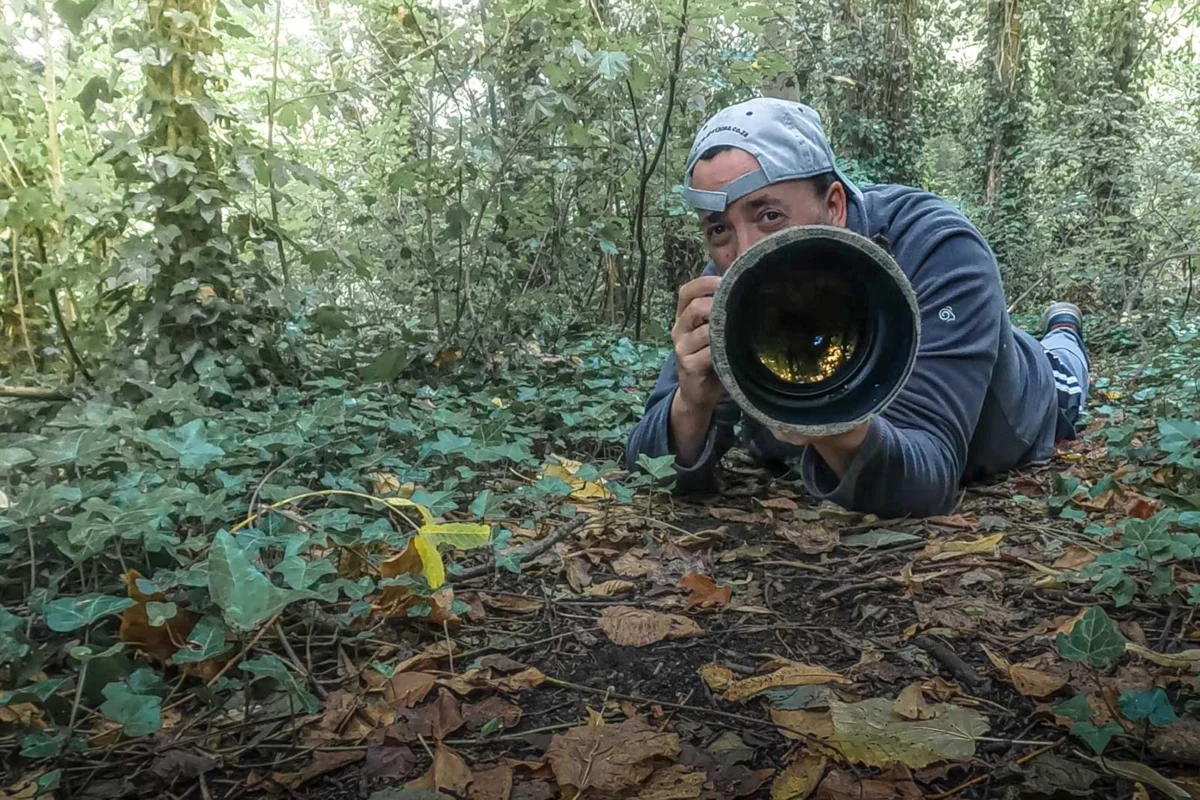
Owls, especially during their daytime roosting hours, are resting and conserving energy for nocturnal hunting. Any disturbance can force them to expend vital energy, potentially impacting their hunting success and overall health. Approaching too closely can cause stress, leading to a change in roosting location or even abandonment of a territory. Photographers must maintain a respectful distance, typically 75 to 100 feet, and immediately back away if the owl exhibits any signs of nervousness, such as head bobbing, eye narrowing, or flight. The use of long telephoto lenses (300mm to 600mm or more) is not merely for filling the frame; it is a critical tool for maintaining this ethical distance. Furthermore, avoiding direct eye contact or sudden movements can help keep the owl calm. When an owl is found, particularly at a known roost, repeated visits should be minimized to prevent habituation or undue stress. "Leave no trace" principles extend beyond physical litter to include minimizing acoustic and visual impact.

The Detrimental Impact of Baiting
A significant ethical concern in owl photography is the practice of baiting. This involves luring owls with live or dead prey to achieve specific flight or hunting shots. Wildlife photography associations strongly condemn baiting because it can:
- Alter natural behavior: Owls can become reliant on human-provided food, losing their natural hunting instincts and fear of humans. This can lead to dangerous situations for both owls and people.
- Increase vulnerability: Habituated owls are more susceptible to vehicle strikes, predation, or human-wildlife conflict.
- Spread disease: Introducing non-native prey or attracting multiple predators to a single site can facilitate disease transmission.
- Disrupt ecosystems: Concentrating owls in one area can deplete local prey populations or displace other predators.
Responsible photographers prioritize authentic encounters, understanding that a truly captivating image reflects natural behavior, not a manipulated scene. The challenge of capturing an owl in its natural state, through patience and fieldcraft, adds immense value to the resulting photograph.

Essential Equipment for Capturing Elusive Owls
Owl photography often takes place in challenging lighting conditions, demanding specialized equipment that can perform under low light and capture fast-moving subjects.
Optimizing Lenses for Distance and Low Light
Given the necessity of maintaining a respectful distance, a long telephoto lens is indispensable. Lenses ranging from 300mm to 600mm are commonly employed, often paired with teleconverters (e.g., 1.4x or 2x) to extend focal length further. These lenses allow photographers to fill the frame with the owl while remaining far enough away to avoid disturbance. The unique perspective achieved from a distance, where the photographer is often at a lower elevation than the owl, can create images that appear to be taken at eye level, enhancing the intimate feel of the portrait.

Crucially, lenses with wide maximum apertures (e.g., f/2.8, f/4, or f/5.6) are highly recommended. These "fast" lenses gather more light, enabling faster shutter speeds in dim conditions, which is essential for freezing motion and ensuring sharpness. While f/2.8 lenses offer superior low-light performance, their cost can be prohibitive. Lenses at f/4 or f/5.6 are excellent alternatives, especially when coupled with modern camera bodies offering impressive high-ISO capabilities. Photographers should typically shoot at the widest aperture to maximize light-gathering and achieve a pleasing background blur (bokeh), then stop down if more depth of field is desired and light permits.
Stabilization and Remote Control: Tripods and Shutter Releases
Handholding a heavy telephoto lens for extended periods is physically demanding and prone to camera shake, particularly at slower shutter speeds. A sturdy tripod, preferably with a gimbal head for fluid movement, provides crucial stability, allowing for precise composition and sharp images. While a tripod can initially feel restrictive for dynamic flight shots, it enables patient observation and readiness for an owl’s subtle movements at its perch. Many photographers adopt a hybrid approach: using a tripod for static perched shots and detaching the camera for anticipated flight sequences. A monopod offers a lighter, more mobile alternative, providing vertical support while maintaining greater flexibility than a tripod.

In low-light scenarios, where shutter speeds may drop, a remote shutter release device (wired or wireless) is invaluable. It eliminates camera shake caused by pressing the shutter button directly, ensuring maximum sharpness, especially when the camera is mounted on a tripod.
Camera Technology: ISO and Autofocus Considerations
Modern camera bodies, particularly those designed for professional wildlife photography, offer advanced features critical for owl photography. High ISO performance is paramount, allowing photographers to increase sensitivity to light without introducing excessive digital noise, thus maintaining fast shutter speeds. Advanced autofocus systems, featuring multiple customizable points, subject tracking capabilities, and low-light sensitivity, are also essential. These systems enable rapid and accurate focusing on fast-moving owls in challenging light, drastically improving the hit rate for sharp flight shots.

Mastering the Shot: Unique Opportunities and Techniques
Owls possess a suite of distinctive anatomical and behavioral traits that offer unique photographic opportunities, allowing for the creation of truly compelling and characterful images.
Highlighting Distinctive Owl Features
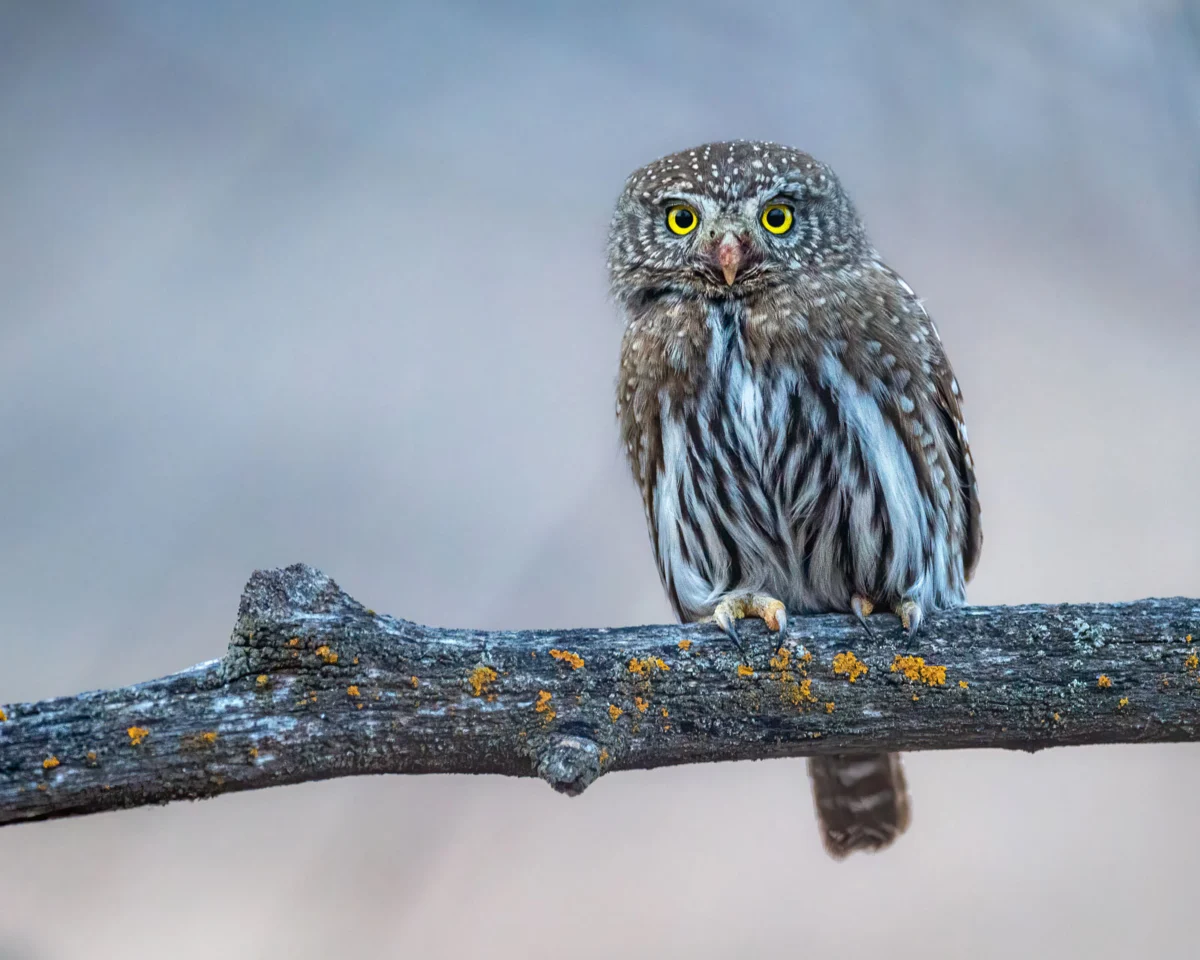
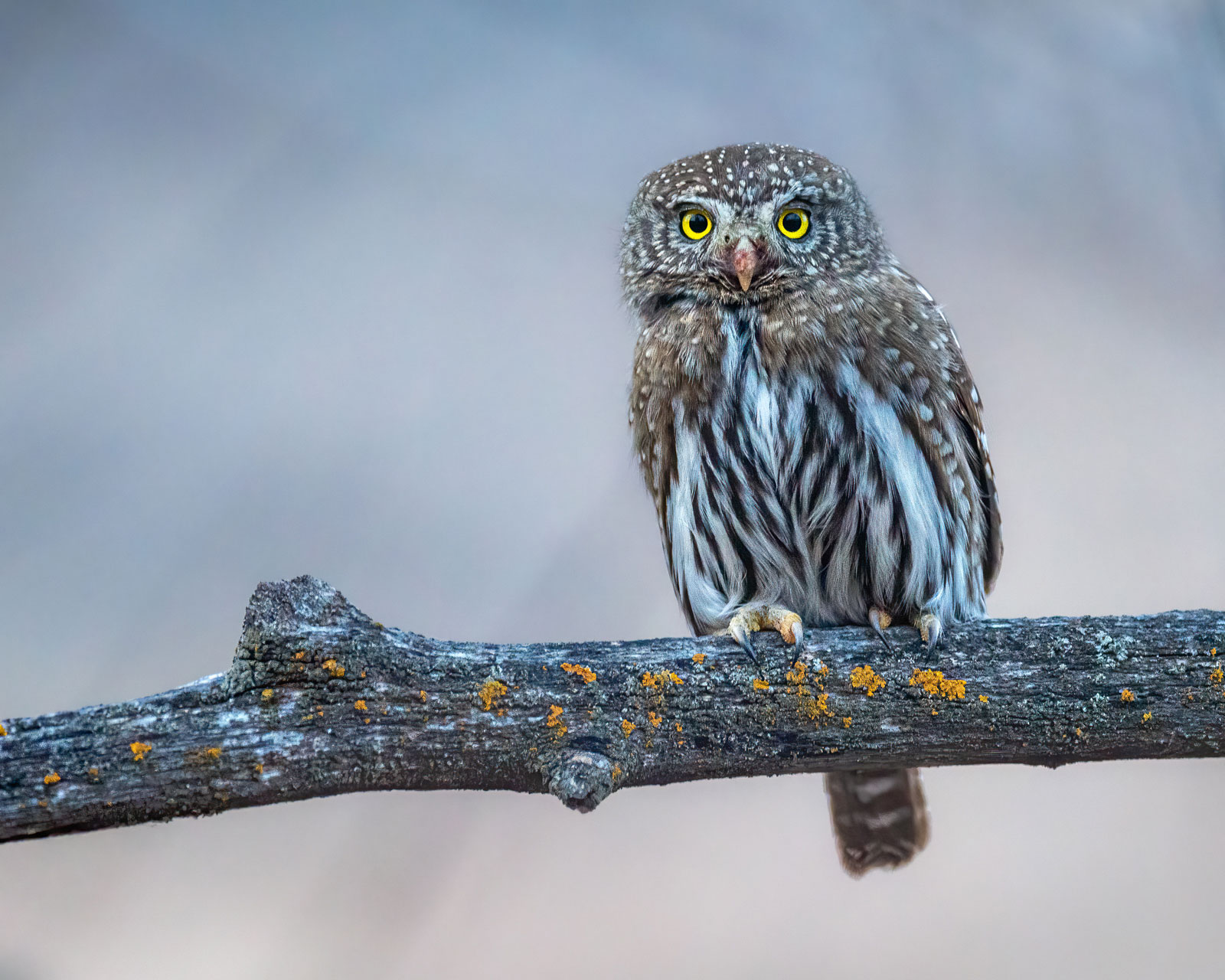
One of the most striking features of many owl species is their large facial discs. These parabolic structures, composed of stiff feathers, act like satellite dishes, channeling sound waves to their asymmetrical ears, granting them exceptional hearing. Photographically, these discs frame the owl’s intense, forward-facing eyes, creating a powerful central point of interest. Since the eyes and facial disc usually lie on the same focal plane, achieving sharp focus on the entire face is relatively straightforward. Photographers should consciously compose shots to emphasize these features, using them to draw the viewer’s eye and convey the owl’s intense focus.

Another often-surprising feature is the length of an owl’s legs. Hidden beneath dense plumage, many owls, such as the Short-eared Owl (Asio flammeus), possess remarkably long legs and powerful talons. Capturing these legs exposed during flight, especially as the owl prepares to strike prey, offers a comical yet powerful glimpse into their predatory mechanics. These fleeting moments add significant interest and a narrative element to action shots.
Owls also boast impressive wingspans relative to their body size, enabling their characteristic silent and graceful flight. When photographing owls in flight, focus on capturing moments when their wings are fully extended, showcasing their power and aerodynamic elegance. Backlighting, where the sun illuminates the translucent flight feathers from behind, can create ethereal and dramatic effects, highlighting the intricate structure of their wings.

Composing Captivating Perched Portraits
A perched owl, though seemingly static, presents a myriad of compositional possibilities. When an owl is found resting in a secluded forest, the primary goal is to capture its essence without disturbing its vital rest. Photographers should experiment with different angles and vantage points to achieve a clear line of sight and, crucially, a non-distracting background. Forests can often create cluttered backgrounds that detract from the subject. A slight repositioning can often transform a busy backdrop into a smooth, blurred canvas that isolates the owl. Attention to the foreground is equally important; it can either be used as a leading line or framing element, or blurred out to enhance the owl’s prominence.
Consider also the technique of "owl small in the scene," where the bird is a relatively small element within a broader environmental portrait. This approach requires a pleasing overall forest scene, free of harsh highlights or excessive visual clutter, allowing the smaller owl to act as an accent, conveying its integration within its habitat. A shorter telephoto lens (e.g., 70-200mm) is ideal for such shots.

Owls do not always perch high; some, like Long-eared Owls (Asio otus), frequently roost just a few feet above the ground. These eye-level opportunities offer incredibly intimate portraits but often involve more skittish individuals. It is critical to afford these low-perched owls ample space, especially if they have just caught prey and are feeling vulnerable. Rewarding patience often yields authentic images of natural behavior.
In terms of exposure, when photographing lighter-toned owls against dark, forested backgrounds, prioritize exposing for the highlights to retain detail in the brightest feathers without blowing them out. This often results in a naturally dark, featureless background, creating a striking, high-contrast image that requires minimal post-processing. Strategic use of compositional elements, such as a prominent branch, can balance the frame and guide the viewer’s eye to the owl without overshadowing it.

Techniques for Dynamic Flight Shots
Capturing owls in flight is arguably the most challenging yet rewarding aspect of owl photography. Patience is paramount, as owls will only fly when they are ready to hunt. At sunset, many nocturnal species begin their foraging, offering the best opportunities. Anticipation is key: learn the hunting behaviors of your target species. Great Gray Owls, for instance, are known for their sudden, precise dives from perches, while Short-eared Owls perform graceful, buoyant flights over open fields. Understanding these patterns allows photographers to predict flight paths and positions themselves accordingly.
Maintaining distance is still vital for flight shots; an owl’s wingspan is surprisingly wide, requiring more space in the frame to avoid clipping its wings. A greater distance also allows the owl to feel more comfortable, increasing the likelihood of it flying towards you. It is crucial to reiterate that baiting is unethical and unnecessary; observe, learn, and wait for natural hunting behaviors.

For sharp flight images, a fast shutter speed of at least 1/1600th of a second is generally recommended, although experienced photographers can achieve motion blur effects at slower speeds with practice. Continuous shooting mode (burst mode) is essential to capture the rapid sequence of wing beats and body movements. Owls can be erratic in the air, offering a dynamic range of wing and body positions, particularly when changing direction or descending on prey. Keep shooting, especially when the owl flies perpendicular to or directly towards you, to maximize your chances of capturing that decisive moment.
Strategic Image Orientation
The choice of image orientation—horizontal (landscape), vertical (portrait), or square—is a crucial compositional decision made in the field. It should reflect the "energy flow" of the scene. A horizontal orientation is typically best for capturing an owl in flight, especially if it is moving across the frame from left to right, emphasizing its trajectory and the expanse of its wings. For a tall, perched owl, or one framed by vertical elements like tree trunks, a vertical orientation often proves more compelling, emphasizing its stature and the verticality of its environment. A square crop can be particularly effective for symmetrical owl portraits, especially when the owl is facing the camera directly, highlighting its facial disc and piercing gaze. Experimentation in the field, shooting both horizontal and vertical variations when possible, and further compositional cropping in post-processing, allows for maximum creative flexibility.

The Broader Impact: Photography as a Conservation Tool
Beyond the personal gratification of capturing stunning images, ethical owl photography plays a vital role in conservation. High-quality, ethically obtained photographs can serve as powerful tools for raising public awareness about these magnificent birds and the environmental challenges they face. Images shared responsibly can highlight the beauty of owls, inspire appreciation for nature, and foster a desire to protect their habitats.
Photographers can contribute to conservation efforts by:

- Documenting species: Capturing images of rare or elusive owl species can aid researchers in population monitoring and distribution mapping.
- Highlighting habitat loss: Images that subtly or explicitly depict the encroachment of human development on natural landscapes can serve as compelling advocacy tools.
- Supporting conservation organizations: Donating images or contributing to campaigns focused on owl research and habitat preservation.
- Educating the public: Sharing knowledge about ethical wildlife viewing and photography practices, and the specific needs of owls, helps cultivate a more informed and responsible audience.
However, the power of photography also carries a responsibility. Irresponsible practices, such as disclosing sensitive nest locations or consistently disturbing birds, can have negative consequences. Climate change, habitat fragmentation, and pesticide use are already significant threats to owl populations globally. Ethical photographers are acutely aware of these challenges and strive to ensure their passion contributes positively to the species’ survival.
Conclusion: Respect, Patience, and the Unforgettable Encounter
The pursuit of owl photography is a profound blend of artistry, technical skill, and deep respect for the natural world. The "search" for owls is, in itself, a significant part of the experience—a meditative act of observation and connection with nature. While owls may be among the more challenging subjects to find, the rewards of an encounter are immeasurable. Each successful photograph is not just an image; it is a testament to patience, an understanding of ecology, and a commitment to ethical engagement. By approaching these majestic birds with the deference and quietude they require, photographers are often rewarded with unique, unforgettable moments that transcend the photographic frame, leaving an indelible mark on the soul. In an increasingly fast-paced world, the slow, deliberate art of owl photography reminds us of the quiet wonders that still exist and the importance of preserving them for future generations.