Southwestern Alaska’s rugged, mist-shrouded coastline and glacial river valleys become the stage for one of nature’s most awe-inspiring and ecologically vital events each year: the annual salmon run. This monumental migration, where an estimated 30 million salmon battle upstream to their natal streams, draws an iconic predator from the wilderness – the brown bear. For these powerful creatures, the salmon run represents a critical period of hyperphagia, a state of excessive eating, essential for accumulating the fat reserves needed to survive the harsh Alaskan winter. The spectacle is not just visually stunning but also a testament to the intricate balance of this wild ecosystem.
The Unfolding Migration: A Five-Month Feast
The salmon run is not a monolithic event but rather a carefully sequenced arrival of different species, each with its own timing and ecological niche. The sockeye salmon are typically the vanguard, followed by pink salmon, then coho, and finally, the prized chinook. This complex migration unfolds over a significant period, commencing in late May and extending through mid-October. For the brown bears, this five-month window is prime feeding time.
During this period, bears enter a state of hyperphagia, a biological imperative to consume vast quantities of calories. Their daily intake can soar into the hundreds of thousands, a stark contrast to their normal dietary habits. This intense feeding is crucial for building subcutaneous fat layers, which act as insulation and energy stores throughout the long, dormant winter months. The success of this annual gorging directly impacts their survival rates and reproductive success in the following spring.
A Hierarchy of Feeding: Dominance and Strategy
Within the bear population, feeding grounds and strategies exhibit a clear social hierarchy. Alpha males, often weighing up to 1,500 pounds (approximately 680 kg), are the first to claim the most advantageous fishing spots along the rivers. Their immense size and strength allow them to stand firm against strong currents, patiently waiting to intercept the salmon as they surge upstream. This dominance ensures they secure the richest and most readily available food sources.
Younger bears, while lacking the sheer power of the alphas, compensate with agility and speed. They often position themselves in areas with dense vegetation, such as tall stands of grass, from which they can launch swift, opportunistic attacks on passing salmon. This strategy allows them to capitalize on fish that might elude the larger, more stationary predators.
Subordinate bears, including younger males and females, demonstrate a pragmatic intelligence by avoiding direct confrontation with their larger counterparts. They understand the risks associated with challenging the alpha males and instead focus on less contested areas or scavenge from opportunities left by others.
The Maternal Imperative: Protection and Provision
Perhaps the most poignant and demanding role during the salmon run falls upon mother bears. Their responsibility extends beyond their own sustenance; they must provide for and protect their vulnerable cubs. Mother bears are in a constant state of heightened alert, their focus unwavering as they navigate the dangers of the riverbanks.
Young cubs, often only five to six months old, are entirely dependent on their mothers. They are still nursing but are also beginning to explore solid foods, including nutrient-rich grasses. Bringing cubs to the river’s edge is one of the most perilous endeavors for a mother bear, as this is where they are most exposed.
A significant threat to these vulnerable cubs is infanticide, a grim reality in the wild. Male bears, particularly dominant individuals, are known to kill cubs, sometimes even their own offspring. While the precise motivations remain a subject of scientific research and observation, theories suggest it may be linked to reducing competition for scarce resources, a form of sexual selection to bring females back into estrus, or even as a supplementary food source. Regardless of the underlying reasons, for a mother bear, the paramount concern is the protection of her young from these aggressive males.

An Encounter in the Alaskan Wilderness
In late August, at the zenith of the salmon run, a photographer experienced a profound encounter on a serene stretch of Alaskan riverbank. The air was filled with the sounds of splashing salmon and the distant calls of nature, creating an atmosphere of quiet intensity. Several large bears were observed fishing upstream, their focus solely on their critical task of foraging.
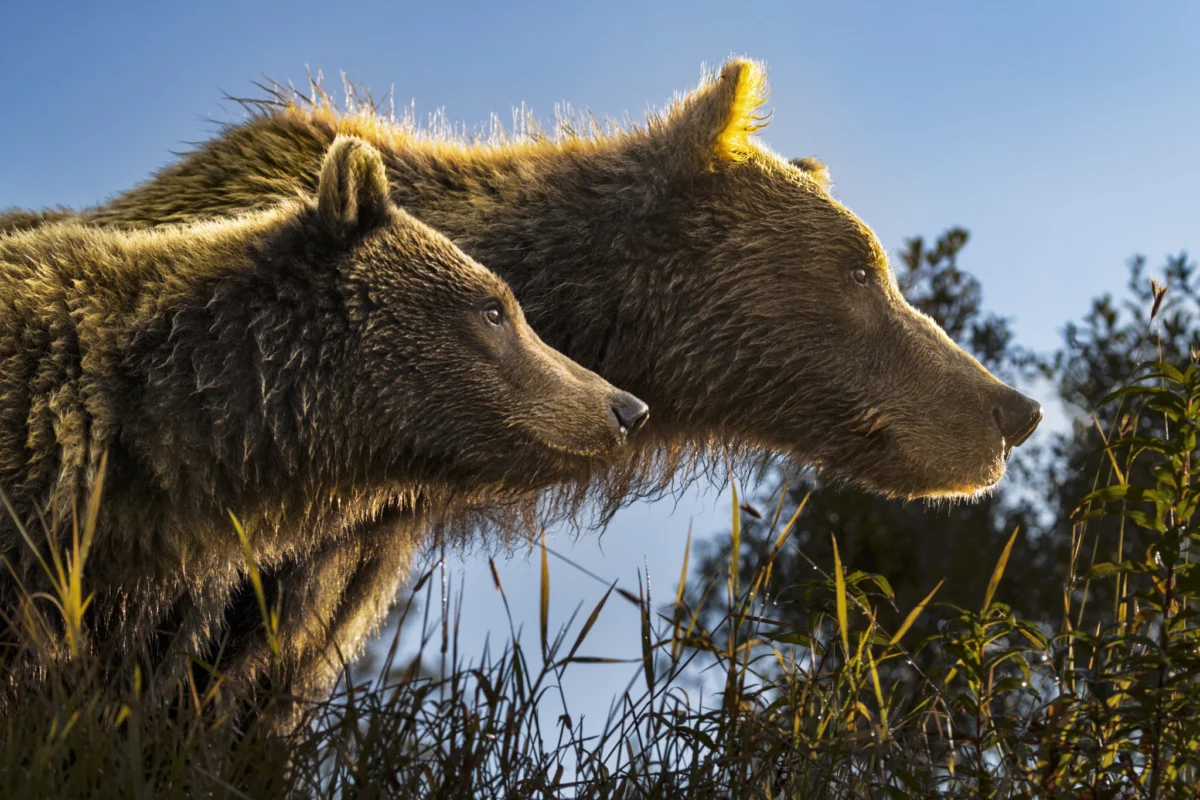
Suddenly, a subtle rustling in the underbrush nearby signaled a new presence. Emerging from the foliage were a mother brown bear and her cub, the cub appearing no more than eight months old. The photographer, recognizing the inherent risks, instinctively slowed their breathing and avoided direct eye contact, adopting a posture of humility and deference. Without a telephoto lens, relying only on a wide-angle zoom, the opportunity for a photograph was limited, but the moment itself held immense significance.
The mother bear, ears alert and eyes scanning, stepped into the open. Her attention was not on the photographer but fixed on a large male bear feeding further upstream. She appeared oblivious to the human presence, yet her senses were keenly attuned to the dominant male, observing and learning his behavior. This demonstrates a sophisticated understanding of the social dynamics and potential threats within their environment.
The Art of Observation: Patience and Respect
Moments like these demand an extraordinary level of calm and control. The photographer described a process of slowing down, steadying nerves, and moving with deliberate slowness and gentleness. This approach, akin to the principles of Tai Chi, emphasizes smooth, deliberate movements, even when urgency might otherwise dictate haste. This philosophy is often imparted to field assistants, underscoring the importance of respecting the animals’ space and minimizing any perceived disturbance.
With immense care, the camera was raised, the aim being to capture the essence of the moment without disrupting the fragile peace. Two quick shots were taken, with no immediate certainty of their quality. However, one of these captures would later be recognized as one of the photographer’s most cherished images, embodying the profound connection and acceptance experienced in that fleeting interlude.
The image captured a moment where an animal, in its natural environment, seemingly accepted the presence of an observer. The mother and cub were aware of the photographer, but perceived no threat. The immediate danger, the large male bear upstream, dictated the mother’s vigilance. It was a convergence of luck, precise timing, and the photographer’s ability to remain present and respectful, all unfolding as the day’s light began to recede behind the mountains.
Ecological Significance and Broader Implications
The salmon run is more than just a dramatic wildlife spectacle; it is a cornerstone of the Alaskan ecosystem. The annual influx of millions of salmon provides a crucial pulse of energy and nutrients to the region, supporting not only brown bears but also a host of other predators, including bald eagles, wolves, and various marine mammals. The health of the salmon populations is intrinsically linked to the health of the wider environment.
The ocean waters, which are vital habitats for these migrating salmon, play a critical role in their life cycle. Conservation efforts aimed at protecting marine ecosystems are therefore directly beneficial to the terrestrial wildlife that depends on the salmon’s return. The salmon’s journey from the ocean to their freshwater spawning grounds represents a vital transfer of marine-derived nutrients inland, enriching the entire food web.
The phenomenon also highlights the complex and often brutal realities of nature. While the sight of a mother bear protecting her cubs is heartwarming, the pervasive threat of infanticide underscores the constant struggle for survival. Understanding these dynamics is crucial for effective wildlife management and conservation strategies.
The annual salmon run in southwestern Alaska serves as a powerful reminder of the interconnectedness of life and the profound beauty that can be found in nature’s most fundamental processes. It is an event that continues to captivate and inform, offering invaluable insights into the wild world and our place within it.