Photographer Kathy Shorr has dedicated over a decade to meticulously documenting the profound and often devastating effects of gun violence across the United States. Her latest endeavor, SHOT: We the School Community, represents the third installment in her compelling series, shifting its lens to the intricate web of lives forever altered by the scourge of school shootings. This comprehensive project captures the raw realities faced by students, parents, teachers, and broader community members, presenting a stark, unvarnished portrait of a nation grappling with an escalating crisis.
A Trilogy of Trauma: Documenting America’s Gun Violence Crisis
Shorr’s commitment to this critical issue spans 13 years, evolving through distinct phases. Her initial project, SHOT: 101 Survivors of Gun Violence in America, undertaken between 2013 and 2025, chronicled the personal journeys of individuals who had physically survived gun violence, bearing visible and invisible scars. This was followed by SHOT: We the Mothers Philadelphia and Miami, photographed from 2021 to 2023, which focused on the unimaginable grief and resilience of mothers who had lost children to gun violence in specific urban areas. With SHOT: We the School Community, Shorr expands her scope to encompass the entire ecosystem of educational institutions, revealing a chilling truth: the sanctuary once offered by schools has been tragically eroded, leaving no one truly safe.
The Power of Place: Autonomy and Healing in Portraiture
A cornerstone of Shorr’s methodology is granting participants complete autonomy in selecting their portrait locations. This deliberate choice imbues each photograph with profound personal significance, directly linking the subject to their experience of the event. As Shorr explains, "I gave the survivors the autonomy to choose a place of profound significance to them." These chosen environments typically fall into two categories: some individuals bravely return to the very sites of their trauma, a powerful act of confrontation and reclamation. Others opt for settings rooted in comfort, safety, or the quiet process of healing, seeking solace in places far removed from the echo of gunfire.
The diverse array of locations and stories within SHOT: We the School Community underscores the widespread impact of these tragedies:
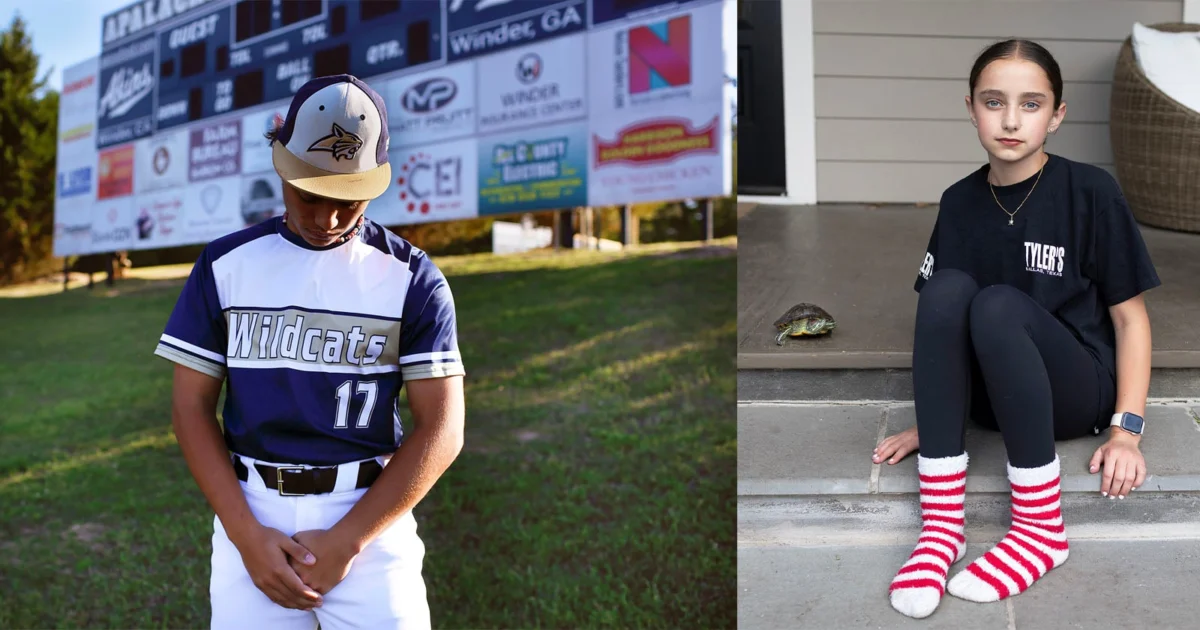
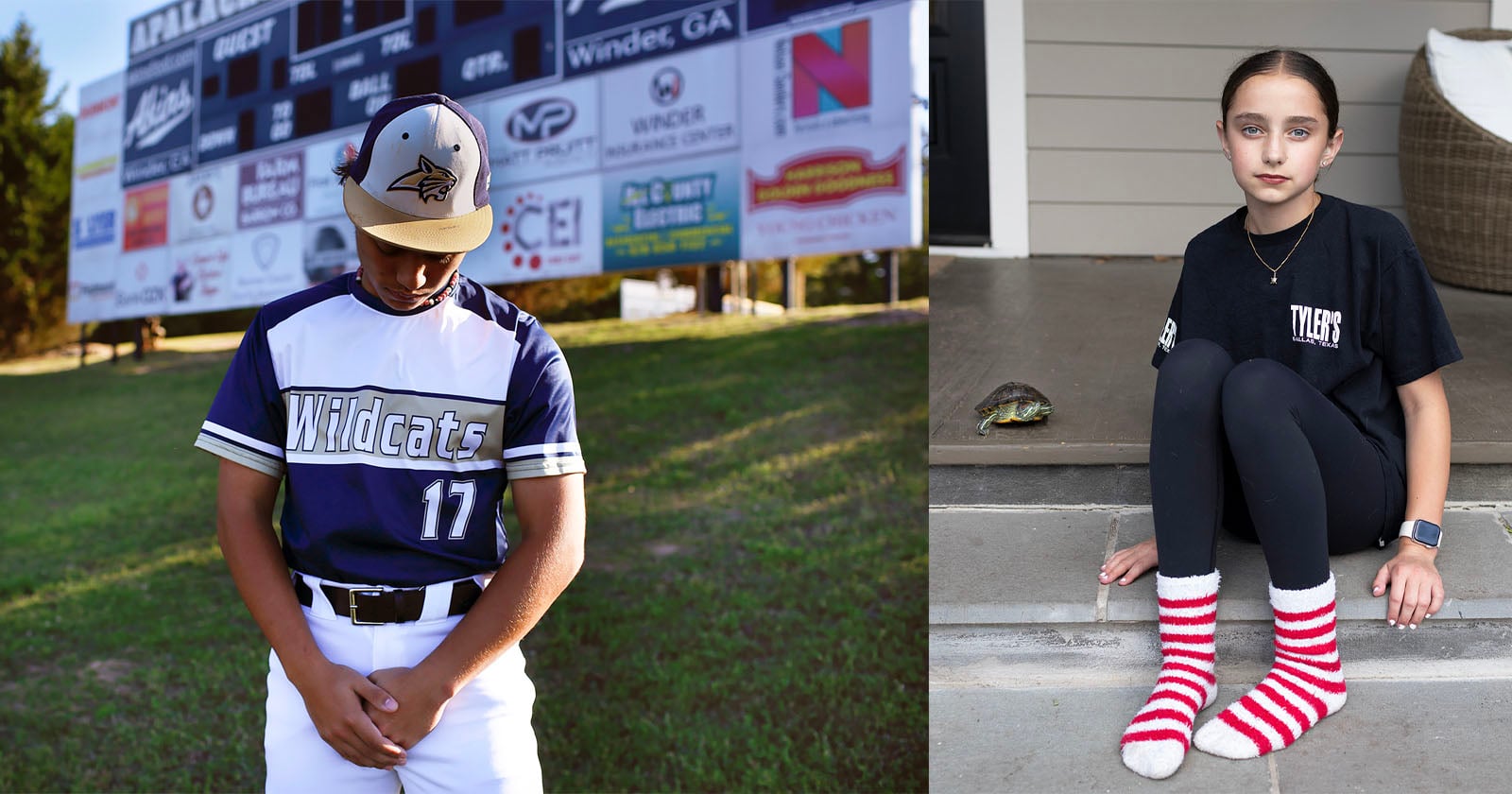
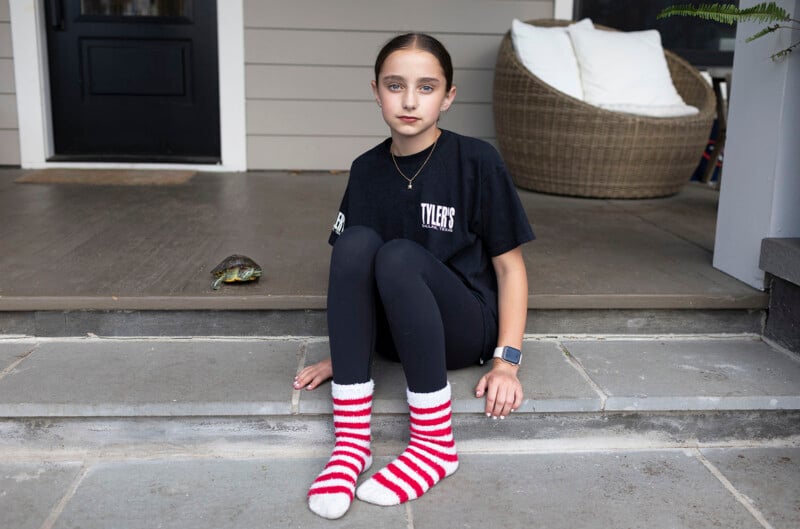
- Orla, Annunciation School, Minneapolis, Minnesota: Photographed on stone steps next to a small turtle, Orla’s image encapsulates a child’s unbearable loss. She was a student at the Annunciation School when a shooting occurred, claiming the life of her best friend, Harper. In a poignant gesture of remembrance, Harper’s parents entrusted Orla with Harper’s turtle, Bubbles. The necklace Orla wears holds a portion of Harper’s ashes, a constant, tangible connection to a friendship cut short.
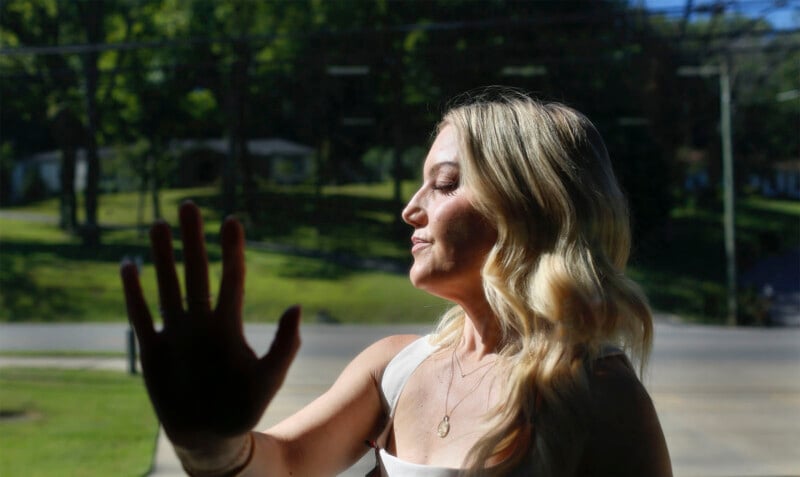
- Melissa, The Covenant School, Nashville, Tennessee: Melissa stands in profile, eyes closed, hand reaching toward light, a posture of quiet contemplation. On March 27, 2023, a 28-year-old former student opened fire at The Covenant School, killing three nine-year-olds and three adults, including the school principal. Melissa’s son, Ozzy, was a student there. During the chaotic aftermath, some students and teachers fled to a local firehouse. Melissa recounts the moment she saw Ozzy inside, both pressing their hands against the glass, a desperate, silent connection amidst the terror before formal reunification centers were established.
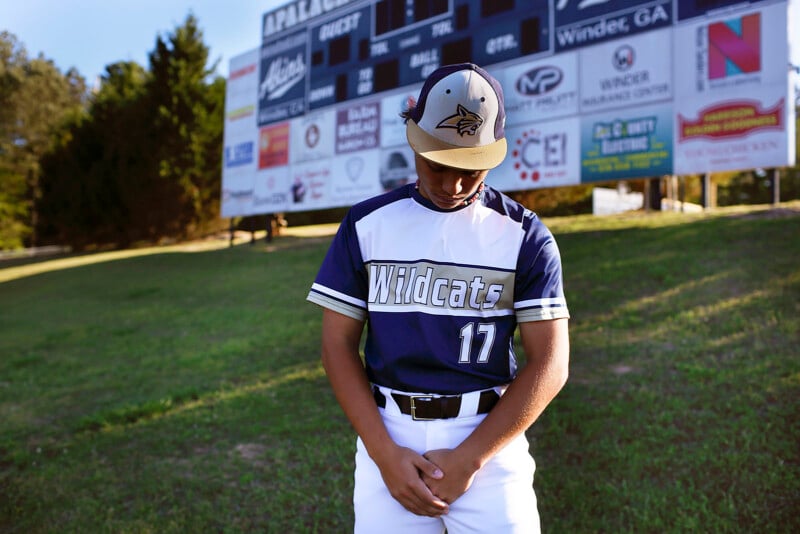
- Elijah Rivera-Rodriguez, Apalachee High School, Winder, Georgia: Dressed in his baseball uniform, number 17, Elijah stands with bowed head before a scoreboard. In September 2024, a 14-year-old student, armed with an assault rifle provided by his father despite known mental health issues, killed two students and two teachers at Apalachee High. Elijah stands on the athletic field, which served as the reunification point for anxious parents and bewildered students – a process that consumed most of that unforgettable day. His stance reflects the indelible mark left by the event.
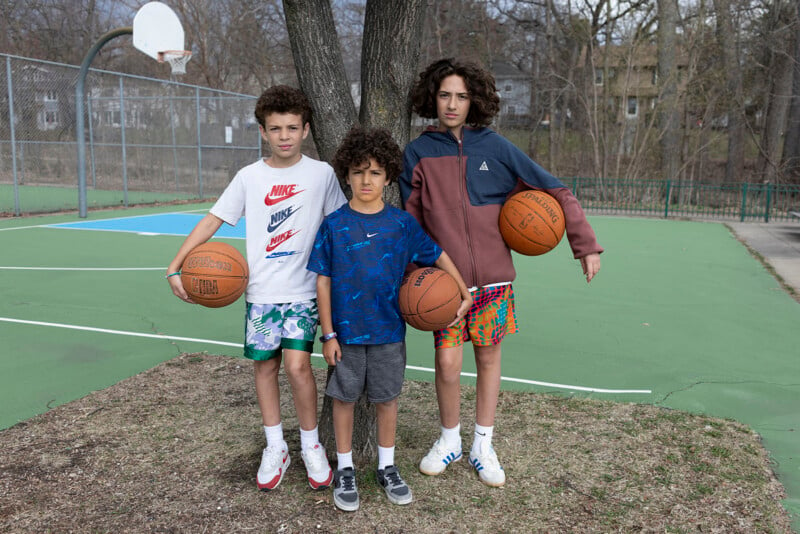
- Brothers (Arlo, Julian, and Dario), Annunciation School, Minneapolis, Minnesota: The three brothers stand together on a basketball court, each holding a ball, a symbol of youth and normalcy interrupted. On August 27, 2025, a 23-year-old former student, armed with an AR-15-style rifle, a shotgun, and a handgun, attacked the school. While 300 students attended Mass in the church, he barricaded the doors and fired 120 rounds through the stained-glass windows, killing two students and injuring 28 before dying by suicide. Arlo, in the white shirt, was hit by shrapnel in his head and back. All three boys are now in therapy, unable to bring themselves to re-enter the church.
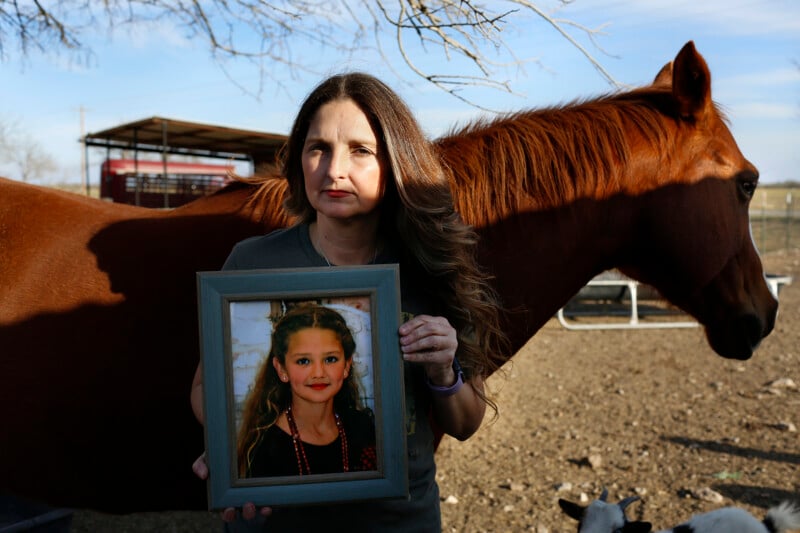
- April Elrod, The Robb Elementary School, Uvalde, Texas: April stands on her family farm, holding a framed portrait of her daughter, Makenna, with Makenna’s horse, Little Red, behind her. Makenna was among the 19 students and two teachers killed during the May 24, 2022, shooting at Robb Elementary School. The farm, a place of shared memories and quiet solace, represents the enduring bond and the void left by Makenna’s absence.
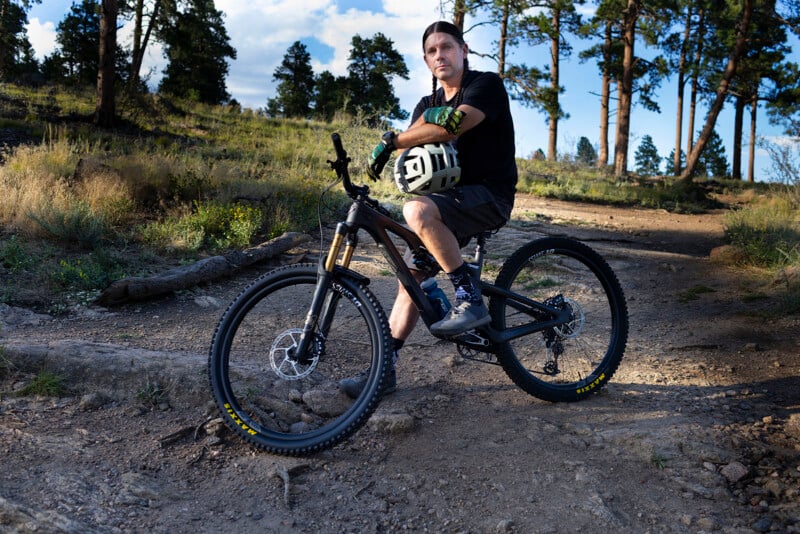
- Andrew Speers, Evergreen High School, Evergreen, Colorado: Andrew, a teacher of graphic arts, photography, and mountain bike repair, and coach of the Mountain Bike Club, is photographed on a dirt trail. In September 2025, a 16-year-old student opened fire during lunchtime, targeting teachers and students. Two students were physically injured, and many more traumatized during the nine-minute ordeal before the shooter took his own life. Andrew, who was sitting with colleagues in the cafeteria when the attack began, now struggles with memory loss surrounding the event.
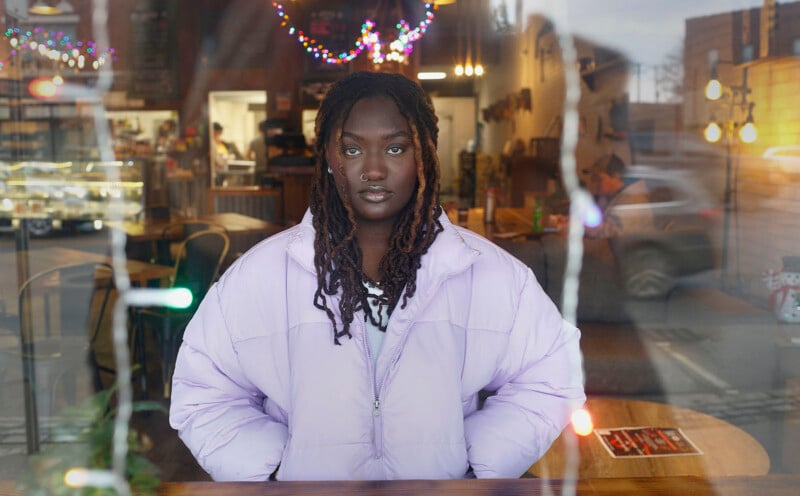
- Zoe Touray, Oxford High School, Oxford, Michigan: Zoe, the older sister of Abu Touray, is captured in a coffee shop, a place where many students sought refuge and community after school. She was a senior at Oxford High School when the November 2021 shooting claimed four students’ lives and wounded seven. In the wake of the tragedy, Zoe founded a small non-profit dedicated to supporting other survivors of school shootings, transforming her pain into purpose.
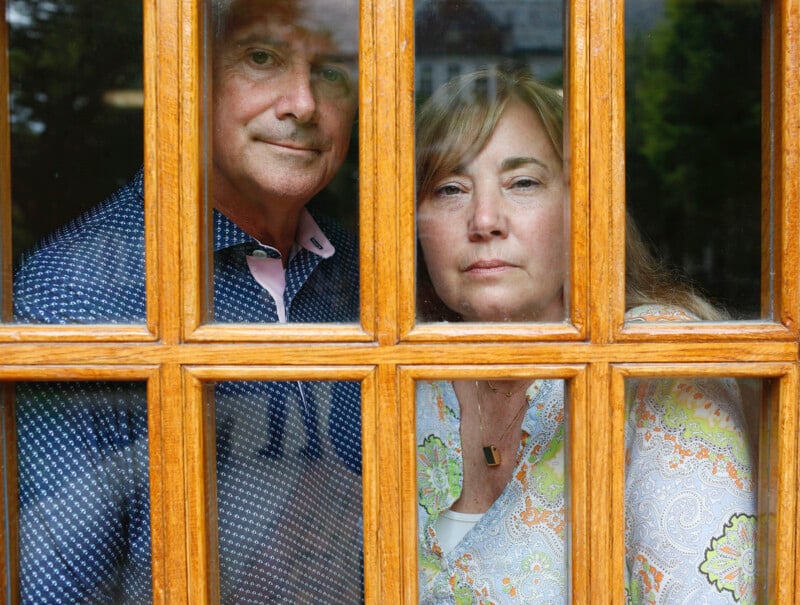
- Nancy and Ted Verner, Michigan State University, Lansing, Michigan: Nancy and Ted stand side-by-side behind a wooden-framed glass door, looking directly into the camera. On February 13, 2023, a gunman walked onto the MSU campus, killing two students in a classroom and injuring five others, before killing another student elsewhere on campus and taking his own life. Their daughter, Alex, an athlete and student, was killed in that classroom. The Verners chose to be photographed at the exact location where Alex died, a powerful statement of enduring presence and advocacy. They have since established a non-profit to provide scholarships for students.
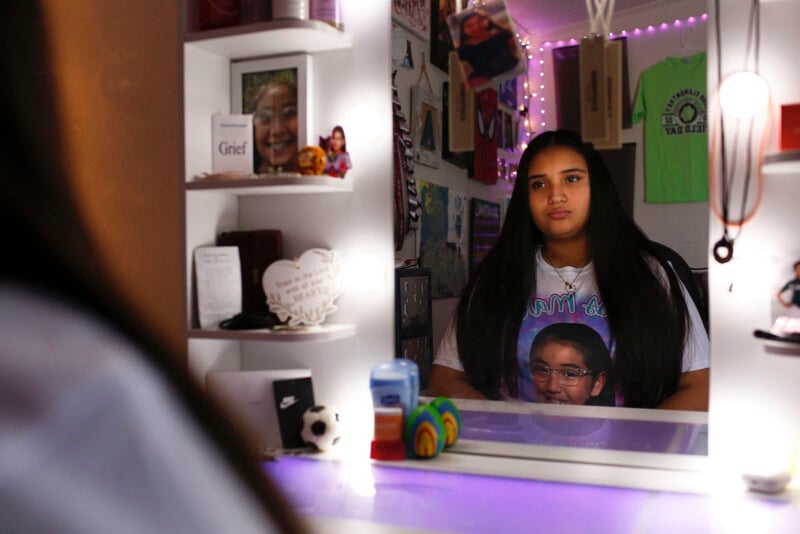
- Abby, The Robb Elementary School, Uvalde, Texas: Twelve-year-old Abby sits at a vanity mirror, wearing a shirt with a portrait of her best friend, Tess, one of the students killed at Robb Elementary. Abby has transformed her room into a shrine for Tess, a deeply personal space of remembrance and grief. The trauma has been so profound that she is now homeschooled.
- Abu Touray, Oxford High School, Oxford, Michigan: Abu stands on an outdoor basketball court, holding a basketball. He was a freshman at Oxford High when the shooting occurred in November 2021. The shooter, a 15-year-old student, had been given the gun by his parents despite severe mental health concerns. His parents were later sentenced to 10-15 years in prison for involuntary manslaughter, a landmark conviction. Now a senior, Abu remains deeply traumatized by the events of that day, finding solace in familiar activities like basketball.
- Emily Dorman, Florida State University, Tallahassee, Florida: Emily stands against a brick wall, wearing a maroon Florida State University t-shirt. FSU was her dream school, following in her parents’ footsteps. After a shooting occurred on campus in April 2025, she resolved not to let the tragedy deter her, choosing to proceed with her plans to attend, a testament to her resilience and determination.
- Kai Palat, Evergreen High School, Evergreen, Colorado: Kai, a freshman at Evergreen High during the September 2025 shooting, is pictured at a grand piano. The shooter chased Kai and his friend down a hallway; Kai’s friend was shot, but Kai narrowly escaped. Playing the piano and the companionship of his cat, Tiger, are his primary coping mechanisms for the anxiety that lingers from that day.
- Kim and Felix Rubio, Robb Elementary School, Uvalde, Texas: Kim and Felix stand by batting cages, a place where their daughter, Lexi, loved to play softball. Lexi was among those killed at Robb Elementary. Kim has since become a vocal activist against gun violence, frequently testifying at the Texas State House in Austin, transforming her unimaginable grief into a powerful call for change.
- Alessandra Borges, Florida State University, Tallahassee, Florida: Alessandra, a political science junior, sits at a desk by a window, holding a dried flower. In April 2025, a 20-year-old student used his stepmother’s Glock handgun to open fire near the Student Union building, killing two university employees and wounding six students. This was Alessandra’s second encounter with school gun violence; as an 8th grader, a friend was killed in the Marjory Stoneman Douglas High School shooting in Parkland, Florida. The dried flower is from a bouquet she brought to her friend’s memorial service, symbolizing a repeated cycle of loss and remembrance.
The Pervasiveness of School Shootings: A National Crisis
Shorr’s project encompasses a broad spectrum of American educational institutions, from elementary schools like Robb Elementary and The Covenant School to high schools such as Oxford and Apalachee, and universities including Michigan State and Florida State. This breadth highlights a chilling reality: school shootings are not isolated incidents but a pervasive threat, spanning geographies and demographics, leaving no level of education untouched.
According to various research bodies, including the K-12 School Shooting Database and Everytown for Gun Safety, the number of school shootings in the U.S. has tragically escalated in recent years. Statistics reveal a grim trend, with hundreds of incidents occurring annually, leading to thousands of casualties and countless lives irrevocably altered. These events extend beyond the immediate victims, inflicting deep psychological trauma on survivors, witnesses, first responders, and entire communities. The constant threat has normalized active shooter drills, fundamentally altering the educational experience and contributing to heightened anxiety among students.
A Call for Common Ground: Bridging Divides for Safety
Shorr expresses frustration that gun violence has become such a polarizing issue in the United States, particularly when solutions for protecting children should be universal. "The Second Amendment in America is not going to go away. We must move past the division and work on the common ground that most rational people can agree on," she asserts. She emphasizes the shared desire among parents for their children to be safe and live long, healthy lives.
A critical point of consensus, Shorr argues, should be safe gun storage. "Why, then, would anyone leave a firearm unlocked where a child could see it, find it, play with it, or take it to school? All guns should be secured with gun locks or stored in gun safes in homes with children or mentally impaired individuals." She points directly to the Oxford High School and Apalachee High School shootings, where parents were charged and convicted for their role in enabling the tragedies, setting significant legal precedents regarding parental responsibility. In both instances, parents faced substantial prison sentences, underscoring a growing legal accountability for negligent gun ownership.
Shorr draws parallels to historical public safety movements, noting that "both the auto industry and the tobacco industry saw Americans come together to create common sense laws that protected everyone." She believes this same collective action is urgently needed within the gun industry. "It should not be a political battleground; it is a human rights violation not to protect our children."
Broader Implications: Advocacy, Legislation, and Societal Change
The narratives captured in SHOT: We the School Community resonate deeply within the ongoing national debate about gun violence prevention. The legal precedents set by parental convictions in cases like Oxford and Apalachee signal a potential shift in accountability, prompting discussions about mandatory safe storage laws and expanded background checks. Advocacy groups, such as Everytown for Gun Safety and Moms Demand Action, frequently cite the devastating impact on families and communities, echoing Shorr’s call for legislative action and common-sense gun safety measures.
Beyond policy, the project illuminates the profound societal impact of school shootings. The long-term psychological toll—manifesting as PTSD, anxiety, depression, and grief—requires extensive mental health support, which is often underfunded and inaccessible. The very nature of education has transformed, with schools now fortifying themselves with security measures, changing the environment from one solely focused on learning to one also preoccupied with survival. Yet, amidst the despair, Shorr’s subjects also showcase remarkable resilience. Many, like Zoe Touray and Kim Rubio, have become powerful advocates, transforming their personal heartbreak into a collective fight for a safer future.
A Legacy of Courage and a Catalyst for Change
Having dedicated 13 years to this trilogy, Kathy Shorr has interacted with nearly 300 survivors, each encounter profoundly shaping her perspective. She often addresses the question of how she sustains her work on such a somber subject. "While the subject matter is heavy, the people are anything but depressing," she explains. "They are courageous, strong, caring, and generous individuals who participate in these projects because they want to help others avoid experiencing the pain they have endured."
Through her lens, Shorr transforms individual stories of tragedy into a collective testimony, forcing society to confront the devastating human cost of gun violence. Her work is not merely documentation; it is an urgent plea, a visual testament to the resilience of the human spirit in the face of unspeakable horror, and a powerful catalyst for a societal shift towards greater safety and protection for all children in America.
More of Shorr’s impactful work can be explored on her official website and Instagram.