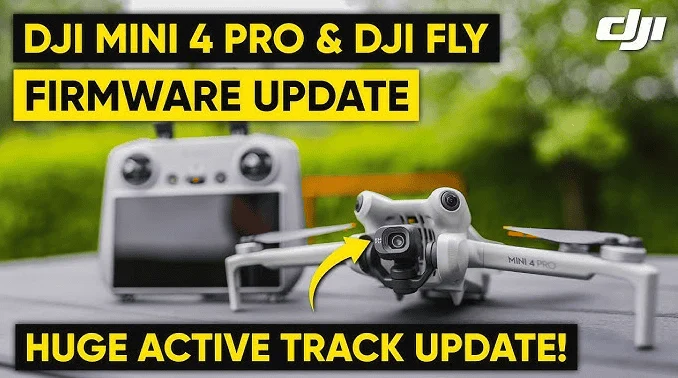
The release of the latest firmware update for the DJI Mini 4 Pro marks a significant milestone in the lifecycle of the world’s leading sub-250-gram drone, signaling DJI’s commitment to maintaining its technological edge through software-driven enhancements. Since its debut, the Mini 4 Pro has served as the benchmark for the "ultralight" category, offering professional-grade features such as omnidirectional obstacle sensing and 10-bit D-Log M color profiles in a frame that bypasses many of the stringent registration requirements imposed by civil aviation authorities worldwide. This recent update is not merely a routine patch but a comprehensive overhaul that introduces advanced navigation tools, expands hardware compatibility, and refines the automated flight systems that have made the Mini series a favorite among both hobbyists and commercial operators.
The Evolution of the Mini Series: A Strategic Context
To understand the weight of the latest DJI Mini 4 Pro update, one must look at the trajectory of the Mini series. When the original Mavic Mini launched in 2019, its primary value proposition was its 249-gram weight, designed specifically to sit just below the Federal Aviation Administration (FAA) and European Union Aviation Safety Agency (EASA) 250-gram threshold for mandatory registration. However, early iterations lacked the robust safety features and image quality of their larger counterparts.
With the arrival of the Mini 4 Pro, DJI effectively closed the gap between the portable consumer line and the professional Air and Mavic series. The current firmware ecosystem represents the culmination of years of data collection and user feedback. By pushing updates that enhance the Mini 4 Pro’s capabilities, DJI is effectively extending the product’s lifespan and discouraging users from migrating to competitors like Autel Robotics or Potensic. The latest update focuses on three core pillars: safety through visual awareness, creative flexibility through peripheral support, and regulatory compliance.
Comprehensive Breakdown of New Features and Enhancements
The most substantial addition in the recent firmware cycle is the "Vision Assist" feature. Previously reserved for the more expensive Mavic 3 series, Vision Assist utilizes the drone’s omnidirectional sensing cameras to provide the pilot with a real-time view of potential obstacles from various angles—front, back, left, and right. This is a transformative tool for pilots operating in complex environments, such as dense forests or urban landscapes, where the main camera’s field of view is insufficient for maintaining situational awareness during lateral or backward movements.
Vision Assist and Navigation Safety
Vision Assist allows users to identify obstacles that might not be visible on the primary gimbal feed. By tapping the icons on the DJI Fly app interface, pilots can see a grayscale high-frame-rate feed from the auxiliary sensors. This feature significantly reduces the risk of "side-swiping" objects during cinematic "orbit" or "dronie" maneuvers. Industry analysts suggest that by democratizing this feature to the Mini line, DJI is setting a new standard for flight safety in the consumer segment.
Expanded Hardware Compatibility
In a move that bridges the gap between traditional cinematic flight and First-Person View (FPV) experiences, the latest update grants the Mini 4 Pro compatibility with the DJI Goggles 3 and the DJI RC Motion 3 controller. This integration allows pilots to experience an immersive flight perspective while retaining the stabilized, high-resolution imaging capabilities of the Mini 4 Pro. Unlike dedicated FPV drones, which often require significant skill to pilot in manual mode, the Mini 4 Pro remains stabilized, making immersive flight accessible to a broader demographic.
ActiveTrack 360° Refinements
The Mini 4 Pro’s ActiveTrack 360° has been further optimized to provide smoother transitions when the drone circles a subject. The update improves the "TouchTrace" interface, allowing for more intuitive path planning. The drone’s ability to calculate a 3D flight path in real-time while avoiding obstacles has been sharpened, resulting in fewer "lost subject" incidents in cluttered environments.
Technical Specifications and Firmware Chronology
The rollout of these features follows a structured timeline designed to ensure stability. Firmware version updates (typically labeled in the v01.xx.xxxx format) are released alongside corresponding updates for the DJI Fly App and the remote controllers (DJI RC 2 and RC-N2).
Chronology of Major Updates:
- Launch Phase (Q3 2023): Initial release with 4K/60fps HDR and omnidirectional sensing.
- Stability Phase (Q4 2023): Focused on optimizing the O4 transmission system to reduce latency in high-interference urban areas.
- Expansion Phase (Current): Introduction of Vision Assist, Goggles 3 support, and enhanced Remote ID broadcast stability.
Supporting data from flight logs indicates that the O4 (OccuSync 4) transmission system, post-update, maintains a more stable 1080p/60fps live feed at distances exceeding 5 kilometers in FCC-compliant regions, compared to the slightly more jittery performance observed at launch.
Regulatory Compliance and Global Impact
One of the most critical aspects of DJI’s firmware strategy is maintaining compliance with evolving international laws. In the United States, the FAA’s Remote ID requirements are now fully operational. The latest Mini 4 Pro firmware ensures that the drone’s Remote ID broadcast is consistent and compliant, preventing potential legal issues for operators.
In the European Union, the update addresses the specific requirements for C0 and C1 class identification labels. For many European users, the firmware allows them to choose between different altitude limits to comply with local "Open Category" regulations. This software-defined geographic and performance fencing is essential for DJI to continue selling its products in highly regulated markets.
Step-by-Step Update Protocol for Professional Operators
To ensure the integrity of the hardware, DJI and industry experts recommend a specific protocol for applying these updates. Failure to follow these steps can, in rare cases, lead to "bricking" the device or sensor calibration errors.
- Battery Preparation: Ensure the drone, the remote controller, and the smartphone (if using the RC-N2) are charged to at least 75%.
- Environment: Perform the update in a location with a stable high-speed Wi-Fi connection. Avoid updating via cellular data in areas with spotty reception.
- App Synchronization: Update the DJI Fly App via the App Store or Google Play (or the DJI website for Android users) before initiating the aircraft firmware update.
- The Process: Once the drone is linked to the controller, the app will automatically prompt the user if an update is available. During the "Updating" phase, the drone may restart several times and the gimbal may go limp; this is normal behavior.
- Post-Update Calibration: After a major firmware overhaul, it is a professional best practice to recalibrate the IMU (Inertial Measurement Unit) and the compass to ensure the new software parameters are correctly aligned with the hardware sensors.
Market Reaction and Competitive Implications
The reception from the drone community has been overwhelmingly positive, particularly regarding the Vision Assist feature. Professional cinematographers who use the Mini 4 Pro as a "B-roll" or "scouting" drone have noted that the added safety features allow them to fly in tighter spaces that were previously considered too risky for a drone without side-view cameras.
From a market perspective, these updates serve as a "moat" against competitors. While brands like Autel have produced impressive hardware, they often struggle to match DJI’s frequency and depth of software support. By continuously adding value to an existing product, DJI reduces the "churn" rate of its customers and reinforces brand loyalty.
However, some industry observers point out that the increasing reliance on software updates also gives DJI significant control over where and how their drones are flown. The integration of "No-Fly Zones" (NFZs) and altitude limits via firmware remains a point of contention for some "right-to-repair" and "open-sky" advocates. Nevertheless, from a corporate and safety standpoint, these measures are vital for the continued integration of UAS (Unmanned Aircraft Systems) into the national airspace.
Conclusion and Future Outlook
The latest DJI Mini 4 Pro update is a testament to the fact that modern drones are as much software products as they are mechanical ones. By introducing Vision Assist and expanding the ecosystem to include FPV hardware, DJI has effectively blurred the lines between its various product categories, offering a versatile tool that punches far above its weight class.
As the industry moves toward 2025, we can expect DJI to continue this trend of software-centric enhancement. There are rumors of further AI-driven features, such as improved subject recognition for wildlife photography and more advanced "Waypoints" functionality for automated mapping. For now, the Mini 4 Pro remains the undisputed leader of the sub-250g segment, and this latest firmware ensures it will stay at the top of the leaderboard for the foreseeable future. Operators are encouraged to keep their systems updated not just for the new features, but for the essential safety and stability patches that protect their investment and the public at large.