The Evolution of Stock Media Accessibility
The stock photography market has undergone a radical transformation over the last two decades, moving from a "macrostock" model characterized by expensive, rights-managed images to the "microstock" era defined by high volume and lower price points. Depositphotos emerged during the height of this transition, leveraging a global network of over 100,000 contributors to build a repository that serves approximately 43 million clients worldwide.
Historically, the industry was dominated by high-friction transactions where every image use required a specific negotiation. The introduction of the Royalty-Free (RF) license by platforms like Depositphotos simplified this process, allowing users to pay a one-time fee for multiple uses across various platforms. This shift has democratized professional-grade imagery, enabling small businesses to compete visually with larger enterprises. In the current economic climate, where digital presence is synonymous with brand viability, the pricing models offered by such platforms serve as a barometer for the broader creative economy.
A Comparative Breakdown of Subscription Tiers
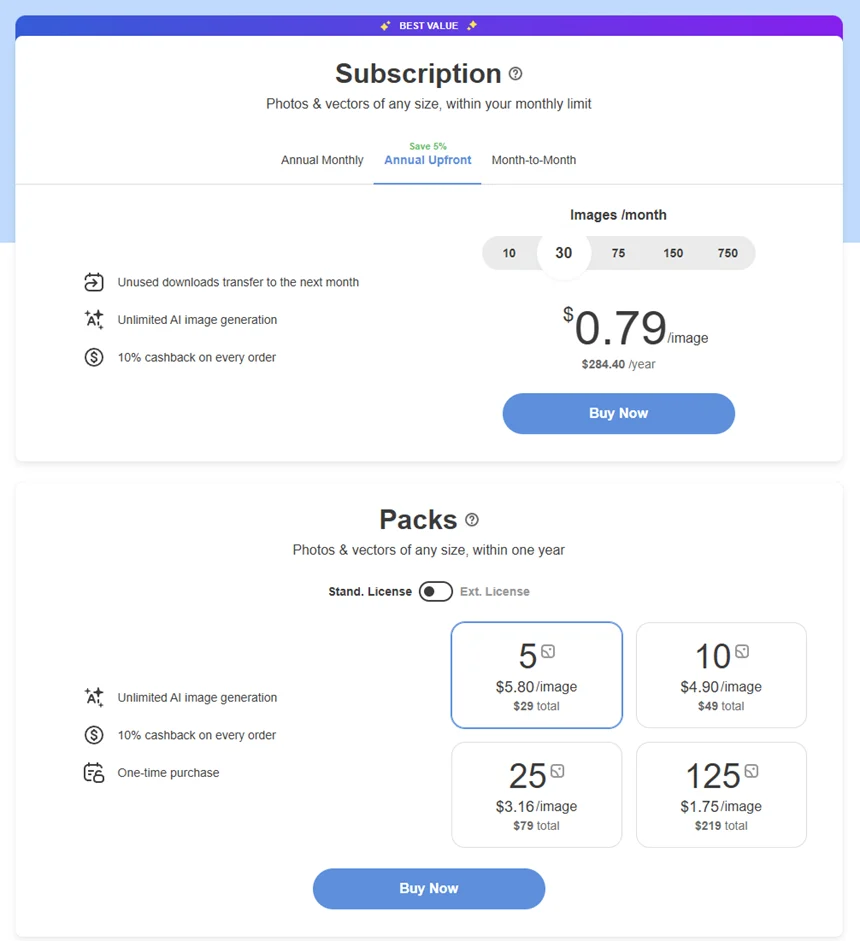
Depositphotos utilizes a tiered subscription model designed to accommodate varying levels of content consumption. These plans are categorized by the number of monthly downloads allowed, with pricing incentivized for long-term commitments.
The entry-level "10 Images Plan" is tailored for freelancers and boutique agencies with limited visual needs. At a monthly billing rate of $10.90, the cost per image stands at approximately $1.09. However, when a user opts for an annual commitment paid monthly, the price drops to $9.90 per month. The most cost-effective version of this tier is the annual upfront payment of $106.80, which secures the user’s access for the year.

As the volume of downloads increases, the economies of scale become more apparent. The "30 Images Plan" is priced at $24.75 for month-to-month billing. Interestingly, the annual billing (paid monthly) for this tier is listed at $26.70, suggesting a pricing strategy that prioritizes the "75 Images Plan" for those seeking mid-range volume. The 75-image tier costs $66.75 per month on a flexible basis or $59.25 per month under an annual contract.
For high-volume users, such as digital publishing houses or social media management firms, the "150 Images Plan" and "750 Images Plan" offer the lowest per-image costs. The 750-image plan, billed at $187.50 monthly or $172.50 under an annual agreement, reduces the cost of a high-resolution professional image to roughly $0.23 to $0.25. This aggressive pricing is designed to capture the market share of "power users" who require a constant stream of fresh content to satisfy algorithmic demands on social media and search engines.
The On-Demand Credit System: Flexibility for Occasional Users
Recognizing that not all creative projects follow a predictable monthly schedule, Depositphotos maintains an "On-Demand" credit system. This model is particularly beneficial for organizations with sporadic project cycles or one-off campaign requirements. Unlike subscription downloads, which typically expire if not used within the billing cycle (unless the plan specifically allows for "rollover"), on-demand credits often provide a longer window of utility, usually valid for one year from the date of purchase.
This system allows users to purchase a set number of downloads upfront. While the per-image price is higher than that of high-volume subscriptions, the lack of a recurring monthly fee provides a financial safety net for businesses that do not want to be tied to a subscription. It also serves as an excellent gateway for new users to test the quality of the library before committing to a larger financial obligation.
Licensing Frameworks: Standard vs. Extended Agreements
A critical component of the Depositphotos pricing structure is the distinction between Standard and Extended licenses. The prices cited in standard subscription tiers typically cover the Standard License. This agreement allows for the use of images in digital marketing, social media, websites, and printed materials with a circulation limit (often up to 500,000 copies).

However, for businesses producing merchandise for resale—such as t-shirts, mugs, or digital templates—the Extended License is required. The Extended License removes the print run limitations and permits the image to be the primary value-add of a commercial product. This license is significantly more expensive and is usually purchased on an individual basis or through specialized credit packages. Failure to distinguish between these licenses can lead to significant legal liabilities for a firm, making the understanding of these costs as vital as the subscription price itself.
Technical Infrastructure and Search Innovation
The value of a Depositphotos subscription is not merely in the quantity of images but in the efficiency of the platform’s search infrastructure. The company has invested heavily in AI-driven search tools that allow users to filter results by color palette, orientation, the presence of people, and even the "space for text" (copy space).
Industry analysts note that the "time-to-find" metric is a hidden cost in the creative process. A platform that allows a designer to find the perfect asset in three minutes versus thirty minutes represents a significant saving in labor costs. Depositphotos also offers a "Reverse Image Search" feature, enabling users to upload a low-resolution sample or a competitor’s image to find similar high-quality alternatives within their own library. Furthermore, the platform’s support for 26 languages and 24/7 customer service ensures that global teams can operate without timezone-related friction.
Market Positioning and Competitive Analysis
In the broader stock media landscape, Depositphotos competes directly with giants like Shutterstock, Adobe Stock, and Getty Images. While Getty Images focuses on the premium, high-end editorial and exclusive creative market, Depositphotos competes primarily on the balance of quality and affordability.
When compared to Shutterstock, Depositphotos often positions itself as a more budget-friendly alternative for small and medium enterprises (SMEs). While Shutterstock may boast a larger total library, the 300 million assets at Depositphotos are curated to ensure they meet modern aesthetic standards. Adobe Stock holds an advantage through its native integration with Creative Cloud applications, but Depositphotos counters this with aggressive promotional pricing and flexible "flexible plans" that allow unused downloads to roll over to the next month—a feature that is highly valued by cost-conscious managers.

Economic Implications for Small and Medium Enterprises (SMEs)
For the modern SME, visual content is the primary driver of engagement. Data from digital marketing studies suggest that posts with high-quality images receive 94% more views than those without. However, hiring a professional photographer for every social media update is financially unfeasible for most businesses.
Depositphotos’ pricing tiers, particularly the mid-range plans, provide a "predictable overhead" model. By allocating approximately $60 to $100 per month, a business can secure a professional visual identity. This predictability is crucial for cash flow management. Furthermore, the multi-user account feature offered in business-centric plans allows team collaboration without the need for shared passwords, which enhances corporate security and asset management.
Official Responses and Industry Sentiment
While Depositphotos does not frequently release public statements regarding its internal pricing algorithms, the company’s trajectory since the Vista acquisition suggests a focus on integration. Experts in the field, such as those from Stock Photo Secrets, have noted that Depositphotos has become a "staple" for the mid-market.
"The value proposition of Depositphotos has always been its accessibility," says one industry analyst. "By offering a free trial and a low-cost entry point, they have effectively lowered the barrier to entry for professional design. Their pricing is not just about the images; it’s about providing a toolkit for the modern digital entrepreneur."
The Future of Stock Photography in the Age of Generative AI
As the industry looks toward the future, the rise of Generative AI presents both a challenge and an opportunity for Depositphotos. The platform has already begun integrating AI-powered tools, such as background removers and image upscalers, into its web interface. There is an ongoing debate within the industry regarding how AI-generated imagery will affect the pricing of traditional stock photography.

Current analysis suggests that while AI can generate generic imagery, the demand for authentic, high-quality human-captured photography remains strong, particularly for editorial and high-stakes commercial use. Depositphotos’ strategy appears to be one of hybridity—maintaining a massive library of human-contributed content while utilizing AI to enhance the search and editing experience. This suggests that their pricing models will continue to evolve, perhaps incorporating "AI-generation credits" alongside traditional download credits.
Final Summary of Value
Choosing the right plan from Depositphotos requires a candid assessment of an organization’s monthly content needs and long-term goals. For the individual creator, the 10-image or 30-image plans provide a low-risk entry into professional assets. For the growing agency, the 750-image subscription offers an unbeatable per-unit price that facilitates high-volume output.
Ultimately, Depositphotos stands as a testament to the maturation of the microstock industry. It offers a sophisticated, multi-lingual, and technologically advanced platform that prioritizes the financial constraints of the modern creator without sacrificing the quality of the visual end-product. As the digital landscape continues to favor visual-first communication, the role of such platforms in providing affordable, licensed, and high-quality media will only become more central to global commerce.