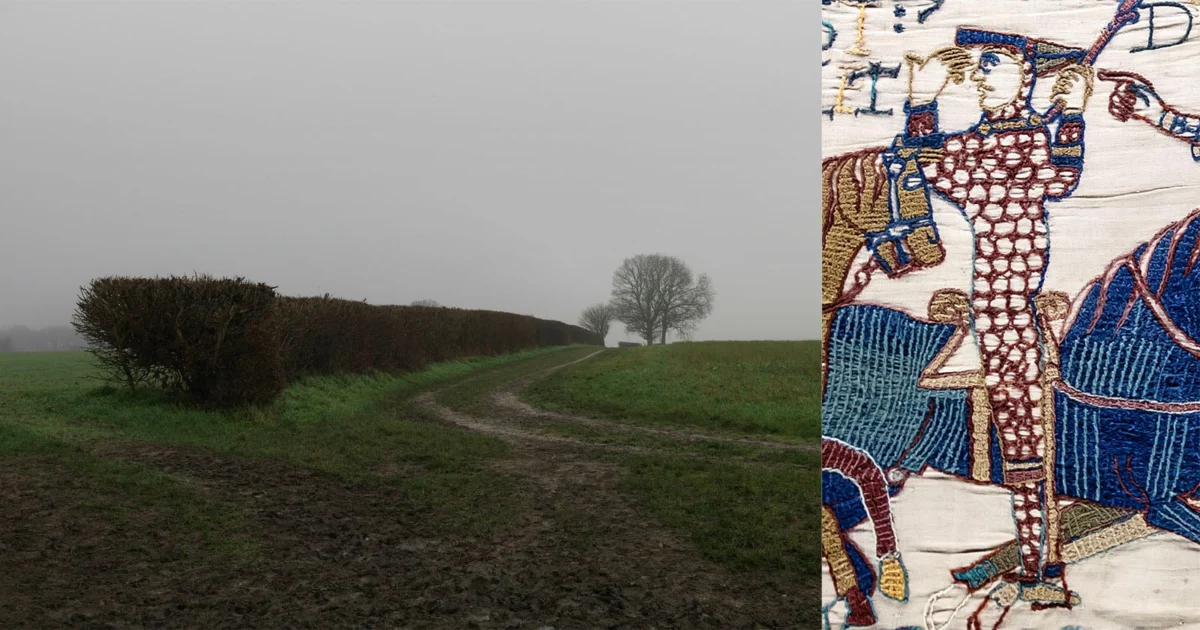
A compelling new photographic project by acclaimed documentary photographer Peter Caton invites viewers to contemplate the enduring legacy of the Norman Conquest, nearly a millennium after William the Conqueror’s transformative invasion of England in 1066. Titled "After 1066: Photographs of an English Landscape," Caton’s latest work meticulously retraces the historical route taken by William and his invading army, from their pivotal landing at Pevensey Bay to the devastating aftermath of the Harrying of the North. The project aims to uncover what tangible and intangible remnants of this epochal event still resonate within England’s contemporary landscape, often in places that appear remarkably ordinary today, creating a poignant dialogue between past and present.
The Artist’s Vision: Unveiling History in the Mundane
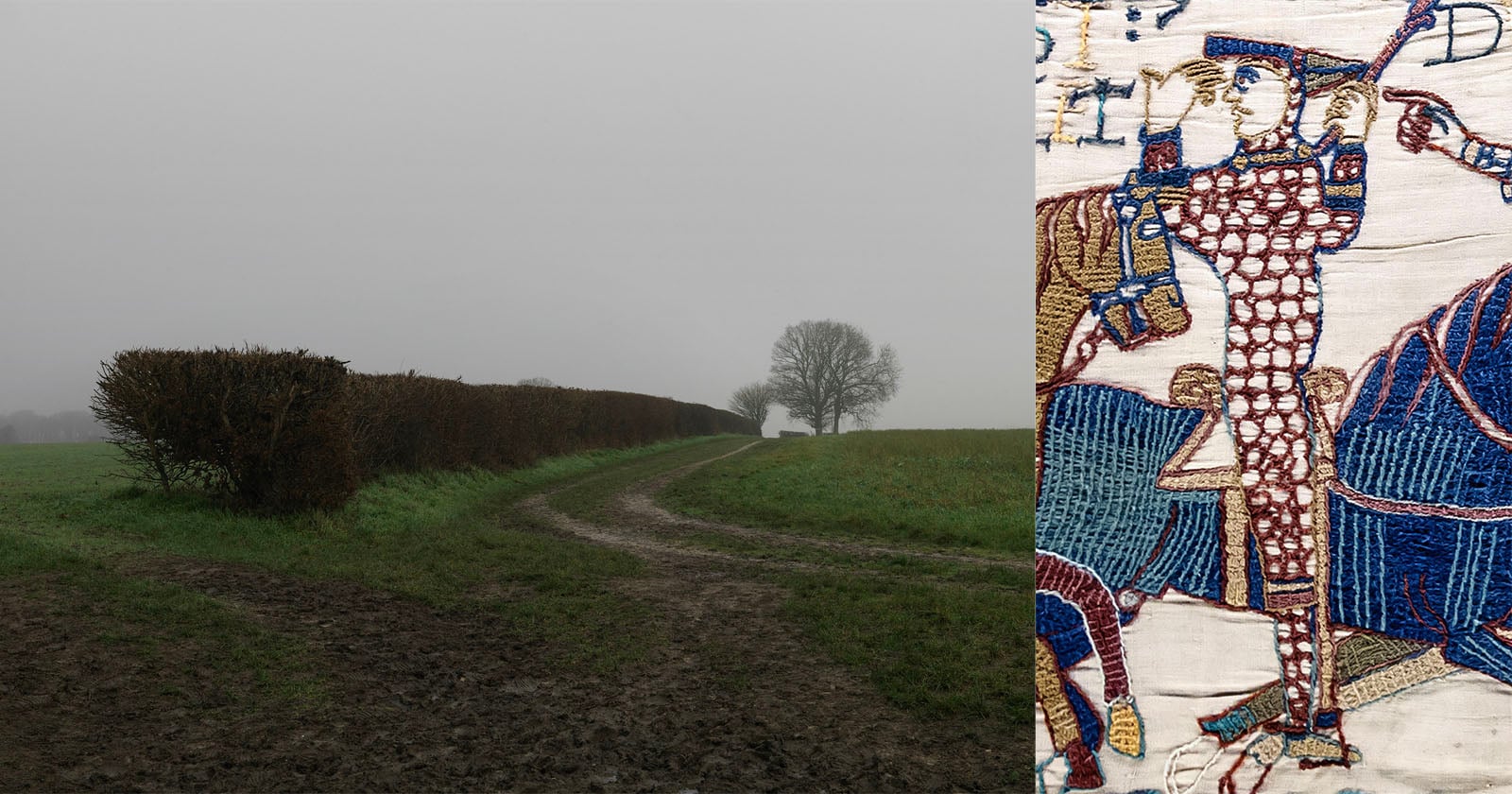
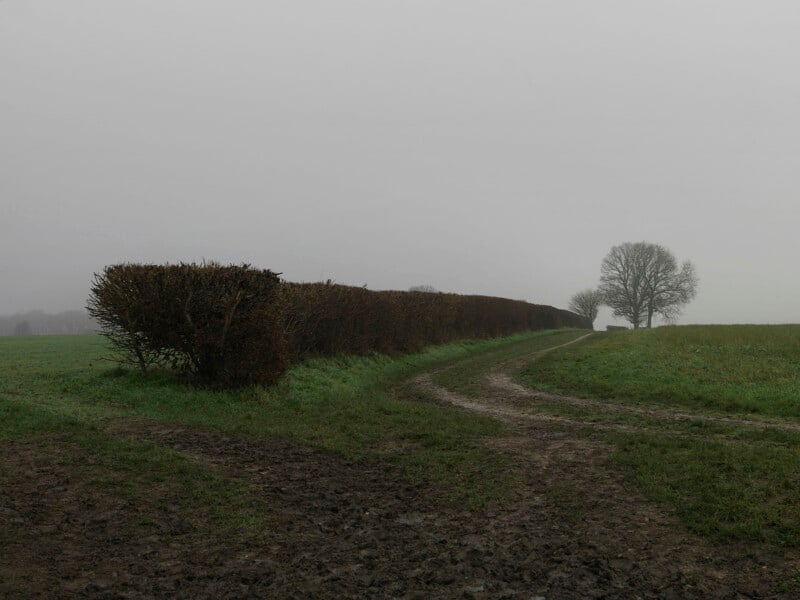
Peter Caton, known for his two decades of internationally recognized documentary photography exploring humanitarian issues and climate change, brings a distinct observational lens to this historical narrative. His work for organizations like Greenpeace, Save the Children, and WWF, and publications in esteemed outlets such as The Sunday Times Magazine and The Guardian, underscores his ability to capture profound stories within seemingly simple frames. For "After 1066," Caton deliberately eschews dramatic lighting or overt historical symbolism. Instead, his photographs are characterized by a quiet, restrained objectivity, inviting reflection rather than dictating interpretation. This approach is central to his inquiry: "I was surprised by how ordinary these places were," Caton explains. "Rather than trying to recreate history, I wanted to photograph the landscapes as they exist today and encourage people to look more carefully at places that have quietly shaped England’s history." This juxtaposition – the everyday appearance against the backdrop of extraordinary historical events – forms the emotional and intellectual core of the book.
The Norman Conquest: A Defining Moment in English History
To fully appreciate Caton’s photographic journey, it is essential to understand the seismic shifts unleashed by the Norman Conquest. The year 1066 marks a watershed moment, fundamentally altering England’s political, social, linguistic, and cultural fabric. The crisis began with the death of the childless King Edward the Confessor in January 1066, sparking a fierce succession dispute. The primary claimants were Harold Godwinson, Earl of Wessex (the most powerful English nobleman), Harald Hardrada, King of Norway (with a claim based on a previous agreement), and William, Duke of Normandy (who asserted Edward had promised him the throne and Harold had sworn an oath to support him).
Harold Godwinson was crowned king shortly after Edward’s death, but his reign was immediately challenged. In September 1066, Harald Hardrada and Harold Godwinson’s estranged brother, Tostig, invaded northern England. King Harold swiftly marched his forces north, achieving a decisive victory at the Battle of Stamford Bridge on September 25th, where both Hardrada and Tostig were killed. However, just days later, on September 28th, William of Normandy landed his invasion fleet unopposed at Pevensey Bay in Sussex.
Harold, upon hearing the news, was forced to undertake a gruelling forced march south with his exhausted army. The two forces met on October 14th at the Battle of Hastings, fought on Senlac Hill. The battle was a brutal, day-long engagement. The Anglo-Saxon shield wall initially held firm against the Norman cavalry and archers, but William’s forces eventually broke through, partly due to feigned retreats that lured segments of the English line into vulnerable positions. The turning point came with King Harold’s death, reputedly struck by an arrow in the eye, followed by dismemberment. With their king fallen and leadership shattered, the Anglo-Saxon resistance collapsed.
Following his victory at Hastings, William did not immediately march on London. Instead, he systematically consolidated his position, encircling the capital and intimidating pockets of resistance. He secured key crossings, such as at Wallingford, and received the submission of leading English nobles, including the Archbishop of Canterbury and Edgar Ætheling (the uncrowned Anglo-Saxon heir), at Berkhamsted. On Christmas Day, 1066, William was crowned King of England at Westminster Abbey, marking the formal commencement of Norman rule.
The conquest, however, was far from complete. William spent years quelling rebellions, establishing a new administrative structure, and imposing Norman control. His most brutal campaign was the Harrying of the North (1069-1070), a scorched-earth policy designed to crush northern English resistance permanently. This devastating campaign led to widespread famine, displacement, and a dramatic reduction in population, leaving vast swathes of Yorkshire desolate for decades. The Domesday Book, commissioned in 1085, served as a comprehensive survey of landholdings and wealth, solidifying Norman control and taxation.
Caton’s Photographic Chronicle: Tracing William’s Footsteps
Caton’s photographic journey meticulously follows William’s path, offering contemporary vistas of these historically charged locations:
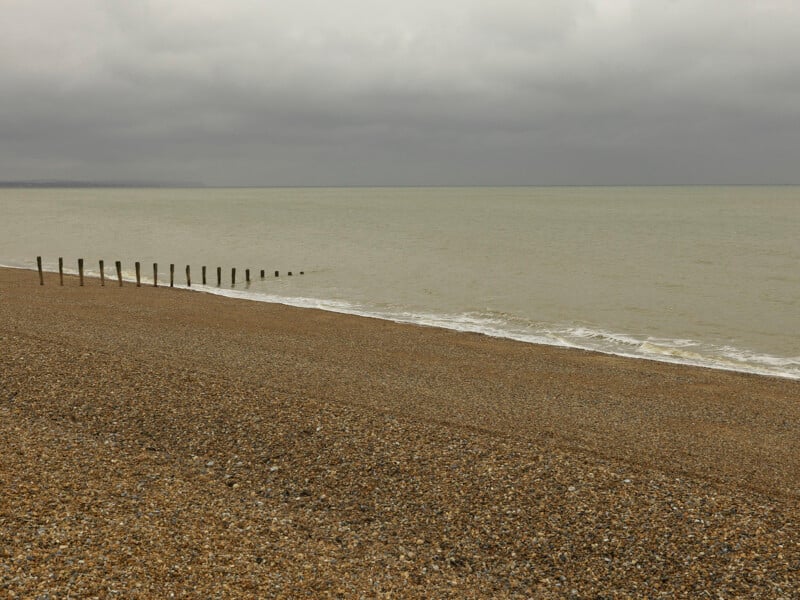
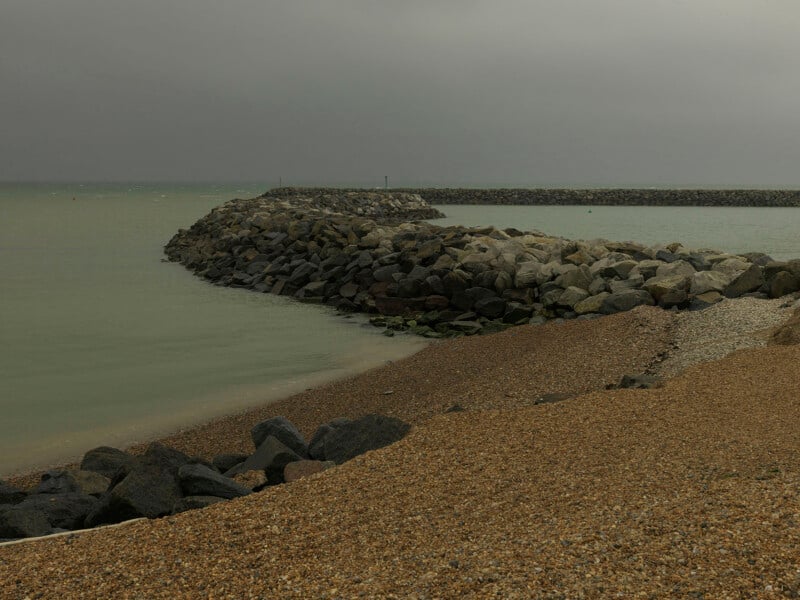
Pevensey Bay, East Sussex (2026): The starting point of William’s invasion. Caton captures the reshaped coastline, where modern coastal defenses now stand. The wooden posts extending into the calm, grey sea under a cloudy sky, and the curved stone breakwater, speak to humanity’s ongoing efforts to tame the sea, much as William once arrived to conquer the land. The initial image of the shingle beach, where William’s fleet of around 700 ships landed, now presents an unremarkable scene, yet it holds the echo of thousands of Norman soldiers, knights, and horses pouring onto English soil. The sheer audacity of the landing, uncontested as Harold’s forces were far to the north, set the stage for the dramatic events to follow.
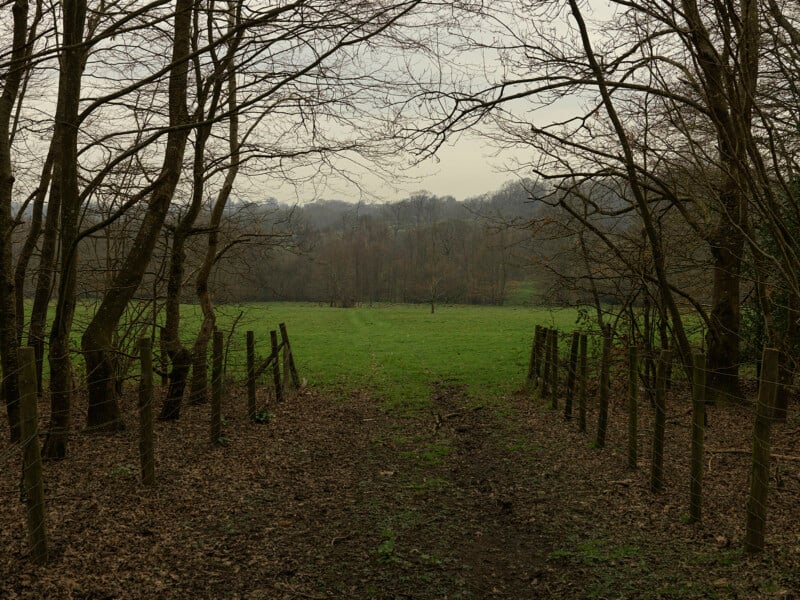
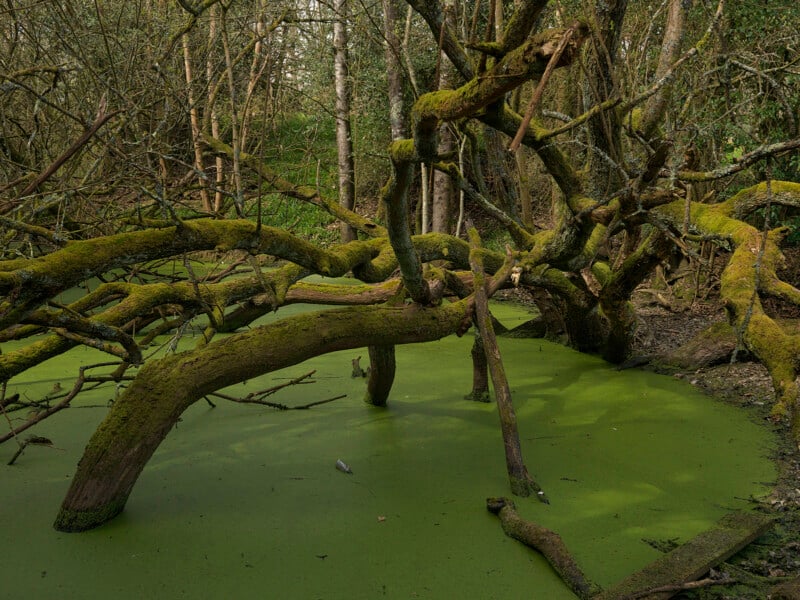
Battle, East Sussex (2026): The site of the decisive Battle of Hastings. Caton photographs the quiet ground below the ridge, the landscape surrounding the battlefield, now a tranquil scene of fields and woodlands. One image shows a dirt path leading through a wooden fence into a green field, framed by bare trees, while another depicts a moss-covered tree leaning over a stagnant pond, covered in bright green duckweed. These serene images belie the horrific violence that unfolded here. It was in this very landscape that Anglo-Saxon forces, fighting desperately for their homeland, were pursued and cut down by Norman cavalry after Harold’s death. The battle site, now overseen by Battle Abbey, built by William as penance and a monument to his victory, is a place where history profoundly contrasts with the present-day calm.
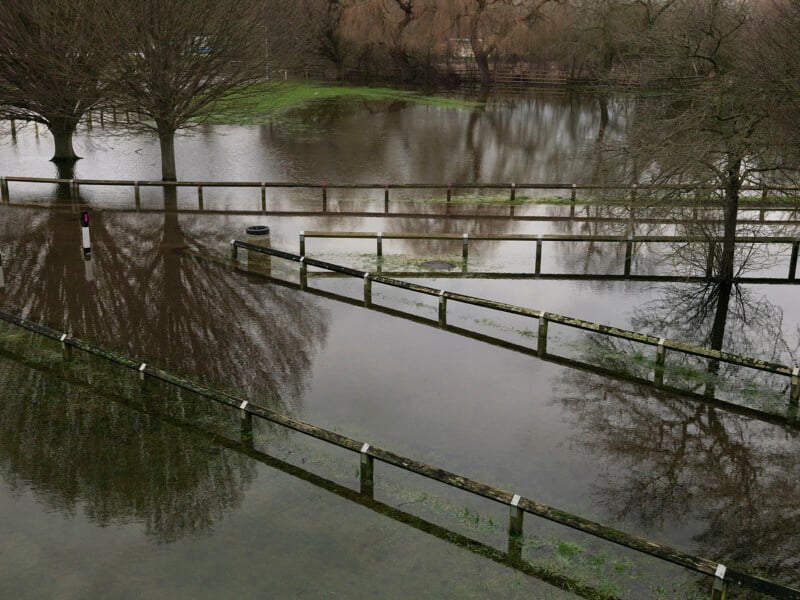
Wallingford, Oxfordshire (2026): Here, Caton captures flooded parkland beside the River Thames. This river crossing was strategically vital for William’s advance towards London. After the Battle of Hastings, London was initially defiant, but William systematically cut off its supply lines and secured key river crossings to isolate the city. Wallingford, with its ancient castle site, represented a critical point where William could cross the Thames without encountering significant opposition, further cementing his encirclement of the capital. Caton’s image of bare trees and fences partially submerged in standing water visually hints at the historical flows and shifts that have shaped the land, including the movement of armies.
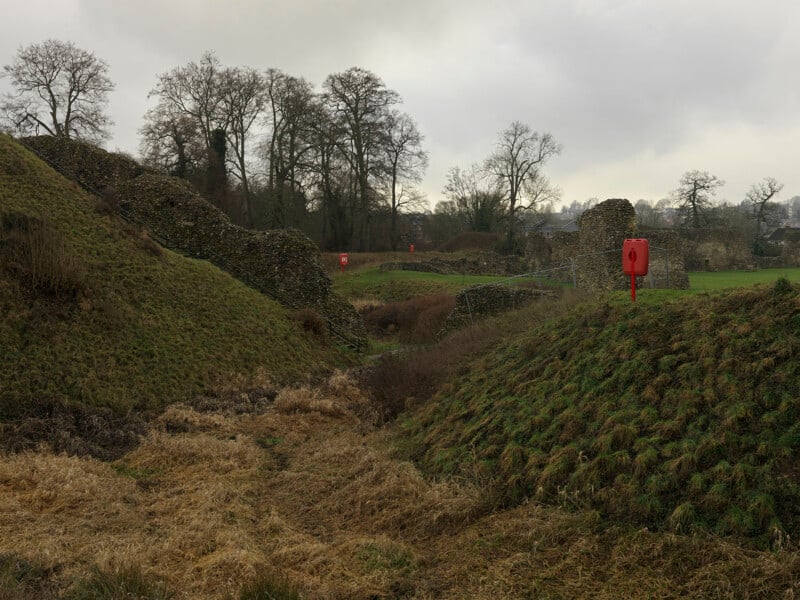
Berkhamsted, Hertfordshire (2026): The location where the English nobility formally submitted to William in December 1066, securing his claim to the throne. Caton photographs a muddy dirt path curving through a grassy field towards Berkhamsted Castle’s earthworks, and then the impressive earthworks themselves, with stone ruins atop grassy mounds. These images evoke the ancient power structures and the strategic importance of such fortifications. After isolating London, William advanced to Berkhamsted, where key figures like Edgar Ætheling, Archbishop Stigand of Canterbury, and Earls Edwin and Morcar, came to swear fealty to the new king. This act of submission, just weeks after Hastings, was crucial for legitimizing William’s rule and avoiding a protracted siege of London.
Ely, Cambridgeshire (2026): Caton’s lens turns to the reedbeds and waterways within the Fens. This marshland once formed one of the last bastions of English resistance against Norman rule, notably with Hereward the Wake’s rebellion. The Fens, with their treacherous terrain and isolated islands like Ely, provided a natural fortress against the Norman cavalry. William eventually had to build a causeway to reach Ely, demonstrating the lengths to which he went to crush all opposition. Caton’s photograph of a body of water flowing past dry, brown reeds under a cloudy sky speaks to the enduring, wild character of this landscape, which once sheltered the last hopes of Anglo-Saxon independence.
Yorkshire (2026): The recovered farmland of Yorkshire, once devastated by the Harrying of the North. While the original article doesn’t include a specific image for Yorkshire, Caton’s inclusion of this region in his route highlights the profound and lasting impact of William’s brutal pacification campaign. The Harrying of the North, from 1069-1070, involved the systematic destruction of crops, livestock, and villages across a vast area, leading to widespread starvation and an estimated loss of 100,000 lives. It was an act of terror designed to prevent future rebellions. Caton’s intention to photograph "recovered farmland" underscores the resilience of nature and human endeavor, yet the memory of this catastrophe remains etched in the historical record, a stark reminder of the cost of conquest.
The Broader Implications and Timely Resonance
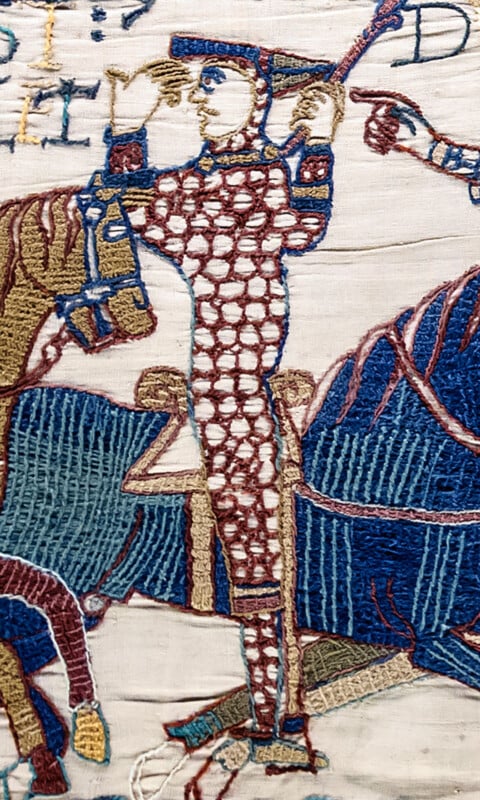
"After 1066" arrives at a particularly poignant moment. Its publication coincides with the Bayeux Tapestry’s anticipated return to Britain in September 2026 – its first visit to the U.K. in almost 1,000 years – and precedes the millennium of William the Conqueror’s birth in 2027. These concurrent historical milestones amplify the project’s relevance, encouraging a renewed public engagement with the Norman Conquest and its profound consequences.
Tracy Marshall-Grant, in her introductory essay for the book, places Caton’s work within a venerable tradition of landscape photographers who explore the intricate relationship between land, memory, and history. She eloquently posits that Caton’s photographs compel us to view landscapes not merely as "simply backdrops to history but living witnesses to it." This perspective is crucial, as it suggests that the land itself retains a memory, an imprint of the events that transpired upon it, even when visible traces have long since faded.
The Norman Conquest instigated a cascade of long-term implications that shaped England’s identity:
- Linguistic Transformation: The most immediate and profound impact was on the English language. Old English, the language of Anglo-Saxon England, was largely supplanted in official and aristocratic circles by Norman French. Over centuries, the two languages blended, giving birth to Middle English, which incorporated a vast vocabulary of French origin. This linguistic fusion is why modern English boasts a rich lexicon with distinct Anglo-Saxon (e.g., "cow," "sheep") and Norman French (e.g., "beef," "mutton") equivalents.
- Political and Social Restructuring: William replaced the Anglo-Saxon aristocracy with Norman loyalists, establishing a highly centralized feudal system. Land ownership shifted dramatically, with the king at the apex of power, granting fiefs in exchange for military service. This system profoundly altered social hierarchies and governance for centuries.
- Architectural Legacy: The Normans introduced their distinctive Romanesque architectural style to England, characterized by massive stone castles (like the Tower of London), cathedrals, and churches. These formidable structures served both as symbols of power and defensive strongholds, fundamentally changing the built environment.
- Legal and Administrative Systems: Norman influence led to the development of common law, centralized justice, and sophisticated administrative structures, including the Exchequer, which laid foundations for modern governmental institutions.
- Cultural Shift: The Conquest brought England into closer alignment with continental European culture, particularly that of France, influencing art, literature, and social customs.
Caton’s "After 1066" serves as a contemporary visual meditation on this enduring legacy. By presenting these historical sites as they exist today – often unremarkable, yet imbued with immense historical weight – he challenges viewers to look beyond the immediate surface. His work encourages a deeper engagement with the landscape as a repository of collective memory, a silent witness to the ebb and flow of power, conflict, and the relentless march of time. The photographs invite contemplation on how history is not just a series of past events but a continuous force that subtly shapes our present environment and our understanding of who we are.
Published by RRB Photobooks, "After 1066: Photographs of an English Landscape" offers a unique and timely contribution to the ongoing dialogue surrounding one of England’s most pivotal historical moments, ensuring that the echoes of 1066 continue to resonate in the modern consciousness.