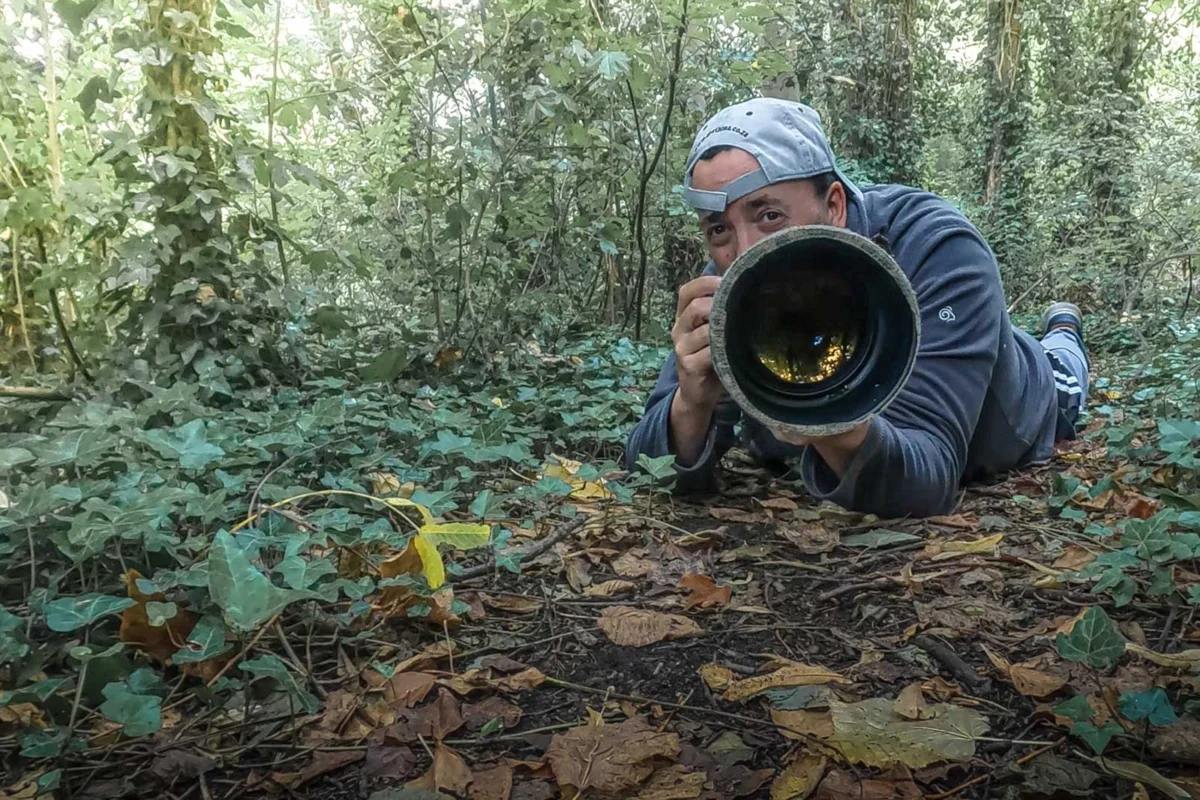
Wildlife photographer Victor Soares, born in South Africa and now based in the UK, shares his nearly two-decade-long evolution from an enthusiastic amateur to a celebrated professional, offering invaluable insights into the dedication, mentorship, and pivotal moments that shaped his distinguished career. This deep dive into the "From Amateur to Professional" interview series reveals the progression of his imagery, the foundational lessons learned, and the strategic transition that has established him as a leading voice in nature photography, leading tours across Europe and Africa and gaining wide recognition in prestigious publications and associations.
Early Life and the Genesis of a Passion
Soares’ profound connection with nature began in the rich, diverse landscapes of South Africa, where wildlife was not merely a backdrop but an integral part of daily life and a personal sanctuary. Growing up amidst the continent’s unparalleled biodiversity, he developed an early and intense passion, particularly for birds. This fascination provided a crucial escape from what he describes as a "dramatic world," fostering countless hours spent observing species through binoculars, driven by a relentless curiosity to understand and connect with the myriad creatures surrounding him. This intimate relationship with the natural world laid the groundwork for his future photographic pursuits, even before he picked up a camera. The vast savannas, rugged mountains, and vibrant coastlines of South Africa offer an unparalleled classroom for any aspiring wildlife enthusiast, home to an estimated 858 bird species, many endemic, providing endless opportunities for observation and appreciation.

The Digital Dawn and a Fortuitous Mentorship
The pivotal shift into wildlife photography, however, was serendipitous, occurring around 2004 with the burgeoning advent of digital photography. Soares, ever drawn to technological advancements, acquired his first DSLR, a Canon 300D, primarily to document holiday memories. This period marked a significant technological revolution in photography, making high-quality image capture more accessible to the public and moving away from the constraints of film. The Canon 300D, launched in 2003, was a groundbreaking consumer-level DSLR, offering features previously exclusive to professional models at a significantly lower price point, thus democratizing digital image creation for a new generation of photographers, including Soares. A subsequent holiday to Kruger National Park, one of Africa’s most iconic wildlife reserves and a globally recognized biodiversity hotspot, yielded a collection of images that, while capturing moments, did not yet embody the artistic vision he aspired to.

The true catalyst for his photographic journey arrived during a visit to a photo lab to develop these Kruger Park images. The owner, Johan Combrink, an ardent wildlife photographer himself, displayed striking examples of his work around the shop. As Combrink handed back Soares’ holiday prints with a polite "nice pictures" remark, Soares, in a moment of candid aspiration, blurted out his desire to capture images "like that," pointing to a powerful photograph of a Cattle Egret. Combrink’s unexpected response – an invitation to return the next day with his camera for a personal tutorial – marked the true inception of Soares’ professional trajectory. This informal mentorship became the cornerstone of his early development. Soares dedicated countless days to learning from Combrink, honing both camera techniques and post-processing skills. More than just technical instruction, Combrink provided crucial motivational coaching, helping Soares navigate the "dark times" inherent in any challenging learning curve, all without ever asking for compensation. This act of generosity and belief instilled in Soares a foundational understanding and an unwavering commitment to his craft, an experience for which he remains eternally grateful. Such mentorships are often cited by successful professionals as invaluable, providing practical knowledge and encouragement that formal education alone might not offer.

Evolution of the Eye: From Early Attempts to Iconic Captures
Recalling his initial attempts, Soares describes his very first DSLR image – a blurry, distant Cormorant in terrible light, taken with his Canon 300D – as an ambitious but ultimately unsuccessful capture. This image, which spurred his conversation with Combrink, no longer exists, a casualty of a deliberate fresh start in 2007. That year, after receiving a Canon Rebel XT (known as the EOS 350D outside North America) as a Christmas gift in late 2006, Soares decided to purge his earlier work and begin anew. The Rebel XT offered improved resolution and performance over its predecessor, reflecting the rapid advancements in digital camera technology at the time. His first truly "liked" image with the new camera was a photograph of a Steenbok, taken during a New Year’s visit to Kruger Park with his girlfriend, now wife.

Reflecting on this 2007 image, Soares acknowledges its merits – the animal was in focus, and the light was decent – but also points out its technical shortcomings from his current perspective: cropped feet, an unsuitable aperture (f/8), and the use of Aperture Priority (Av) mode rather than his now-preferred Manual mode. He also notes the significant constraints of early digital photography regarding noise, limiting his ISO to a mere 400. Digital noise, or grain, was a much greater concern in early DSLRs compared to modern cameras, forcing photographers to carefully manage ISO settings to maintain image quality. Despite these technical imperfections, the Steenbok image represented a tangible improvement and, crucially, maintained his motivation and interest in pursuing wildlife photography further.

Fast forward to his current body of work, and one image stands out as a personal favorite: a yawning fox captured in a London park. Soares’ fascination with foxes deepened after his move to the UK in 2016 and subsequently to London in 2018, having previously encountered only a handful of these elusive creatures in his native land. The opportunity arose when a friend mentioned a group of foxes residing in a small park in Sutton, London. Among the five resident foxes, one, in particular, was notably amenable to close proximity. On this memorable occasion, the fox gracefully leaped over a small hedge, settled into a bed of vibrant autumn leaves, and, as Soares positioned himself, delivered a magnificent, wide yawn. The immediate impact of the image, visible on his camera’s back screen, was profound, but its true magic unfolded when viewed on a larger monitor. The photograph meticulously captured the ethereal detail of the fox’s cold breath, the rich tapestry of autumn hues, and the intricate structure of its teeth mid-yawn. The shallow depth of field expertly isolated the subject, rendering the background into a soft, painterly blur, emphasizing the fox’s elegant pose, position, and inherent grace. For Soares, this image transcended mere photographic skill; it was the tangible realization of a childhood fantasy, as red foxes had previously existed only in fairytales in his native Africa. This photograph embodies a confluence of technical mastery, opportunistic timing, and deep personal significance, showcasing a dramatic leap in his artistic and technical capabilities.

Deepening Expertise: Revisiting and Refining the Craft
Soares’ approach to photography has also evolved through consistent re-visitation of subjects and locations, demonstrating a continuous quest for improvement and deeper understanding. His frequent visits to South African game parks during his time living there instilled in him the fundamental skills of safari photography: shooting from a vehicle, identifying promising situations, and anticipating animal behavior. These experiences in environments like Kruger National Park, which spans nearly 20,000 square kilometers and boasts an incredible diversity of large mammals and birds, provided an unparalleled training ground for developing fieldcraft. Now, residing in the UK, these visits are less frequent but imbued with heightened appreciation and intentionality. He is far more conscious of environmental factors previously taken for granted, such as the direction and quality of light, the composition of backgrounds and potential foreground distractions, and optimal shooting angles. His understanding of animal behavior has deepened, allowing him to interpret actions and their potential implications for other animals, transforming each safari into a rich learning experience. This systematic approach highlights the shift from merely documenting to actively creating compelling narratives through imagery.

Similarly, the annual deer rut in the UK has become a cherished, recurrent subject. This natural phenomenon, typically occurring in autumn, sees male deer, such as Red Deer and Fallow Deer, engage in fierce competition for breeding rights, making for dramatic visual spectacles. Initially, Soares was drawn to the raw spectacle of the event – the thunderous bellows and intense sparring matches of the stags. Over time, his photographic objectives have become more nuanced, seeking out specific, evocative moments. This might involve capturing the "bellow steam" on a crisp, cold morning, the way the autumnal light filters dramatically through the trees, or subtle interactions between female deer, even as the magnificent stags remain the primary draw. He also actively seeks out the less-favored Fallow Deer, whose intense and dynamic fights offer compelling photographic opportunities often overlooked by those focusing solely on the larger Red Deer. This continuous engagement with familiar subjects underscores his belief that there is always more to observe, learn, and capture, refining both his technical approach and artistic vision.

The Professional Leap: A Calculated Risk and a Catalyst for Change
The decision to transition from a successful engineering career to full-time professional photography was a long-gestating idea for Soares. For many years, the significant financial disparity between engineering and the often-precarious income of professional photography, typically pursued as an extension of a hobby, acted as a deterrent. The average income for a professional photographer can vary widely, often significantly less than that of an engineer, making such a career change a substantial financial risk. Despite entering various competitions with mixed results, his commitment to photography was never absolute, overshadowed by his engineering responsibilities. The competitive landscape of professional photography is notoriously challenging, with a vast talent pool and often limited financial rewards, a reality that gives pause to many aspiring artists.

However, a significant turning point arrived in 2023 when Soares began leading photography trips and teaching workshops in his spare time. While this venture generated some income, it remained incomparable to his engineering salary. The true catalyst for his full-time transition came unexpectedly in early 2024, when his position as an engineer was made redundant during a company-wide staff reduction. What initially felt like a setback quickly transformed into an unforeseen opportunity. With the unwavering support of his wife, whom he credits as his "biggest fan and strongest supporter," Soares made the courageous decision to fully commit to wildlife photography as a professional endeavor. This pivot, though abrupt, allowed him to channel his entire focus and passion into his lifelong calling, illustrating how unforeseen circumstances can sometimes align with long-held aspirations to forge new career paths.

Milestones and Validation: The Natural History Museum Recognition
While Soares