The latest iterations of Apple’s flagship smartphones, the iPhone 18 Pro and iPhone 18 Pro Max, have arrived, signaling a pivotal advancement in mobile photography despite their outwardly familiar design. At the heart of this innovation lies a first for Apple: a variable aperture system integrated into the main camera. This development is poised to redefine how users capture photos and videos, merging advanced optical engineering with Apple’s renowned computational photography prowess. Through exclusive insights gleaned from conversations with Apple’s engineering and product marketing teams, PetaPixel has shed light on the genesis, functionality, and far-reaching implications of this new photographic tool.
This rare, unscripted dialogue with key Apple personnel offered a transparent look into the meticulous engineering and strategic design decisions that underpin the iPhone Pro line, one of the company’s most critical and valuable product offerings. The introduction of a variable aperture is not merely an incremental upgrade but a foundational shift, reflecting Apple’s ongoing commitment to pushing the boundaries of smartphone imaging.
The Strategic Imperative: Why Variable Aperture Now?
The most compelling question surrounding the iPhone 18 Pro series’ new variable-aperture main camera is its timing. Competitors have experimented with variable apertures in the past, prompting industry observers to ponder Apple’s rationale for its delayed, yet ultimately deliberate, entry into this optical domain. Jeremy Hendricks of Apple’s iPhone Product Marketing team articulated the company’s overarching philosophy: "Especially on our Pro line, we really want to make it as simple as possible for anyone to get the best shot possible, all while giving really technically advanced capabilities for pros, people who may be experienced in photography and videography." He emphasized, "Our Pro line over the years has really had to evolve and balance both of those sides."
The decision to implement a variable aperture was not an end in itself but a strategic means to a more fundamental goal: enhancing overall image quality, particularly in challenging lighting conditions. Matt Waldon, Senior Director of Camera & Depth Hardware at Apple, explained, "So we really started from sensitivity, actually. We’re always trying to make our cameras better, bring better image quality to customers. And in this case, we really wanted to improve the sensitivity. And there’s a few ways to do that."
Waldon elaborated on the conventional methods for improving camera sensitivity, primarily increasing the image sensor size. While larger sensors inherently capture more light and thus improve sensitivity, they come with significant design constraints. They demand greater physical space within the phone’s compact chassis, necessitate larger and more complex lens assemblies, and require increased processing power to handle the larger data streams. For Apple, these trade-offs often conflict with the imperative of maintaining a sleek form factor and optimizing battery life.
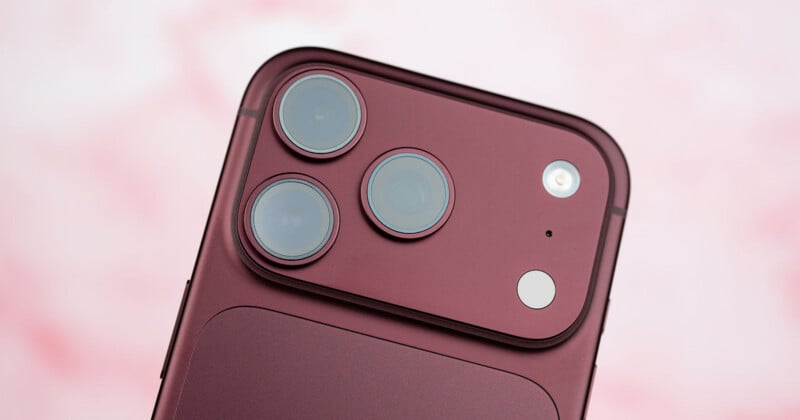
Therefore, Apple pursued an alternative, yet equally impactful, solution: a faster aperture. The iPhone 18 Pro and Pro Max transition from an f/1.8 aperture to a significantly wider f/1.48 aperture. This change allows the camera to gather substantially more light, resulting in improved low-light performance, faster shutter speeds to freeze motion, and the potential for greater background blur (bokeh).
However, a consistently wider aperture presents its own set of challenges. As Waldon noted, "So this camera now has an f/1.48 lens. And if we did that without variable aperture, in some shots, for example, if you’re shooting somebody close and you have something in the background you want to capture… you would really lose sharpness and not necessarily be able to take the shot you want to take." A very wide aperture can lead to an extremely shallow depth of field, making it difficult to keep both a nearby subject and relevant background elements in sharp focus. This is where the variable aperture becomes indispensable. It allows the camera to dynamically adjust its f-number, providing the benefits of a wide aperture when needed for low light or subject isolation, while also enabling a narrower aperture for scenes demanding greater depth of field and sharpness across the frame. Thus, the variable aperture emerged as a critical engineering solution to harness the advantages of a faster lens without compromising image quality or creative flexibility in other scenarios.
Unlocking Creative Potential: Beyond Pure Sensitivity
While improved sensitivity was the initial catalyst, the variable aperture’s implications extend far beyond technical performance, profoundly impacting the creative toolkit available to users. Hendricks highlighted this aspect, stating, "So when you look at something like aperture, that seemed like the next natural thing to bring to the Pro camera system, [to] be able to expand that overall creative range for everyone." This expansion of creative control aligns perfectly with Apple’s strategy for its Pro lineup, catering to both casual users seeking effortless quality and seasoned photographers desiring granular command over their images.
Waldon echoed this sentiment, expressing the team’s excitement over the newfound creative possibilities. "Being able to shorten the depth of field even beyond what you can shoot with today at f/1.8. Being able to close down the aperture gives you more things you can do when it comes to video. You can have more flexibility in shutter speed. Even in stills, you can have more flexibility in shutter speed. When you want it, you can get this very cool starburst effect."
The ability to manipulate depth of field on a smartphone lens optically, rather than solely through computational effects, is a significant leap. It offers a more natural and nuanced rendering of bokeh, allowing photographers to isolate subjects with greater precision. For videographers, the power to adjust aperture means finer control over exposure, especially when aiming for specific motion blur effects by pairing aperture adjustments with shutter speed selections—a fundamental technique in cinematic filmmaking. Moreover, stopping down the aperture to narrower settings like f/2.8 or f/4 introduces the sought-after "starburst" or "sun star" effect when shooting bright light sources, adding a professional aesthetic to landscape and night photography.
Engineering Miniaturization: The Six-Blade Design
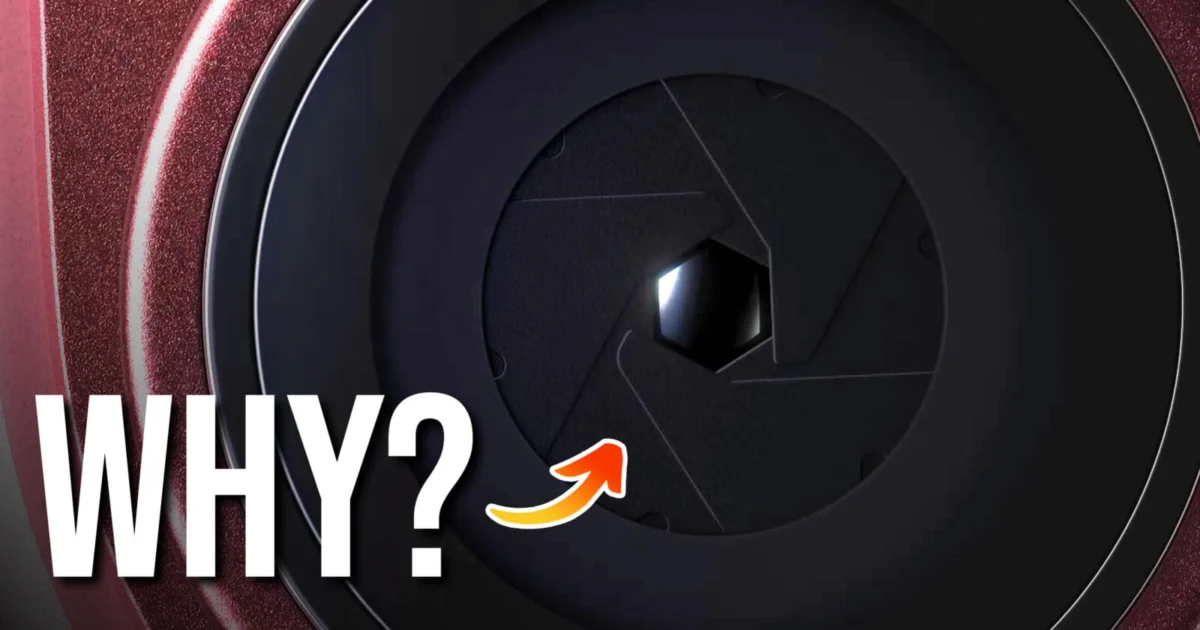
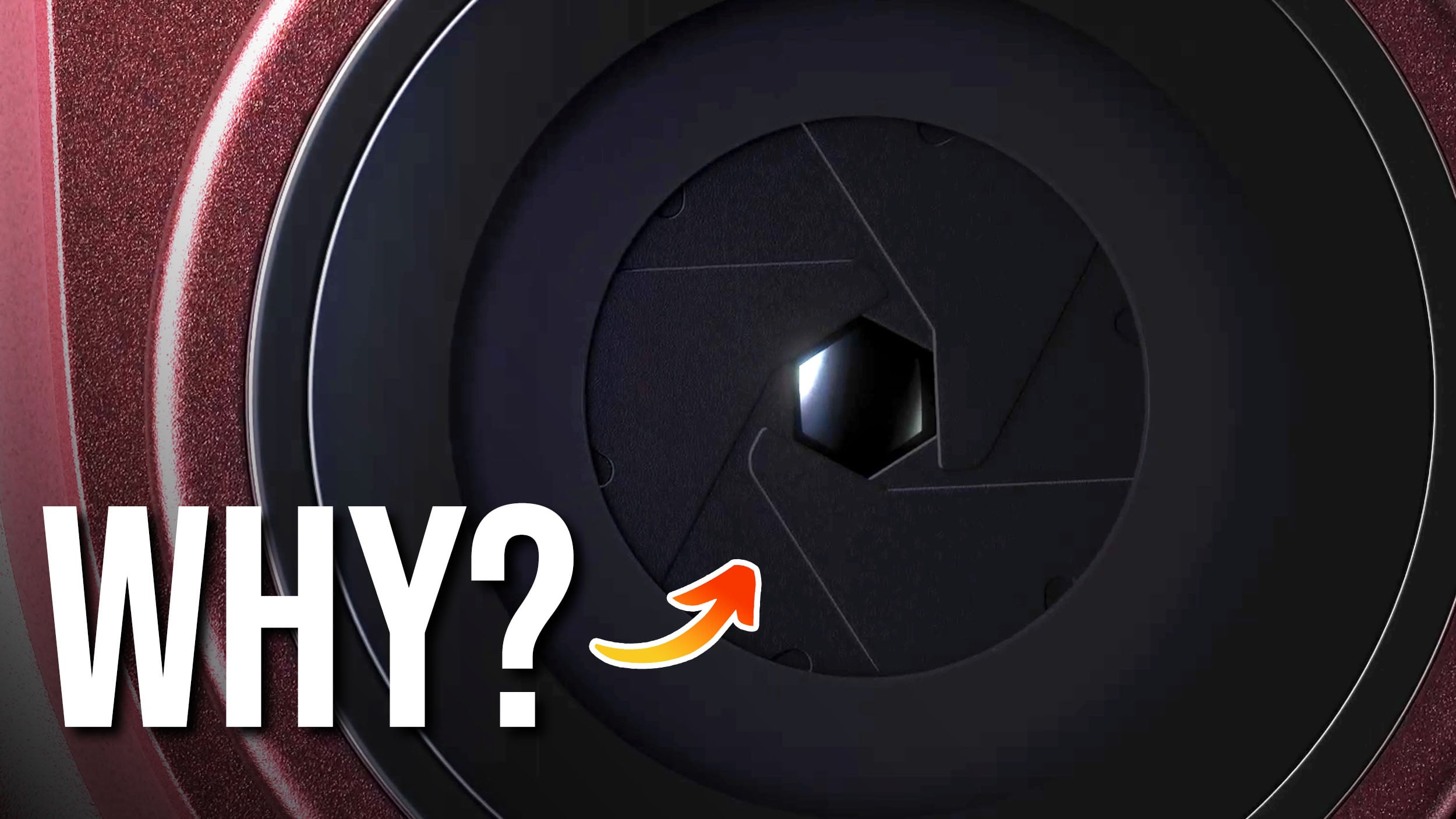
The core of the iPhone 18 Pro’s variable aperture system is its precisely engineered mechanism, featuring six blades. The choice of six blades was a carefully considered balance of physical constraints and optical performance. "So six blades was really a combination of things. One is just the physical dimensions of it. The more blades you add, given the size constraints, it becomes difficult to fit them all in, frankly. So there’s, there’s a physical constraint," Waldon explained to PetaPixel. The miniature scale of smartphone camera modules imposes severe limitations, making the integration of any moving parts a significant engineering challenge.
Beyond mere fit, the number and shape of aperture blades directly influence the aesthetic quality of out-of-focus areas (bokeh) and the appearance of starburst effects. Waldon continued, "Obviously we want enough blades to give sort of a nice, smooth aperture at every setting. So we did a lot of optimization around the shape of the blades and at every aperture setting. You sort of see how the blades have a big impact on how bokeh and out of focus areas look. It impacts how the starburst looks. So for this particular design, six was really the sweet spot." Fewer blades can result in less circular bokeh and more pronounced, angular starbursts, while more blades can create smoother bokeh and more defined starbursts, but at the cost of complexity and physical space. Apple’s six-blade design aims to strike an optimal balance for its specific optical format.
Each of these six laser-cut aperture blades is crafted from a specialized polymer composite, an innovative material designed by Apple to balance critical properties: minimal mass for rapid movement, sufficient flexibility for precise operation, and exceptional durability to withstand countless adjustments over the lifetime of the device. These blades are remarkably thin, described as "thinner than a human hair," and work in conjunction with a newly developed compact rotor mechanism. This miniaturized mechanical system allows for stepless aperture adjustments, meaning the aperture can be set to any value between its widest (f/1.48) and narrowest (f/4) limits, rather than being restricted to discrete steps.
Hendricks lauded the achievement, remarking, "So it’s amazing that you have this incredibly complex camera module, let alone with the rotor mechanism, with all of these different things that enable variable aperture in a really smart way on something that you have just in your pocket all the time with you." This statement underscores the monumental engineering effort required to integrate such a sophisticated optical system into the confined space of a smartphone, a testament to Apple’s relentless pursuit of miniaturization and precision.
Navigating Aperture Choices: Striking the Right Balance
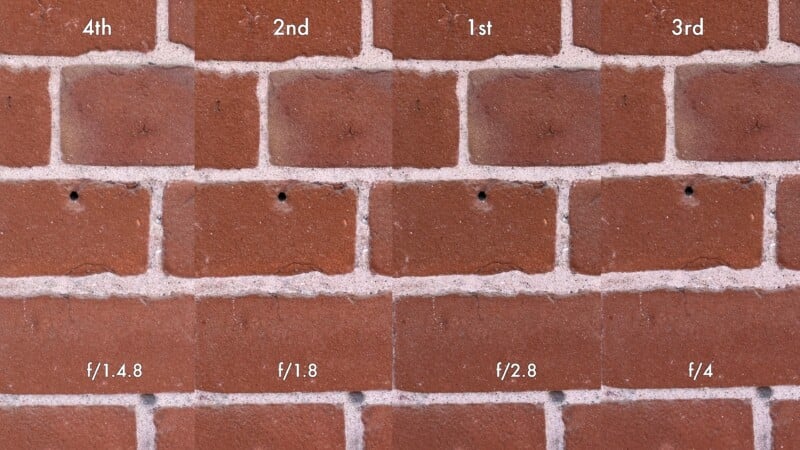
Despite the stepless design of the variable aperture mechanism, Apple has, for now, provided users with access to four distinct aperture settings: f/1.48, f/1.8, f/2.8, and f/4. The default setting remains f/1.8, a decision rooted in a careful assessment of user experience and image quality. Apple posits that f/1.8 offers the best overall choice for most scenarios due to its excellent sharpness, its ability to deliver a pleasing amount of background blur when subjects are close, and its familiarity to existing iPhone users. It represents a "good balance between sharpness and speed."

Waldon explained the optical trade-offs involved in using the extreme ends of the aperture range: "So there is a little bit of trade off as you go to to higher or lower apertures, where you sacrifice a little bit of sharpness [at f/1.48 because of aberrations] and on the long end, [f/4], because of diffraction." At the widest aperture of f/1.48, while maximizing light intake and background blur, lenses can exhibit optical aberrations (like chromatic aberration or coma) that slightly reduce overall sharpness. Conversely, at very narrow apertures like f/4, diffraction—a physical phenomenon where light waves spread out as they pass through a small opening—can lead to a slight softening of the image across the entire frame. Apple’s choice of f/1.8 as the default reflects its position as a "sweet spot" where these optical compromises are minimized for general use.
However, Apple’s commitment to user choice means providing access to these other settings for specific creative needs. Hendricks and Waldon expressed particular interest in how videographers will leverage the variable aperture to fine-tune shutter speed, achieving desired motion blur effects crucial for cinematic aesthetics. For instance, a videographer might close down the aperture to f/4 in bright conditions to maintain a slower shutter speed (e.g., 1/50th of a second for 24fps video) without overexposing the scene, thereby preserving natural motion blur.
Pro Controls: Empowering the Photographer
The variable aperture is seamlessly integrated with the new "Pro Controls" feature on the iPhone 18 Pro and Pro Max. This pairing represents a significant philosophical shift for Apple, which has historically prioritized simplicity and automation in its native Camera app. Until now, iPhone users seeking granular manual control over settings like aperture, shutter speed, and ISO typically relied on third-party applications.

While these third-party apps will undoubtedly retain their appeal for a segment of advanced users, Apple’s introduction of Pro Controls within its native app serves a dual purpose. Hendricks believes it will "kind of invite people to learn about manual controls and try to experiment with them, even if you don’t have a deep background in that." Simultaneously, it aims to satisfy the long-standing demands of serious users for advanced controls directly within Apple’s ecosystem.
Waldon underscored the accessibility of this system: "The incredible thing with the Camera app and Pro controls is everything is by default automatic. So you don’t have to know how to use a camera. Just as has always been the case, you just go in, press the shutter button, let the camera do the work." This ensures that the core "point-and-shoot" experience remains intact for the vast majority of users. However, he added, "But at the same time, once you start playing around with it, I think it’s actually really fun and almost a little bit hard to put down when you start playing around with all the different settings."
The integration of Pro Controls with the variable aperture means that users can now optically manipulate depth of field and exposure in conjunction with Apple’s sophisticated computational photography pipeline. Hendricks emphasized, "The amazing thing now is that now that you do have the full control, you take advantage of the computational image pipeline. So you get the image quality, you get the Styles, you also get on the video side, that flexibility that we have with editing, like audio mix, for example." This synergy allows users to apply creative manual settings while still benefiting from Apple’s advanced image processing, such as Smart HDR, Deep Fusion, and Photographic Styles, ensuring optimal image quality even with manual adjustments. "The more flexibility that you give people upfront, like in our Camera app, the more creative range that they’ll have," Hendricks concluded, highlighting the empowerment of the user.
A Cascading Series of Innovations: The iPhone’s Evolving Camera System

Apple’s entry into the variable aperture arena is not unprecedented in the smartphone market. Several manufacturers, including Samsung with its Galaxy S9/S10 series and Nokia with older models like the N86, have experimented with similar technologies. However, many of these implementations were later abandoned or offered a less impactful user experience. Apple, acutely aware of these precedents, has approached its variable aperture with a distinct amount of care and intentionality.
"We went into this very intentionally," Waldon affirmed. "You’ll see that it does make a real difference when you’re shooting in scenes, when you have something close and you have something far and you want more depth of field. It’s a real thing." He acknowledged the shortcomings of some previous implementations by competitors, noting that in many cases, "the difference isn’t really there." Apple’s confidence stems from its belief that for its specific "optical format and f-number, this is the right time to maintain fantastic quality and also give this creativity."
Unlike companies that quickly phased out variable apertures, Waldon stated unequivocally that Apple is "all in on the design decision. We think this is something that is super important for our Pro cameras and it’s part of our plan going forward." This long-term commitment signals that the variable aperture is not a one-off gimmick but a foundational element of Apple’s future camera strategy for its Pro models.
It is particularly insightful to trace the genesis of these significant changes. The entire evolution of the iPhone 18 Pro camera system ultimately began from a single, seemingly straightforward desire: to improve image quality, especially in low light. This core objective prompted a series of cascading decisions. Improving low-light performance led to the pursuit of a faster aperture. However, a consistently fast aperture introduced challenges with depth of field and overall sharpness in certain scenarios, necessitating a variable aperture. And if the hardware allowed for a variable aperture, then user control became a natural and desirable next step, giving rise to the Pro Controls within the native Camera app.

Individually, each of these changes—a faster lens, a variable aperture, and enhanced manual controls—might appear as incremental refinements. However, in real-world application, their synergistic integration culminates in a profoundly superior camera experience for both still photography and video capture. The iPhone 18 Pro and Pro Max represent a significant milestone, merging Apple’s legendary user-friendliness with advanced optical engineering and sophisticated computational intelligence, thereby empowering a new era of creative expression for mobile content creators. The familiar exterior of these new iPhones truly belies a revolution within, setting a new benchmark for what a smartphone camera can achieve.