A significant shift in photographic technique is gaining traction within the professional community, advocating for the deliberate application of core lighting principles not just to primary subjects, but also to the often-underestimated background. Historically, photographic education and practical application have heavily emphasized illuminating the main subject to achieve flattering and impactful results, frequently relegating background lighting to a secondary, often uniform, role. However, new insights presented at recent industry workshops highlight how a nuanced understanding of Intensity, Direction, and Quality of light, when applied to the backdrop, can profoundly enhance overall image cohesion and visual narrative. This refined approach is poised to elevate the aesthetic and expressive capabilities of photographers across various genres, from studio portraiture to environmental photography.
For decades, the bedrock of photographic lighting instruction has centered on mastering illumination for the foreground. Seminars, tutorials, and academic curricula have extensively covered techniques such as Rembrandt lighting, butterfly lighting, and broad lighting, all designed to sculpt and define the subject. While these fundamentals remain indispensable for rendering subjects effectively, the background often receives less analytical attention, frequently treated as a mere canvas to avoid distraction. The prevailing mindset often prioritizes a clean, evenly lit background to ensure the subject pops, inadvertently overlooking the creative potential within the backdrop itself. This traditional focus, while effective for clarity, can sometimes lead to static or uninspired compositions where the background fails to contribute dynamically to the image’s overarching message.
The proposed evolution in lighting methodology champions the extension of established principles – Intensity, Direction, and Quality – to the background. This paradigm recognizes that the backdrop is not merely passive space but an active element capable of contributing to mood, depth, and visual interest. Demonstrations conducted in controlled studio environments, using both static objects and live models, have illustrated how these principles, previously reserved for subject illumination, can be meticulously applied to backdrops to create a more integrated and impactful final image. Importantly, while these techniques are easily showcased in a studio, their applicability extends seamlessly to outdoor and on-location shoots, where photographers can actively manipulate ambient light or strategically place portable strobes to shape the background.

Mastering Background Intensity: A Spectrum of Expression
The intensity of light, defined as its brightness relative to the scene, is perhaps the most immediately discernible and easily manipulated principle for background enhancement. A foundational concept in photography, the Inverse Square Law, dictates that light intensity diminishes rapidly with distance. While often discussed in relation to subject lighting and falloff, this law holds profound implications for how a background appears. A white backdrop, for instance, can transition from brilliant white to shades of grey, or even deep black, depending on the power output and distance of the light source illuminating it. This principle applies universally to all background colors, offering an expansive palette of visual possibilities from a single backdrop.
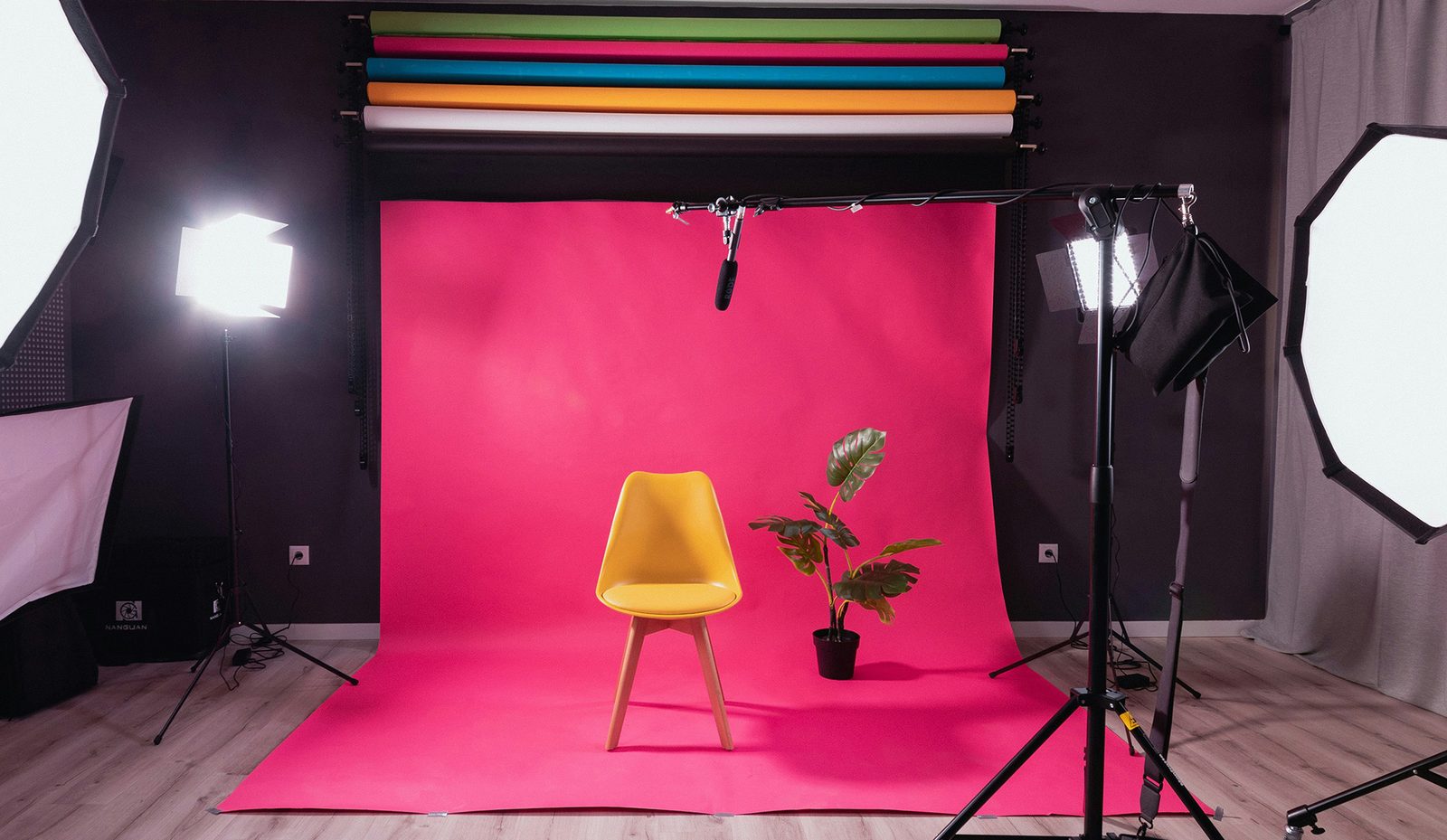
In practical demonstrations, a consistent subject (such as an apple box) was lit independently, while the background lighting was meticulously isolated and adjusted. By incrementally varying the power output of the background lights across a range of seamless paper rolls – from pure white to deep yellow, true blue, plum, pecan, orange, and flamingo – observers witnessed dramatic transformations. Each adjustment in light intensity not only altered the background’s brightness but also significantly impacted its saturation. A brightly lit background rendered colors vibrant and true, while progressively dimming the light produced deeper, richer, and more subdued tones. This experimental approach revealed that a single colored backdrop could yield a multitude of distinct looks, effectively multiplying a photographer’s creative options without requiring additional physical backdrops.

For instance, two otherwise identical images featuring a model, with consistent posing and subject lighting, could convey entirely different moods based solely on the intensity of the background illumination. A brightly lit background might evoke a sense of openness and modernity, while a subtly darkened backdrop of the same color could imbue the image with intimacy or drama. This granular control over background intensity empowers photographers to fine-tune the emotional resonance of their images, ensuring the backdrop complements rather than merely supports the subject. Industry experts note that this technique can also offer significant cost savings, as studios can achieve diverse aesthetic outcomes with fewer rolls of expensive seamless paper by strategically adjusting light intensity.
Directing Light: Sculpting Depth and Focus in the Background
While the directional control of light on a flat studio backdrop might seem limited, understanding light falloff allows for sophisticated effects that add depth and visual interest. In a typical studio setup, where light is projected onto a planar background, directional availability is indeed confined to approximately 180 degrees. However, this limited range does not preclude artistic manipulation. The most effective application of directional lighting for backgrounds involves using a single light source positioned off-center. Rather than aiming for a uniform wash of light across the entire backdrop, focusing the light on one side of the image creates a natural gradient.

This technique capitalizes on the principle of light falloff, where the intensity of light decreases as the distance from the source increases. By directing a background light to one side, the area closest to the light source will be brightest and most saturated, gradually fading into darker, less saturated tones further away. This gradient effect transforms a flat background into a dynamic element, guiding the viewer’s eye and creating a sense of dimension. It allows photographers to highlight specific textures within a backdrop or introduce subtle visual anchors without distracting from the subject.
The creation of gradients through directional lighting is not limited to studio settings. In environmental portraiture, a photographer might strategically position a portable strobe or utilize natural light sources (like a window or a break in foliage) to create a similar gradient effect on a distant wall or natural landscape. This thoughtful manipulation of background light direction ensures that the backdrop becomes an active compositional element, adding depth and narrative context to the scene. Dr. Evelyn Reed, a renowned professor of photographic arts, commented, "This refined approach elevates background lighting from a mere afterthought to a powerful narrative tool, transforming flat planes into canvases of graduated tone and selective emphasis."

The Quality of Light: Shaping Mood and Narrative
The quality of light, encompassing its softness or hardness, its diffusion or focus, and its color properties, offers the most ambiguous yet potentially impactful avenue for background enhancement. Unlike intensity or direction, which often deal with quantitative changes, quality delves into the qualitative attributes of light, allowing for highly expressive and artistic interventions. While the conventional wisdom in studio photography often dictates an even, neutral backdrop to ensure the subject remains the undisputed focal point, deliberately altering the background light quality can introduce compelling elements of interest without overshadowing the main subject.
One of the most versatile and cost-effective methods for manipulating background light quality is the use of gels. Gels, or colored filters placed over light sources, introduce specific hues to the backdrop, allowing photographers to implement sophisticated color theory into their images. This technique can break the monotony of a solid, uniformly lit background, injecting vibrancy, mood, or even thematic relevance. For example, applying a warm gel to a background can evoke a sense of comfort or nostalgia, while a cool gel might suggest calm or detachment. The economic advantage of gels is substantial; a diverse pack of gels is significantly less expensive than acquiring multiple rolls of seamless paper in various colors, offering an expanded creative palette at a fraction of the cost. Through judicious application of gels, photographers can create images that resonate with specific emotional tones or brand aesthetics, enhancing the visual story without directly altering the subject’s appearance.

Beyond color, the shape and spread of background light can be meticulously controlled using modifiers such as grids, snoots, or flags. These tools allow for highly selective illumination, creating focused beams of light, dramatic shadows, or precise highlights on the backdrop. For instance, a snoot can concentrate light into a narrow beam, which, when directed onto the background, can create a spotlight effect or a leading line. Combined with flags (light-blocking panels), photographers can sculpt distinct shapes of light, drawing the viewer’s eye to specific areas of the image or even to particular features of the subject. A practical demonstration involved using a snoot and flags to create an angled beam of light on the background, strategically designed to direct attention towards a model’s intricate eye makeup. This technique transforms the background from a passive element into an active participant in guiding the viewer’s gaze, underscoring the narrative focus of the image.
The broader implications of this refined approach to background lighting are considerable. For aspiring photographers, mastering these principles offers a powerful means to differentiate their work in a competitive market, moving beyond generic studio shots to create images with greater depth and artistic intention. For established professionals, it provides new tools for creative expression and problem-solving, allowing for greater flexibility on set and potentially reducing the need for extensive post-production editing to alter background aesthetics. Industry analysts suggest that this emphasis on holistic lighting design will become increasingly vital in commercial photography, where every element within the frame must contribute to the brand’s message or product’s appeal. By treating the background as an integral part of the overall composition, photographers can craft more compelling, nuanced, and visually sophisticated images that resonate more deeply with their audience.