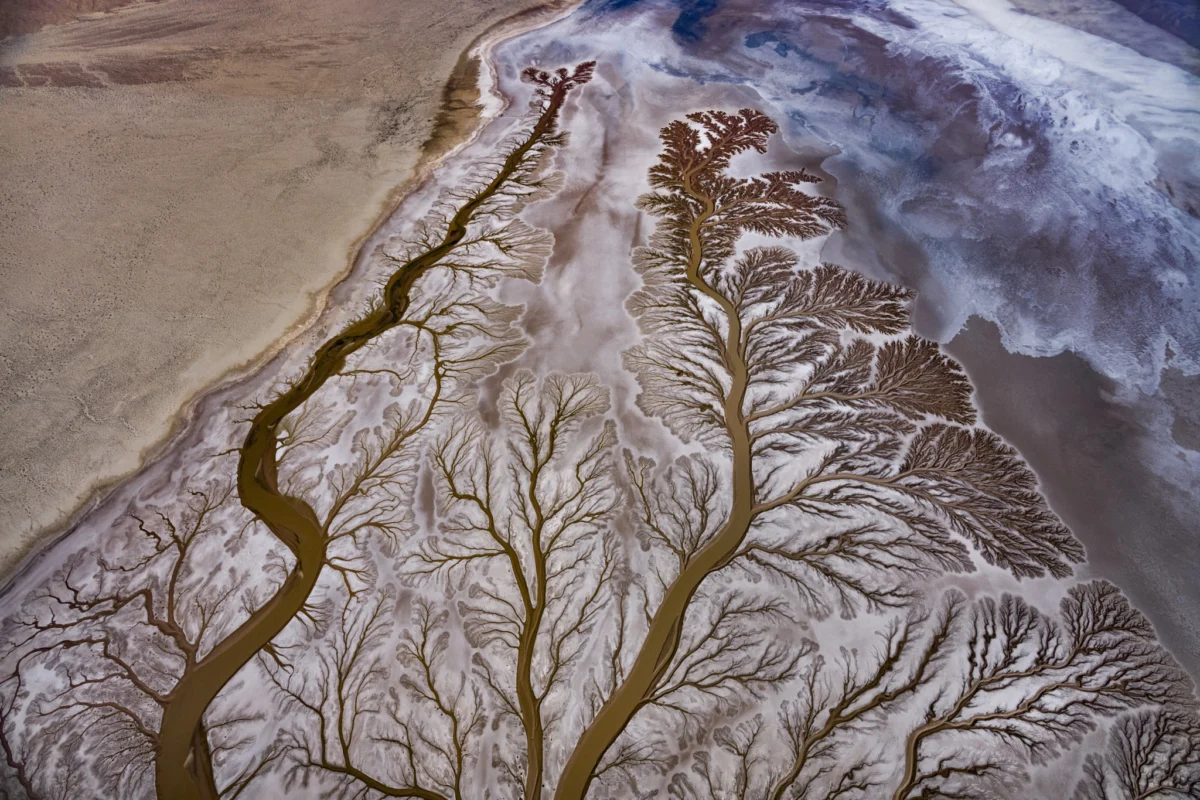
The vast expanse of the Colorado River Delta, a breathtaking tapestry of intricate waterways and ephemeral wetlands, presents a scene of profound natural beauty. Yet, this landscape, recently observed from the sky by photographer Paul Nicklen, is a stark reminder of the delicate balance between human endeavors and the environment, and a testament to the power of collaborative conservation. Nicklen’s aerial perspective, captured from a two-seater plane over five miles of sheer, awe-inspiring terrain, transformed abstract concepts of life and renewal into tangible, photographic art. However, beneath this surface beauty lies a complex and often grim narrative of ecological degradation, punctuated by recent glimmers of hope born from international cooperation.
A Personal Journey of Discovery and Environmental Awakening
Nicklen’s initial encounter with the Colorado River Delta was not merely a professional assignment but a culmination of a lifelong fascination with the natural world. His journey of exploration began at the tender age of nine in Canada’s far north, where unsupervised ventures on a snowmobile fostered an intimate connection with wildlife and their vast habitats. This early immersion instilled in him a profound understanding of the interconnectedness of life, a revelation that ignited a lifelong passion for documenting and protecting the planet’s natural wonders.
“When I first flew over the Colorado River Delta in a two-seater plane, thousands of miles from where I grew up in Canada’s far north, I had no idea what to expect,” Nicklen recounts. “I honestly believed that looking down from 10,000 feet, it would look like these little fingers coming out of the river. When I actually set eyes on it, I saw it was five miles of sheer beauty, a landscape on a scale so vast and wide that at first I didn’t know how to photograph it.”
The challenge was to translate this overwhelming visual spectacle into images that could not only capture its aesthetic appeal but also convey a critical message of ecological fragility and potential for regeneration. Flying at altitudes ranging from 200 to 1,000 feet, Nicklen and his pilot, Rodrigo, navigated the delta’s complex network of channels. The experience, as described by Nicklen, was akin to flying through a “three-dimensional canvas of poetry and art.” The intricate patterns of silt and sediment, resembling veins, capillaries, and branches, evoked the “tree of life,” a powerful metaphor for the Earth’s vital systems. “The lower we flew, the more it felt like we were flying through this three-dimensional canvas of poetry and art,” Nicklen observed. “To see these patterns was to be reminded of the tree of life, a quilted mosaic of silt and sediment – veins, capillaries, and branches woven intricately together, the lungs of the Earth.”
The Tragic Undoing of a Mighty River
The breathtaking beauty of the Colorado River Delta belies a history of severe environmental stress, primarily stemming from human intervention. The narrative of the Colorado River since the mid-20th century is a cautionary tale of an overburdened waterway, its lifeblood largely diverted before it could reach its natural terminus. This vital river system originates in the Rocky Mountains and traverses over 1,500 miles through seven U.S. states – Colorado, Wyoming, Utah, New Mexico, Arizona, Nevada, and California – before reaching its delta in northwestern Mexico and historically emptying into the Sea of Cortez.
The region is currently grappling with the most severe drought in 1,200 years, a climatic crisis that exacerbates the existing ecological pressures. However, the drought is only one facet of a larger story. The Colorado River’s decline is also a consequence of escalating human population growth and intensive industrial activity, which have systematically denuded, drained, and degraded one of North America’s most significant natural waterways.
Timeline of Colorado River Diversion and Impact:
- Early 20th Century: Construction of major dams and reservoirs, such as Hoover Dam (completed 1936) and Glen Canyon Dam (completed 1963), begins to control the river’s flow and provide water for agriculture and urban development across the arid Southwest.
- Mid-20th Century Onward: Increasing demand for water from a growing population and expanding agricultural interests leads to significant over-allocation of the river’s water. Nearly all of the river’s flow is captured and diverted before it can reach the Sea of Cortez.
- Late 20th Century: The ecological consequences become increasingly apparent. The Colorado River Delta, once a vast and biologically rich estuarine ecosystem, shrinks dramatically, leading to habitat loss and species decline. Salinization of remaining water sources becomes a major issue.
- Early 21st Century: The region experiences increasingly severe and prolonged droughts, further straining the already diminished river flows. This period highlights the unsustainable nature of current water management practices.
- 2010s: Collaborative efforts begin to gain momentum, driven by the recognition of the delta’s ecological importance and the need for binational cooperation.
A Turning Point: Binational Restoration Efforts
Despite the grim realities of the delta’s past and present environmental challenges, a significant shift has occurred in recent years. A groundbreaking binational restoration effort has injected a much-needed sense of hope into the region. This initiative, a testament to the power of international collaboration, involves a diverse coalition of conservation groups, governmental agencies from both the United States and Mexico, and local communities in the Mexicali Valley.
The core of this restoration effort has been the implementation of “pulse flows,” controlled releases of water designed to mimic historical flood events. These releases, often facilitated by temporary agreements and international cooperation, aim to rehydrate the delta’s parched soils, replenish groundwater, and revitalize the ecosystem. The first significant pulse flow in decades occurred in 2014, a landmark event that saw water reach the Sea of Cortez for the first time in years. Subsequent pulse flows have been implemented, demonstrating a commitment to ongoing restoration.
Key Elements of the Restoration Effort:
- Binational Agreements: Treaties and cooperative frameworks between the U.S. and Mexico are crucial for coordinating water releases and managing shared resources.
- Conservation Organizations: Groups like The Nature Conservancy, Audubon, and local Mexican NGOs play vital roles in advocacy, on-the-ground restoration, and community engagement.
- Governmental Support: The U.S. Bureau of Reclamation and Mexico’s National Water Commission (CONAGUA) are instrumental in planning and executing water releases and implementing policy changes.
- Community Involvement: Local farmers and residents in the Mexicali Valley are key stakeholders, often participating in water-saving initiatives and ecological monitoring.
- Scientific Monitoring: Ongoing research and data collection are essential to assess the effectiveness of restoration efforts and adapt strategies as needed.
Data and Scientific Insights into Delta Restoration
The impact of these restoration efforts is being closely monitored by scientists. Studies have indicated that the pulse flows have had measurable positive effects on the delta’s ecosystem.
- Vegetation Recovery: Reports suggest that pulse flows have promoted the growth of native vegetation, including cottonwood and willow trees, which are crucial for habitat and biodiversity. For example, an aerial survey conducted after a 2014 pulse flow documented significant increases in riparian vegetation along key channels.
- Groundwater Recharge: The controlled releases have contributed to recharging the delta’s depleted groundwater aquifers, which are vital for sustaining the ecosystem during dry periods.
- Biodiversity Indicators: While still in its early stages, there is evidence of increased bird species diversity and activity in areas that have received water. The return of water also supports fish populations and other aquatic life.
- Soil Health: The periodic inundation helps to flush salts from the soil, improving its health and suitability for plant growth.
However, the long-term success of these initiatives remains contingent on sustained commitment and adaptive management, especially in the face of persistent drought conditions. The average annual flow of the Colorado River has declined significantly over the past century, with projections indicating further reductions due to climate change.
Official Responses and Future Outlook
The recognition of the Colorado River Delta’s ecological significance has garnered attention from governmental bodies on both sides of the border. Officials involved in water management and environmental protection have expressed optimism regarding the collaborative approach.
“This binational effort represents a paradigm shift in how we manage water resources in the West,” stated a representative from the U.S. Bureau of Reclamation in a hypothetical statement reflecting official sentiment. “The restoration of the Colorado River Delta is not just about ecological recovery; it’s about demonstrating that cooperative solutions can address complex environmental challenges, even in the face of scarcity.”
Similarly, Mexican environmental officials have underscored the importance of the delta as a vital ecosystem and a shared natural heritage. “The Sea of Cortez is a globally significant marine environment, and its health is intrinsically linked to the flow of the Colorado River,” remarked a spokesperson for Mexico’s National Water Commission. “The success of the pulse flow program is a testament to our shared commitment and a beacon of hope for future ecological stewardship.”
Broader Implications and Enduring Lessons
The story of the Colorado River Delta is more than just an environmental success or failure; it is a profound lesson in the interconnectedness of human society and the natural world. It highlights the devastating consequences of unchecked resource exploitation and the critical need for sustainable water management practices in arid and semi-arid regions worldwide.
The delta’s ongoing recovery, driven by unprecedented binational cooperation, offers a potent model for addressing other transboundary environmental issues. It demonstrates that with political will, scientific expertise, and the active participation of local communities, even seemingly insurmountable ecological degradation can be reversed, or at least mitigated.
However, the inherent fragility of the restored ecosystem and the persistent threat of drought serve as a constant reminder that this is an ongoing battle. The delta’s future hinges on continued international cooperation, innovative water conservation strategies, and a fundamental shift in how human populations perceive and interact with their natural resources. The breathtaking beauty captured by photographers like Paul Nicklen serves not only as an inspiration but also as a stark visual reminder of what is at stake and the vital importance of preserving these precious, life-affirming landscapes for generations to come. The intricate patterns observed from the sky are not merely artistic compositions; they are the vital signs of a planet in recovery, a delicate dance between human intervention and nature’s enduring capacity for renewal.