The digital landscape has undergone a radical transformation over the last decade, transitioning from a text-heavy environment to one dominated by high-resolution visual storytelling. In this competitive ecosystem, stock photography platforms have become the backbone of the creative economy, providing essential assets for marketing agencies, freelance designers, and corporate entities. Depositphotos, established in 2009, has emerged as a primary contender in this space, leveraging a massive library of over 240 million files to secure a significant market share. As the industry moves toward more integrated creative solutions, understanding the nuances of Depositphotos’ pricing architecture is critical for professionals seeking to balance aesthetic quality with budgetary constraints.
The Evolution of the Microstock Market and Depositphotos’ Position
To understand the current pricing structure of Depositphotos, one must look at the broader context of the stock media industry. Historically, stock photography was divided between "Rights Managed" (RM) images—which were expensive and limited by specific usage durations—and "Royalty-Free" (RF) images. Depositphotos was a key player in the "microstock" revolution, which democratized access to professional imagery by offering high-quality RF assets at a fraction of traditional costs.
Founded by Dmitry Sergeev in Kyiv, Ukraine, Depositphotos grew rapidly by focusing on a contributor-centric model and a user-friendly interface. A pivotal moment in the company’s chronology occurred in October 2021, when it was acquired by Cimpress (the parent company of VistaPrint) in a deal valued at approximately $85 million. This acquisition integrated Depositphotos into the broader Vista ecosystem, reinforcing its stability and allowing for expanded investment in AI-driven search tools and a more diversified content library, which now includes vectors, illustrations, 4K videos, and music tracks.

Detailed Breakdown of Subscription Tiers
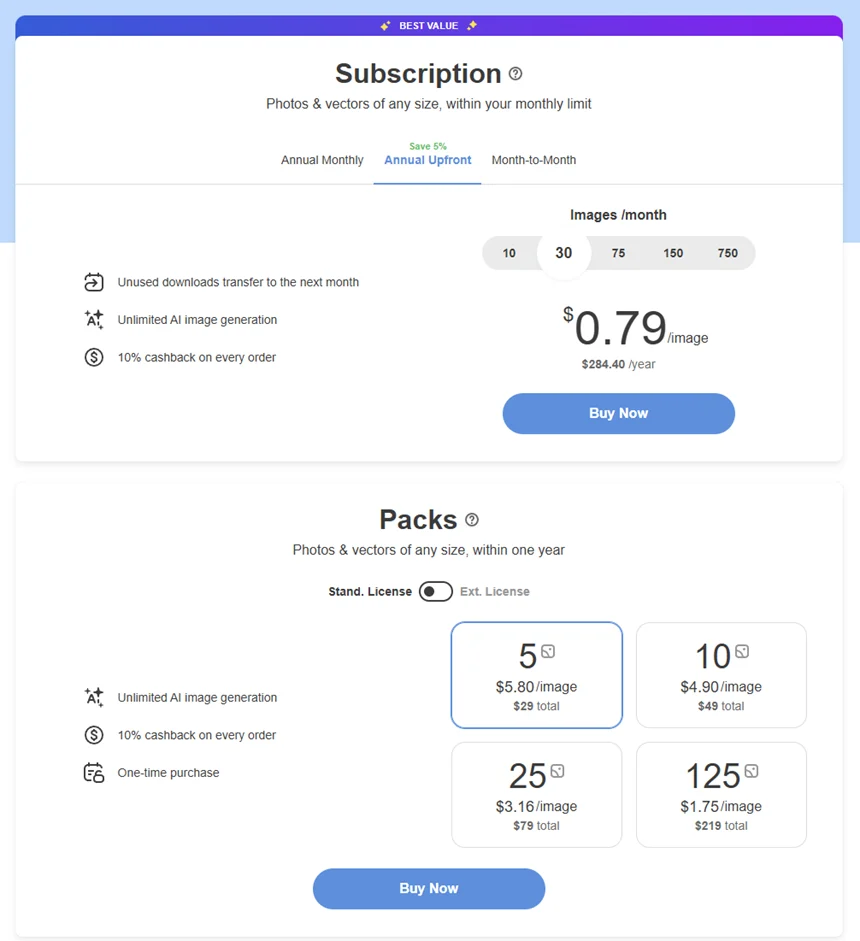
Depositphotos utilizes a multi-tiered subscription model designed to accommodate varying volumes of content consumption. For 2024 and 2025, the platform has standardized its offerings into five primary brackets based on the number of monthly downloads.
The Entry-Level: 10 to 30 Images per Month
The 10-image plan is specifically tailored for freelancers and small-scale bloggers who require a consistent but limited stream of visuals. At a monthly billing rate of $10.90, the cost per image stands at approximately $1.09. However, users who commit to an annual plan (paid monthly) see this drop to $9.90 per month. The 30-image plan offers a middle ground, priced at $24.75 for monthly billing, which is often cited by industry analysts as one of the most competitive entry points for high-resolution content.
Mid-Range and High-Volume: 75 to 750 Images per Month
For active marketing departments and social media managers, the 75-image and 150-image plans provide a lower cost-per-asset. The 75-image plan costs $66.75 monthly, while the 150-image plan is priced at $97.50.
The "750 Images Plan" represents the platform’s flagship offering for heavy users. At a monthly cost of $187.50, the price per image plummets to $0.25. When paid upfront annually at $1,699, the savings are substantial, making it the preferred choice for large agencies that produce high volumes of daily content for clients.

On-Demand Credits vs. Subscription Models
A critical distinction in the Depositphotos pricing ecosystem is the "On-Demand" credit system. While subscriptions are ideal for those with predictable monthly needs, the credit system serves users with sporadic requirements.
- Flexibility: Credits are valid for one year from the date of purchase, providing a "safety net" for users who do not want to be tied to a monthly quota.
- Cost Comparison: On-demand images are significantly more expensive on a per-unit basis than subscription images. This premium is the price for flexibility and the lack of a recurring commitment.
- Licensing: Both on-demand and subscription downloads typically fall under the Standard License, though Extended Licenses—required for products intended for resale—usually require a separate, higher-cost credit purchase.
Licensing Architecture: Standard vs. Extended
A major factor in Depositphotos’ value proposition is its transparent licensing. Journalistic and corporate users must distinguish between these two categories to ensure legal compliance:
- Standard License: This covers most digital and print uses, including websites, advertising, social media, and internal presentations. It limits the print run to 500,000 copies and prohibits the use of the image on items for resale where the image is the primary value (e.g., a T-shirt or a coffee mug).
- Extended License: This removes the print run limit and allows for the creation of merchandise for resale. For businesses involved in manufacturing or high-volume publishing, the Extended License is a mandatory upgrade, often costing significantly more than a standard download.
Comparative Industry Analysis
When compared to its primary competitors, Shutterstock and Adobe Stock, Depositphotos often positions itself as the "value-driven" alternative. While Adobe Stock benefits from deep integration with the Creative Cloud suite, and Shutterstock boasts a slightly larger library, Depositphotos competes on price and localized support.
Data suggests that for a 750-image monthly plan, Depositphotos frequently undercuts the "Big Two" by 10% to 20%, depending on the current promotional cycle. Furthermore, Depositphotos has been praised for its "rollover" policy. In several of its subscription models, unused downloads from one month can carry over to the next, provided the subscription remains active—a feature that is not universally available across all stock agencies.

Technological Integration and User Experience
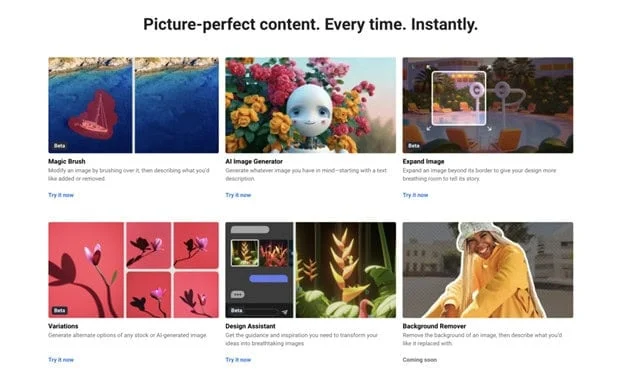
The price of a subscription is not merely for the image itself but for the tools used to find it. Depositphotos has invested heavily in proprietary search algorithms. Key features include:
- AI-Powered Search: Users can filter by color, orientation, the presence of people, and even the "space for text" (copy space), which is a vital tool for graphic designers.
- Reverse Image Search: This allows users to upload an image they like and find similar, legally licensable alternatives within the Depositphotos library.
- Multi-User Accounts: For enterprise clients, the ability to have a centralized billing account with multiple "seats" or sub-users is a significant administrative benefit, reducing the friction of asset sharing within a large team.
Broader Impact and Market Implications
The aggressive pricing strategy of Depositphotos has broader implications for the creative industry. By lowering the barrier to entry for high-quality media, the platform has enabled small businesses in developing markets to compete visually with larger international corporations.
However, this downward pressure on pricing is a subject of ongoing debate among contributors. With over 100,000 contributors worldwide, the "microstock" model relies on volume. While users benefit from low prices, photographers and illustrators must sell thousands of licenses to generate a sustainable income. This has led to a shift in the type of content being produced, with a higher emphasis on "commercial-ready" lifestyle photography and versatile vectors that have broad appeal.
Official Responses and Global Accessibility
Depositphotos has maintained a strong commitment to global accessibility, offering 24/7 support in 26 different languages. In official statements regarding their pricing updates, the company has frequently emphasized "flexibility" and "scalability." By offering both monthly and annual options, they aim to capture a wide demographic, from the solo "solopreneur" to the multinational corporation.

Industry analysts note that Depositphotos’ decision to offer a free trial period—often allowing new users to download a limited number of images for free—serves as a powerful lead-generation tool. This "try-before-you-buy" approach has been instrumental in building a user base of over 43 million clients.
Strategic Recommendations for Consumers
Based on the factual analysis of the plans and prices, the following recommendations emerge for different user profiles:
- For Small Businesses: The 30-image annual plan offers the best balance of cost and volume, providing enough assets for a consistent social media presence without a heavy financial burden.
- For Design Agencies: The 750-image plan is virtually mandatory to keep the per-image cost low enough to maintain healthy margins on client projects.
- For One-Off Projects: On-demand credits are the logical choice, despite the higher per-unit cost, as they avoid the complications of subscription management.
As the stock media market continues to evolve—particularly with the rise of AI-generated imagery—Depositphotos’ pricing structure remains a benchmark for the industry. Its ability to offer a massive, curated library at a price point that remains accessible to the average creator ensures its continued relevance in the global creative economy. Whether through its competitive subscriptions or its flexible credit packs, the platform remains a cornerstone for those who require professional-grade visuals to communicate their message in an increasingly visual world.