The Evolution and Institutional Background of Depositphotos
To understand the safety and reliability of Depositphotos, one must look at its institutional history. Founded in 2009 by Dmitry Sergeev in Kyiv, Ukraine, the agency was launched at a time when the "microstock" model was beginning to disrupt traditional, high-priced photography agencies. By offering high-quality images at a fraction of the cost of traditional rights-managed photography, Depositphotos quickly scaled its operations.
The company’s trajectory took a significant turn in October 2021, when it was acquired by Cimpress, a publicly traded American-Irish investment firm that also owns Vistaprint. This acquisition provided Depositphotos with the backing of a massive corporate entity listed on the Nasdaq, further cementing its status as a legitimate and safe marketplace. Today, the platform hosts over 300 million files, supported by a network of over 100,000 contributors globally. This scale of operation necessitates rigorous security protocols and legal frameworks to protect both the creators and the end-users.
Legal Safety: Understanding Copyright and Licensing Frameworks
The primary concern for any professional using stock imagery is legal liability. Using an image without the proper rights can lead to "copyright trolling" or legitimate lawsuits that can cost a company thousands of dollars. Depositphotos mitigates this risk through a robust Royalty-Free (RF) licensing model.

When a user downloads an image from Depositphotos, they are not "buying" the image itself, but rather a license to use it under specific conditions. The platform offers two primary types of licenses:
- Standard License: This covers most common uses, including websites, advertising, social media, and printed materials with a limited print run (typically up to 500,000 copies). The safety here lies in the fact that Depositphotos ensures all images in their commercial library have the necessary model releases (for people) and property releases (for recognizable private locations).
- Extended License: This is required for users who intend to use the images on products for resale, such as t-shirts, mugs, or digital templates, or for print runs exceeding the 500,000-copy limit.
A critical safety feature of Depositphotos is its legal indemnity. For corporate clients and professional users, the agency provides a guarantee that the content licensed is original and does not infringe on third-party intellectual property. If a legal dispute arises regarding the copyright of a licensed image, Depositphotos offers a level of financial protection (indemnification), which is a standard requirement for large-scale enterprise operations.
Technical Security and Data Protection
Beyond legal concerns, the safety of a stock photo site depends on its technical infrastructure. As a platform handled by millions of users, Depositphotos employs industry-standard encryption and data protection measures.
- Financial Transactions: The platform is PCI DSS (Payment Card Industry Data Security Standard) compliant. This means that when users purchase subscriptions or on-demand credits using credit cards or digital wallets, the data is encrypted via SSL (Secure Sockets Layer) technology. Financial information is processed through secure gateways, ensuring that the agency itself does not store sensitive card details in a vulnerable manner.
- Malware Prevention: Every file uploaded by contributors undergoes a multi-stage review process. This is not only for aesthetic quality but also for technical integrity. Files are scanned to ensure they are free from malicious code, ensuring that a downloaded ZIP or JPEG file will not compromise a user’s local network or workstation.
- Privacy Compliance: In accordance with global regulations such as the GDPR (General Data Protection Regulation) in Europe and various data privacy acts in the United States, Depositphotos maintains transparent policies regarding how user data is collected, stored, and utilized.
The Vetting Process: How Content Enters the Library
A stock agency is only as safe as the contributors it allows on its platform. Depositphotos maintains a strict entry barrier for photographers and illustrators. Prospective contributors must submit a portfolio for review, which is evaluated for both technical proficiency and legal compliance.

Once an artist is accepted, every individual submission is manually or algorithmically reviewed. Reviewers check for:
- Visible Trademarks: Ensuring that logos (like the Nike "swoosh" or Apple logo) are removed from commercial images to prevent trademark infringement.
- Model Releases: Verifying that a signed legal document exists for every person appearing in a photo.
- Intellectual Property: Ensuring that the artwork is not a derivative of someone else’s copyrighted work.
This rigorous vetting process is the cornerstone of user safety, as it prevents "unsafe" content—legally speaking—from ever reaching the marketplace.
Comparative Market Analysis: The "Big 5" Context
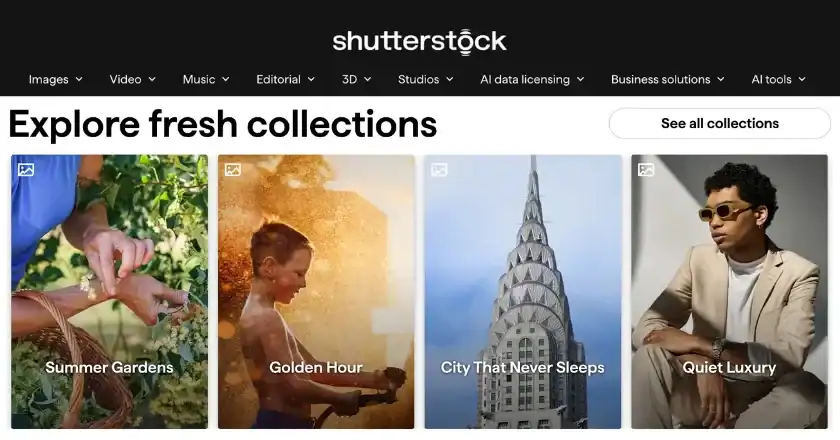
In the stock media industry, Depositphotos is frequently grouped within the "Big 5" alongside Shutterstock, Adobe Stock, iStock, and Getty Images. When compared to its peers, Depositphotos often positions itself as the more cost-effective alternative without sacrificing safety or quality.
Data from market analysts suggests that while Getty Images focuses on high-end, exclusive rights-managed content, and Adobe Stock integrates deeply with Creative Cloud software, Depositphotos excels in the "microstock" volume market. Its library of 300 million assets rivals Shutterstock’s, yet its pricing structures—particularly its flexible "on-demand" packs—are often cited as more accessible for small to medium-sized enterprises (SMEs).

Pricing Structures and Economic Transparency
Safety in a commercial transaction also involves transparency in billing. Depositphotos utilizes three main pricing models designed to prevent "hidden fee" scenarios:
| Plan Type | Target Audience | Key Safety/Value Feature |
|---|---|---|
| Monthly Subscription | High-volume agencies | Unused downloads often roll over, preventing wasted capital. |
| Annual Subscription | Corporate marketing teams | Lowest per-image cost with predictable billing. |
| On-Demand Credits | Occasional users/Freelancers | One-year expiration period, allowing for flexible usage. |
By providing clear documentation of what each plan entails, Depositphotos avoids the "subscription trap" that characterizes less reputable digital services. Users are notified before renewals, and the cancellation process is standardized.
The Impact of AI-Generated Content
As of 2023 and 2024, the rise of Generative AI has introduced new safety concerns regarding copyright. Many AI models were trained on datasets without the explicit consent of the original artists, leading to a "gray area" in copyright law.
Depositphotos has addressed this by launching its own AI Image Generator, which is built on ethically sourced data. This ensures that the AI-generated images available on the platform are "legally clean." By taking a proactive stance on AI, the agency ensures that users who experiment with new technology are not inadvertently opening themselves up to future litigation as AI copyright laws continue to be codified globally.

Chronology of Key Milestones
- 2009: Depositphotos is founded in Kyiv.
- 2011: The company reaches the 10-million-file milestone.
- 2013: Launch of the "Clashot" app, pioneering mobile-sourced stock photography.
- 2017: The library expands to include video and high-definition footage.
- 2021: Acquisition by Cimpress (Vistaprint), providing massive institutional stability.
- 2022: The company navigates the geopolitical challenges in Ukraine, maintaining 100% uptime and supporting its local workforce.
- 2023: Integration of ethical AI generation tools into the platform.
Broader Implications for the Creative Industry
The continued success and safety of platforms like Depositphotos have democratized professional design. Decades ago, only companies with massive budgets could afford high-quality visual assets. Today, a solo entrepreneur can access a library of 300 million images for less than a dollar per file.
This accessibility, however, places the burden of "safe usage" on the user. While Depositphotos provides the legal and technical shield, users must still ensure they are using the correct license for their specific project. The platform’s 24/7 support in 26 languages serves as a critical safety net here, allowing users to clarify licensing ambiguities before a project goes live.
Conclusion: A Verdict on Safety and Reliability
Depositphotos is not only safe but is one of the most reputable institutions in the global stock media market. Its combination of a massive, vetted library, secure technical infrastructure, and the backing of a major public corporation (Cimpress) makes it a low-risk environment for both creative and financial transactions.
For the modern marketer, the "safety" of Depositphotos lies in its predictability. The licenses are clear, the files are technically sound, and the legal indemnity provides peace of mind in an increasingly litigious digital world. As the industry moves further into the era of AI and rapid content creation, Depositphotos’ commitment to ethical sourcing and contributor vetting remains a vital safeguard for the global creative community.