On August 12, 2026, as the moon crossed the solar disk, a convergence of high-end digital technology and vintage analog craftsmanship at Albury Heath, Surrey, highlighted a shift in how modern observers document celestial events. While thousands across the United Kingdom turned their eyes upward to witness the deep partial eclipse, a specific photographic project led by Michael McGrath sought to transcend simple documentation. By utilizing a combination of a digital Hasselblad 907X and a modified 1960s-era Polaroid 180 Land Camera, the project aimed to explore both the scientific precision of modern imaging and the tactile, human-centric nature of instant film. The results of this dual-format approach revealed not only a rare optical phenomenon known as tonal reversal but also the enduring power of physical photography to foster social connection in an increasingly digital landscape.
The August 2026 Eclipse: Context and Magnitude
The solar eclipse of August 12, 2026, was the first total solar eclipse visible in continental Europe since 2006. While the path of totality swept through Greenland, Iceland, and northern Spain, the United Kingdom experienced a significant partial eclipse. In the Surrey region, including Albury Heath, the magnitude of the eclipse reached approximately 90%, causing a noticeable drop in ambient temperature and a dramatic shift in the quality of light.
For photographers, the 2026 event presented a unique challenge. Unlike a total eclipse, where the solar corona becomes visible to the naked eye, a partial eclipse requires constant filtration to protect both human eyesight and camera sensors. The event at Albury Heath drew a communal gathering of enthusiasts, families, and researchers, creating a social environment that became as much a part of the photographic record as the celestial alignment itself.
Technical Methodology: A Dual-Format Approach
The photographic mission was divided into two distinct objectives: high-resolution scientific recording and experimental analog capture. To achieve these, two vastly different camera systems were deployed simultaneously.

The Digital Record: Hasselblad 907X and 500mm Reflex
For the precise documentation of the lunar progression, a Hasselblad 907X/CFV 100C medium-format digital back was paired with a vintage Canon FD 500mm Reflex f/8 lens. This mirror lens, known for its compact size and fixed aperture, provided the necessary focal length to isolate the solar crescent within the frame. To manage the extreme brightness of the sun, the setup utilized stacked Neutral Density (ND) filters, specifically an ND8 and an ND2.
Operating at ISO 64, the camera recorded shutter speeds ranging from 1/6000 to 1/10000 of a second. This configuration allowed for a sharp, detailed rendering of the "horns" of the solar crescent, isolated against a pitch-black background—a standard astronomical record of the event’s progression.
The Analog Experiment: The Modified Polaroid 180
The second half of the project utilized a modified Polaroid 180 Land Camera, a professional-grade folding camera originally manufactured in the 1960s. This specific unit had been converted by Analogue Studio to accept a Lomography Lomograflok back, allowing it to use modern Fujifilm Instax Wide film. Unlike the digital Hasselblad, this setup was used to capture the eclipse within the context of the Surrey landscape.
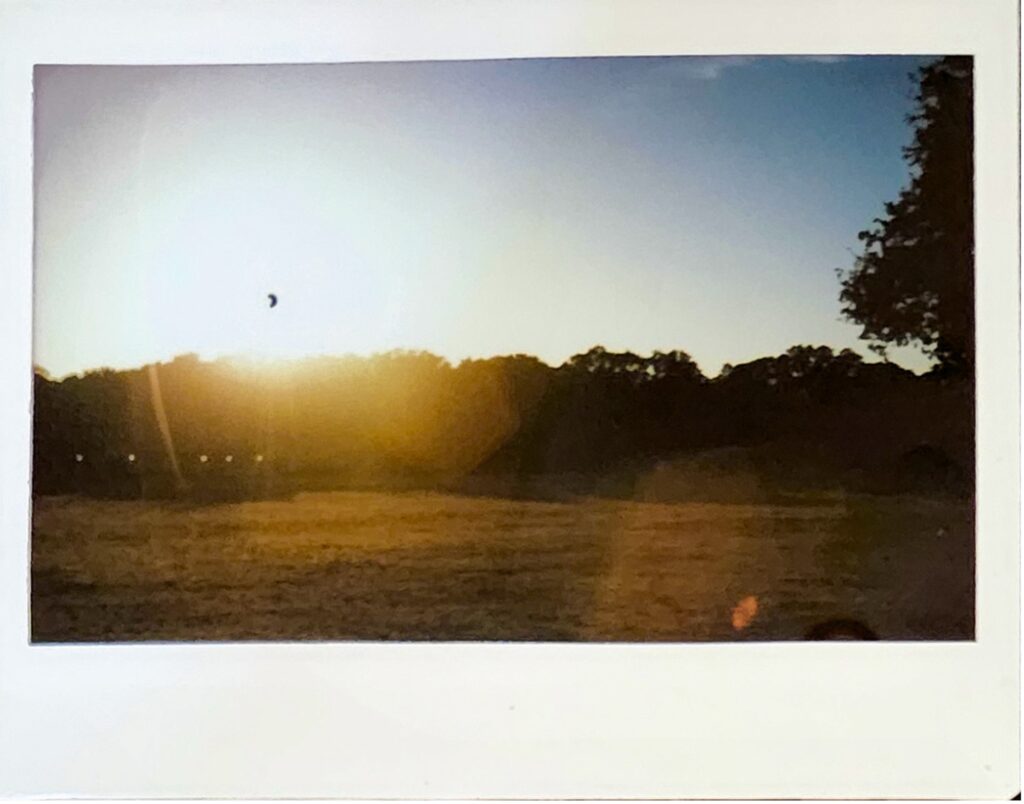
The goal was to induce a specific chemical reaction on the film. By using extreme overexposure—achieved through slow shutter speeds (1/8 to 1/60 second) and small apertures—the photographer aimed to trigger a tonal reversal in the brightest areas of the image. In solar photography, this effect is often referred to as a "black sun," where the most intense light source appears dark on the final print due to the saturation of the film’s silver halides.
Chronology of the Event at Albury Heath
The observation began in the late afternoon as the moon first made contact with the solar limb. The timeline of the photographic project followed the eclipse’s progression:
- First Contact (Early Phase): Initial digital frames were captured to calibrate the Hasselblad and ensure the ND filters were sufficiently mitigating solar flare.
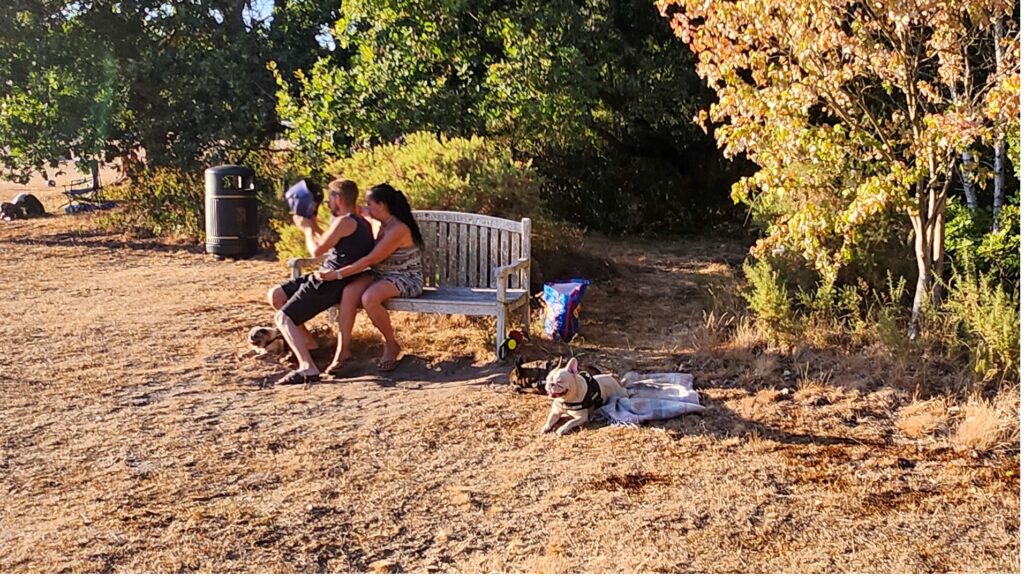
- The Gathering: As the moon covered more of the sun, the crowd at Albury Heath grew. The presence of the modified Polaroid 180, a bulky and mechanical curiosity, began to attract attention from fellow observers.
- Maximum Obscuration: At the peak of the eclipse in Surrey, the light turned "silvery" and shadows became sharper and more crescent-shaped. It was during this window that the experimental Instax frames were exposed.
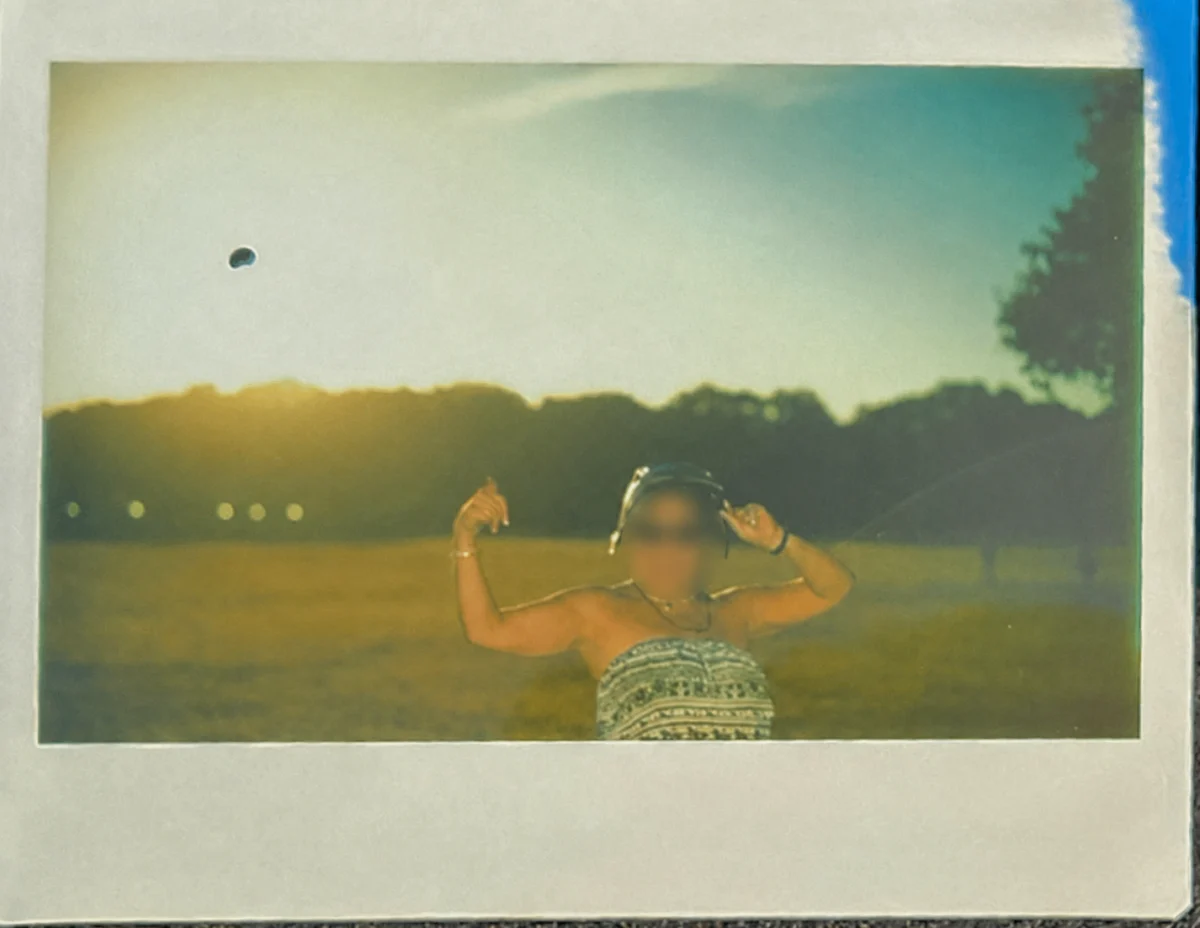
- The Social Exchange: Following the peak, the focus shifted from the sky to the people. Portraits were made of observers using the Polaroid 180, providing them with physical mementos of the event.
- Post-Eclipse: As the sun began to emerge from the lunar shadow, the final "black-eyed sun" prints were evaluated, confirming the success of the tonal reversal experiment.
The Phenomenon of the Black-Eyed Sun
The most striking result of the analog experiment was the "black-eyed sun." In these images, the sun does not appear as a brilliant white crescent but as a dark, void-like shape floating above the Surrey treeline. This effect is a variation of the Sabattier effect, a phenomenon in photography where a partially developed film is exposed to light, causing a reversal of tones.
On Instax Wide film, the extreme intensity of the sun overwhelmed the emulsion’s ability to record light normally. Instead of reaching a maximum white point, the chemical process "flipped," rendering the sun in dark, charcoal tones. This created a surreal aesthetic, placing a "black sun" within a recognizable, naturally lit landscape. It offered a psychological representation of the eclipse—a feeling of "wrongness" in the sky—that a standard filtered digital photograph often fails to capture.
The Social Catalyst: Analog in a Digital Age
A significant finding of the Albury Heath project was the role of the camera as a social instrument. In a modern setting, digital cameras are ubiquitous and often ignored. However, the Polaroid 180, with its bellows, manual dials, and the immediate mechanical ejection of film, acted as a "conversation starter."
Observers who had brought their own high-tech gear or simple eclipse glasses were drawn to the physical process of the instant film. This led to a series of portraits. One notable interaction involved a woman who expressed deep emotion during the event; her daughter, an astronomy enthusiast, was unable to attend. The photographer captured her portrait beneath the eclipsing sun and gifted her the original Instax print.
This exchange highlighted a fundamental difference between digital and analog media. While a smartphone can capture and share a file instantly, it does not produce a "singular physical object." The Instax print, as a unique chemical artifact that cannot be perfectly replicated, carried a weight of significance that a digital file lacked. The woman reported that she intended to keep the photograph for decades as a primary memory of the day.
Analysis of Implications: Memory and Technology
The project at Albury Heath serves as a case study for the philosophy of Edwin Land, the co-founder of Polaroid. Land’s "Retinex theory" explored how human perception of color is based on the relationship between different parts of a scene rather than just the light hitting the eye. He envisioned photography as an "adjunct to memory."
The 2026 eclipse demonstrated that while digital technology (the Hasselblad) provides the necessary data and scientific accuracy, analog technology (the Polaroid) provides the "human picture." The data gathered at Albury Heath suggests that:
- Tactility Enhances Memory: The physical nature of the instant print creates a stronger emotional bond between the subject and the event.
- Technological Anachronism as Engagement: Older, mechanical technologies can break down social barriers in public spaces more effectively than modern, streamlined devices.
- Hybrid Workflows are Optimal: The use of both digital and analog allowed for a comprehensive record—one that satisfied both the need for detail and the need for emotional resonance.
Safety Protocols and Technical Warnings
Journalistic integrity requires a note on the safety risks associated with solar photography. During the event, the photographer noted a lapse in safety regarding the use of the Polaroid’s optical viewfinder. Because the Polaroid 180 uses a separate rangefinder rather than a through-the-lens (TTL) system, looking through the viewfinder at the sun is equivalent to looking at it with the naked eye.
Official safety guidelines for future eclipses emphasize that:
- Standard ND filters are not solar filters: They may block visible light but often allow harmful Infrared (IR) and Ultraviolet (UV) radiation to pass through, which can cause permanent retinal damage.
- Viewfinder Safety: Only electronic viewfinders or cameras with front-mounted, ISO-certified solar filters should be used to aim at the sun.
- Equipment Protection: Sensors can be damaged by concentrated sunlight even if the photographer is wearing protection. Front-mounting filters is the only way to ensure the safety of the internal components.
Conclusion
The 2026 partial solar eclipse at Albury Heath was more than an astronomical alignment; it was a demonstration of how different photographic mediums shape our experience of reality. The Hasselblad 907X captured the sun as an object of science—cold, precise, and distant. The modified Polaroid 180 captured the eclipse as a human experience—warm, flawed, and communal.

By successfully inverting the sun’s tones to create the "black-eyed sun," the project proved that there is still room for experimental chemistry in the age of the megapixel. More importantly, by giving away the original prints, the project reaffirmed the role of the photographer as a participant in the community rather than just an observer. As the woman at Albury Heath walked away with her unique portrait, the photograph fulfilled its ultimate purpose: becoming a physical anchor for a fleeting celestial moment.