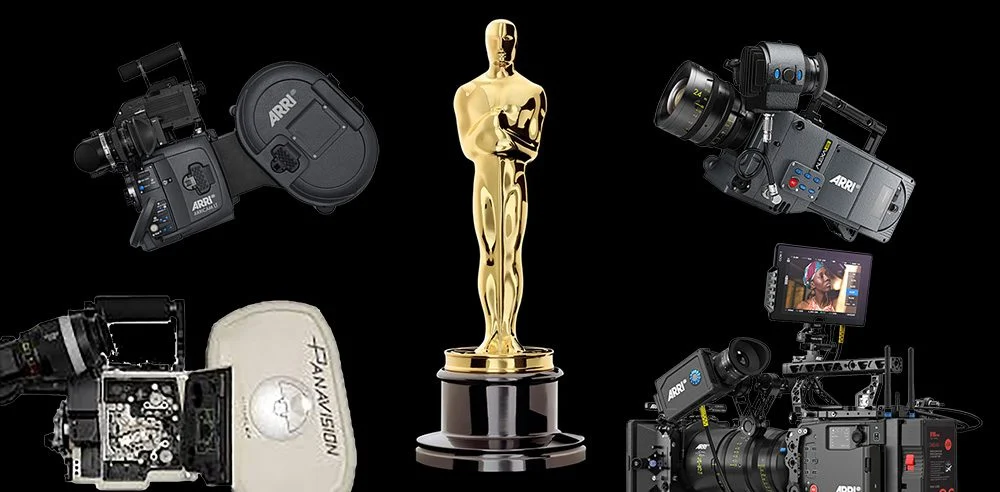
For over a century, motion pictures have captivated audiences, evolving from silent reels to immersive digital experiences. This long history has spawned an immense diversity of filmmaking tools, offering creators unparalleled freedom. However, this vast landscape of equipment, ranging from vintage Super 8mm cameras to cutting-edge digital cinema cameras, presents a significant challenge for global content platforms like Netflix: ensuring a consistent, high-quality viewing experience across myriad devices. To address this, Netflix has meticulously defined a set of seven technical capture standards that cameras must meet to be considered "Netflix approved." These guidelines are not merely arbitrary restrictions but rather a strategic effort to establish a baseline for image quality, aiming to guarantee that all original productions available on its platform — and, by extension, influencing the broader industry — adhere to a high technical bar. While these stringent requirements have sparked debate, particularly among independent filmmakers seeking stylistic freedom or operating on tighter budgets, the underlying intent is to safeguard the viewer’s experience, preventing the dissemination of content that falls short of modern expectations. No global streaming giant, after all, wishes to present a feature film captured at a resolution akin to a 20-year-old standard definition television broadcast. This comprehensive framework, first solidified as Netflix ramped up its original content production in the mid-2010s, reflects a proactive stance in an increasingly competitive streaming landscape, directly influencing equipment choices, production workflows, and the overall technical excellence of contemporary cinema.
The Genesis of Standardization: Why Netflix Stepped In
The proliferation of digital filmmaking tools throughout the late 20th and early 21st centuries democratized cinema, allowing more creators than ever to produce visual content. This era saw a dramatic shift from film stock to digital sensors, accompanied by a dizzying array of camera manufacturers, formats, and compression schemes. While this fostered immense creativity, it also introduced a significant variability in technical output. As Netflix transitioned from a DVD rental service to a global streaming behemoth, investing billions in original content, it encountered a practical dilemma: how to maintain a cohesive brand identity for quality when content could originate from vastly different technical pipelines. Early digital productions often exhibited inconsistencies in resolution, color fidelity, and dynamic range, leading to a fragmented viewing experience for subscribers.
Recognizing the potential for a disjointed content library, Netflix began to codify its technical requirements. This wasn’t an overnight decision but an evolving process, influenced by advancements in display technology (especially the rise of 4K and HDR televisions), increasing consumer expectations for pristine visuals, and the sheer volume of submissions from diverse production teams worldwide. The goal was not to stifle artistic expression but to establish a robust technical foundation upon which creative visions could thrive without compromising the final image quality delivered to millions of subscribers. By setting these benchmarks, Netflix aimed to streamline its post-production workflows, reduce the need for extensive upscaling or color correction on substandard footage, and ultimately elevate the perceived value of its subscription service. These standards implicitly push the industry towards higher production values, fostering a competitive environment where technical excellence becomes a prerequisite for global distribution on a major platform.
Deconstructing the Requirements: A Deep Dive into Netflix’s Seven Pillars
Netflix’s seven core requirements for camera approval are meticulously designed to ensure high-fidelity image capture. These specifications cover fundamental aspects of digital cinematography, from the sheer number of pixels captured to how that data is processed and stored.
Resolution: Beyond 4K – Spherical vs. Anamorphic
The most immediately understandable requirement pertains to resolution: "Minimum of 3840 photosite capture width (Spherical)." For standard 16:9 aspect ratio productions, this mandates a minimum of 3840×2160 pixels, universally recognized as Ultra High Definition (UHD) 4K. This resolution has been the de facto industry standard for premium content for well over half a decade, aligning with the widespread adoption of 4K televisions and monitors by consumers globally. Data from market research firms consistently show increasing penetration rates for 4K displays in households, making content captured at this resolution a necessity for platforms aiming to deliver a "native" experience. While many high-end productions already exceed this baseline, opting for 6K, 8K, or even higher resolutions for greater flexibility in post-production, 3840 pixels serves as the absolute floor for Netflix approval.
The nuance, however, lies in the distinction between spherical and anamorphic capture. Spherical lenses project a standard image onto the sensor, directly corresponding to the sensor’s pixel count. Anamorphic lenses, conversely, optically "squeeze" a wider field of view onto the sensor, which is then "de-squeezed" in post-production to achieve a cinematic widescreen aspect ratio (e.g., 2.39:1). This squeezing process means that for a given sensor resolution, an anamorphic capture effectively uses fewer horizontal photosites per unit of final image width. To compensate for this and maintain equivalent image clarity and detail after de-squeezing, anamorphic projects necessitate a higher initial horizontal resolution from the camera sensor. Therefore, a camera deemed "4K" for spherical capture might not meet the minimum effective resolution for anamorphic work. Netflix provides a dedicated list of approved cameras specifically for anamorphic capture, reflecting the technical complexities involved in this specialized cinematographic approach. This demonstrates Netflix’s commitment not just to resolution but to effective resolution across different lensing methodologies.
Codec: Raw Power and Intra-frame Efficiency
Codec requirements can often appear daunting, yet they fundamentally boil down to preserving image data with minimal loss. Netflix specifies "Lightly compressed or uncompressed RAW; Or intra-frame based codec with 4:2:2 chroma sub-sampling or greater."
RAW formats are essentially the unprocessed, uncompressed (or lightly compressed) data directly from the camera sensor. This provides the maximum amount of information, offering unparalleled flexibility in post-production for color grading, exposure adjustments, and noise reduction. "True" uncompressed RAW, however, generates enormous file sizes, often impractical for large-scale productions. Consequently, most professional cameras employ proprietary compressed RAW formats (e.g., REDCODE RAW, Canon Cinema RAW Light, ProRes RAW). These formats utilize sophisticated algorithms to reduce file sizes significantly while retaining nearly all the benefits of uncompressed RAW, making them a preferred choice for high-end productions due to their balance of quality and workflow efficiency.
The second option caters to codecs that are not RAW but still offer robust image quality. An "intra-frame based codec" means that each frame is compressed independently, without reference to preceding or succeeding frames. This is crucial for editing fluidity and maintaining quality during complex post-production operations. The accompanying requirement of "4:2:2 chroma sub-sampling or greater" refers to how color information is sampled relative to luminance (brightness) information. In a 4:2:2 scheme, for every four pixels of luminance data, there are two pixels of chroma (color) data for each of the two color difference channels. This retains significantly more color information than consumer-grade 4:2:0 formats, which is critical for professional color grading, ensuring smooth tonal gradations and preventing color artifacts, especially when pushing colors in post-production or when preparing content for High Dynamic Range (HDR) delivery. This specification ensures that the footage has ample color data to withstand the rigors of professional finishing.
Bit Depth: The Spectrum of Color
Closely related to codecs is bit depth, where Netflix mandates "10-bit or greater." Bit depth determines the number of distinct tonal values available for each primary color channel (red, green, blue). A 10-bit color depth means that each of the red, green, and blue channels can represent 1,024 different shades (2^10). When combined, this results in over 1.07 billion possible colors (1024 x 1024 x 1024).
In contrast, an 8-bit system, common in consumer cameras, offers only 256 shades per channel, totaling 16.7 million colors. The difference is profound: 10-bit color significantly reduces the likelihood of "banding," a visible stair-stepping effect in areas of subtle color gradation (like a clear blue sky). This becomes particularly critical for HDR content, which demands a much wider range of brightness and color information. Higher bit depth ensures that the nuanced color and luminance information captured by modern sensors can be preserved throughout the production pipeline, from capture to final display, contributing to richer, more realistic imagery and a smoother viewing experience, especially on high-quality displays.
Data Rate: Ensuring Robust Visual Information
The data rate requirement, "Minimum 240Mbps at 24FPS," serves as a practical floor for the volume of information captured per second. Megabits per second (Mbps) quantifies how much data is being written to storage. This specification acts as an assurance that the camera is recording enough information to meet the resolution, codec, and bit depth requirements without excessive compression that could introduce artifacts.
If a production adheres to the minimum 4K resolution, utilizes a RAW or intra-frame 4:2:2 codec, and captures at 10-bit or higher, the resulting data rate will almost invariably exceed 240Mbps at 24 frames per second. This requirement therefore functions more as a sanity check, ensuring that the camera system is capable of handling the bandwidth necessary for high-quality capture. It implicitly discourages the use of highly compressed, low-bitrate formats that might technically meet resolution but compromise overall image integrity. High data rates are essential for preserving fine details, minimizing compression artifacts, and providing robust files for post-production manipulation.
Color Space & Transfer Function: Mastering Dynamic Range
These two interconnected requirements are crucial for preserving the visual integrity of the captured image throughout the entire production workflow:
- "Scene-referred Color Space (S.Gamut3, ALEXA Wide Gamut, REDWideGamut etc.)"
- "Scene-referred Transfer Function (Slog3, Log C, Log3G10, VLog etc.)"
A color space defines the range of colors that a camera can capture or a display can reproduce. "Scene-referred" color spaces are designed to capture the widest possible gamut of colors present in the real-world scene, rather than being limited by a specific display standard. Examples like ARRI’s ALEXA Wide Gamut or RED’s REDWideGamut are proprietary color spaces that encompass a vast spectrum of colors, far exceeding what standard displays can show. Capturing within such a wide color space ensures that as much color information as possible is preserved, offering maximum flexibility for color grading and future-proofing the content for advanced display technologies.
A transfer function (often referred to as a "gamma curve" or "log curve") describes how the light intensity from the scene is encoded into the digital signal. "Scene-referred transfer functions" like Sony’s S-Log3, ARRI’s Log C, or Panasonic’s V-Log are designed to compress the camera’s wide dynamic range into a digital file efficiently. Unlike standard Rec.709 gamma curves that are optimized for displaying images directly on conventional monitors, log curves store significantly more highlight and shadow detail. This "flat" looking footage provides greater latitude in post-production, allowing colorists to shape the image’s contrast and brightness without losing detail in extreme highlights or shadows, critical for achieving cinematic looks and for HDR mastering. Together, these requirements ensure that the captured footage contains the maximum possible color and dynamic range information, providing the best foundation for a high-quality final product.
Timecode: The Backbone of Production Sync
The final technical requirement, though sometimes less rigid for specific genres like documentaries, is paramount for organized production:
- "System is capable of jamming to an external source."
- "Timecode should be written as metadata."
Timecode is a series of numerical codes generated by electronic equipment that identifies precisely each frame of video or audio. It is indispensable for multi-camera shoots, syncing audio recorders with video cameras, and efficient editing workflows. The ability to "jam to an external source" means the camera can synchronize its internal timecode generator with a master timecode generator (e.g., a Tentacle Sync device), ensuring all recording devices on set share an identical, continuous time reference. This prevents drift and significantly streamlines the post-production process, avoiding countless hours spent manually syncing footage.
Furthermore, requiring timecode to be "written as metadata" ensures that this critical information is embedded directly within the video files, making it easily accessible to editing software. While some prosumer cameras lack built-in timecode functionality, external devices can readily provide this capability. For large-scale productions, especially those involving multiple cameras, sound recorders, and extensive visual effects, accurate and synchronized timecode is not just a convenience but an absolute necessity for project management and integrity. Netflix’s emphasis on this technical detail underscores its understanding of professional production workflows and its commitment to facilitating efficient post-production.
Industry Reactions and Creative Tensions
The implementation of Netflix’s camera standards has elicited varied responses across the filmmaking community. From the perspective of Netflix itself, these guidelines are a non-negotiable aspect of its quality assurance, crucial for maintaining a premium brand image and delivering a consistent user experience to its nearly 250 million global subscribers. A Netflix spokesperson, if interviewed, would likely emphasize that these standards reduce technical variability, streamline post-production, and ensure that content is future-proofed for evolving display technologies like HDR. They would argue that rather than stifling creativity, these standards provide a robust technical canvas upon which diverse artistic visions can be painted without technical compromise.
For established cinematographers and high-end production houses, these standards are largely embraced. Most professional digital cinema cameras from manufacturers like ARRI, RED, Sony, Canon, and Blackmagic Design already meet or exceed these specifications. These professionals appreciate the clarity of expectation and the assurance that their work will be presented at a high technical level. "It standardizes the baseline," noted a veteran director of photography in an industry forum, "which means we can focus more on the art, knowing the technical foundation is solid." Camera manufacturers have also largely adapted, often marketing their products with "Netflix Approved" badges, which has become a significant selling point in the professional market. This has indirectly spurred innovation, pushing manufacturers to integrate advanced features like higher bit depths, better codecs, and robust timecode solutions into their camera lines.
However, the standards are not without their critics, particularly among independent filmmakers and those who champion a more experimental, lo-fi aesthetic. The primary concern revolves around perceived limitations on creative freedom and significant budgetary implications. A director aiming for a deliberately grainy, low-fidelity look reminiscent of vintage film or early digital video might find their preferred tools, such as older consumer cameras or specialized artistic capture devices, excluded by Netflix’s technical mandates. "Not every story needs to look pristine 4K HDR," argued an indie filmmaker on a social media platform. "Sometimes the aesthetic demands something different, and these rules can feel like they’re closing off avenues for unique visual storytelling." For projects with limited budgets, the cost of acquiring or renting Netflix-approved cameras and the associated storage and post-production infrastructure can be prohibitive, potentially creating a barrier to entry for emerging talents or niche narratives. This tension highlights the ongoing debate in the creative industries: where does the balance lie between technical standardization for mass consumption and the preservation of artistic autonomy and diverse visual language?
Implications for Filmmakers and the Future of Content Creation
The long-term implications of Netflix’s camera standards are multi-faceted, impacting not only individual filmmakers but the broader industry ecosystem. For aspiring and established filmmakers, understanding and adhering to these standards has become a crucial aspect of career development, especially for those aiming for global distribution. It means that technical literacy, particularly in digital image capture, is as important as creative vision. Production workflows must be designed from the outset with these specifications in mind, influencing everything from equipment choice to data management and post-production planning. This encourages a higher degree of professionalism and technical rigor across the board.
The standards also inadvertently shape the camera market. Manufacturers are compelled to innovate and ensure their flagship products meet these benchmarks, as a "Netflix Approved" label is a powerful marketing tool. This benefits the industry by driving technological advancement, but it also means that certain camera types or older models may fall out of favor, impacting resale markets and rental houses.
For independent filmmakers, the challenge is more pronounced. While the standards may limit their choice of cameras for Netflix original productions, they also serve as a de facto guide for achieving a professional baseline, even for non-Netflix projects. Many film festivals and distributors are increasingly adopting similar technical expectations, understanding that high-quality visuals enhance audience engagement. The standards thus push independent cinema towards greater technical excellence, potentially raising the overall production value of the entire industry, though at the cost of excluding truly low-budget or aesthetically unconventional projects from major platforms.
The Broader Impact: Elevating the Streaming Experience
Beyond the immediate impact on production, Netflix’s camera standards have a profound broader influence, primarily by elevating the overall streaming experience for consumers and setting new benchmarks for the industry. By mandating a consistent minimum quality for resolution, color depth, dynamic range, and technical integrity, Netflix ensures that its subscribers receive a premium visual product, regardless of the specific show or film they choose. This consistency builds trust and reinforces the value proposition of a Netflix subscription, especially as competition in the streaming space intensifies.
These standards have also served as a catalyst for other streaming platforms. While not all platforms have published equally detailed guidelines, many implicitly expect similar technical quality for their original content. This ripple effect contributes to a general uplift in production values across the streaming industry, benefiting viewers who now expect and receive consistently high-quality content from various providers. Moreover, by requiring robust color spaces and transfer functions, Netflix is actively future-proofing its content. As display technologies continue to advance, offering even wider color gamuts and higher dynamic ranges, content captured under these guidelines will be better positioned to adapt and shine on future screens, ensuring longevity and continued viewer satisfaction.
In conclusion, Netflix’s camera approval standards represent a deliberate and impactful strategy to navigate the complexities of modern digital filmmaking. While they necessitate certain technical adherence and occasionally spark debates regarding creative autonomy and accessibility for lower-budget productions, their primary aim is undeniable: to guarantee a universally high-quality viewing experience for a global audience. By setting these rigorous technical benchmarks for resolution, codec, bit depth, data rate, color management, and timecode, Netflix has not only streamlined its own content pipeline but has also significantly influenced equipment manufacturing, production workflows, and the overall technical excellence of the streaming industry, shaping the visual language of contemporary cinema for years to come.