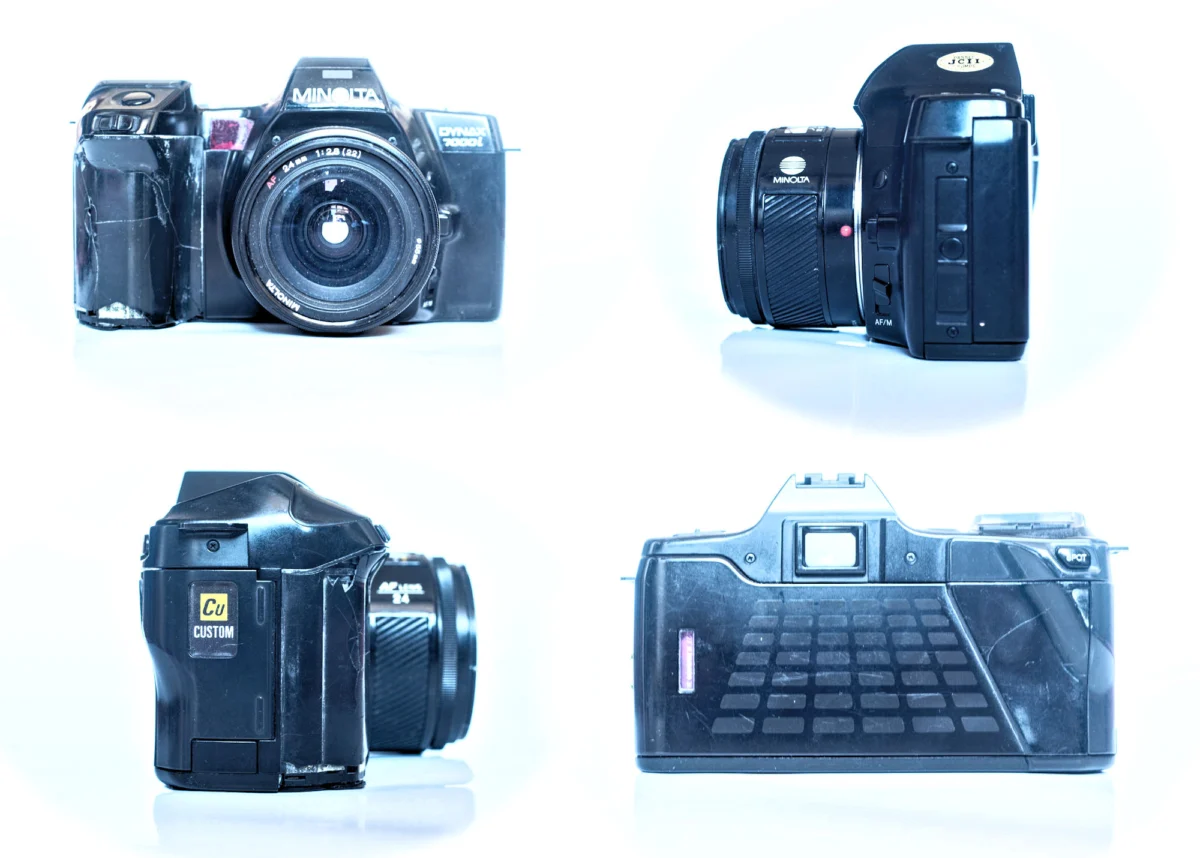
The Minolta X-300 and its numerous derivatives, including the widely distributed Centon DF-300, have served as the entry point for millions of amateur photographers since the series was first introduced in 1984. Now approaching their fourth decade of service, these electronic 35mm SLR cameras remain remarkably robust, yet they are increasingly prone to a specific technical failure that can render the device entirely inoperable. This failure, colloquially known among camera technicians as the "capacitor plague," stems from the degradation of budget-grade electrolytic capacitors used during the original manufacturing process. While the issue can be catastrophic for the functionality of the camera, it remains one of the most accessible and cost-effective repairs for the DIY enthusiast, provided they possess a basic understanding of electronics and soldering techniques.
The Historical Context of the 300-Series Platform
To understand the ubiquity of this issue, one must examine the lineage of the Minolta X-300. Introduced as a simplified, more affordable alternative to the professional-grade X-700, the X-300 (known as the X-370 in North America) utilized a simplified metering system and an electronic horizontal-travel focal plane shutter. In an effort to expand its global reach and recoup research and development costs, Minolta licensed the design to the Shanghai Seagull Camera Ltd. in China.
This licensing agreement led to a proliferation of clones and derivatives produced throughout the late 1980s and 1990s. In the United Kingdom, the most prominent version was the Centon DF-300, the "in-house" brand for Jessops, which at the time was the nation’s leading photographic retailer. Tens of thousands of these units were sold as affordable kits, often bundled with Samyang-manufactured lenses under the Centon brand name. Because these cameras shared the same internal architecture as the original Minolta X-300, they also inherited its primary vulnerability: a reliance on a specific electrolytic capacitor located in the base of the camera.
Identifying the Symptoms of Capacitor Fatigue
The failure of an electrolytic capacitor is rarely instantaneous; rather, it manifests as a progressive decline in reliability. Owners of the Centon DF-300 or Minolta X-300 often report a series of intermittent glitches that serve as a precursor to total electronic failure. The most common early warning sign occurs during the metering process. When the user half-presses the shutter button to activate the light meter, the LED display inside the viewfinder may flicker or go dark entirely.
In many instances, the camera may function correctly for a dozen frames before the shutter fails to fire or the film advance lever becomes locked. While cycling the power switch can occasionally "reset" the circuit, these are temporary fixes. The underlying cause is the capacitor’s inability to hold a sufficient charge to trigger the electromagnets that control the shutter release. Eventually, the capacitor will fail to bridge the circuit at all, leaving the camera unresponsive despite the presence of fresh batteries.
Technical Specifications and Component Sourcing
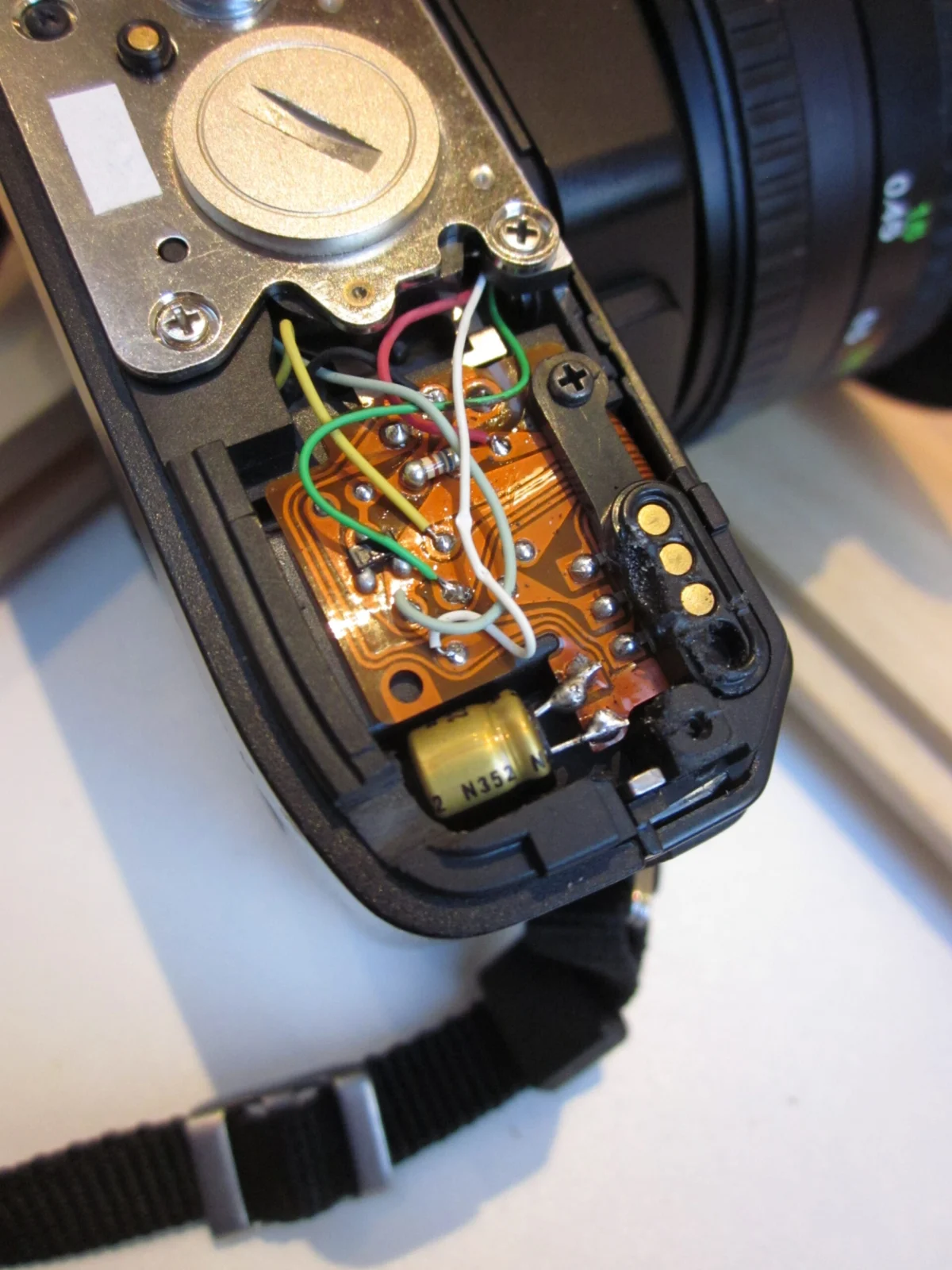
The capacitor in question is an electrolytic component originally rated at 4 volts with a capacitance of 220 uF (microfarads). Finding an exact modern equivalent for a 4V capacitor can be challenging, as contemporary manufacturing standards have largely shifted toward higher voltage ratings for components of this size. Technical analysis and field testing by the film photography community have confirmed that a 6.3V 220uF capacitor is an acceptable and safe replacement. The higher voltage rating indicates the maximum "pressure" the component can handle, and it does not negatively impact the 3V circuit (powered by two LR44 batteries) of the camera.
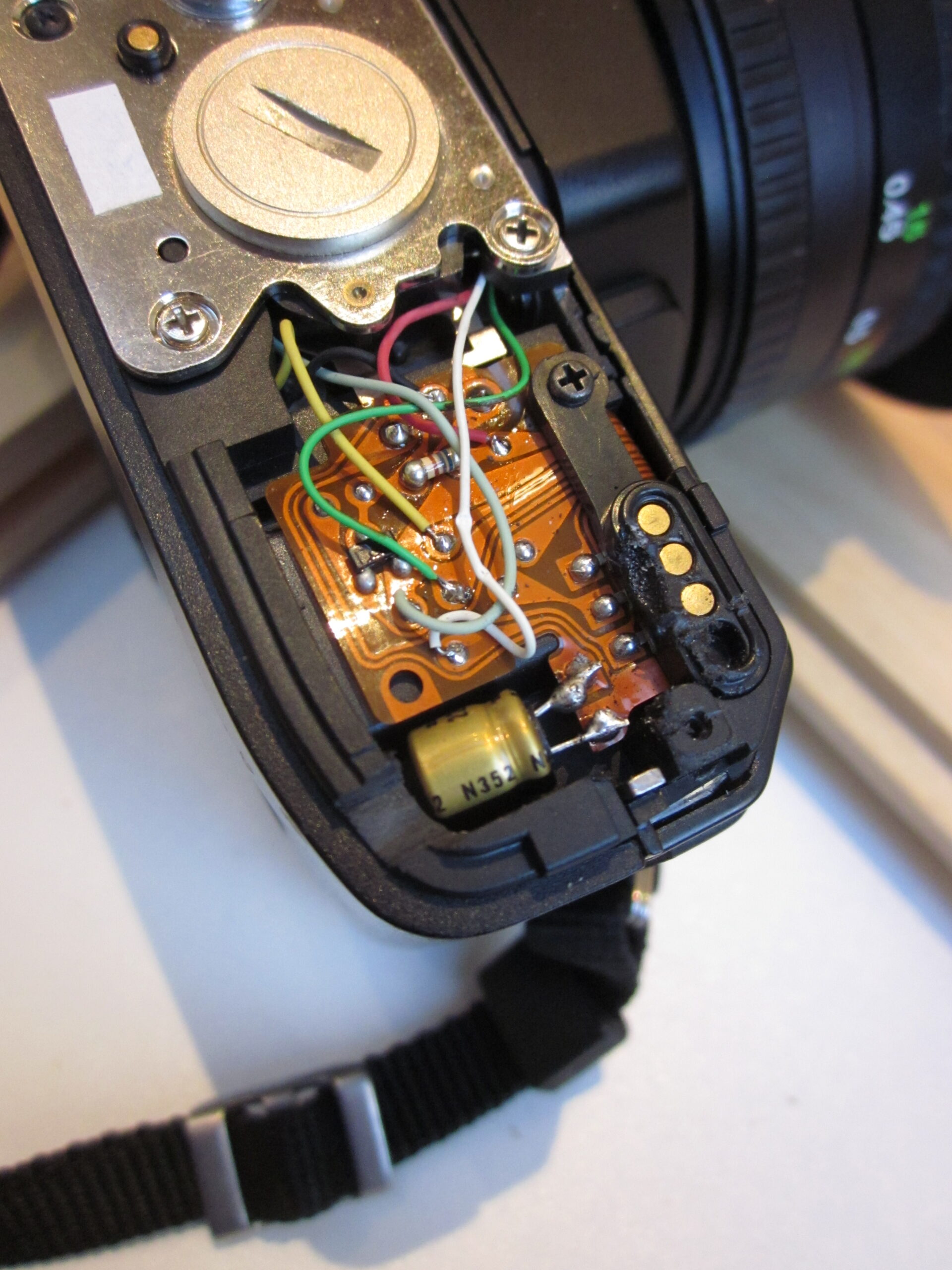
The primary constraint for the replacement part is physical dimension rather than electrical capacity. The compartment within the base of the camera is extremely tight. For the base plate to sit flush, the capacitor body must not exceed 7mm in length. Technicians frequently recommend "audio-grade" or "low-profile" capacitors, which are engineered for compact electronics and typically meet these stringent size requirements.
Comparative Repair Difficulty: X-300 vs. X-700
It is noteworthy that the more advanced Minolta X-700 is also susceptible to capacitor failure, but it presents a significantly higher barrier to repair. While the X-300 and DF-300 utilize a single, easily accessible capacitor in the base, the X-700 features two. The first is located in the base, similar to the 300-series, but the second is buried beneath the top plate and the complex prism assembly.
Replacing the top-plate capacitor in an X-700 requires extensive disassembly, including the removal of the rewind crank, the shutter speed dial, and the delicate soldering of wires connected to the ISO settings. In contrast, the X-300 series design allows for a "base-only" repair that does not disturb the camera’s optical alignment or its complex mechanical linkages, making it an ideal candidate for those new to camera restoration.
Chronology of the Repair Procedure
The restoration of a Centon DF-300 or Minolta X-300 follows a logical progression that can typically be completed in under thirty minutes.
Phase 1: Disassembly and Access
The process begins with the removal of the battery holder to ensure no current is flowing through the circuit. The base plate is secured by four screws. In a standard configuration, the two screws located toward the center of the plate are shorter than the two located at the outer edges. Using a JIS (Japanese Industrial Standard) #000 screwdriver is critical; using a standard Phillips head can easily strip the shallow slots of these vintage screws.
Phase 2: Component Removal
Once the base plate is removed, the capacitor is visible in a small well at the right-hand side of the camera (when viewed upside down with the lens mount facing away). It is soldered to a flexible printed circuit (FPC), a thin, orange-tinted plastic film that houses the copper traces. This FPC is notoriously fragile. The old capacitor must be desoldered with precision, using a fine-tipped soldering iron and a desoldering pump or wick to remove the aged solder without overheating the plastic substrate.
Phase 3: Installation of the New Component
The replacement capacitor must be prepared by trimming its leads to approximately 6-7mm. Polarity is the most critical factor during this stage; electrolytic capacitors are polarized, and installing one backward will cause it to fail or potentially leak. The negative pole is clearly marked with a "minus" symbol on the capacitor’s casing. On the X-300/DF-300 circuit board, the negative terminal is positioned toward the outer edge of the camera body.
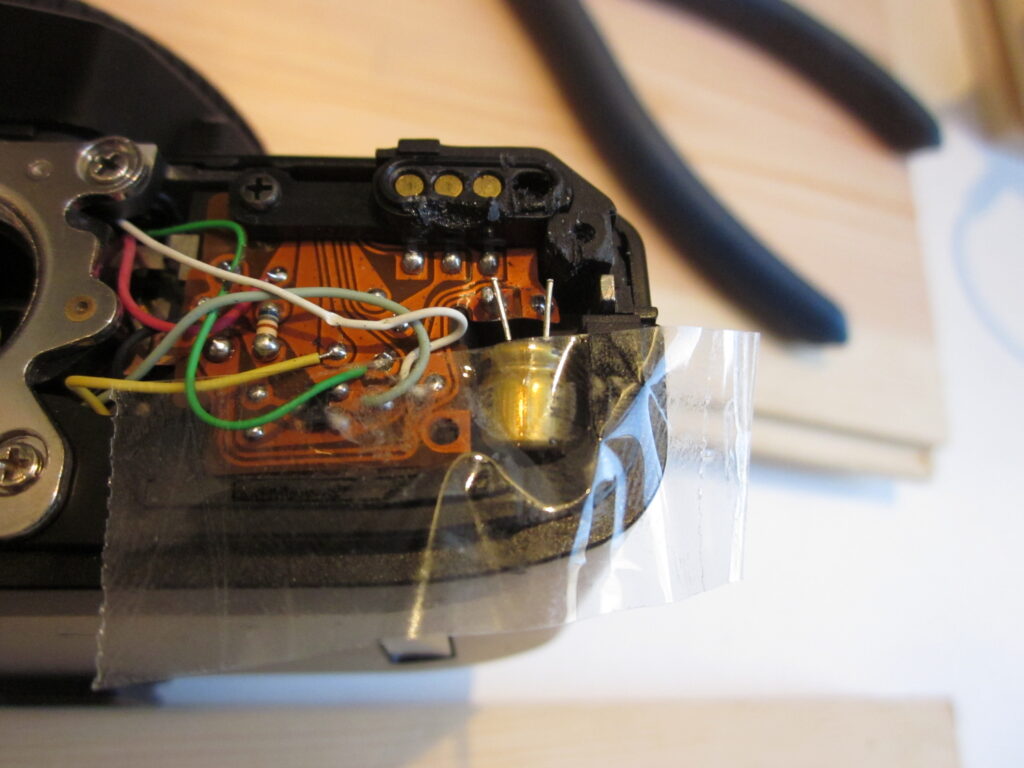
Phase 4: Testing and Reassembly
Before the base plate is reattached, the battery holder should be reinserted for a "dry test." If the LEDs in the viewfinder illuminate and the shutter fires at varying speeds, the circuit has been successfully restored. Final reassembly involves replacing the base plate and ensuring the motor drive contacts are properly aligned.
Risk Assessment and Practical Implications
While the repair is technically straightforward, it is not without risks. The primary danger is thermal damage to the surrounding plastic housing or the FPC itself. Professional restorers often suggest masking the area with Kapton tape or thick cardstock to prevent the soldering iron from accidentally melting the camera’s internal frame.
From a market perspective, the Centon DF-300 remains one of the most affordable entry points into film photography, with used units often retailing for between £20 and £40. Given the low replacement cost of the camera, the risk of a DIY repair is mitigated by the fact that a failed attempt does not result in a significant financial loss. Conversely, a successful repair extends the life of a perfectly capable photographic tool, preventing it from contributing to electronic waste.
Broader Impact on the Film Photography Revival
The ability to maintain and repair entry-level SLRs like the Centon DF-300 is vital for the continued growth of the film photography revival. As prices for "prestige" cameras from brands like Leica, Nikon, and Canon continue to escalate, the availability of reliable, affordable alternatives becomes essential for students and hobbyists.
The "300" series cameras offer a sophisticated aperture-priority auto-exposure system and access to the legendary Minolta MD lens mount, which hosts some of the finest glass produced in the 20th century. By addressing the "budget capacitor" issue, the photographic community ensures that these utilitarian workhorses remain in the hands of photographers rather than in landfills. This DIY fix embodies the "right to repair" ethos, demonstrating that with a few pence worth of components and a steady hand, decades-old technology can be granted a new lease on life.