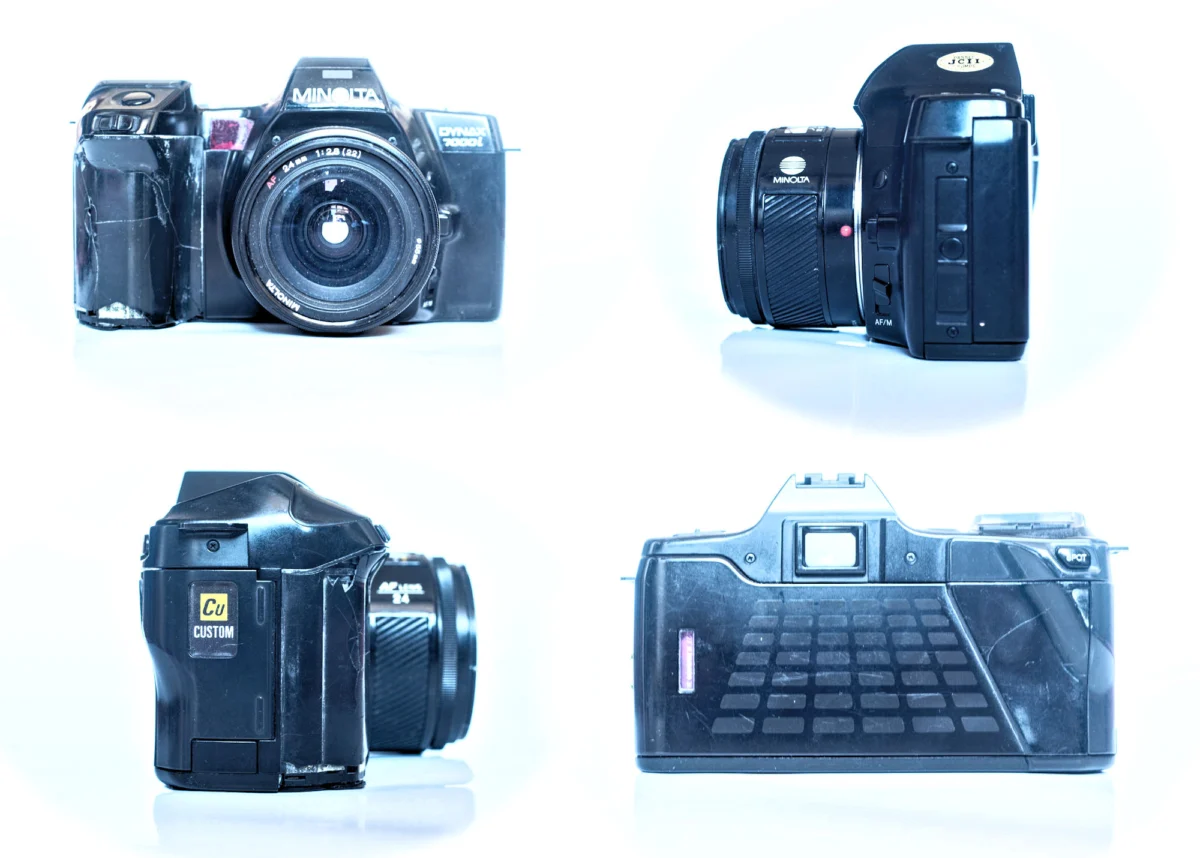
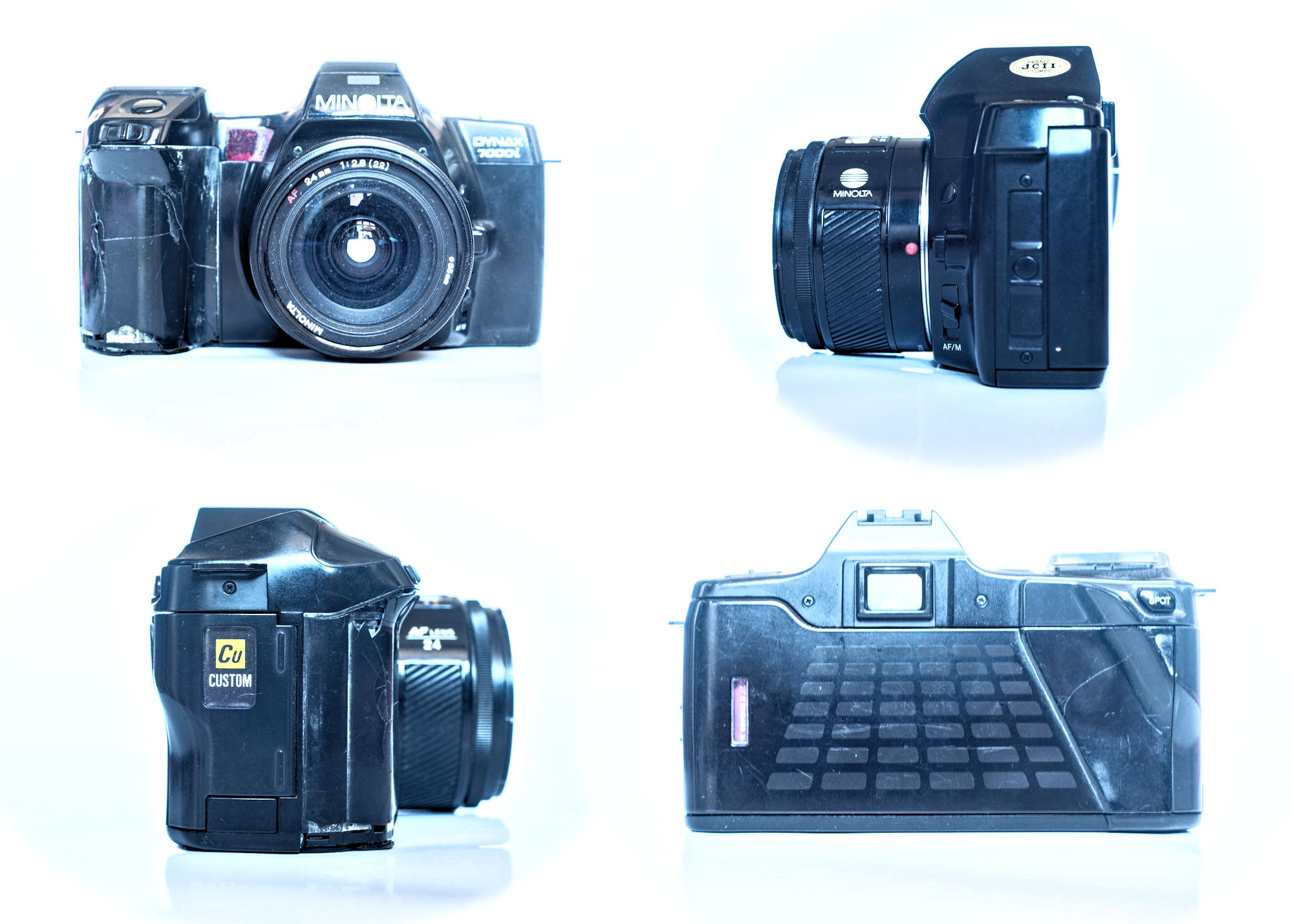
In 1988, the global photographic industry witnessed a pivotal transition with the release of the Minolta Dynax 7000i. Marketed as the Maxxum 7000i in North America and the Alpha 7700i in Japan, this second-generation autofocus (AF) single-lens reflex (SLR) camera was designed to solidify Minolta’s dominance in a market it had effectively created three years earlier. While the original Maxxum 7000 of 1985 had shattered traditional camera design by integrating a viable autofocus system into the camera body, the 7000i arrived at a time when industry giants Nikon and Canon had begun to mount formidable challenges. The 7000i was not merely a replacement; it was a sophisticated technological statement intended to maintain Minolta’s lead through increased processing power and a new philosophy of "intelligent" automation.
The Competitive Landscape of the Late 1980s
To understand the significance of the 7000i, one must look at the state of the photographic market between 1985 and 1988. Minolta’s first-generation AF system had caught competitors off guard, but the response was swift. Canon introduced the EOS system in 1987, featuring electronic lens mounts and ultrasonic motors, while Nikon continued to refine its F-mount for the autofocus era with the F-401 and the professional F4.
Minolta’s strategy with the 7000i was to move beyond the basic "can it focus?" question and address the efficiency and intelligence of the photographic process. The "i" in the 7000i stood for "intelligent," a branding choice that highlighted the camera’s ability to analyze scenes and predict subject movement. This era marked the beginning of the "AF Wars," where technical specifications—shutter speeds, metering segments, and focus points—became the primary metrics for enthusiast photographers.
Technical Specifications and Performance Data
The 7000i represented a significant leap in raw performance over its predecessor. While the original 7000 was revolutionary, it was relatively slow by modern standards. The 7000i addressed these limitations with a suite of upgraded internals:
- Shutter System: An electronically controlled, vertical-travel focal-plane shutter offering speeds from 30 seconds to 1/4000 of a second, plus a Bulb setting.
- Flash Synchronization: A top sync speed of 1/125 second, utilizing the then-new iISO flash shoe.
- Film Transport: An integrated motor drive capable of a continuous shooting speed of 3 frames per second (fps), a notable improvement for an enthusiast-grade body of that era.
- Metering: A new 6-segment honeycomb pattern silicon photocell (SPC) for evaluative metering, replacing the simpler center-weighted systems of the past.
- Power Source: A transition from the four AAA or AA batteries of the previous generation to a single 6V 2CR5 lithium battery, which provided the high current necessary for faster autofocus and film winding.
The Evolution of the "Intelligent" Autofocus System
The most marketed feature of the 7000i was its advanced autofocus array. Unlike the single central sensor of the original 7000, the 7000i introduced a three-sensor wide-area AF system. This configuration allowed the camera to maintain focus on subjects that were not perfectly centered, a common limitation of early AF technology.
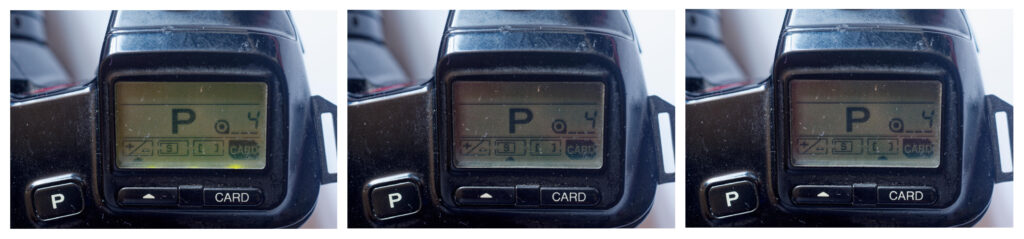
The "Predictive AF" capability was a cornerstone of the system’s intelligence. The onboard computer analyzed the direction and speed of a moving subject, calculating where the subject would be at the moment the shutter actually opened. This was a critical advancement for sports and action photography. While modern digital systems far surpass this today, in 1988, the ability of a mid-range SLR to track a moving object with reasonable accuracy was a major selling point.
Photographers were given the option to utilize the wide-area focus or lock the camera into a "Spot AF" mode via a dedicated button on the rear of the body. This dual-layer approach allowed for both automated ease of use and precise manual override when the environment proved too complex for the sensors.
Design Philosophy and Modal Control
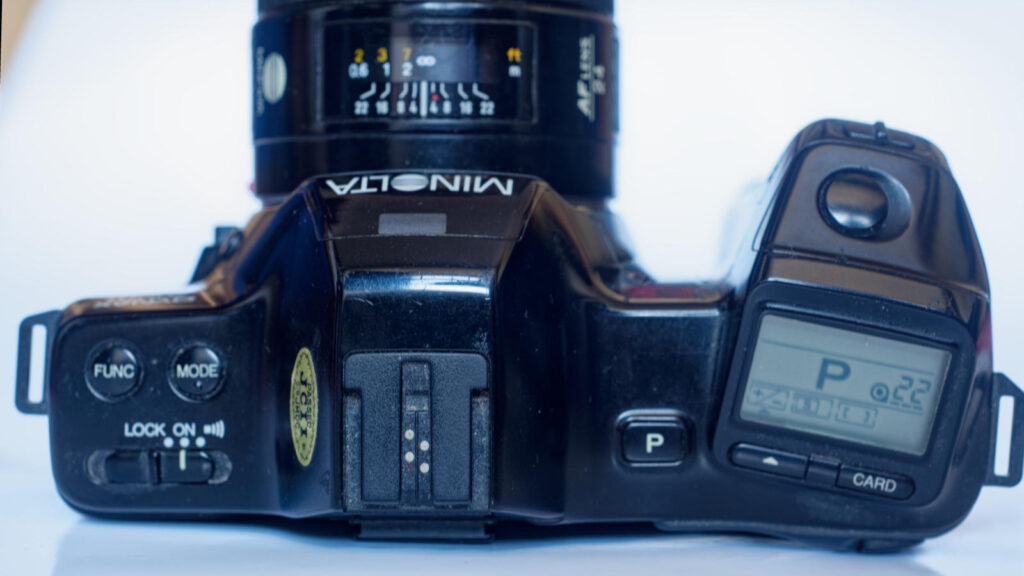
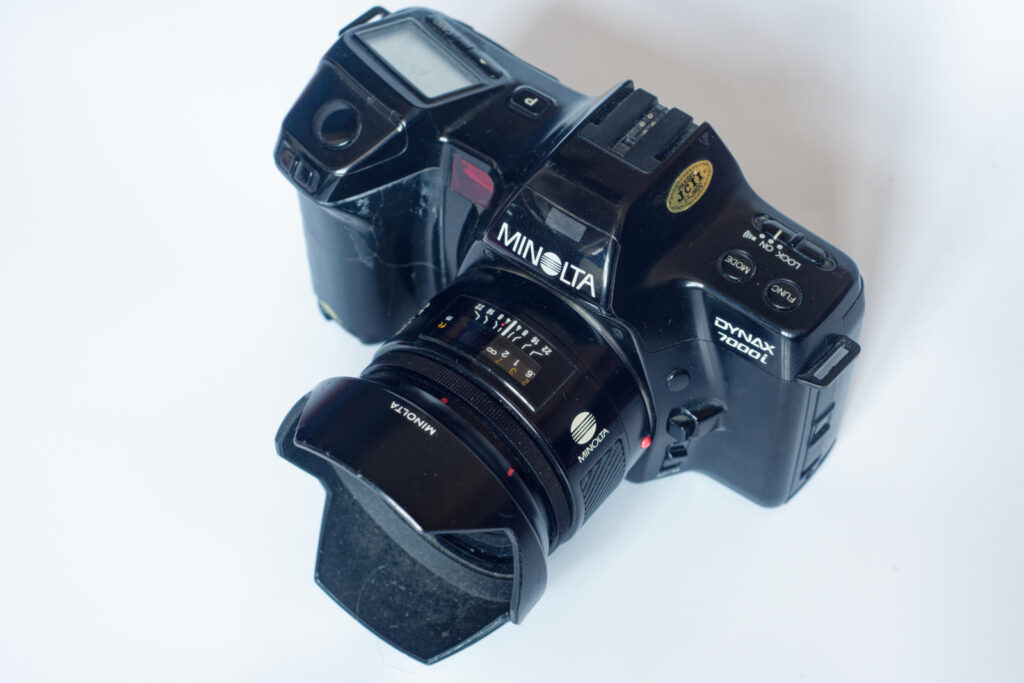
The aesthetic and ergonomic shift from the 7000 to the 7000i was dramatic. The original model featured a blocky, button-heavy interface that felt like a bridge between the analog and digital eras. The 7000i, however, embraced a sleek, organic form factor that would define camera design for the next decade.
Minolta introduced "Modal Control" with the 7000i. Instead of dedicated knobs or switches for every function, the camera utilized a large liquid crystal display (LCD) on the top plate and a "Function Select" button. By pressing this button and using a singular jog-switch located near the shutter release, photographers could cycle through exposure compensation, drive modes, and focus area selections.
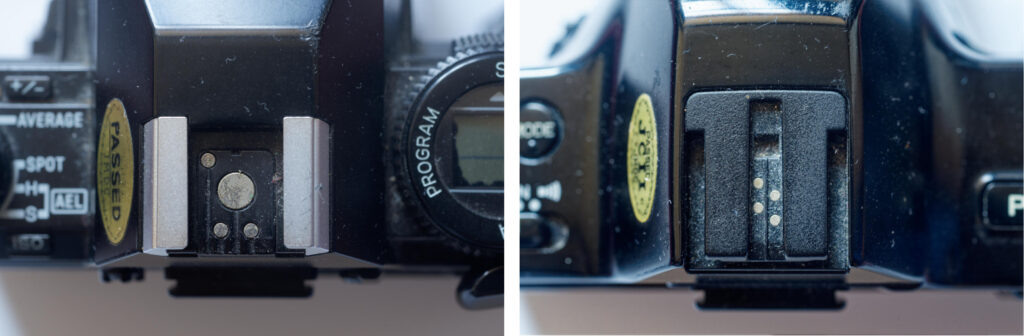
This design was polarizing at launch. Traditionalists missed the tactile feedback of dedicated dials, but the market at large embraced the simplified interface. Minolta also prominently placed a green "P" (Program) button on the body. This "Panic Button" allowed a photographer to instantly reset all settings to a factory-default automated mode, ensuring they wouldn’t miss a shot due to incorrect manual settings.
The iISO Flash Shoe Controversy
One of the most enduring legacies of the 7000i is the introduction of the iISO (Intelligent ISO) flash shoe. Minolta abandoned the industry-standard "cold" and "hot" shoe designs that had been in place for decades. The new design featured a slide-on locking mechanism with four pins, which was physically incompatible with third-party flashes without an adapter.
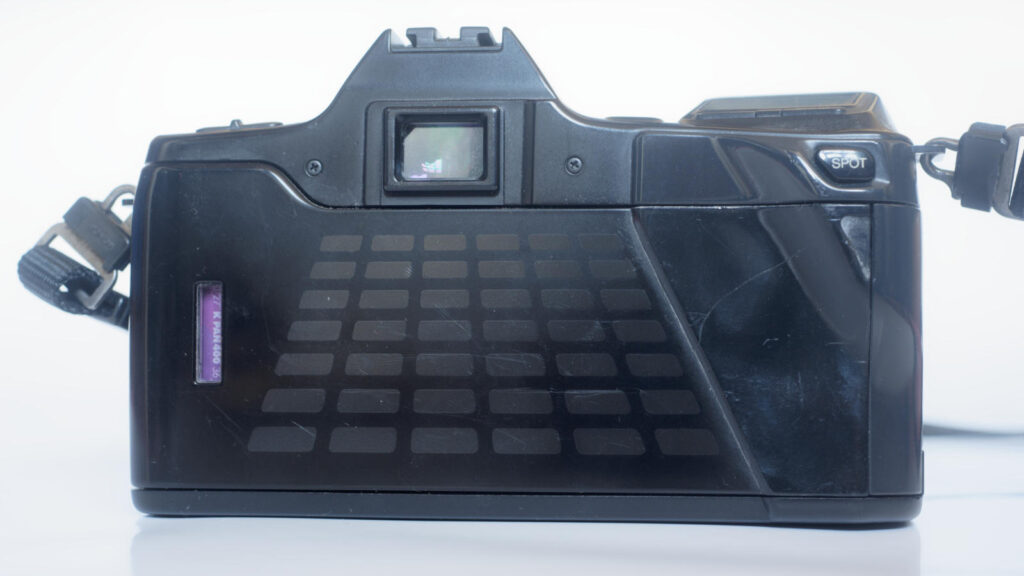
From an engineering perspective, the iISO shoe was superior. It provided a more secure electrical connection and featured a "break-away" plastic construction. If a camera with a large flash attached was dropped, the shoe would snap, potentially saving the expensive camera body or flash internals from catastrophic structural damage. However, from a consumer standpoint, it forced users into a proprietary ecosystem. This mount was maintained through Minolta’s merger with Konica and eventually into the early years of the Sony Alpha digital system, before Sony finally returned to a modified version of the ISO standard in 2012.
The Creative Expansion Card System
In a move that pre-dated modern "app-based" technology, Minolta introduced the Creative Expansion Card system with the 7000i. The camera featured a small door on the side of the grip that accepted credit-card-sized chips. These cards were designed to "unlock" or enhance specific features, such as:
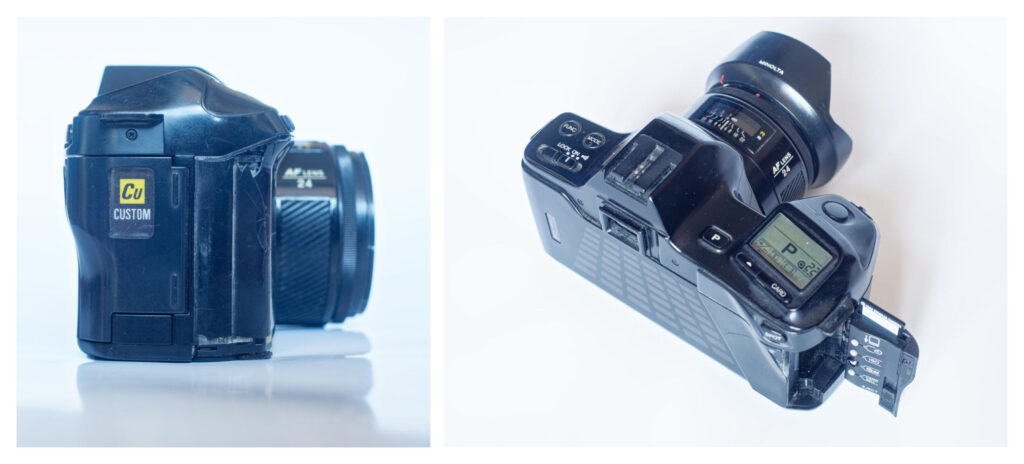
- Custom Function Card: Allowed users to change camera behavior, such as leaving the film leader out after rewinding or changing the AF priority.
- Specialty Cards: Included "Sports," "Fantasy," "Portrait," and "Close-up" modes, which adjusted aperture and shutter speed bias to suit specific genres.
- Technical Cards: Provided features like automatic exposure bracketing, multi-spot metering, and data memory for recording exposure settings.
While innovative, the card system was viewed by some as a way to charge extra for features that should have been built into the camera. Despite this, the cards remained a staple of the "i," "xi," and "si" series cameras throughout the 1990s.
The Dynax 8000i: The High-Speed Variant
Two years after the debut of the 7000i, Minolta released the 8000i (Alpha 8700i) to satisfy the needs of high-end enthusiasts and semi-professionals. While it shared the same chassis and "intelligent" philosophy, the 8000i pushed the technical boundaries even further. It featured a world-first 1/8000 second shutter speed and a 1/200 second flash sync. The 8000i also included a PC sync terminal for studio lights and a built-in multiple exposure function, features that were absent on the standard 7000i.
A notable historical footnote is the white "MIR" version of the 8000i, which was sent to the Soviet Mir space station in 1990 with Japanese journalist Toyohiro Akiyama. This reinforced the camera’s reputation for reliability in extreme conditions.
Long-term Reliability and Material Challenges
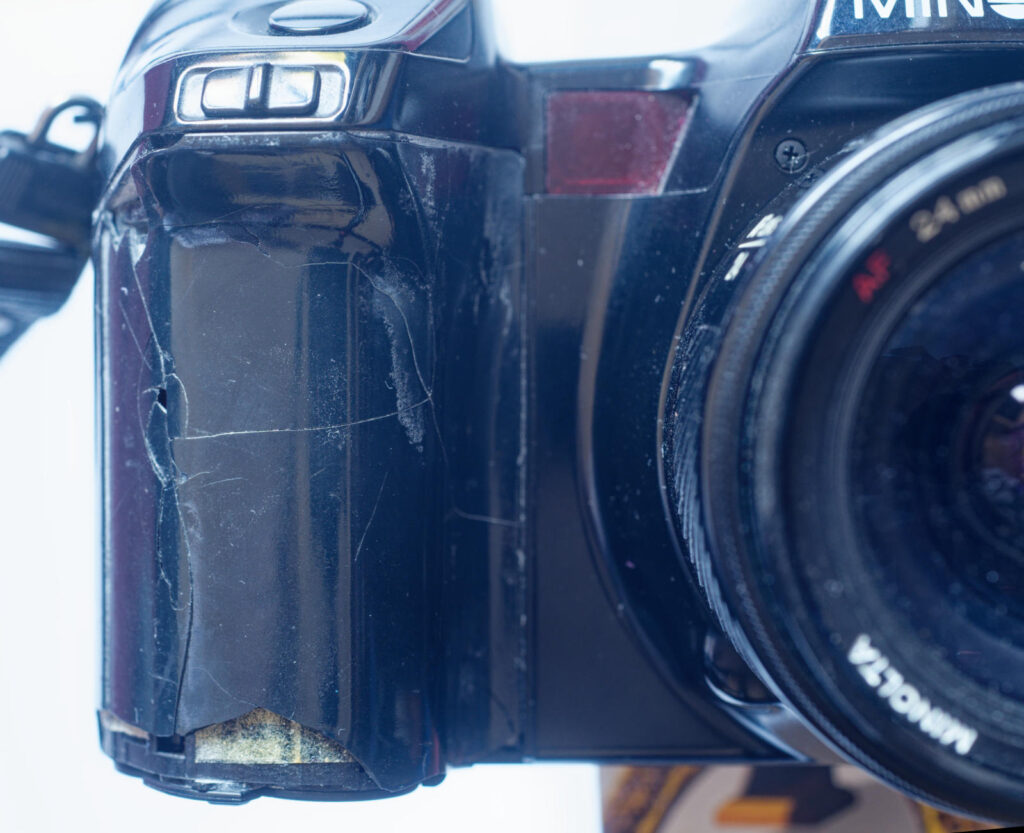
Decades after its release, the Minolta 7000i faces a specific physical challenge: the degradation of its synthetic materials. The rubberized grip used on the 7000i and 8000i is notorious for becoming brittle and cracking over time. In many surviving units, the plastic grip literally flakes away, requiring owners to either replace the grip with custom leatherette or use 3D-printed replacements.
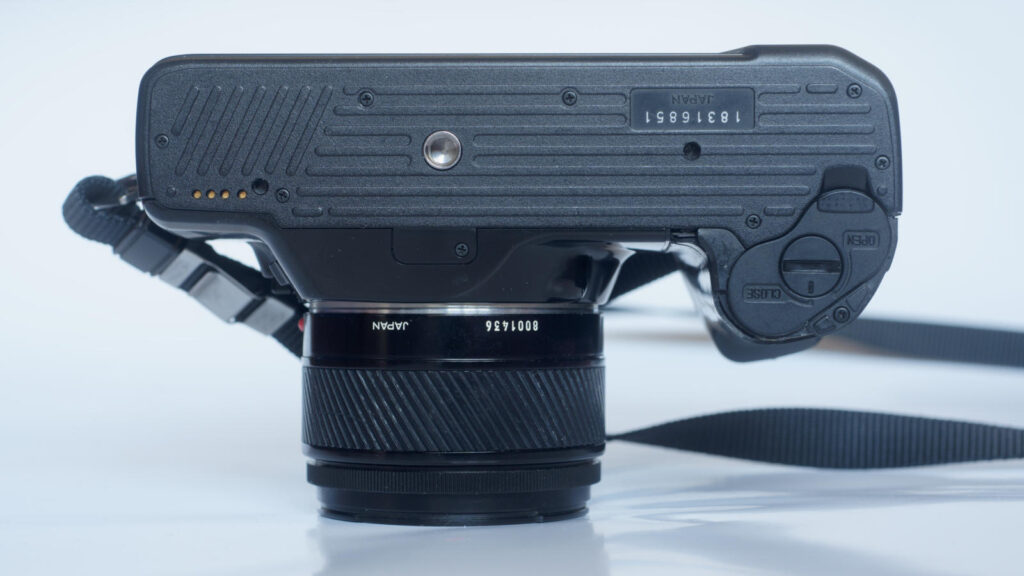
Mechanically, however, the 7000i remains remarkably robust. The shutter assemblies and internal electronics have proven durable, with many units still functioning perfectly as long as they are supplied with a fresh 2CR5 battery.
Market Impact and Legacy
The Minolta Dynax 7000i was a commercial success that proved Minolta could iterate rapidly on its groundbreaking AF technology. It bridged the gap between the experimental first generation of autofocus and the highly refined, professional-grade SLRs of the late 1990s.
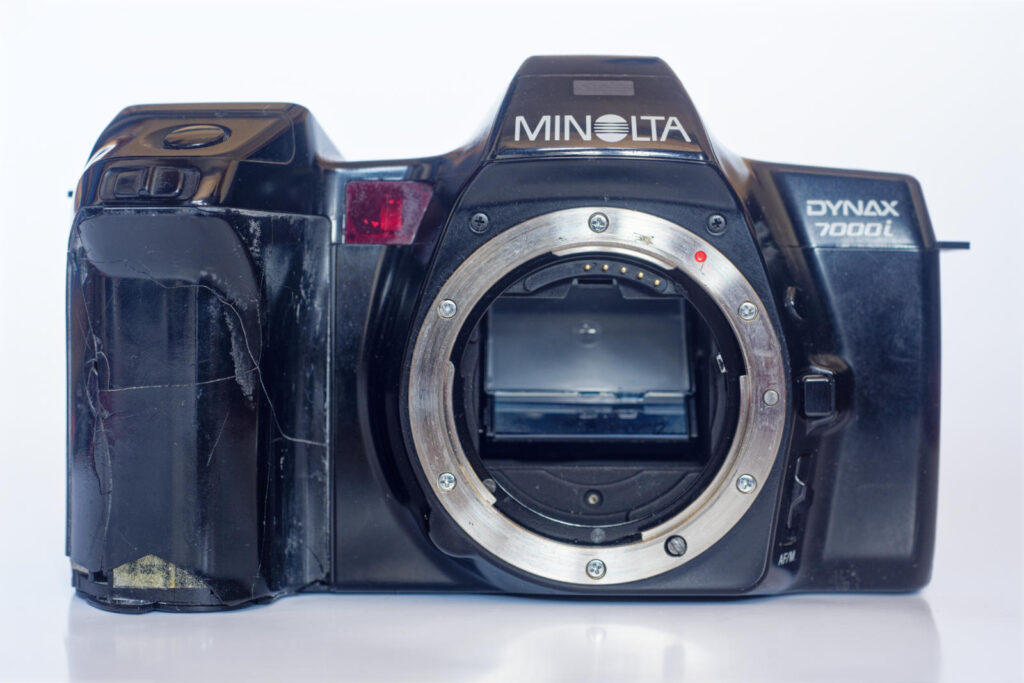
The camera’s greatest legacy is its lens mount. The Minolta A-mount, introduced with the 7000 and refined with the 7000i, remained the standard for Minolta and Konica Minolta until the company’s camera division was sold to Sony in 2006. Because of this continuity, lenses produced for the 7000i in 1988 remain compatible with Sony’s A-mount digital SLRs (DSLTs) and can be adapted to the modern E-mount mirrorless system with full autofocus support via Sony’s LA-EA adapters.
For the modern film enthusiast, the 7000i offers a high-performance entry point into the Minolta ecosystem. It provides a level of automation and "intelligence" that makes film photography accessible, while its compatibility with nearly 40 years of A-mount glass ensures that it remains a versatile tool for creative expression. The 7000i stands as a testament to an era when Minolta led the world in photographic innovation, pushing the boundaries of what a camera could "think" and "do" for the photographer.