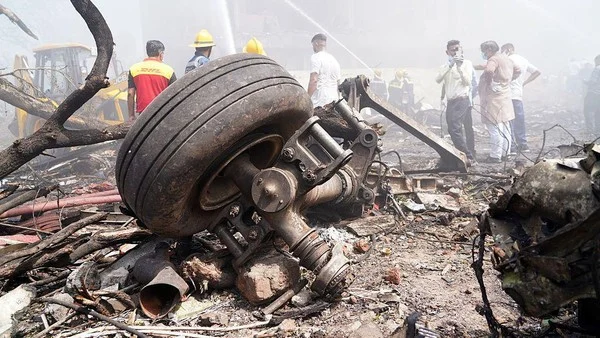
The global aviation community remains in a state of profound shock following the catastrophic loss of Air India Flight AI-171, a Boeing 787-8 Dreamliner that crashed on June 12, 2025, during its final approach to Sardar Vallabhbhai Patel International Airport in Ahmedabad. Carrying 245 souls, including passengers and crew, the flight from London Heathrow ended in a tragedy that has left only one confirmed survivor, currently in critical condition at a specialized trauma center. As the recovery phase transitions into a high-stakes investigation, the focus has shifted to a high-security laboratory in New Delhi, where international experts have begun the delicate process of extracting and analyzing data from the aircraft’s "black boxes"—the Flight Data Recorder (FDR) and the Cockpit Voice Recorder (CVR).
The investigation is a multi-national effort, led by the Indian Directorate General of Civil Aviation (DGCA) and the Aircraft Accident Investigation Bureau (AAIB), with significant technical support from the United States National Transportation Safety Board (NTSB) and engineers from Boeing, the aircraft’s manufacturer. This collaborative approach is standard for accidents involving American-made aircraft on foreign soil, ensuring that the highest levels of technical expertise are applied to uncover the sequence of events that led to the deadliest aviation disaster in recent Indian history.
Chronology of the Final Minutes
Flight AI-171 departed London Heathrow at approximately 09:45 GMT, following a routine schedule for the long-haul journey to Ahmedabad. According to preliminary radar data and air traffic control (ATC) logs, the flight was uneventful for the majority of its duration, maintaining a steady cruise altitude over Europe and the Middle East.
Trouble appeared to emerge only during the final descent phase. At 21:12 local time, as the aircraft was maneuvering to align with Runway 23 at Ahmedabad, ATC recordings indicate that the pilots were cleared for a standard instrument approach. Weather conditions at the time were reported as challenging but within operational limits, characterized by intermittent heavy rain and gusty winds typical of the early monsoon season in Gujarat.
Minutes later, at 21:18, the aircraft’s altitude and airspeed readings began to show significant fluctuations. Witnesses on the ground reported seeing the aircraft struggling to maintain a level pitch before it suddenly banked sharply to the left and plummeted into a semi-arid region approximately four kilometers from the airport perimeter. The impact was followed by an immediate and intense post-crash fire, which complicated initial rescue efforts and necessitated the deployment of over thirty emergency response units.
The Critical Role of the Black Boxes
The recovery of the FDR and CVR from the smoldering wreckage was a priority for the search teams. Despite the intense heat of the post-impact fire, both units were found relatively intact, protected by their crash-survivable containers designed to withstand temperatures of up to 1,100 degrees Celsius and pressures equivalent to deep-sea depths.
The Flight Data Recorder is expected to provide a second-by-second account of over 700 different parameters, including airspeed, altitude, engine performance, wing flap positions, and autopilot status. Simultaneously, the Cockpit Voice Recorder will offer the investigation team the final two hours of audio from the flight deck. This includes not only the verbal communication between the Captain and the First Officer but also ambient sounds—such as mechanical clicks, engine whines, or warning alarms—that can provide vital clues to the aircraft’s mechanical state.
In New Delhi, the analysis is proceeding through a rigorous four-stage process. First, the devices are meticulously cleaned of debris and inspected for structural integrity. Second, if the memory chips are damaged, they are removed and placed in specialized readers. Third, the raw data is converted into a readable format, a process that can take several days depending on the state of the hardware. Finally, the data is synchronized with ATC transcripts to create a comprehensive timeline of the disaster.
Technical Focus: The Flap System Failure Theory
While the investigation remains in its early stages, a primary area of concern has emerged regarding the aircraft’s flight control surfaces, specifically the trailing-edge flaps. Preliminary reports from ground-based maintenance telemetry, which some modern aircraft transmit in real-time, suggest a potential "asymmetry" or "failure to deploy" in the flap system during the landing configuration.
Flaps are essential components of the wing assembly that increase lift and drag, allowing an aircraft to fly safely at the lower speeds required for landing. If the flaps fail to deploy correctly, or if they deploy unevenly (asymmetric flap), the aircraft can become aerodynamic unstable, leading to a sudden roll or a stall that is difficult to recover from at low altitudes.

The Boeing 787 Dreamliner utilizes a sophisticated fly-by-wire system to manage these surfaces. Investigators will be scrutinizing the electronic signals sent from the cockpit to the flap actuators to determine if the failure was mechanical, such as a jammed linkage, or electronic, involving a software glitch or a sensor malfunction. This line of inquiry is particularly sensitive given the 787’s history of pioneering—and at times, complex—lithium-ion battery and electrical system architectures, though there is currently no evidence linking this crash to previous issues.
Official Responses and Global Repercussions
The tragedy has prompted a wave of official statements and a surge in regulatory scrutiny. The Indian Prime Minister’s Office issued a statement expressing profound grief and promising a "transparent and exhaustive" probe. "We owe it to the families of the victims to find the truth," the statement read. "No stone will be left unturned in ensuring that our skies remain safe."
Air India, which has been undergoing a massive brand and fleet transformation under the ownership of the Tata Group, has grounded several of its older 787 airframes for "precautionary inspections," though the airline clarified that this was a voluntary measure and not a regulatory mandate. The airline’s CEO emphasized that the company is providing full support to the grieving families, including the establishment of a dedicated family assistance center in Ahmedabad and London.
In the United States, the Federal Aviation Administration (FAA) and Boeing are under pressure to provide data on any similar "flap-related" incidents across the global Dreamliner fleet. Boeing issued a brief statement: "Our thoughts are with the passengers and crew of AI-171 and their loved ones. We have a technical team on the ground assisting the NTSB and the Indian authorities and will continue to provide our full support throughout the investigation."
Broader Implications for Aviation Safety
The loss of AI-171 has sent ripples through the global aviation market. On the morning following the crash, shares in Boeing saw a notable decline as investors reacted to the possibility of a systemic issue with one of the manufacturer’s flagship models. Furthermore, insurance premiums for long-haul carriers operating in the South Asian region are expected to face upward pressure.
From a regulatory standpoint, the crash may lead to a re-evaluation of pilot training protocols for "low-altitude emergency recovery." If the black box data confirms that the crew was battling a mechanical failure while simultaneously navigating monsoon weather, it could lead to new mandates for simulator training that specifically mimics these compounded high-stress scenarios.
Additionally, the incident has renewed debates regarding "survivability" in modern aircraft design. The fact that only one individual survived an impact of this magnitude highlights the extreme forces involved in high-speed aviation accidents. Safety advocates are calling for a review of cabin fire-suppression systems and seat-anchoring technologies to determine if any improvements could have increased the survival rate.
Looking Ahead: The Long Road to a Final Report
While the "black box" analysis will provide the first clear window into the cockpit, a final report is not expected for at least 12 to 18 months. Aviation investigations are notoriously slow, as every piece of evidence must be cross-referenced with maintenance records, pilot training logs, and metallurgical analysis of the wreckage.
In the coming weeks, the investigation team will likely release a preliminary report. This document will not assign blame but will provide the factual findings established in the immediate aftermath. For the families of the 244 victims, these facts are the first step toward closure. For the aviation industry, they are the blueprints for the next generation of safety improvements.
As the laboratory in New Delhi hums with the sound of data extraction, the world waits for the Boeing 787’s final recordings to speak. The lessons learned from the tragedy of Air India AI-171 will undoubtedly shape the future of flight, ensuring that from this immense loss, a safer path forward is forged for the millions who take to the skies every day.