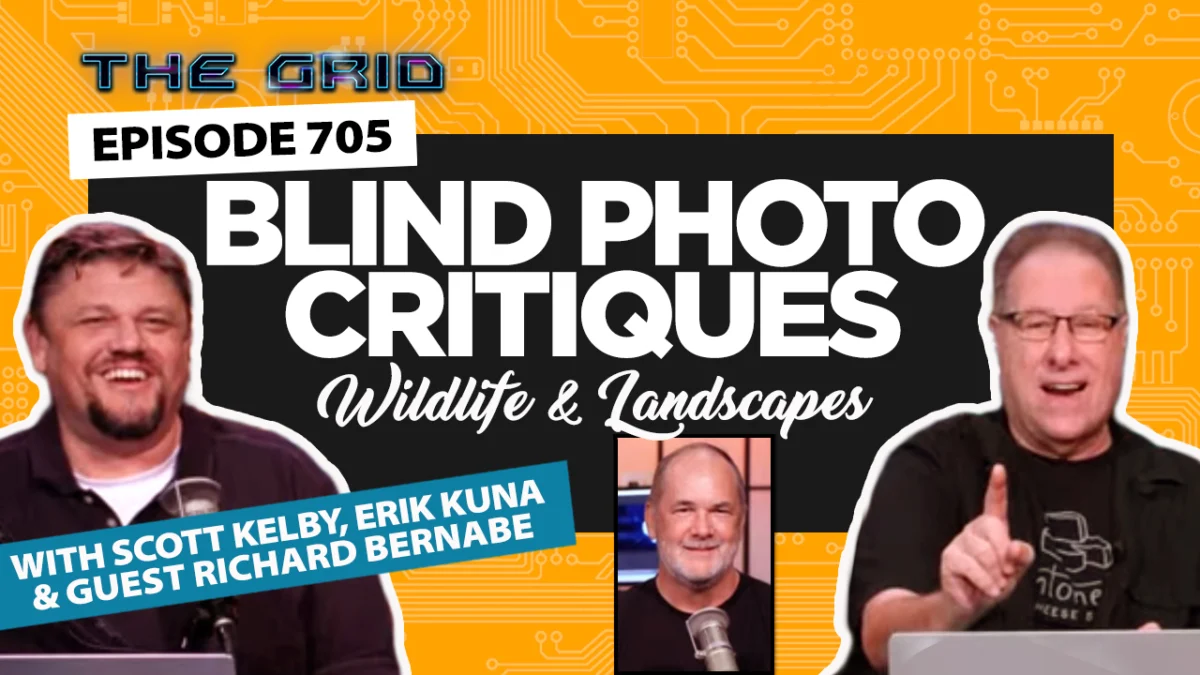
The episode, numbered 705 in its extensive run, marked a significant event for the global photography community, bringing together three highly respected figures to dissect and analyze submitted images without prior knowledge of their creators. This format, a hallmark of effective critique, ensures impartiality and focuses solely on the technical and artistic merits of the photographs. Scott Kelby, CEO of KelbyOne and a world-renowned photographer, author, and educator, along with Erik Kuna, a celebrated landscape photographer and educator, provided a dynamic hosting environment, facilitating a deep dive into the nuances of capturing and refining compelling wildlife and landscape imagery. Their combined expertise, augmented by Bernabe’s specialized knowledge, created an educational experience that underscored the iterative nature of photographic mastery.
The Grid: A Pillar of Photography Education
"The Grid" has long stood as a cornerstone of online photography education, produced by KelbyOne, a platform dedicated to providing high-quality training for photographers, designers, and creatives worldwide. Launched over a decade ago, the show quickly established itself as a go-to resource for practical advice, industry news, and expert interviews, broadcasting weekly to a global audience. Its mission is to demystify complex photographic concepts, inspire creativity, and foster a vibrant learning community. The program’s consistent delivery of accessible, actionable content, often featuring leading professionals in various photographic disciplines, has solidified its reputation as an indispensable tool for photographers ranging from aspiring enthusiasts to seasoned professionals seeking to refine their craft. The "Blind Photo Critique" segment, in particular, has become a fan favorite, lauded for its transparency and the profound learning opportunities it presents by showcasing real-world examples and expert analysis.
Richard Bernabe: A Master’s Perspective on Nature Photography
Richard Bernabe’s participation in this special episode brought an authoritative voice to the discussion of wildlife and landscape photography. Bernabe is widely recognized for his breathtaking images of the natural world, his extensive travels, and his dedication to teaching. His work, characterized by a profound appreciation for light, composition, and the raw beauty of untamed environments, has graced numerous publications and galleries. As an experienced workshop leader and author, Bernabe possesses a unique ability to articulate complex photographic principles in an understandable manner, making his insights particularly valuable for the critique session. His presence underscored the episode’s focus on two of photography’s most challenging yet rewarding genres, areas where technical precision, artistic vision, and an intimate understanding of natural phenomena converge. His emphasis on ethical wildlife photography and sustainable landscape practices also subtly permeated the discussion, reflecting broader industry standards.
The Anatomy of a Blind Photo Critique: Objective Learning in Practice
The blind photo critique format is a pedagogical tool designed to remove personal bias from the evaluation process. Photographers submit their work, often anonymously, and experts analyze the images based solely on their visual merits and technical execution. This approach fosters a safe learning environment where constructive feedback can be delivered and received without the pressure of personal attachment. In this episode, the diverse range of submitted photographs—from majestic bald eagles and elusive wolves to serene waterfalls, vibrant autumn vistas, and dramatic geological formations—provided a rich tapestry for discussion. The critiques offered a granular look at common challenges faced by nature photographers and demonstrated practical strategies for improvement, both during the image capture phase and in subsequent post-processing workflows using software like Adobe Lightroom. This unbiased approach not only benefits the submitting photographers but also provides invaluable lessons for the thousands of viewers who can apply these critiques to their own work.
Dissecting the Details: Key Photographic Principles Unpacked
The panel meticulously dissected various technical and artistic elements present in the submitted images. A significant portion of the discussion revolved around fundamental photographic principles, illustrating how even seemingly minor adjustments can yield substantial improvements.
- White Balance: The hosts and Bernabe frequently addressed the critical importance of accurate white balance. They demonstrated how an improperly set white balance can skew colors, rendering scenes unnatural or unappealing. For instance, a landscape shot under cloudy skies might appear too cool, lacking warmth, while a sunset image might lose its golden hour glow if white balance is not appropriately adjusted. The discussion highlighted both in-camera presets and the flexibility of post-processing adjustments in Lightroom to achieve color fidelity or to intentionally introduce creative color casts to evoke specific moods.
- Cropping and Composition: The power of strategic cropping was a recurring theme. The experts illustrated how a tighter crop could eliminate distracting elements, enhance the subject’s prominence, or refine the overall composition. Conversely, they also pointed out instances where a too-tight crop might diminish the sense of scale or context crucial for landscape photography. The conversation naturally extended to broader compositional principles, such as the rule of thirds, leading lines, and negative space, emphasizing how these elements guide the viewer’s eye and create visual harmony. Distracting backgrounds, often a pitfall in wildlife photography, were thoroughly examined, with advice on how to use depth of field, change shooting angles, or employ post-processing techniques to minimize their impact.
- Exposure Control: Managing Light and Shadows: Harsh highlights and blocked shadows are common challenges, especially in high-contrast outdoor environments. The panel provided guidance on proper exposure metering, understanding the dynamic range of cameras, and utilizing techniques like exposure bracketing to capture detail across a wide tonal range. In post-processing, they showed how to "pull back" bright areas and recover detail in shadows, effectively balancing the image’s luminosity without introducing artifacts.
- Shutter Speed: Freezing Motion and Creating Flow: The selection of an appropriate shutter speed is paramount in both wildlife and landscape photography. For wildlife, a fast shutter speed is often essential to freeze fleeting moments and capture sharp detail in moving subjects. Conversely, for landscapes, a slower shutter speed can be employed to create ethereal effects, such as silky smooth water in waterfalls or streaking clouds, imparting a sense of motion and tranquility. The experts provided practical advice on how to choose shutter speeds based on the subject’s movement and the desired creative outcome.
- Using Light for Subject Separation: A crucial aspect highlighted was the masterful use of light to separate a wildlife subject from its surroundings. Whether it’s rim light accentuating a creature’s outline or directional light creating depth and dimension, understanding how light interacts with the subject and background can dramatically enhance an image’s impact. The panel demonstrated how subtle light adjustments, both in-camera and in Lightroom, could make a subject "pop" from the frame, adding a three-dimensional quality to an otherwise flat image.
Post-Processing with Lightroom: The Art of Refinement
The editing discussions provided compelling demonstrations of how relatively small adjustments within Adobe Lightroom can lead to significant improvements. The process of refining an image, rather than fundamentally altering it, was emphasized. Techniques covered included:
- Global and Local Adjustments: The power of global adjustments like exposure, contrast, and saturation, contrasted with localized adjustments using brushes, radial filters, and graduated filters, to selectively enhance specific areas of an image without affecting others.
- Cleaning Up Distractions: Practical methods for removing minor distracting elements, such as dust spots, stray branches, or small imperfections, using tools like the spot healing brush or clone stamp.
- Color Grading and Tonal Adjustments: Fine-tuning white balance, adjusting hue, saturation, and luminance (HSL) for specific colors, and utilizing the tone curve to sculpt contrast and mood. The discussion showcased how warming or cooling the white balance could dramatically alter the emotional resonance of a photograph.
- Sharpening and Noise Reduction: Best practices for applying sharpening to enhance detail and effectively reducing digital noise, particularly important for images captured in low light or at high ISO settings, common in wildlife photography.
Richard Bernabe’s Enduring Wisdom: Beyond the Shutter Button
Perhaps the most profound takeaway from the episode came from Richard Bernabe, who shared an essential reminder that transcends technical proficiency: "Sometimes the best editing decision starts before you ever open Lightroom." This statement encapsulates the philosophy of pre-visualization and situational awareness that defines truly exceptional nature photography.
Bernabe elaborated on the critical importance of:
- Knowing When the Light Isn’t Working: Understanding that not every moment is conducive to a great photograph. Harsh midday sun, for example, often produces unflattering light, leading to high contrast and flat results. Recognizing these conditions and choosing to wait for better light (e.g., golden hour) is a mark of a patient and discerning photographer.
- Changing Your Position: Often, a slight shift in perspective can transform an ordinary scene into an extraordinary one. Moving a few feet, getting lower or higher, or altering the angle can eliminate distractions, improve composition, and optimize light. This active engagement with the environment is crucial for both wildlife, where finding the right vantage point is key, and landscapes, where framing elements can make all the difference.
- When to Simply Wait: Nature photography often demands immense patience. Waiting for an animal to move into a better position, for clouds to break, or for the perfect wave to crash can be the difference between a mediocre snapshot and a portfolio-worthy image. This advice underscores the value of being present, observing, and allowing the scene to unfold, rather than rushing the shot.
This emphasis on the "before the click" decision-making process highlights that technical skills, while vital, are ultimately subservient to a photographer’s artistic vision, patience, and deep understanding of their subject and environment. It reinforces the idea that photography is not just about operating a camera but about seeing, anticipating, and connecting with the world.
Broader Impact and Implications for the Photography Community
The "Wildlife & Landscape Blind Photo Critique" episode of "The Grid" carries significant implications for the broader photography community. Firstly, it democratizes access to expert knowledge, providing professional-level instruction that might otherwise be accessible only through expensive workshops or private mentorships. This accessibility fosters continuous learning and skill development for photographers across all levels.
Secondly, the episode reinforces the value of constructive criticism. By modeling how to give and receive feedback in a professional and educational manner, it encourages viewers to develop a more critical eye for their own work and to seek out peer review, a vital component of artistic growth.
Finally, by showcasing the interplay between in-camera technique and post-processing, the episode demystifies the workflow of professional photographers. It illustrates that excellence in photography is not solely dependent on expensive gear but rather on a combination of technical acumen, artistic sensibility, patience, and a willingness to learn and refine one’s craft continuously. The insights shared by Scott Kelby, Erik Kuna, and Richard Bernabe serve as a compelling reminder that the journey of photographic mastery is an ongoing process of observation, experimentation, and thoughtful reflection, culminating in images that not only capture a scene but also tell a compelling story.
Viewers are encouraged to watch the replay of this insightful episode to glean practical ideas and apply them to their own wildlife and landscape photography endeavors, marking another successful chapter in "The Grid’s" enduring commitment to photography education.