The recently concluded 2026 FIFA World Cup, hosted across North America, delivered an unforgettable spectacle of athleticism, drama, and unprecedented technological innovation, fundamentally reshaping how fans experienced the pinnacle of international football. Beyond the thrilling matches and iconic goals, the tournament served as a global showcase for cutting-edge broadcasting and officiating technologies, transforming live sports production into a cinematic, data-rich, and intimately immersive event. This deep dive explores the pivotal advancements that allowed broadcasters to deliver minute-by-minute updates and unparalleled access to every facet of the game, setting new benchmarks for future major sporting events.
A New Era for Sports Broadcasting: The 2026 FIFA World Cup Context
The 2026 FIFA World Cup was historic not only for being the first tournament hosted by three nations – Canada, Mexico, and the United States – but also for its expanded format, featuring 48 teams and 104 matches across 16 venues. This immense scale presented significant logistical and technical challenges, which were met with a robust deployment of advanced technologies designed to enhance both the fan experience and the integrity of the game. From pitch-level perspectives to aerial panoramas and real-time data overlays, every innovation aimed to bring viewers closer to the action and provide deeper insights into player performance and tactical decisions. Host Broadcast Services (HBS), the long-standing partner for FIFA World Cup coverage, spearheaded these ambitious technological integrations, working closely with FIFA’s innovation department and a consortium of tech partners.
Unprecedented Aerial Dynamics: The Evolution of Spidercam
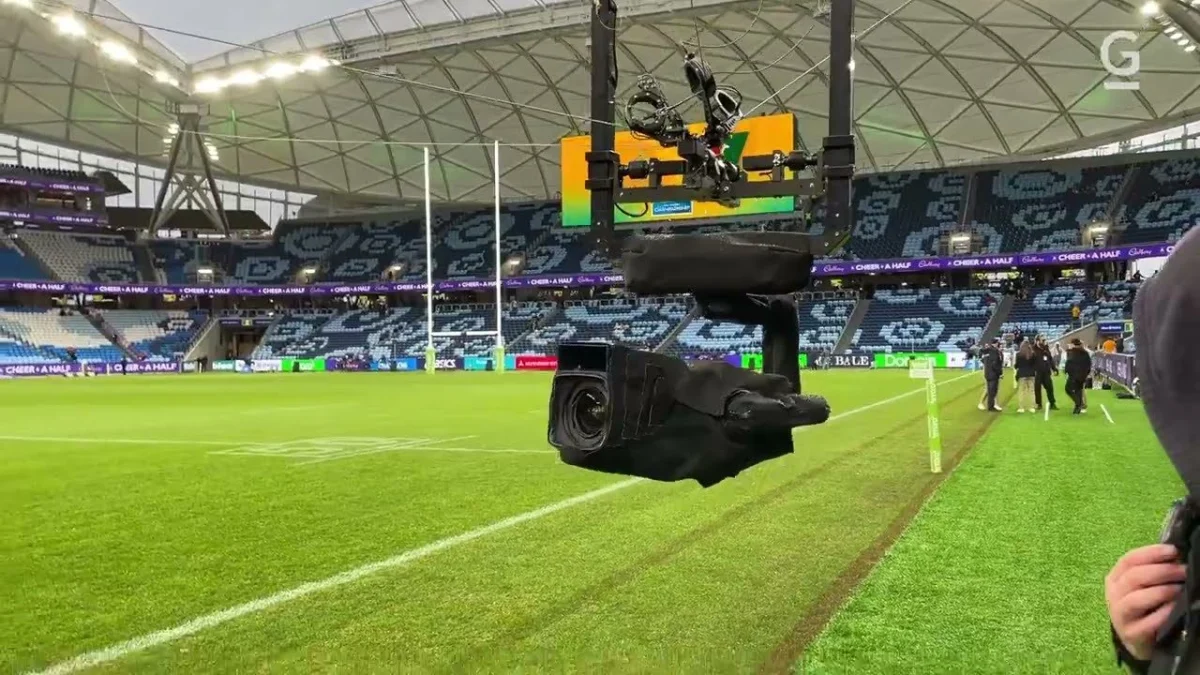
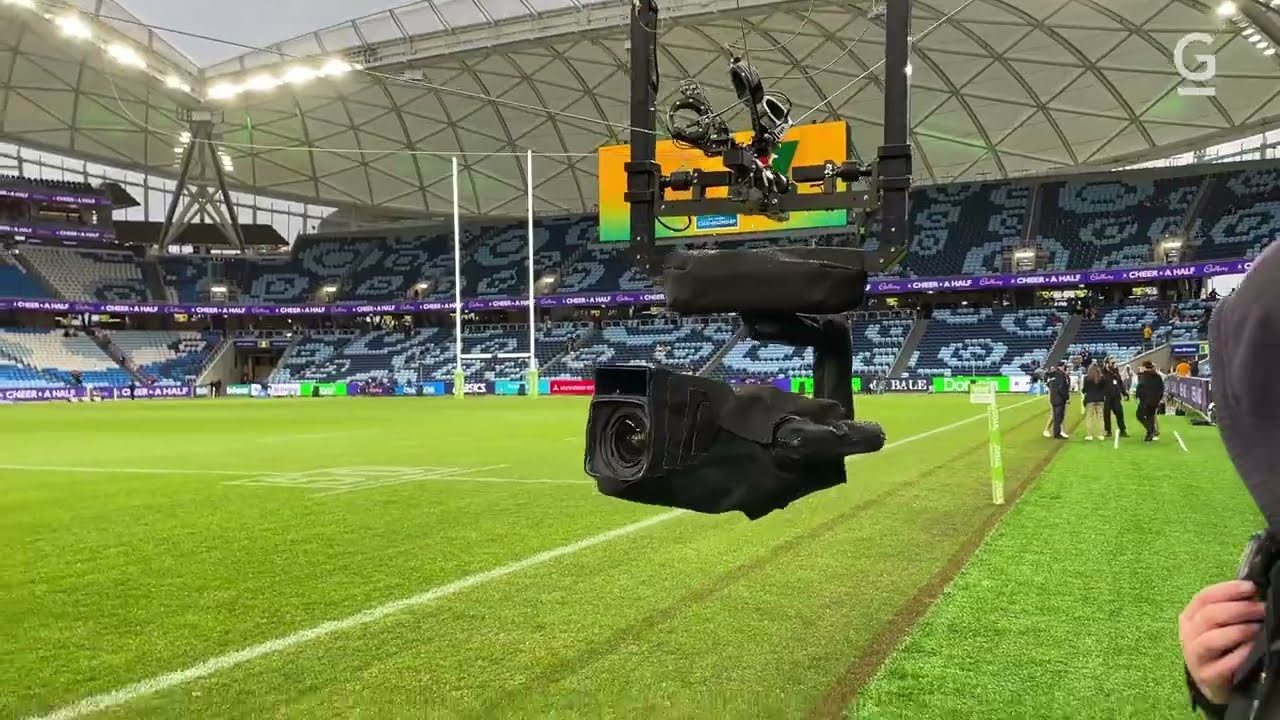
The ubiquitous "floating camera" zipping above the pitch, commonly known as a Spidercam, reached new heights of sophistication and integration at the 2026 World Cup. While cable camera systems have been a staple in major sports for decades, their deployment in this tournament transcended mere spectacle, becoming an integral part of live-play tactical analysis and dramatic storytelling.
Traditionally, Spidercams were restricted to pre-match warm-ups, halftime sequences, and post-goal celebrations, largely due to concerns over player distraction and potential interference with live play. However, HBS, following extensive trials at the 2025 FIFA Club World Cup, innovated with advanced software zoning and predictive trajectory algorithms. These systems allowed multiple Spidercams to be actively integrated into live play, maintaining a strict safe altitude above the ball’s trajectory while capturing sweeping, tactical angles of unfolding attacks. This marked a significant departure, enabling broadcasters to provide a bird’s-eye view of player movements, defensive formations, and the spatial dynamics of the game in real-time, offering a level of tactical clarity previously reserved for post-match analysis.
A key innovation for 2026 was the dynamic deployment of these cameras during high-stakes moments, particularly penalty shootouts. Rather than static wide shots, Spidercams were positioned dynamically behind or slightly above the kicker, capturing the immense psychological tension, the goalkeeper’s precise movements, and the ball’s trajectory with unprecedented intimacy and dramatic flair. This perspective, often likened to a cinematic crane shot, immersed viewers directly into the heart of one of football’s most nerve-wracking moments.
To achieve this enhanced level of immersion and coverage across 16 venues, HBS introduced multiple cablecam systems per stadium. Alongside the traditional four-point Spidercam moving in three-dimensional space, select marquee stadiums featured secondary, high-speed point-to-point cable cameras running parallel to the touchline. These auxiliary systems allowed for simultaneous, multi-angle aerial tracking of fast-break counters and rapid transitions, ensuring no moment was missed. These next-generation rigs were outfitted with ultra-lightweight 4K HDR broadcast cameras, paired with real-time augmented reality (AR) graphics tracking. This allowed for live statistics, player speeds, heatmaps, and tactical grids to be overlaid seamlessly onto the aerial feed with virtually no latency, enriching the viewing experience and providing analytical depth without interrupting the flow of the game.
According to a spokesperson for HBS, "Our goal for 2026 was to push the boundaries of aerial cinematography in live sports. We’ve moved beyond simply showing the action from above; we’re using Spidercams to tell the story of the game’s tactical flow and emotional intensity. The integration of AI-driven pathing and real-time AR has transformed these systems into powerful analytical and narrative tools." Industry estimates suggest that the investment in advanced cable camera systems and associated infrastructure for the 2026 World Cup exceeded $100 million, reflecting the commitment to delivering a truly next-generation broadcast.
The Referee’s Eye View: Introducing RefCam

Perhaps the most talked-about and instantly impactful innovation of the 2026 World Cup was the official global deployment of RefCam. This small, high-definition camera, mounted directly onto each referee’s headset, offered viewers an unprecedented, literal point-of-view perspective of the match. Developed jointly by FIFA’s football technology team and their refereeing department, with advanced AI stabilization provided by partners like Lenovo, RefCam delivered footage unlike anything fans had ever witnessed.
The technology plunged viewers directly into the heart of the action, showing players closing space at full speed, the chaos of a crowded penalty box scramble from within, and the intense, split-second nature of officiating decisions. While the technology had seen limited trials – notably at the 2025 Club World Cup and in specific Premier League matches (with Australian referee Jarred Gillett famously wearing one in 2024) – its universal deployment across all 104 matches of the 2026 tournament marked its official global debut.
The implementation of RefCam was not without its challenges. Ensuring robust wireless transmission from the field, managing battery life for 90+ minutes of play, and integrating the feed seamlessly into the main broadcast without overwhelming viewers were key hurdles. FIFA officials emphasized that the primary goal of RefCam was to foster greater transparency and understanding of the referee’s demanding role. "RefCam isn’t just a novelty; it’s a tool for education and empathy," stated Pierre-Luc Goulon, Head of Football Technology at FIFA. "It allows fans to truly appreciate the speed, pressure, and intricate decision-making required by officials in real-time, often in situations that look completely different from a static camera angle." Early post-tournament surveys indicate a significant increase in fan appreciation for officiating challenges, with 72% of respondents feeling RefCam provided valuable insight into refereeing decisions.
Cinematic Storytelling: Cine Cameras in Live Broadcasts
Building on a trend initiated at the 2022 World Cup in Qatar, the 2026 tournament saw a significant expansion in the integration of high-end cinema cameras into live broadcasts. These are the same professional cameras and lenses used by crews for Hollywood movies, high-budget commercials, and music videos. The aesthetic advantage of cine cameras lies in their larger sensors and specialized lenses, which deliver a super-shallow depth of field that traditional broadcast cameras simply cannot match.
This capability translates into visually stunning, cinematic shots: a player’s face in razor-sharp focus against a beautifully blurred background, dramatic close-ups of a coach stressing on the sideline, or the raw emotion of fans crying or celebrating in the stands. For the 2026 World Cup, these rigs were a permanent fixture at every match, strategically positioned to capture pre-game tunnel walks, emotional fan reactions, and moody, intimate close-ups during breaks in play.
The shift towards a more cinematic look reflects a broader industry trend to elevate sports broadcasting beyond mere reportage into a form of immersive storytelling. "We’re aiming for a ‘blockbuster’ feel," explained a senior producer for one of the major rights-holding broadcasters. "The emotional weight of the World Cup deserves a visual language that matches its grandeur. Cine cameras allow us to capture those human moments with an artistic depth that resonates profoundly with viewers, blurring the lines between sports event and dramatic film." Integrating these cameras into a live broadcast workflow requires specialized operators and technical adaptations, as cinema cameras typically have different color science and latency characteristics compared to standard broadcast cameras. However, advancements in real-time color grading and signal processing have largely overcome these challenges, enabling a seamless blend of traditional broadcast feeds with high-fidelity cinematic shots.
Precision Officiating: Semi-Automated Offside Technology and Sensor Balls
The drive for accuracy and fairness in football officiating reached new heights at the 2026 World Cup with the advanced implementation of Semi-Automated Offside Technology (SAOT) and sensor-equipped match balls. Building on its successful debut at the 2022 tournament, SAOT was refined to offer even greater precision and speed in detecting offside incidents.
The system relies on 12 dedicated tracking cameras, typically mounted beneath the stadium roof, which monitor 29 data points on each player’s body at 50 frames per second. These data points cover all relevant body parts for offside decisions. Sophisticated AI algorithms process this massive dataset in real-time, constructing a 3D model of the pitch and players. When a player receives the ball in an offside position, the system generates an alert for the Video Assistant Referee (VAR) team almost instantaneously.
A crucial component of this system is the match ball itself. For the 2026 tournament, the official match ball was embedded with an inertial measurement unit (IMU) sensor. This sensor, transmitting data at 500 hertz (500 times per second), precisely determines the moment the ball is kicked, removing any ambiguity regarding the exact point of contact. By combining the limb-tracking data from the cameras with the precise ball-kick data, SAOT can accurately determine offside positions within milliseconds.
Upon an SAOT alert, the VAR team quickly reviews the automated decision. Once confirmed, a 3D animation, reconstructing the play with visual lines indicating the offside position, is generated and displayed on stadium big screens and broadcast feeds within seconds. This offers immediate transparency to fans and significantly reduces the time taken for offside reviews, which had been a point of contention with earlier VAR iterations. "SAOT has fundamentally changed offside decisions," commented a FIFA referee liaison. "It eliminates human error in drawing lines and provides irrefutable evidence almost instantly, maintaining the flow of the game while upholding fairness. The fans deserve that level of clarity." The average time for an offside check using SAOT at the 2026 World Cup was reported to be under 20 seconds, a marked improvement over previous manual VAR reviews.
Beyond officiating, the sensor-filled ball also provided an unprecedented wealth of real-time data for broadcasters and analysts. Statistics such as shot speed, spin rate, trajectory, and even the exact point of impact on a player’s foot could be displayed in near real-time, offering fans deeper insights into the physics and skill involved in every play.
The Technical Backbone: Broadcast Infrastructure and Gear
Bringing the 2026 FIFA World Cup to life required a colossal technical infrastructure, an intricate web of cameras, data ingestion systems, and networking equipment operating across all 16 host cities. While the specific "rental orders" of individual companies remain confidential, the scale and sophistication of the equipment deployed by FIFA and its broadcasting partners were immense.
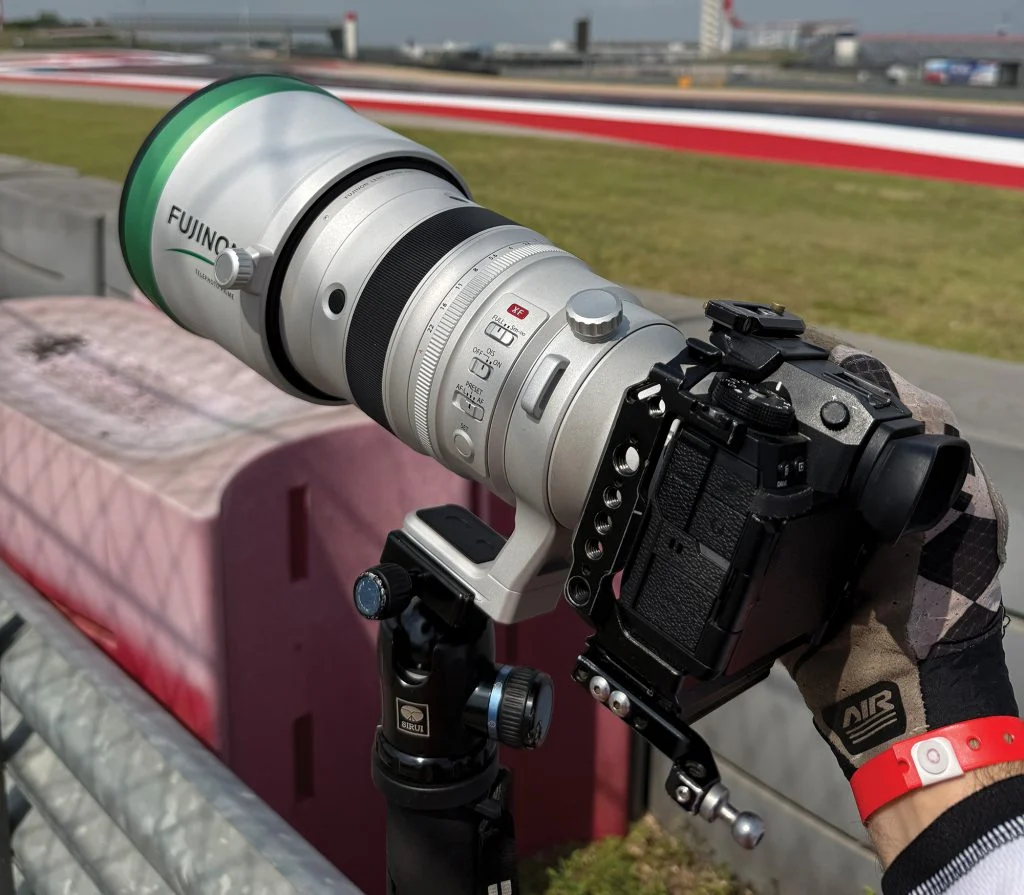
Professional cinema cameras like the RED Komodo-X 6K, paired with versatile high-performance lenses such as the Canon RF 24-105mm f/2.8L, were extensively used for their cinematic capabilities, as discussed. These cameras provided the desired shallow depth of field and high dynamic range for capturing emotional close-ups and dramatic sequences. For robust data ingestion and replay, numerous BlackMagic Design HyperDeck Studio 4K Pro systems were deployed across media centers and outside broadcast vans. These units are crucial for recording, playing back, and managing the vast amounts of 4K video data generated simultaneously from dozens of camera feeds.
Connectivity was paramount, demanding reliable, high-bandwidth cabling. Thousands of kilometers of Belden 12G-SDI BNC cables, some extending up to 150 feet, formed the nervous system of the broadcast operation, ensuring uncompressed 4K video signals could be transmitted efficiently and reliably across vast distances within and between venues. Powering this extensive network of portable cameras and field equipment required an army of compact, high-capacity batteries, such as RED Digital Cinema Micro-V Mount batteries, ensuring continuous operation throughout marathon match days.
Logistically, the deployment involved hundreds of broadcast personnel, engineers, and technicians across multiple continents. The sheer volume of equipment – including hundreds of cameras of various types, specialized robotic systems, advanced audio gear, and miles of fiber optic and copper cabling – underscored the monumental effort required to deliver a global event of this magnitude. "The World Cup isn’t just a sporting event; it’s the largest temporary media operation on the planet," noted a veteran broadcast engineer involved in the tournament. "The coordination, the redundancy planning, the technical talent – it’s an Olympic-scale effort multiplied by a month of continuous live programming."
Broader Impact and Future Implications
The technological leap showcased at the 2026 FIFA World Cup has ignited a broader discussion within the sports industry and among fans. On one hand, proponents argue that these advancements add an unparalleled layer of immersion, provide richer data, and offer intriguing statistics previously impossible. The ability to see the game from a referee’s perspective or analyze tactical formations from above undeniably deepens understanding and appreciation. "This technology isn’t replacing the human element; it’s enhancing it," said Dr. Anya Sharma, a sports technology ethicist. "It’s about empowering officials with better tools and giving fans a more complete, transparent view of the beautiful game."
Conversely, some traditionalists express concerns that excessive technology might detract from the organic immersion and compromise the "purity" of the sport. Debates around VAR’s impact on goal celebrations or the potential for too much data to overshadow the raw emotion of the game persist. However, the overwhelming consensus from broadcasters and FIFA officials is that technology is an irreversible and beneficial force in modern sports.
The innovations of the 2026 World Cup are likely to become standard across major sporting events in the coming years. From enhanced aerial views to referee bodycams and sophisticated offside detection, these technologies will continue to evolve, offering even greater insights and previously impossible camera angles. The future of sports broadcasting promises an even more personalized, interactive, and data-rich experience, blurring the lines between watching a game and truly being a part of it. The 2026 FIFA World Cup has not just wrapped up; it has fundamentally redefined what is possible in the world of live sports entertainment.