The practice of street photography in the mid-2020s has evolved into a complex intersection of technical skill, psychological navigation, and ethical considerations, as evidenced by recent documentation from the Hamilton outdoor music festival in Ontario. On August 15, 2026, the city of Hamilton hosted its annual late-summer arts and music gathering, providing a fertile environment for visual sociologists and hobbyist photographers alike. Among those documenting the event was Ron Duda, a practitioner whose recent work highlights the ongoing tension between two primary methodologies: the "stealth" approach and the "engagement" model. This case study explores the technical execution of candid photography in a public setting, the socio-legal implications of capturing images in the digital age, and the enduring relevance of analog film in contemporary documentation.
The Methodological Divide: Stealth Versus Engagement
Street photography remains one of the most challenging genres of visual art due to its reliance on unpredictable human behavior and fluctuating environmental conditions. Analysts categorize the discipline into two distinct schools of thought. The first, often referred to as the "stealth" or "candid" method, requires the photographer to remain an unnoticed observer. This approach prioritizes the preservation of an authentic, un-posed moment, requiring rapid reaction times and a deep understanding of human anticipation. Success in this mode is often predicated on the photographer’s ability to blend into the background, utilizing small, quiet equipment and maintaining a non-threatening presence.
The second method involves direct engagement with the subject. In this framework, the photographer actively seeks permission or establishes a rapport before the shutter is released. While this "honest" approach mitigates ethical concerns regarding privacy and "stolen" images, it fundamentally alters the scene. Once a subject is aware of the camera, the resulting image shifts from a candid observation to a collaborative portrait. At the Hamilton festival, the tension between these two methods was a central theme of the photographic exercise, reflecting a broader debate within the global photography community regarding the boundaries of public observation.

Chronology of the Hamilton Festival Documentation
The photographic survey conducted on the afternoon of August 15, 2026, followed a specific chronological and technical path. Arriving at the festival grounds in the late afternoon, the photographer targeted the peak hours of human interaction as the sun began to lower, providing the high-contrast lighting often preferred for black-and-white film.
The equipment selected for this mission was a Leica M3, a rangefinder camera originally manufactured between 1954 and 1966, which remains a benchmark for street photography due to its mechanical precision and quiet operation. To facilitate the "stealth" approach, the camera was paired with a 90mm f/4 Rokkor lens. This focal length is atypical for traditional street photography—which usually favors 35mm or 50mm lenses—but it allowed for a greater distance between the lens and the subjects, effectively creating a "cloak and dagger" environment where the photographer could observe from the periphery.
Throughout the afternoon, the documentation focused on the mundane yet revealing interactions of festival-goers. Initial frames captured vendors and shoppers, where the photographer noted a palpable sense of being observed by the subjects themselves. This "watched-watcher" dynamic illustrates the difficulty of maintaining true invisibility in an era of heightened surveillance awareness. The session concluded with a series of images that utilized visual humor and situational irony, notably a shot titled "In Through The Out Door," a reference to both the physical movement within the festival space and a nod to the 1979 Led Zeppelin album.
Technical Specifications: The Role of Analog Film in 2026
Despite the dominance of high-resolution digital sensors, the use of photochemical processes remains a significant trend in 2026. The Hamilton festival project utilized Ilford HP5 Plus, a high-speed, fine-grain black-and-white film known for its versatility.
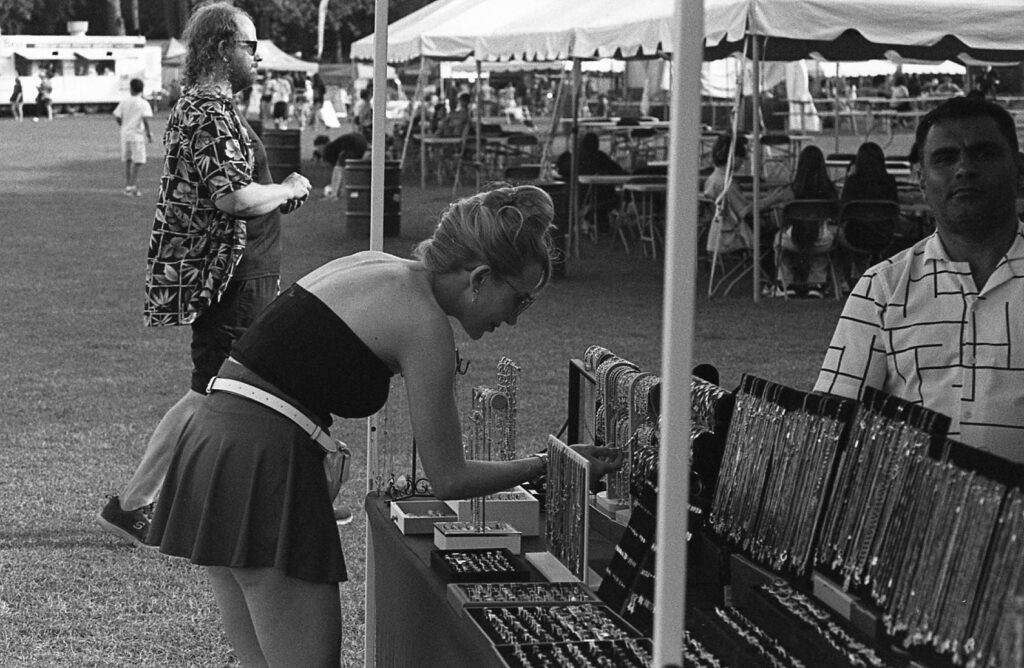
Data from the 2025 Global Imaging Report indicates a 12% year-over-year increase in the sale of traditional silver halide films among the 18-35 demographic. The preference for HP5 Plus in street photography is attributed to its wide exposure latitude, which allows photographers to capture detail in both deep shadows and bright highlights—a crucial feature in the uncontrolled lighting of an outdoor festival. The decision to use analog equipment is not merely aesthetic but methodological; the 36-exposure limit of a standard roll of film forces a level of intentionality and patience that digital photography often lacks.
Supporting Data: Hamilton’s Cultural Resurgence
The backdrop for this photographic study is Hamilton, Ontario, a city that has undergone a significant cultural transformation over the last decade. According to the Hamilton Economic Development Office, arts and culture festivals contributed an estimated $42 million to the local economy in 2025. The outdoor music festival serves as a primary driver of this growth, attracting over 50,000 attendees over a three-day period.
For photographers, these high-density events provide a microcosm of urban life. However, the density also increases the complexity of navigating public space. While Canadian law generally permits the photographing of individuals in public places without explicit consent—provided the images are not used for commercial gain or in a way that is defamatory—the social contract is more nuanced. The feedback from the Hamilton event suggests that even within legal bounds, the feeling of "stealing" a photograph remains a psychological hurdle for many practitioners.
Comparative Analysis: The "Photochemical Graffiti" Influence
The Hamilton documentation was partly inspired by contemporary peers such as Scott Ferguson, whose work "Photochemical Graffiti" has influenced a new generation of film photographers. Ferguson’s work emphasizes the transition from a "shy" or "unconfident" observer to an assertive documentarian. This shift is critical in street photography; as practitioners gain experience, they often move from the long-lens "stealth" method toward closer, wide-angle interactions.
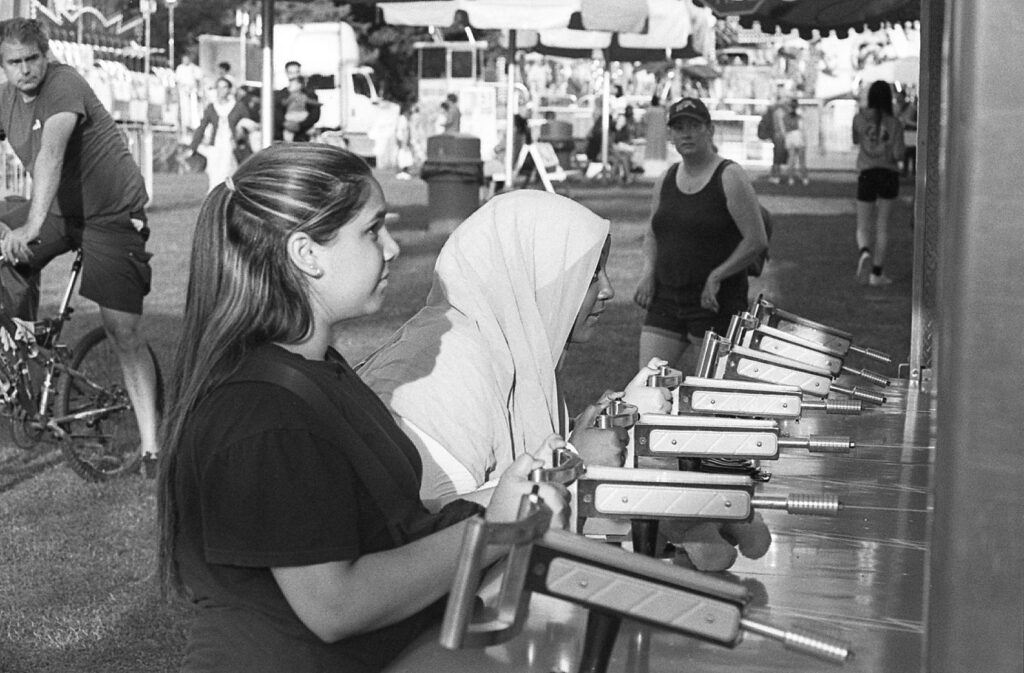
The Hamilton case study demonstrates that even experienced photographers struggle with this transition. The use of a 90mm lens is often a symptom of this struggle, acting as a physical barrier that protects the photographer from the social friction of close-up shooting. Analysts suggest that the "stealth" method, while producing candid results, often carries a higher emotional cost for the photographer, who may feel like an interloper rather than a participant in the cultural moment.
Broader Impact and Ethical Implications
The ethics of street photography are under constant scrutiny as privacy expectations evolve. In 2026, the ubiquity of facial recognition technology and social media has made the public more sensitive to being photographed. This has led to a paradoxical situation: while there are more cameras in public spaces than ever before (via smartphones and CCTV), the presence of a "serious" camera, such as a Leica M3, often draws more suspicion.
Legal experts in Ontario point out that while the "expectation of privacy" is low in a public festival, the ethical responsibility of the photographer is to ensure that subjects are not portrayed in a dehumanizing or exploitative manner. The "In Through The Out Door" photograph serves as an example of ethical candid photography—it captures a humorous, relatable human moment without violating the dignity of the subjects involved.
The implications of this work extend to the historical record of Hamilton. Candid photography provides a visual archive of fashion, social interaction, and urban atmosphere that posed photography cannot replicate. By documenting the "boring" or "marginal" moments of the festival alongside the highlights, photographers like Duda contribute to a more comprehensive understanding of 21st-century civic life.

Conclusion: The Future of the Public Lens
The documentation of the Hamilton outdoor music festival highlights the enduring complexity of street photography. The reliance on vintage equipment and traditional film stocks like HP5 Plus reflects a desire for a tactile, slowed-down approach to a fast-moving world. As the debate between stealth and engagement continues, it is clear that both methods have a place in the documentarian’s toolkit.
The primary challenge for the future will be balancing the photographer’s creative impulse with the public’s evolving sense of privacy. As demonstrated in Hamilton, the most successful street photography often occurs when the practitioner navigates this tension with a combination of technical skill, historical awareness, and a necessary sense of humor. The "stealth" approach may be born of trepidation, but it remains a vital means of capturing the unvarnished truth of the human experience in the public square.