The practice of shooting color reversal film, commonly known as slide film, represents one of the most demanding yet rewarding disciplines in analog photography. Unlike color negative film, which offers significant exposure latitude and can often be "saved" during the scanning or printing process, slide film is notorious for its narrow dynamic range and intolerance for exposure errors. This technical rigidity has historically fostered a sense of trepidation among enthusiasts, leading to the widespread adoption of bracketing—the practice of taking multiple shots of the same scene at different exposure settings. However, in a contemporary market defined by skyrocketing costs, limited availability, and the extinction of certain film stocks, the reliance on bracketing is increasingly viewed as an unsustainable luxury.
As the analog photography industry navigates a period of fluctuating supply chains and renewed interest, the necessity for precise metering has never been more critical. For photographers aiming to maximize their yield per roll, understanding the nuances of spot metering, the Sunny 16 rule, and the specific characteristics of available emulsions like Kodak Ektachrome and Fujifilm Provia is essential for consistent professional results.
The Economic and Technical Realities of Modern Slide Film
The current landscape of analog photography is characterized by a significant increase in the cost of materials. In the United States, a single 36-exposure roll of premium slide film can retail between $25 and $35, with professional E-6 laboratory processing and high-resolution scanning adding another $20 to $30 to the total. When a photographer brackets a shot by three frames to ensure one correct exposure, the cost per successful image triples, often exceeding $5 per frame.

Furthermore, the scarcity of specific emulsions adds a layer of "scarcity pressure" to the shooting process. Stocks such as the out-of-production Fujifilm MS 100/1000 or the increasingly rare Velvia 50 represent finite resources. Every frame "wasted" on an intentional overexposure or underexposure is a frame that cannot be reclaimed. This environment has shifted the professional consensus away from the "safety net" of bracketing toward a more calculated, data-driven approach to light measurement.
The Technical Imperative: Why Slide Film Demands Precision
To understand the difficulty of metering for slide film, one must examine its chemical and optical properties. Color negative film typically possesses a latitude of several stops, meaning it can handle significant overexposure while retaining detail in the highlights. Slide film, conversely, has a dynamic range often compared to early digital sensors, generally limited to five or six stops.

The primary rule in slide photography is "expose for the highlights." Once a highlight is "blown" (overexposed to the point of pure white) on slide film, the silver halides and dyes are completely exhausted, leaving no data to be recovered. While shadows can be "crushed" (underexposed to pure black), this is often considered an aesthetic choice or a necessary compromise to preserve the integrity of the highlights.
Advanced Metering Methodologies: The Spot Metering Advantage
Professional photographers frequently cite spot metering as the most reliable method for mastering slide film. Whether utilizing a handheld dedicated spot meter or a Through-The-Lens (TTL) spot function in a high-end SLR, this method allows for the measurement of light from a very narrow angle—usually between 1 and 3 degrees.

The Zone System Application
The application of a modified Zone System is highly effective for slide film. By metering the brightest area where detail is required (the highlights) and the darkest area (the shadows), a photographer can calculate the exact dynamic range of a scene.
- Identify the Range: If a spot meter indicates a highlight at 1/500th of a second and a shadow at 1/125th at a fixed aperture, the scene has a two-stop range.
- Calculate the Median: In this scenario, setting the exposure to 1/250th (the midpoint) will likely preserve detail at both ends of the spectrum.
- Prioritize Highlights: If the scene exceeds a four-stop range, the photographer must make a strategic decision. Most professionals opt to set the exposure 1 to 1.5 stops above the highlight reading to ensure the brightest areas do not lose texture, even if it means the shadows fall into total darkness.
Speed and Efficiency in the Field
While the calculation of dynamic range may seem time-consuming, experienced practitioners often utilize a "fast" spot metering method. This involves metering directly off the primary subject and adjusting based on the subject’s tonal value. For instance, metering off a Caucasian face (which is roughly one stop brighter than 18% middle gray) and opening up the aperture by one stop ensures the subject is perfectly exposed, regardless of the background complexity.

Alternative Approaches: Sunny 16 and Center-Weighted Metering
In situations where a spot meter is unavailable or the pace of the environment precludes careful measurement, photographers often rely on the "Sunny 16" rule or traditional center-weighted averaging.
The Sunny 16 Rule for Reversal Film
The Sunny 16 rule suggests that on a bright, sunny day, the correct exposure is f/16 with a shutter speed reciprocal to the film’s ISO. For ISO 100 film, this would be f/16 at 1/125th of a second. However, regional atmospheric conditions play a significant role. In northern latitudes or coastal cities like Boston or Seattle, the "Sunny 11" rule is often more accurate due to the angle of the sun and atmospheric haze.

- Highlighted Subject: Use the standard Sunny 16/11 calculation.
- Partial Shade: Open the aperture by one full stop.
- Full Shade: Open the aperture by two full stops.
Center-Weighted TTL Reliability
Modern SLRs with sophisticated center-weighted meters can be remarkably accurate in diffused lighting conditions. During "blue hour," overcast days, or in scenes with very even illumination, the lack of high-contrast highlights reduces the risk of exposure failure. In these specific contexts, the camera’s internal meter is often sufficient to produce a well-exposed slide.
Comparative Analysis of Modern Emulsions
Not all slide films are created equal; each current production stock offers different levels of "forgiveness" and color rendering.
Kodak Ektachrome E100
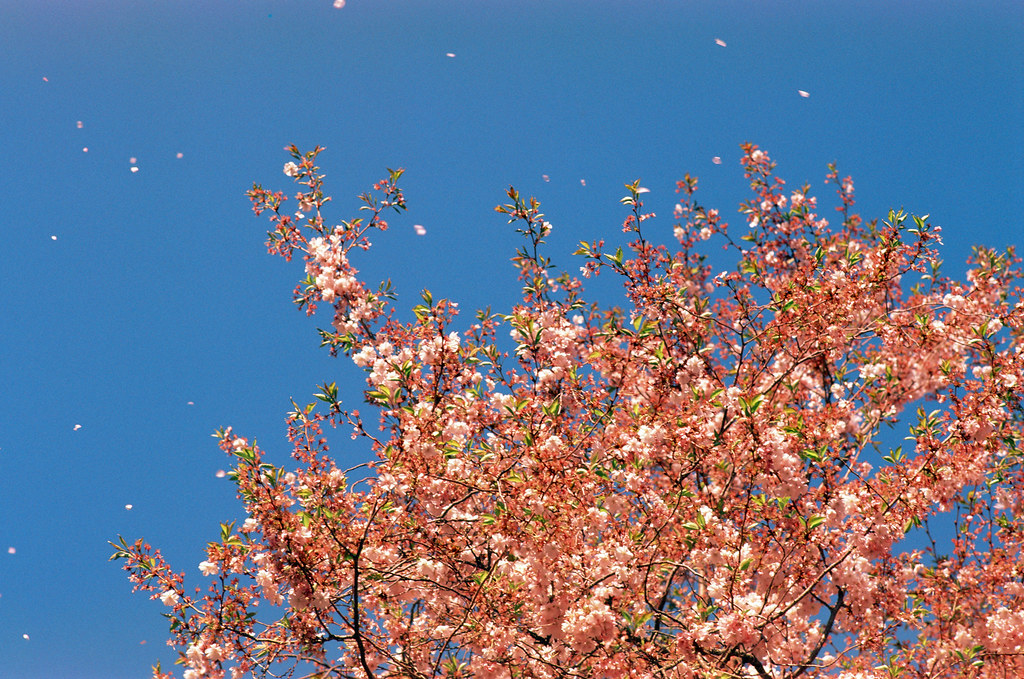
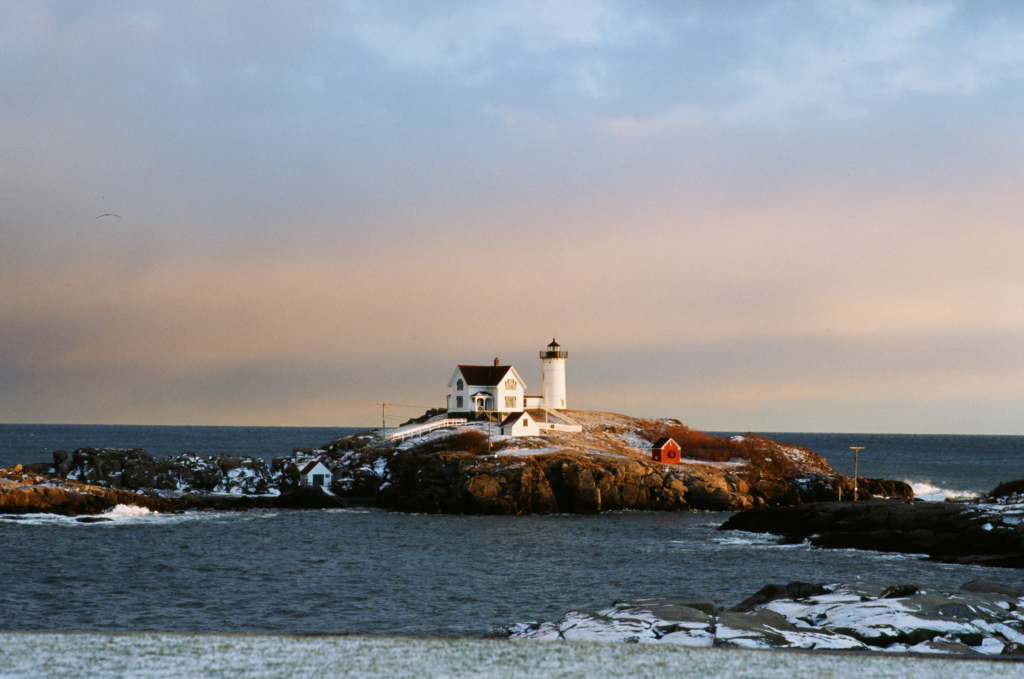
Reintroduced to the market in late 2018, Ektachrome E100 has become the industry standard for those returning to slide film. It is widely regarded as having the most generous exposure latitude of any current reversal film. It excels at capturing subtle, pastel tones and maintains highlight detail better than its competitors. For photographers transitioning from digital or color negative film, Ektachrome is the recommended starting point due to its relative stability.
Fujifilm Provia 100F (RDP III)
Provia 100F is marketed as a professional, multi-purpose film. It is known for its exceptional sharpness and fine grain. While it is slightly less forgiving than Ektachrome, it provides a more neutral color balance and is highly prized for fashion and product photography. However, due to Fujifilm’s recent restructuring of its imaging divisions, Provia has become increasingly difficult to source in Western markets, leading to significant price premiums.

Fujifilm Velvia 50 and 100
Velvia is the most specialized—and difficult—slide film to master. With extremely high saturation and high contrast, it is the favorite of landscape photographers. However, its dynamic range is notoriously narrow. Even a half-stop error can result in a ruined frame. Velvia 50, in particular, is known for its "reciprocity failure" during long exposures, requiring complex calculations for any shot longer than one second.
Market Trends and the Future of Analog Precision
The resurgence of analog photography has led to a "flight to quality." As digital photography becomes increasingly automated through AI and computational processing, a segment of the market is moving toward the deliberate, manual process of shooting slides. This trend is supported by the "tactile" value of the final product—a positive transparency that can be viewed on a light table or projected onto a screen.

Data from film manufacturers suggests that while the volume of film produced is a fraction of its 1990s peak, the demand for "premium" experiences is rising. This has prompted companies like Kodak Alaris to invest in revitalizing their E-6 chemical lines.
The broader implication of this shift is the professionalization of the hobbyist. To shoot slide film successfully in 2024 is to demonstrate a high level of technical proficiency. It requires an understanding of physics, chemistry, and the mechanics of light that digital systems have largely rendered invisible.
Conclusion
Mastering the metering of slide film is more than a technical hurdle; it is a necessary evolution for the modern analog photographer. By moving away from the wasteful practice of bracketing and embracing the precision of spot metering and manual calculations, photographers can ensure the longevity of their practice in a high-cost environment. The rewards of this discipline are found in the unique depth, color, and clarity of the color reversal image—a medium that remains, for many, the pinnacle of photographic expression. Through careful practice and a respect for the limited latitude of the medium, the "fear" of slide film can be replaced by a consistent, professional methodology that honors the heritage of the craft.