The 2026 FIFA World Cup represented a watershed moment for North American sports, expanding to a 48-team format and utilizing 16 host cities across Canada, Mexico, and the United States. For professional photojournalists, the tournament was not merely a display of elite athleticism but a grueling test of logistical planning, technical proficiency, and endurance. The transition from the 1994 World Cup—the last time the United States hosted the event—to the 2026 iteration highlighted a radical shift in media consumption, technology, and the global stature of soccer within the American market. What was once a "strange foreign thing" to domestic audiences in the 1970s has evolved into a cornerstone of the North American sporting calendar, culminating in a month-long event that transformed cities like Dallas and Houston into global epicenters of "fandom."
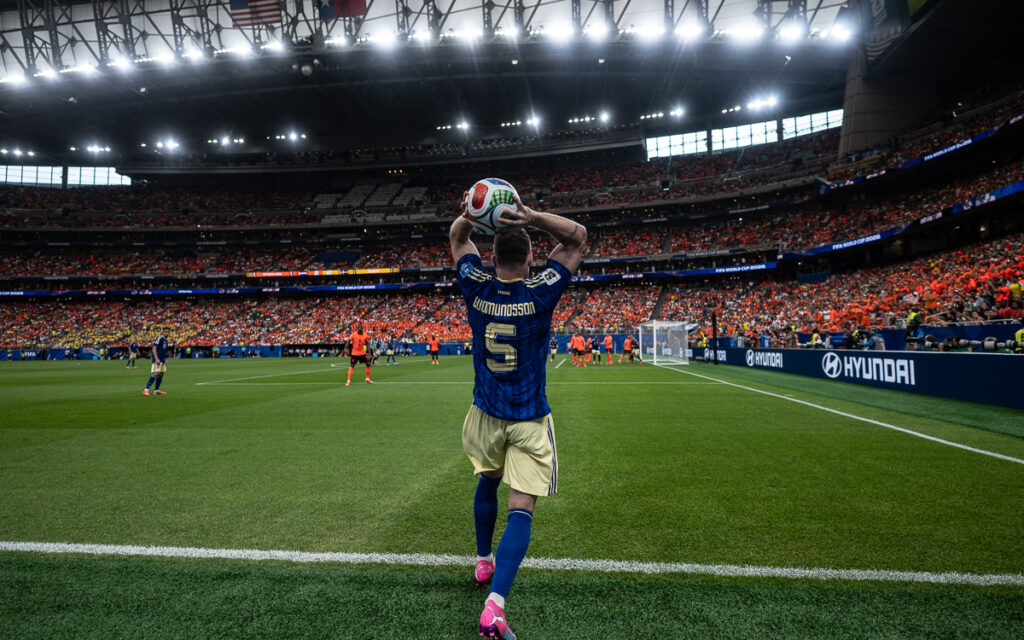
The Evolution of Soccer Photojournalism in North America
The historical context of soccer photography in the United States provides a necessary lens through which to view the 2026 tournament. During the 1970s, the sport existed on the periphery of the American consciousness. Early photographers relied on analog systems, such as the Minolta SRT 101, and operated in an era devoid of real-time digital transmission or social media. The 1994 World Cup served as the initial catalyst for change, introducing the American public to the scale of international soccer. However, the true professional shift occurred with the advent of high-speed internet and the "Messi Effect."
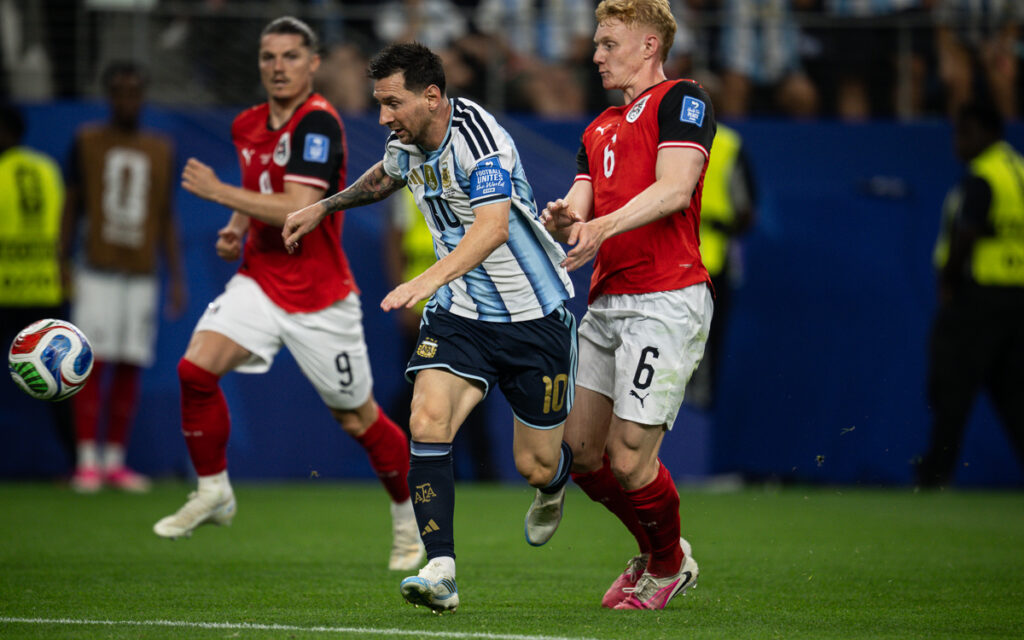
The arrival of Lionel Messi to Major League Soccer (MLS) with Inter Miami served as a professional precursor for many photographers preparing for the 2026 World Cup. The heightened media interest surrounding Messi’s first road games, such as his appearance against FC Dallas, forced local media outlets to elevate their coverage standards. For regional publications like the Dallas Observer, this era necessitated a transition from general event coverage to specialized sports photojournalism. This period allowed photographers to build the necessary portfolios and professional networks required to meet FIFA’s stringent accreditation standards.
Navigating the FIFA Accreditation and Approval Process
Securing a position on the sidelines of a World Cup match is a multi-tiered bureaucratic challenge. FIFA’s media operations are categorized by extreme exclusivity and a rigid hierarchy. The process for the 2026 tournament began approximately three months prior to the opening match with the opening of the FIFA Media Hub.
The Tiered Accreditation System
Accreditation is not guaranteed and is based on a variety of factors:
- Organization Standing: National and international wire services (e.g., Associated Press, Getty Images, Reuters) receive priority.
- Regional Relevance: Local outlets in host cities, such as Dallas or Houston, are granted secondary consideration for matches within their jurisdictions.
- Country of Origin: Media representatives from nations participating in the tournament are often prioritized to ensure global coverage.
- Portfolio Verification: Photographers must provide evidence of current photo passes and links to recently published work in recognized outlets.
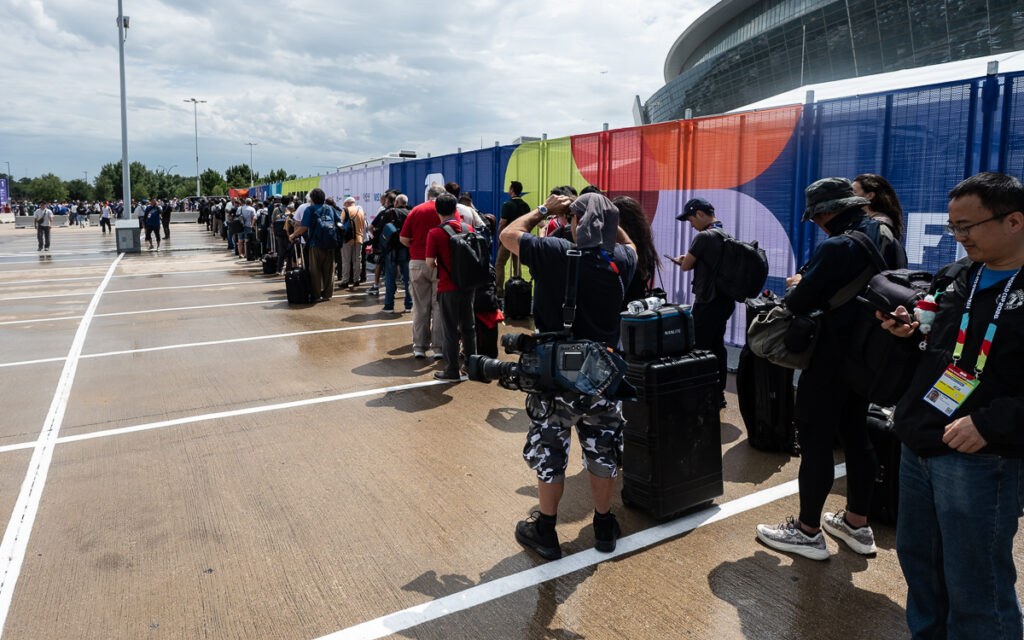
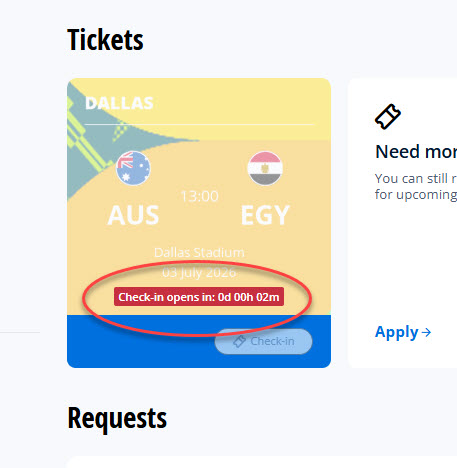
Even after obtaining general accreditation, photographers must apply for individual "Match Day Passes" for every game. For the 2026 tournament, FIFA utilized a dedicated application portal where approvals were often withheld until the final week before a match. This "just-in-time" approval process created significant logistical tension for media organizations, particularly for knockout stage games where the participants are not determined until days before kickoff.
Technical Logistics: The Seating Assignment "Group of Death"
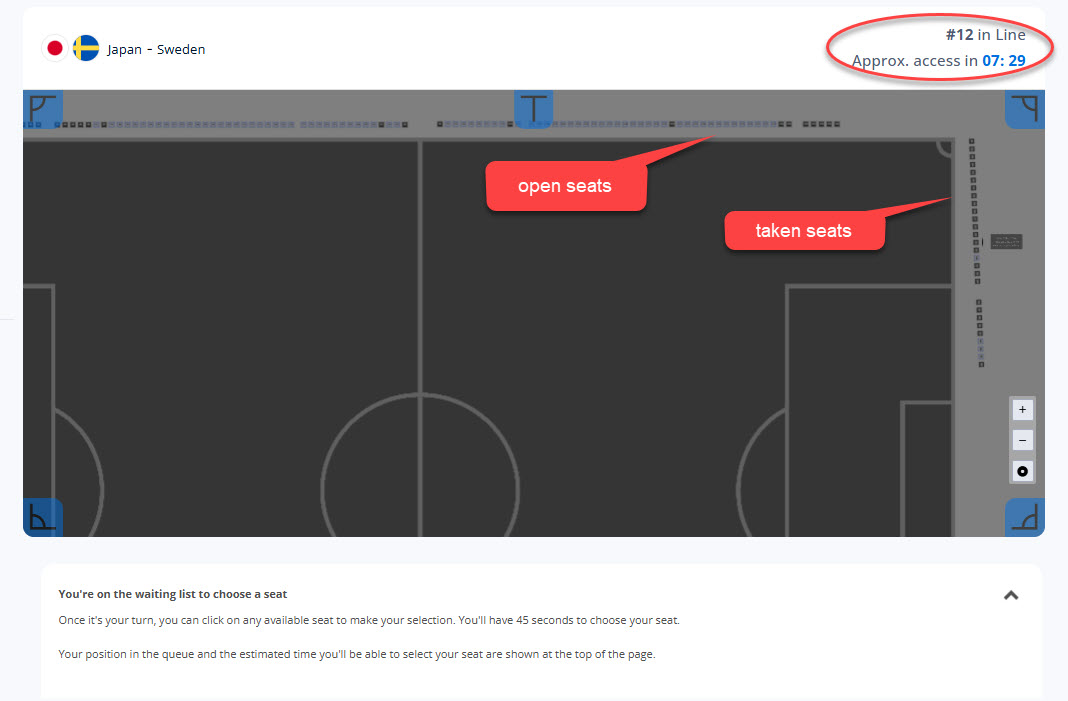
Once a photographer is approved for a match, the final hurdle involves the seating assignment. In the 2026 World Cup, FIFA implemented a digital seating selection system divided into three priority tiers: Groups A, B, and C.
- Group A: Reserved for major global wire services. These photographers have the first pick of seats, usually 24 hours before kickoff.
- Group B: Comprised of regional media and secondary agencies.
- Group C: Independent photographers and smaller publications.
The most coveted positions are the corners adjacent to the team benches, which provide the optimal angle for goal celebrations and bench reactions. In the high-stakes environment of World Cup photography, the difference between a Group A and Group B designation can be the difference between a world-class action shot and a blocked view.
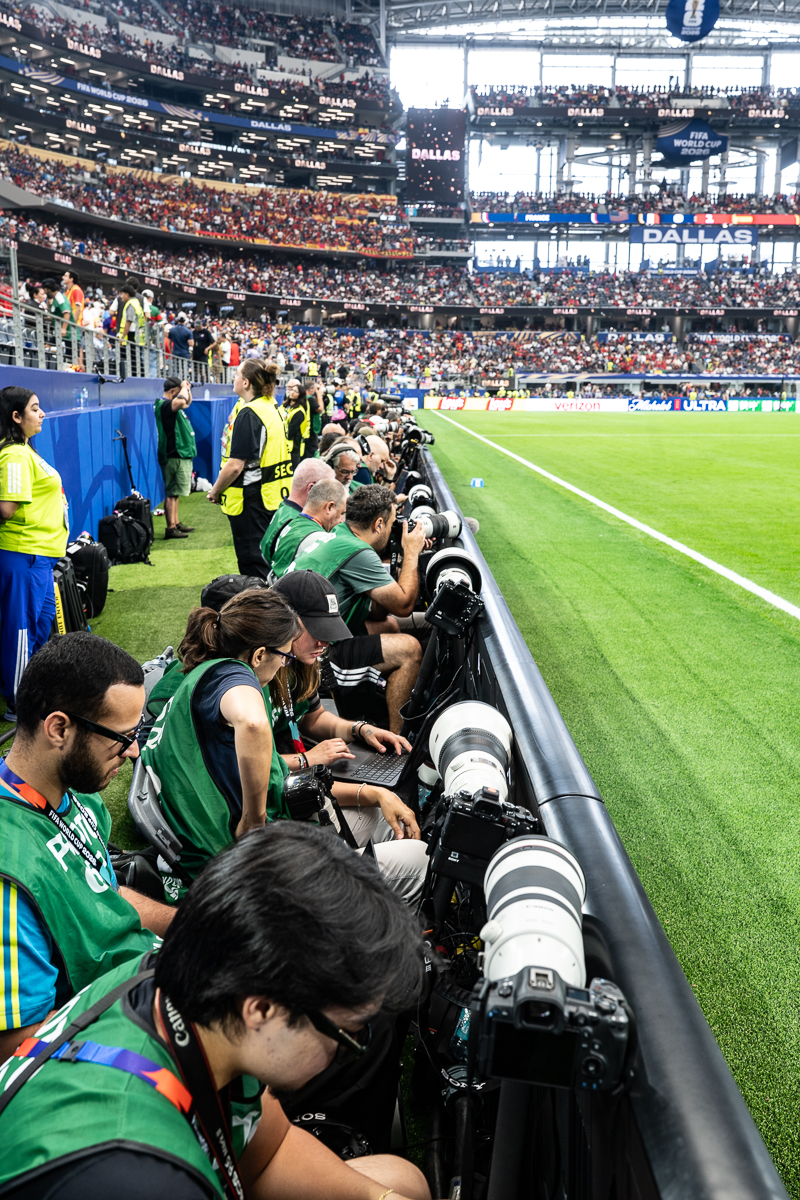
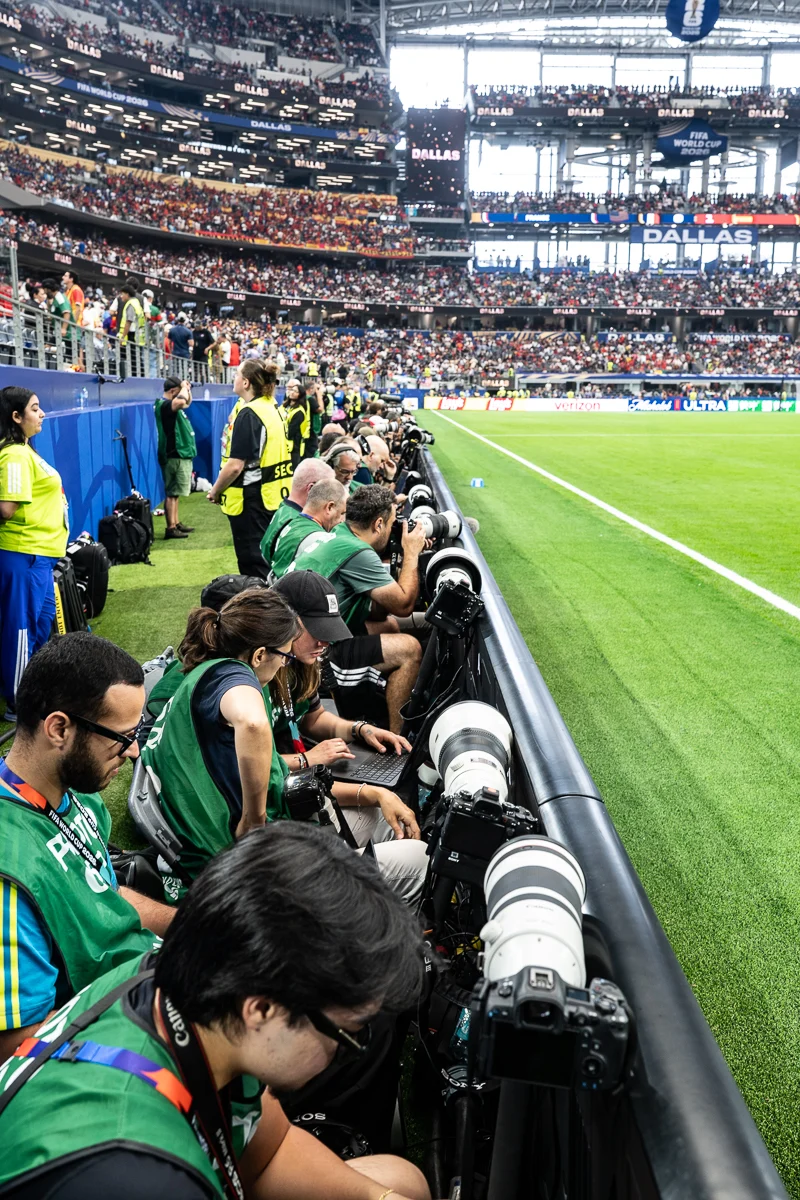
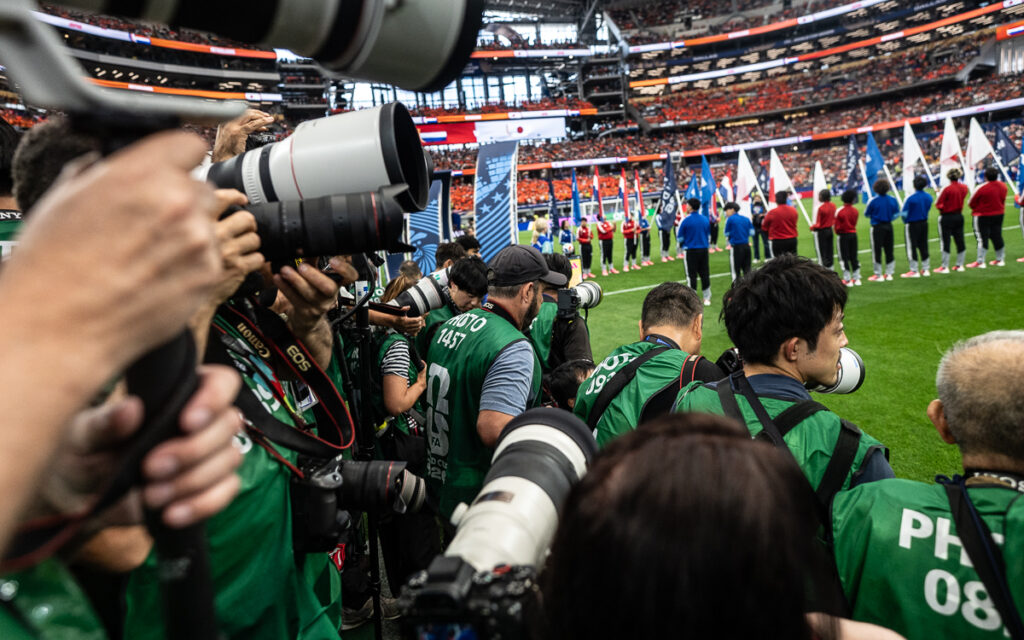
Furthermore, the physical architecture of American football stadiums—originally designed for a narrower field of play—presented unique challenges. To accommodate FIFA’s wider pitch requirements, sidelines were often moved closer to the stands, resulting in cramped "economy-class" seating for the 100 to 150 photographers present at each match. Photographers were required to remain in their assigned seats for the duration of the match, often packed shoulder-to-shoulder with thousands of dollars of equipment.
Equipment and Technical Specifications
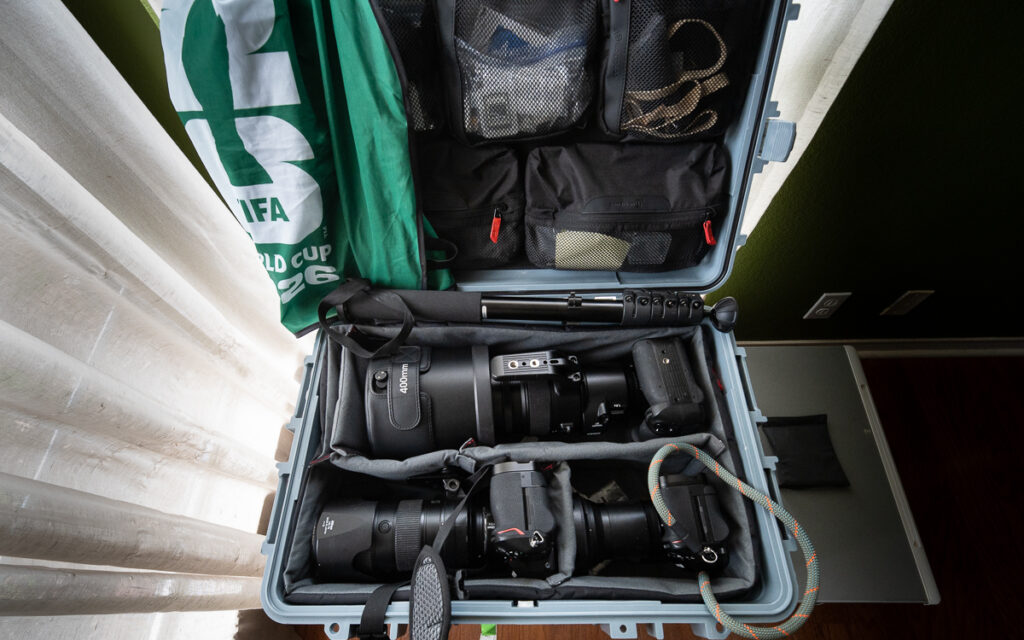
The 2026 tournament demanded the highest tier of photographic technology. Professionals typically utilized a three-camera setup to ensure coverage across all focal lengths:
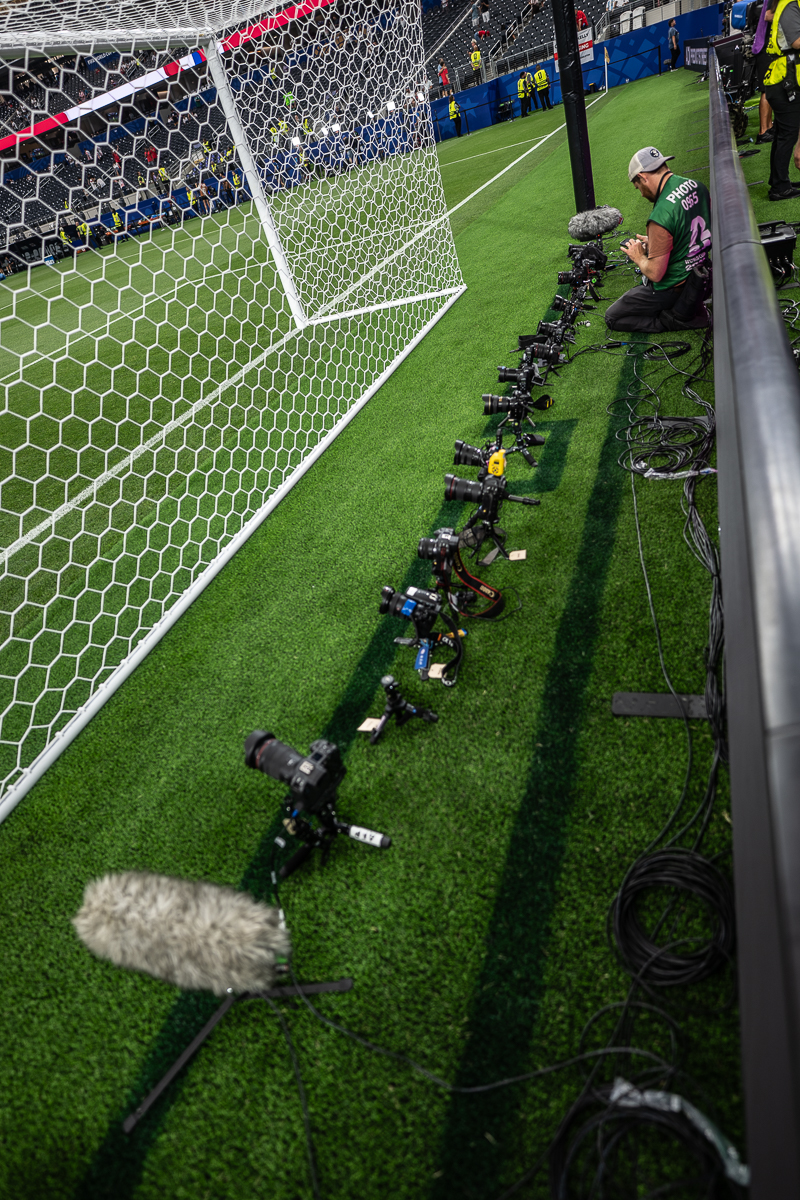
- Primary Body: High-speed mirrorless systems like the Nikon Z9, often paired with a 400mm f/2.8 lens. The integration of built-in teleconverters proved essential for reaching action at the far end of the pitch, effectively extending the focal length to 560mm.
- Secondary Body: A Nikon Z8 or equivalent, equipped with a 70-200mm zoom lens for mid-range action and near-field plays.
- Wide-Angle Body: A Nikon Z6iii or similar, with a 20mm or 35mm lens for crowd shots, national anthems, and wide-angle stadium views.
In addition to cameras, the modern World Cup photographer must manage a mobile workstation. Wired internet connections at each seat allowed for the real-time transmission of images to editors, a necessity in an era where social media demands instant updates.
Chronology of Key Match Moments and Fan Engagement
The 2026 World Cup in Texas was defined by several high-profile matchups that showcased the tournament’s expanded reach.
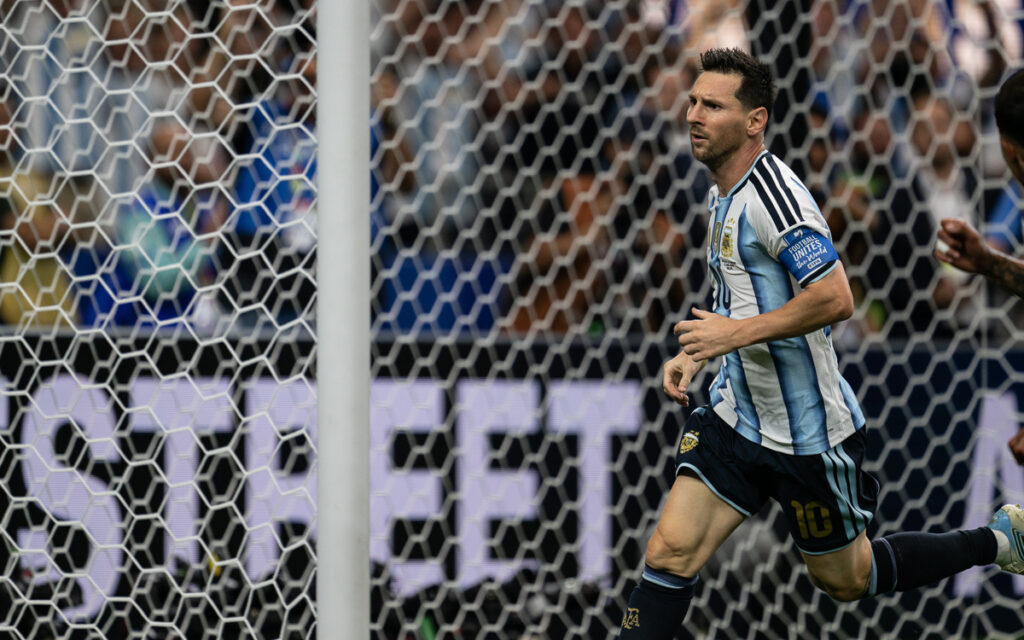
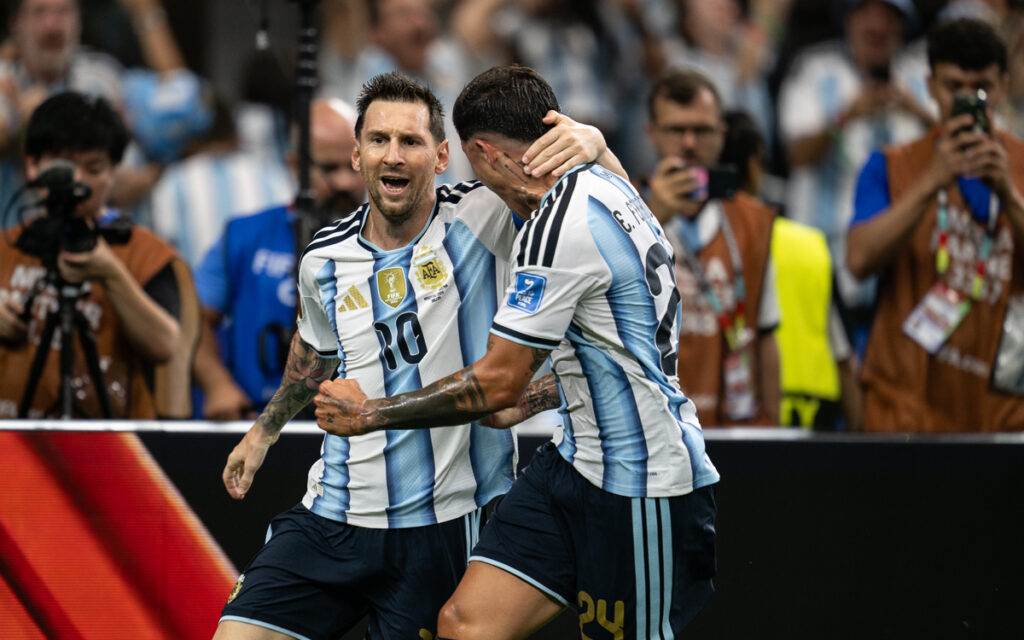
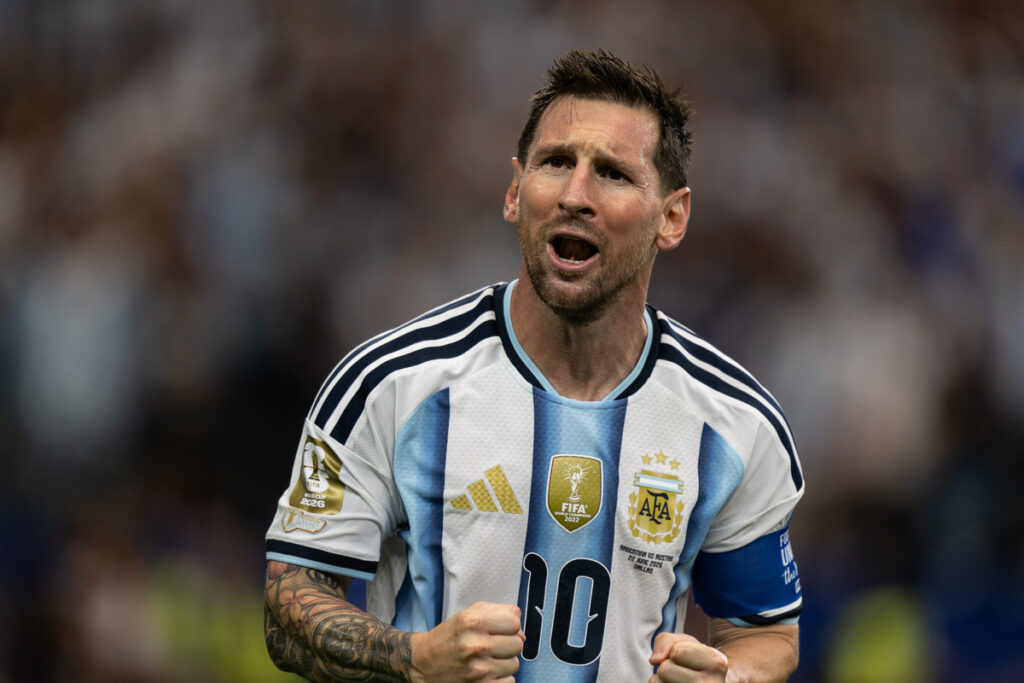
- The Argentina Surge: Driven by the lingering momentum of their 2022 victory, Argentina fans flooded Dallas and Houston. Lionel Messi’s presence continued to be a focal point, with the legendary forward briefly becoming the all-time World Cup goal leader during the tournament’s early stages.
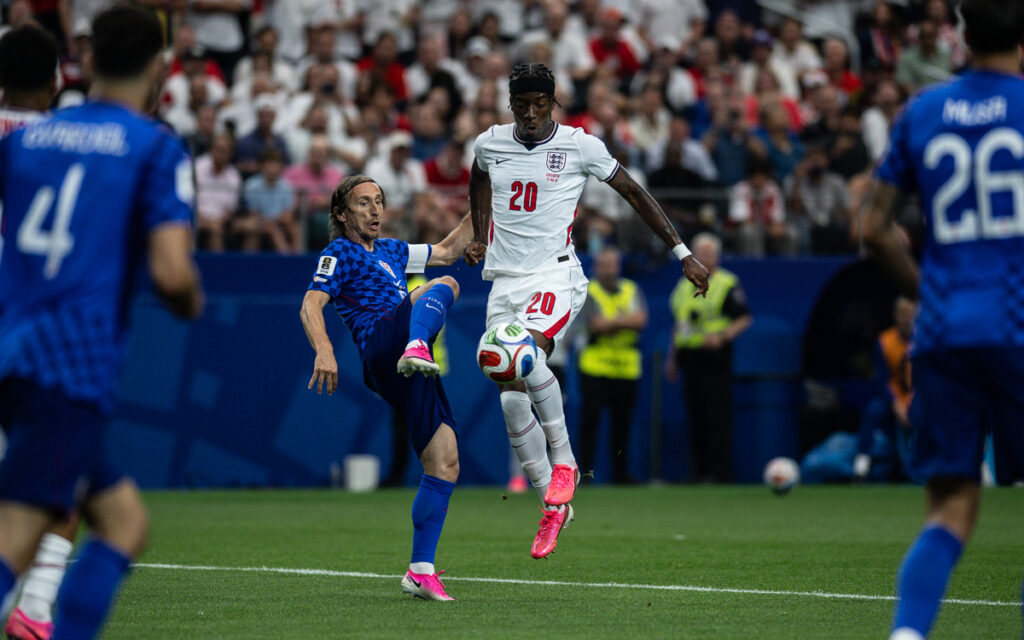
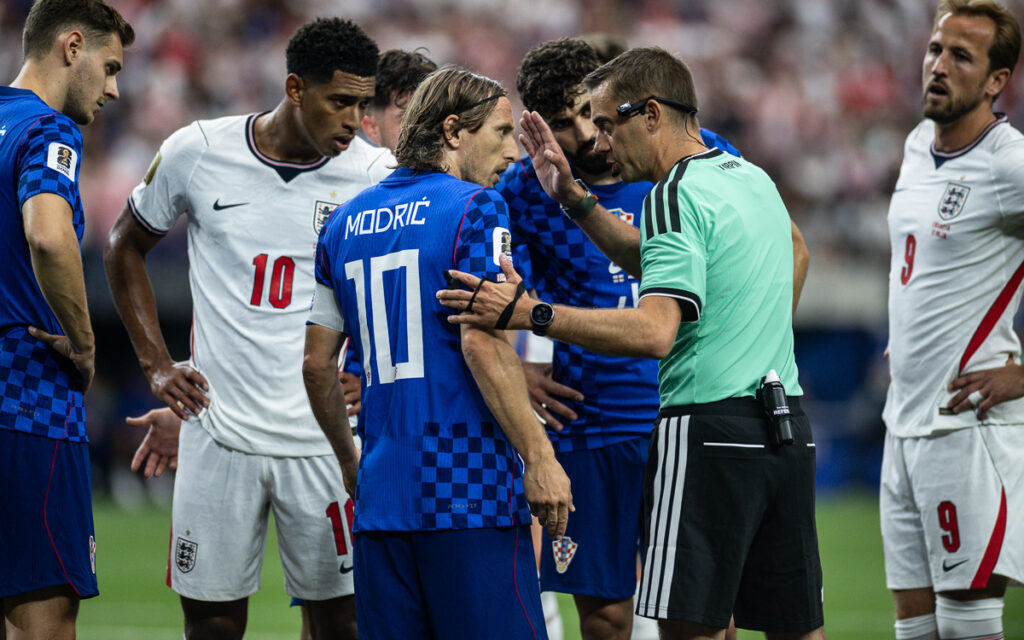
- European Giants in Texas: Matches such as England vs. Croatia and Portugal vs. Spain drew massive international crowds. The England-Croatia match was particularly notable for a dramatic Harry Kane penalty sequence and the presence of stars like Jude Bellingham and Luka Modrić.
- The Rise of Norway: Erling Haaland’s performance against the Netherlands highlighted the physical evolution of the sport, with the striker’s aerial ability providing iconic imagery for the press corps.
- The Final Act: The Dallas assignment concluded with Spain’s victory over Kylian Mbappé and France, a match that epitomized the tactical sophistication of the modern game.
Beyond the pitch, the "Fan Fest" locations in Dallas and Houston became cultural hubs. The 2026 tournament saw an unprecedented level of international tourism in the American South. Japanese supporters, known as the "Nissan Ultras," gained widespread respect for their passionate chanting and their tradition of cleaning the stadium sections after matches. Meanwhile, the strong local Mexican fan base ensured that "El Tri" jerseys were a ubiquitous sight, regardless of which teams were playing.
Analysis of Broader Impacts and Legacy
The 2026 FIFA World Cup is projected to have a long-term impact on the North American sports landscape. From a media perspective, the tournament forced a rapid professionalization of soccer coverage among local outlets. The logistical frameworks established by FIFA—though described by some participants as navigating "Dante’s circles of hell"—provided a blueprint for handling massive international events in American venues.
Economic data suggests that host cities saw a significant boon in the hospitality and service sectors. International visitors embraced local culture, famously "drinking all the beer and eating up barbecue" while purchasing traditional Texas attire like cowboy hats.
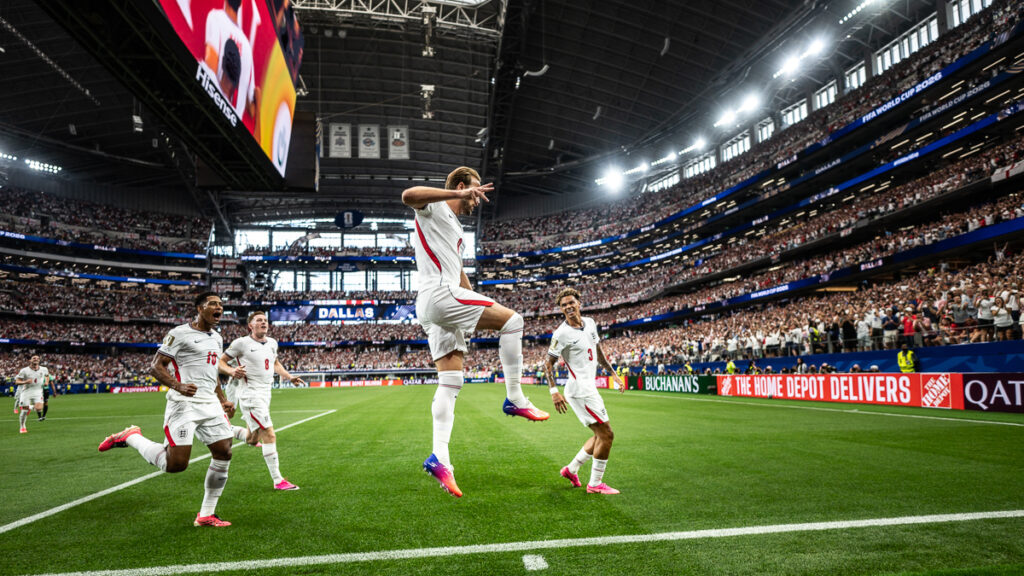
For the photographers involved, the event represented the pinnacle of a career. The sheer density of talent on the field—featuring the likes of Mo Salah, Cristiano Ronaldo, and Kylian Mbappé—meant that every match offered the potential for a "once in a lifetime" shot. As the tournament concluded, the focus shifted toward the legacy of these images, which serve as the primary historical record of the largest World Cup ever staged. The successful execution of the 2026 event has solidified the United States’ position as a premier destination for global soccer, likely paving the way for future international competitions and a continued evolution in sports photojournalism.