The traditional creative process has long venerated the "blank canvas" as the ultimate symbol of artistic purity and original thought. In the context of modern commercial marketing, however, the blank canvas is increasingly viewed as a liability—a source of significant overhead, delayed timelines, and escalating production costs. As the digital landscape demands an unprecedented volume of visual content across a multitude of platforms, the industry is undergoing a fundamental shift. The emerging standard for high-velocity creative departments is no longer to build from nothing, but to utilize professional stock media as a foundational layer, enhanced by artificial intelligence to bridge the gap between a generic asset and a campaign-ready masterpiece.
The Economic Burden of the Blank Canvas
In contemporary marketing, "starting from zero" involves a hidden chain of logistical and financial decisions. Before a single usable asset is produced, teams must account for art direction, talent scouting, location permits, equipment rentals, and the time-intensive process of post-production. While this level of bespoke production remains necessary for high-stakes brand identity work, it is often unsustainable for the day-to-day requirements of digital engagement.
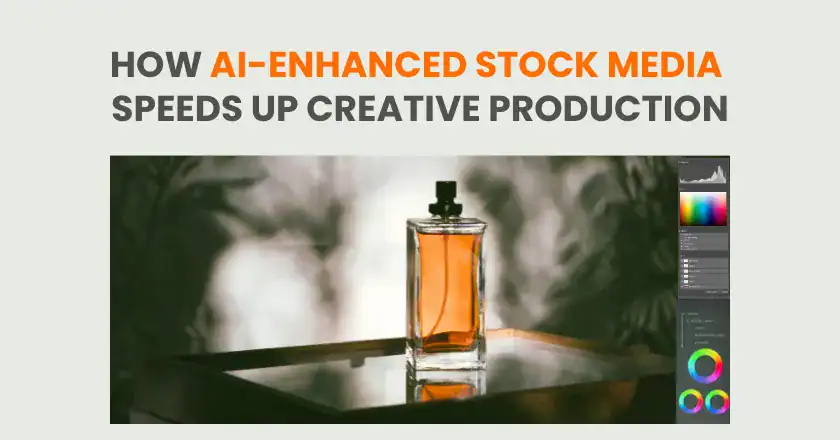
A single marketing campaign in 2024 may require dozens, if not hundreds, of unique assets. These include hero images for websites, diverse aspect ratios for social media platforms like TikTok and Instagram, banners for email marketing, display ads for programmatic networks, and localized visuals for international markets. When designers are forced to create each of these from scratch, they become bogged down in repetitive production tasks—such as manual cropping, background reconstruction, and file resizing—rather than focusing on the high-level strategy and creative differentiation that drives consumer behavior.
Chronology: The Evolution of Visual Sourcing
To understand the current AI-driven shift, it is essential to trace the timeline of how creative assets have been sourced over the last century:
- 1920s–1980s: The Physical Era. Stock photography began with physical archives. Creative agencies would browse printed catalogs and order physical transparencies or prints via mail. The process was slow, expensive, and limited by physical inventory.
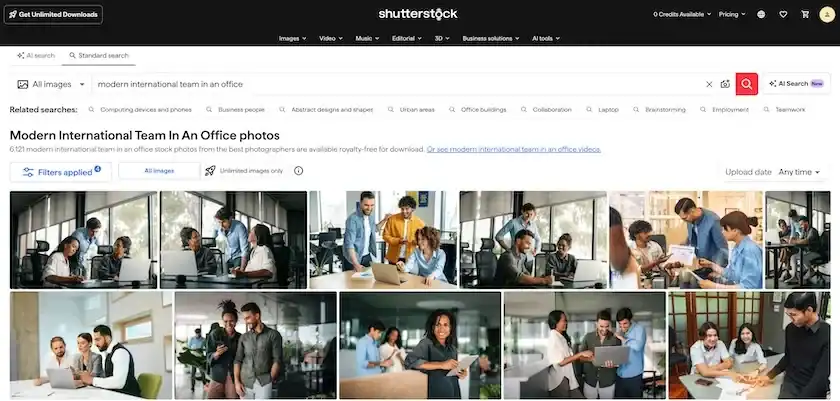
- 1990s–2000s: The Digital Revolution. The advent of the internet led to the rise of digital stock libraries. Agencies like Getty Images and later Shutterstock democratized access to professional photography, allowing for instant downloads. This significantly reduced the need for custom shoots for generic imagery.
- 2010s: The Era of Scale. As social media platforms proliferated, the demand for content exploded. Stock libraries expanded into the tens of millions of assets, including video, vectors, and music. Search algorithms became the primary tool for designers.
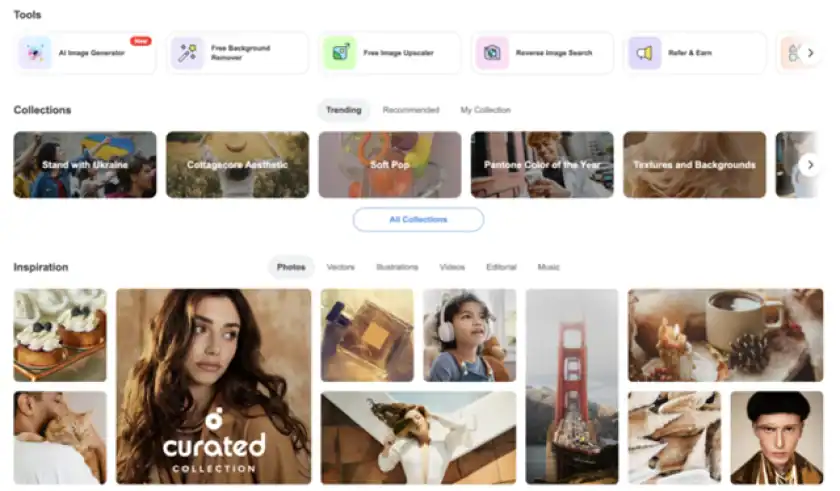
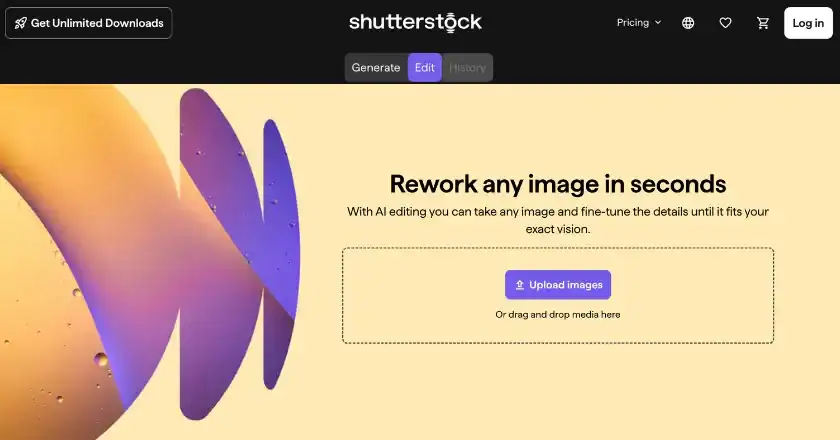
- 2022–Present: The AI-Enhanced Integration. The introduction of generative AI marked a paradigm shift. Rather than just being a repository of finished files, stock platforms began integrating AI tools—such as generative fill, outpainting, and variation engines—directly into their libraries. This allows a professional asset to serve as a "starting layer" that can be infinitely modified.
Supporting Data: The Rising Demand for Content Velocity
The transition toward AI-enhanced stock media is driven by a measurable increase in content demand. According to industry reports from McKinsey & Company, companies that utilize AI in their creative workflows see a potential 20% to 50% increase in content output without a corresponding increase in budget. Furthermore, a 2023 Gartner study indicated that 60% of CMOs are prioritizing "content velocity"—the speed at which content is conceived, produced, and deployed—as a key performance indicator.

The sheer volume of formats required for a standard cross-channel campaign illustrates the problem. A single "hero" concept must often be adapted into:
- Horizontal (16:9): YouTube, Desktop Web, Presentations.
- Square (1:1): Instagram Feed, LinkedIn, Facebook.
- Vertical (9:16): TikTok, Reels, Stories.
- Banner (various): Email headers, Leaderboard ads.
Historically, if a designer found a perfect horizontal stock photo but needed it for a vertical Story, they would have to search for a new image or attempt a "tight crop" that often ruined the composition. AI-enhanced tools like "Generative Expand" now allow designers to use the original professional asset and "grow" the edges of the image to fit any format, maintaining the lighting, texture, and style of the original photographer’s work.
Official Responses and Industry Sentiment
While the integration of AI has caused some apprehension among traditional photographers, the consensus among major stock agencies and marketing executives is one of "co-creation." Paul Hennessy, CEO of Shutterstock, has frequently emphasized that AI should be viewed as a tool to unlock human potential rather than replace it. The company’s strategy involves compensating the original contributors whose work trains the AI models, ensuring an ethical loop that sustains the professional creative community.

Design directors at major global agencies have noted that AI-enhanced stock media solves the "80/20" problem. "AI handles the 80% of the work that is purely technical—resizing, retouching, and expanding backgrounds," says one creative lead at a New York-based firm. "This leaves the remaining 20% for the humans to apply their taste, brand voice, and emotional resonance. We are moving from being ‘pixel pushers’ to being ‘creative curators’."
The Impact on Global Localization and Testing
One of the most significant implications of this technology is in the realm of international marketing. A global brand may have a central campaign concept that needs to resonate in Tokyo, London, and São Paulo. Traditionally, this would require three separate photo shoots to ensure cultural relevance in terms of talent, clothing, and environment.
With AI-enhanced stock media, a "modular production" model becomes possible. A team can select a base professional image and use AI-assisted editing to swap out specific elements—such as a background city skyline or the specific items on a desk—to localize the asset for different regions. This ensures that the overarching brand aesthetic remains consistent worldwide while still respecting local cultural nuances.
Furthermore, AI-driven workflows have revolutionized A/B testing. Performance marketers can now generate five variations of a single ad—changing the background color, the placement of the subject, or the lighting—in a matter of minutes. This allows for data-driven creative optimization where the "winning" visual is determined by actual audience engagement rather than subjective boardroom opinions.
Broader Implications: The Hybrid Future of Creativity
The rise of AI-enhanced stock media does not signal the end of professional photography or illustration. On the contrary, it reinforces the value of "strong source material." Generative AI is highly effective at modification, but it still struggles with the intentionality, lighting, and authentic human emotion that a professional photographer provides. An AI can expand a background, but it cannot "invent" the soul of a high-quality portrait.
Consequently, the future of creative production is a hybrid model. In this ecosystem:
- Professional Creators provide the high-quality, technically sound "raw materials" or "seeds."
- AI Tools provide the flexibility, speed, and scalability required for modern distribution.
- Human Designers provide the strategic oversight, brand alignment, and final judgment.
This shift represents a maturation of the creative industry. By removing the necessity of starting from scratch for every minor social media post or display ad, AI-enhanced stock media allows the industry to keep pace with the "always-on" nature of the digital economy. The productivity gains are not just about saving money; they are about reclaiming time for the high-level creative thinking that truly moves the needle for brands.
Conclusion: Efficiency as a Creative Catalyst
The move away from the blank canvas is an admission that in a world of infinite content, efficiency is no longer an administrative concern—it is a creative necessity. As AI continues to integrate more deeply into the libraries of platforms like Shutterstock, the distance between a creative brief and a multi-channel campaign deployment will continue to shrink.
The most successful marketing teams of the next decade will likely be those that master the art of the "fast start." By leveraging the combined power of human-made professional media and machine-driven adaptation, these teams will be able to produce content that is not only faster and cheaper but also more relevant, more localized, and more effective at capturing the dwindling attention spans of the modern consumer. The blank canvas may still hold a place in the museum, but in the marketing agency of the future, the "smart start" is the new gold standard.