
Technical Specifications and Engineering Heritage of the Minox 35 GT
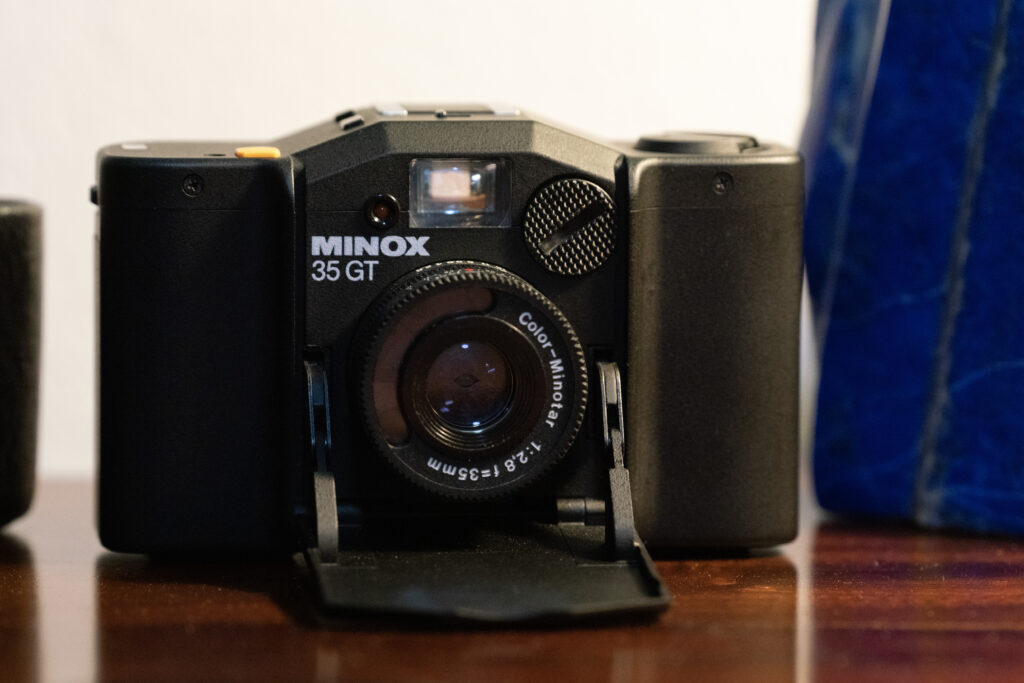
The Minox 35 series holds a prestigious position in the history of photographic equipment, often cited as one of the smallest full-frame 35mm cameras ever produced. The 35 GT model is constructed from Makrolon, a fiberglass-reinforced polycarbonate that provides a high strength-to-weight ratio. This choice of material allows the camera to remain lightweight—weighing approximately 200 grams—without sacrificing structural integrity. The hallmark of the device is its 35mm f/2.8 lens, which utilizes a four-element, three-group Tessar-type design. This optical configuration is celebrated for its edge-to-edge sharpness and minimal distortion, qualities that are often unexpected in a camera of such diminutive proportions.
The camera operates primarily through a zone-focusing system, requiring the photographer to estimate the distance to the subject. This manual interaction is balanced by an advanced aperture-priority exposure system. The shutter speed is determined electronically by a Cadmium Sulfide (CdS) light meter located just above the lens element. While the CdS meter was industry-standard during the late 20th century, modern users often note its susceptibility to degradation over time. However, a functional GT meter provides accurate readings that are generally center-weighted, ensuring that the primary subject in the middle of the frame is correctly exposed.

One of the most practical updates for the modern era is the camera’s compatibility with contemporary power sources. While originally designed for mercury-based batteries that are now environmentally regulated and largely unavailable, the Minox 35 GT can be operated using four LR44 alkaline batteries or two CR1/3N lithium batteries with minor adjustments to the battery chamber. This adaptability has ensured the camera’s continued relevance in the second-hand market, where it is frequently sought after by street photographers who value discretion and portability.
The Chemical Composition and Versatility of Kodak Ultramax 400
Kodak Ultramax 400 serves as the quintessential "all-purpose" film within the Kodak consumer lineup. Positioned as a more versatile alternative to the entry-level Kodak Gold 200, Ultramax 400 features a higher ISO rating, which translates to increased sensitivity to light. This sensitivity is achieved through Kodak’s proprietary grain technology, which allows for finer detail than typical 400-speed consumer films while maintaining the "punchy" saturation and warm skin tones for which Kodak is renowned.
The film’s color palette is characterized by a distinctive warmth, though it exhibits a more nuanced rendering of greens and blues compared to its lower-speed counterparts. Its primary advantage in a technical context is its exposure latitude; the film can typically handle several stops of overexposure and a moderate amount of underexposure without a total loss of detail in the highlights or shadows. This makes it an ideal companion for a camera like the Minox 35 GT, which relies on a vintage metering system that may not always be perfectly calibrated to modern standards. The ISO 400 rating also permits higher shutter speeds, which is essential for a camera that lacks internal stabilization and is often used for "run-and-gun" street photography.
Chronological Field Observations: Performance in Diverse Lighting
In a series of field tests conducted across various locations, the Minox 35 GT and Kodak Ultramax 400 were subjected to different lighting conditions and subject matters to evaluate their combined performance. These observations provide a comprehensive look at how the hardware and film emulsion interact in real-world scenarios.
Case Study 1: High-Activity Street Scenes (The Flea Market)
During an assessment at a local flea market, the combination was used to capture high-contrast environments filled with intricate details. The flea market setting, characterized by a mix of shaded stalls and bright open-air aisles, tested the CdS meter’s ability to navigate complex lighting. The resulting images demonstrated the center-weighted nature of the Minox’s metering. In one instance, the camera successfully prioritized the mid-tones of a subject’s face over the darker garments worn by surrounding individuals. The Kodak Ultramax 400 complemented this by providing a vibrant color response that captured the eclectic nature of the market goods, from rusted metal to weathered paper postcards.
Case Study 2: Architectural and Static Subjects (The Archaeological Courtyard)
The duo was further tested at the National Archaeological Museum, specifically in the outdoor courtyard housing eroded Greek statuary. This environment provided a study in texture and tonal transition. The 35mm f/2.8 lens captured the fine erosions on the stone surfaces with impressive clarity. Here, the film’s color rendition played a crucial role; the interaction between the warm sunlight hitting the marble and the cool greens of the surrounding foliage highlighted the film’s balanced palette. The subtle rendering of the "cool greens" mentioned by technical reviewers was evident, providing a sophisticated look that elevated the consumer-grade film to a more professional aesthetic.

Case Study 3: Low-Light and High-Motion Environments (Twilight Flags)
A critical test of the ISO 400 rating occurred during twilight, capturing flags fluttering in the wind from a moving vehicle. The ISO 400 speed allowed for a sufficiently fast shutter speed to freeze the motion of the fabric while maintaining enough depth of field to keep the background legible. This scenario highlighted a specific advantage over ISO 200 films, which would likely have required a slower shutter speed, resulting in motion blur or underexposure. The grain structure of the Ultramax 400 became more apparent in the darker regions of the frame, adding a classic analog texture that is often praised by contemporary film photographers for its "organic" feel.
Case Study 4: Interior Lighting and High Dynamic Range (The Byzantine Church)
The interior of a Byzantine church provided a challenge in dynamic range, featuring dark indoor corners juxtaposed against bright outdoor light streaming through open arches. The Minox 35 GT’s metering system and the Kodak film’s latitude worked in tandem to preserve detail in both the ancient Greek pillars used in the church’s construction and the sunlit floor. This performance suggests that the combination is well-suited for travel photography where lighting conditions are unpredictable and often extreme.
Community Sentiment and Market Implications
The resurgence of interest in the Minox 35 series reflects a broader trend in the photographic community toward "pocketable full-frame" cameras. While modern digital alternatives exist, the tactile experience of the Minox—the mechanical "click" of the drawbridge and the manual winding of the film—offers a deliberate pace of photography that many find rewarding.

However, experts and long-time users often issue warnings regarding the reliability of the shutter mechanism. It is a well-documented fact that the Minox 35 GT shutter is entirely dependent on battery power; without a functional circuit, the camera becomes an inert object. This has led to a bifurcated market where "tested and working" units command a premium, while many others are sold for parts. The reliance on CdS cells also introduces a layer of unpredictability, as these cells can "drift" in accuracy over decades. Despite these flaws, the optical quality of the Color-Minotar lens continues to drive demand, often outperforming much larger and more expensive SLR lenses from the same era.
Broader Impact on the Analog Revival
The continued use of the Minox 35 GT and Kodak Ultramax 400 is emblematic of the "Analog Revival" that has seen film sales stabilize and grow over the last decade. The Minox represents a peak in miniaturization technology that has rarely been matched in the digital age, where sensors and batteries often dictate larger body sizes. For the modern photographer, this combination offers a bridge between the past and the present—using 40-year-old German optics to capture the world on a film emulsion that remains readily available at local pharmacies and specialized photo labs.
The environmental and historical implications of maintaining these devices cannot be overstated. By repairing and utilizing vintage Makrolon-bodied cameras, photographers participate in a form of technological preservation. Simultaneously, the use of versatile films like Ultramax 400 ensures that the medium remains accessible to a wide audience, preventing analog photography from becoming an exclusively elite or professional pursuit. As long as films like Ultramax are produced and cameras like the 35 GT are maintained, the unique aesthetic of 35mm film will continue to document the intersection of history, culture, and daily life with a clarity and warmth that digital sensors still struggle to replicate.