When my parents chose to move our small family from Saskatchewan to the remote Arctic and undertake the biggest adventure of our lives, we had to let go of certain comforts. Both my mother and father came from farming families and inherited the unyielding work ethic that serves as the backbone of Canada’s heartland. Still, we found joy in the simple pleasures afforded by society—easy access to family, mild summer evenings, and the predictable cycles of the seasons. Uprooting to the Arctic meant trading the familiar for the unknown, but I quickly found that the benefits of living closer to nature far exceeded what we left behind.
Since those early years, the best gifts in my life have always come from nature. After becoming a photographer, I used my camera to get closer to our wild kin. Wolves, penguins, lynx, sharks, and even the more elusive animals like spirit bears all became subjects of my lens. In my eyes, there is no greater privilege than living each day on a planet overflowing with more species and beauty than we could ever fully grasp. Of all the encounters I have shared with wildlife around the world, my experiences with whales, the true giants of Earth, have been some of the greatest gifts.
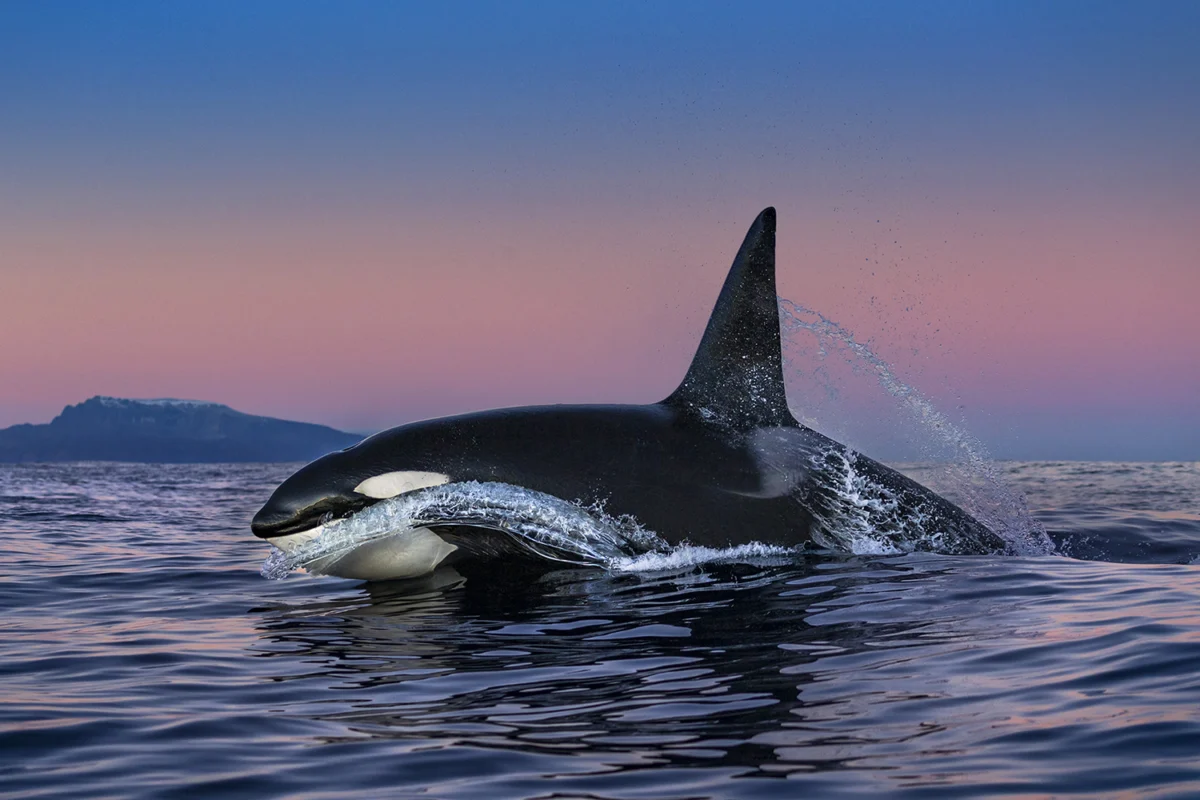
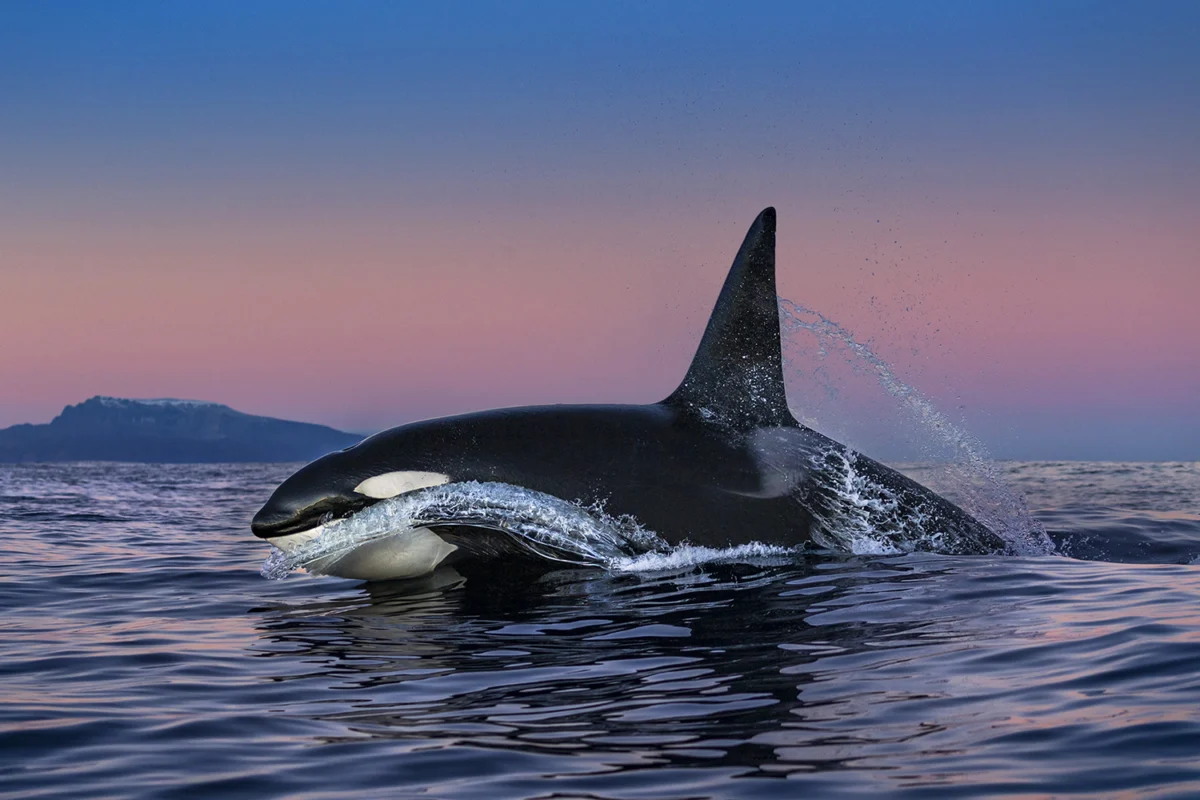
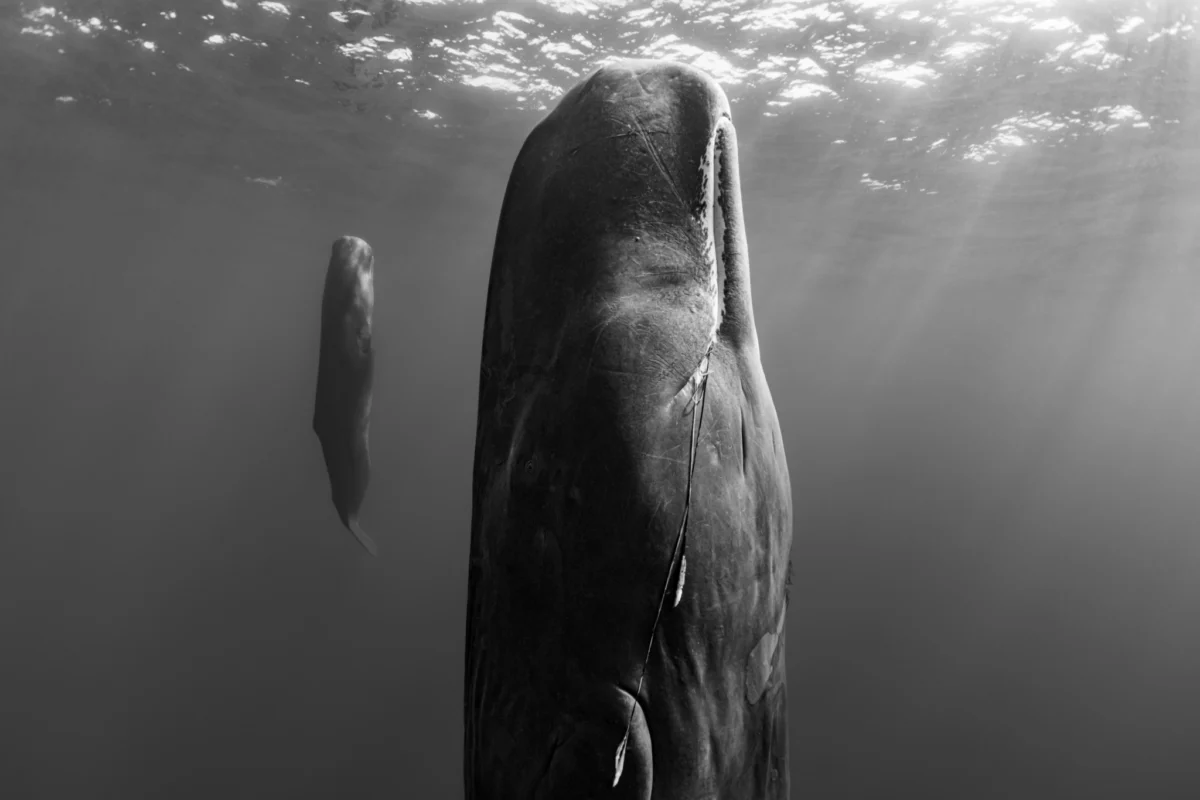
Like the Arctic wildlife I grew up with, such as wolves and polar bears, creatures like orcas and sperm whales inspire a mix of fear and awe in people. Despite their size and status as some of the ocean’s greatest hunters, there is no definitive record of orcas or sperm whales ever killing anyone. In fact, my own experiences have revealed their gentle nature and deep intelligence—a side that often goes unnoticed beneath the myths and misconceptions. Sperm whales, in particular, have garnered a reputation fueled in part by works of fiction, stories, and legends. Of all my encounters with whales, however, swimming with a pod off the coast of Dominica proved to be one of the most wholesome and eye-opening experiences of my life. Free-diving with a snorkel, I was able to get fairly close to a group dozing vertically in the water column. Sperm whales spend most of their time deep below the surface until they finally come up to breathe and rest, suspended with their heads pointed skyward.
The shoot was going well, with the matriarch and her group fully aware and comfortable with my presence. However, as I drifted up to catch my breath, I suddenly caught the attention of the youngest member in the group—a little calf affectionately dubbed “Ariel” by locals. Evidently bored from napping with her mom, Ariel made a beeline straight for me, and I suddenly found myself staring down a 20-foot baby whale charging at full speed. I braced myself as she opened her thankfully toothless mouth, and the next thing I knew, she was happily gumming my camera housing like an overgrown toddler. Years of experience around large, unpredictable wildlife allowed me to calmly backtrack until I could take a breath. Far from the sea monster that haunted Captain Ahab and his crew, Ariel was a bubbly, curious, and surprisingly gentle little whale.
The Arctic Exodus and the Seeds of a Deep Connection
The decision by the author’s parents to relocate from the plains of Saskatchewan to the stark, remote beauty of the Arctic marked a profound turning point for the family. This move, undertaken in the latter half of the 20th century, was not merely a geographical shift but a deliberate embrace of a life less ordinary, one intrinsically tied to the rhythms of the natural world. Saskatchewan, with its expansive agricultural landscapes and predictable seasonal shifts, provided a foundation of resilience and a strong work ethic, traits inherited from generations of farming. However, the Arctic presented a vastly different canvas, one demanding adaptation and a redefinition of "comfort."
The initial years in the Arctic were characterized by a conscious shedding of urban conveniences. Easy access to extended family, the temperate warmth of summer evenings, and the familiar cadence of agricultural cycles were replaced by the raw, untamed grandeur of the North. This transition, while challenging, fostered an immediate and profound appreciation for the simple, yet potent, gifts offered by the natural environment. The author’s early observations of Arctic wildlife, including wolves and polar bears, laid the groundwork for a lifelong fascination with the planet’s biodiversity. This formative experience underscores the principle that proximity to nature can cultivate a deep reservoir of strength and resilience, as posited by Rachel Carson’s enduring observation: "Those who contemplate the beauty of the earth find reserves of strength that will endure as long as life lasts."
The Evolution of a Wildlife Photographer: From Arctic Plains to Global Oceans
Emerging from this formative Arctic upbringing, the author embarked on a career that would allow for an even deeper immersion into the natural world: wildlife photography. This profession became a vehicle for intimate observation and documentation of a vast array of species. The lens of the camera served as an extension of the photographer’s innate curiosity, facilitating close encounters with animals ranging from the iconic to the exceptionally rare. Subjects included the primal presence of wolves, the sleek agility of penguins, the elusive grace of lynx, the formidable power of sharks, and the ethereal beauty of spirit bears. This photographic pursuit solidified a core belief: the unparalleled privilege of inhabiting a planet teeming with an almost incomprehensible diversity of life and natural splendor.
The author’s photographic journey has spanned continents and ecosystems, but particular emphasis has been placed on interactions with whales. These colossal marine mammals, often perceived as enigmatic and awe-inspiring, represent some of the most significant encounters in the photographer’s career, embodying the profound gifts that nature offers.

Dispelling Myths: The Gentle Giants of the Deep
The perception of large marine predators, such as orcas and sperm whales, is often colored by a blend of primal fear and profound admiration. This apprehension is understandable given their size, predatory prowess, and their status at the apex of marine food webs. However, scientific and observational data paint a different picture, one that frequently contrasts with popular portrayals. Despite their formidable capabilities, there are no documented instances of orcas or sperm whales initiating fatal attacks on humans. This statistical reality, coupled with firsthand encounters, has led the author to a deeper understanding of their often-misunderstood nature.
Sperm whales, in particular, have been subject to a rich tapestry of fictional narratives and folklore, contributing to their mystique. These stories, while captivating, often overshadow the observable reality of their behavior. The author’s experiences have consistently revealed a more nuanced reality: these intelligent creatures exhibit a gentle demeanor, particularly when approached with respect and understanding.
The Dominica Encounter: A Whimsical Introduction to a Sperm Whale Calf
One of the most impactful and revealing encounters detailed by the author occurred off the coast of Dominica, a Caribbean island renowned for its rich marine biodiversity and opportunities for whale watching. Here, the author had the privilege of free-diving with a pod of sperm whales. These majestic animals were observed in a state of rest, a crucial aspect of their life cycle. Sperm whales are known to spend significant periods in the deep ocean, foraging for food, before ascending to the surface to breathe and recuperate. During these periods of rest, they often adopt a vertical posture, suspending themselves in the water column with their heads oriented towards the sky.
The author’s presence, while initially observed with a degree of awareness by the matriarch and the rest of the pod, was met with a surprising degree of tolerance. The photographer was able to maintain a respectful distance, documenting the scene with a camera. It was during a moment of ascent for air that the narrative took a distinctly charming turn. The youngest member of the pod, a calf that had been affectionately nicknamed "Ariel" by local guides and researchers, became curious.
Ariel, seemingly unburdened by the contemplative rest of her elders, broke away from her mother and approached the photographer with remarkable speed. The author, experienced in interacting with large wildlife, recognized the potential for a playful, rather than aggressive, interaction. The calf’s approach was characterized by an open mouth, devoid of teeth at this developmental stage, and a gentle but firm contact with the camera housing. This action, likened by the author to a toddler gumming a toy, highlighted the inherent curiosity and lack of malice in the young whale. The author’s ability to remain calm and extricate themselves from the situation underscores the importance of understanding animal behavior and maintaining composure in unexpected wildlife encounters. The incident served as a powerful counterpoint to the monstrous imagery often associated with these creatures, revealing instead a playful, intelligent, and remarkably gentle being.
The Enduring Legacy of Nature’s Embrace
Reflecting on a lifetime dedicated to observing and capturing the essence of the wild, the author draws a clear line from those formative years in the Arctic to the profound connections forged with Earth’s most extraordinary creatures. The early experiences of observing Arctic fauna provided an invaluable foundation, cultivating a deep empathy and understanding that would later be applied to interactions with marine life, such as Ariel and her pod.
The author posits that the more individuals immerse themselves in natural environments, the more their perception of the world expands, unveiling a wealth of novel experiences and insights. This immersion offers a form of enrichment that transcends the superficial comforts and conveniences of modern, fast-paced societies. Nature, in its myriad forms, provides a pathway to genuine connection, not only with the environment itself but also with a deeper sense of self and belonging.
This profound connection, cultivated through a lifetime of exploration and observation, is presented not as a mere pastime or aesthetic appreciation, but as the most significant and enduring gift that life on Earth can bestow. The imagery captured, from the stark beauty of the Arctic to the vibrant depths of the ocean, serves as a testament to this belief, urging a wider audience to recognize and cherish the invaluable contributions of the natural world to the human experience.