The commercial vehicle branding industry is witnessing a significant paradigm shift as the 2026 design season approaches, moving away from uniform textures toward a sophisticated integration of contrasting finishes. For decades, fleet managers and marketing executives were forced to choose between the high-impact vibrance of gloss finishes and the understated, modern elegance of matte. However, as visual ergonomics and brand visibility become paramount in an increasingly saturated outdoor advertising market, the "hybrid surface" has emerged as the definitive standard for high-performance vehicle graphics. This evolution is driven not merely by aesthetic trends but by the practical necessity of maintaining legibility under diverse lighting conditions and the technical advancements in vinyl manufacturing.
The Functional Engineering of Hybrid Texturing
At the core of the hybrid surface movement is the science of light reflection and its impact on human cognition. High-gloss wraps, while visually striking in controlled environments, often suffer from specular reflection when exposed to direct overhead sunlight. This phenomenon creates "hot spots" of glare that can obscure critical brand information, such as QR codes, phone numbers, and web addresses. Conversely, full-matte surfaces, while excellent at diffusing light, can occasionally appear "flat" or muddy in low-light conditions, failing to capture the attention of passing motorists from a distance.
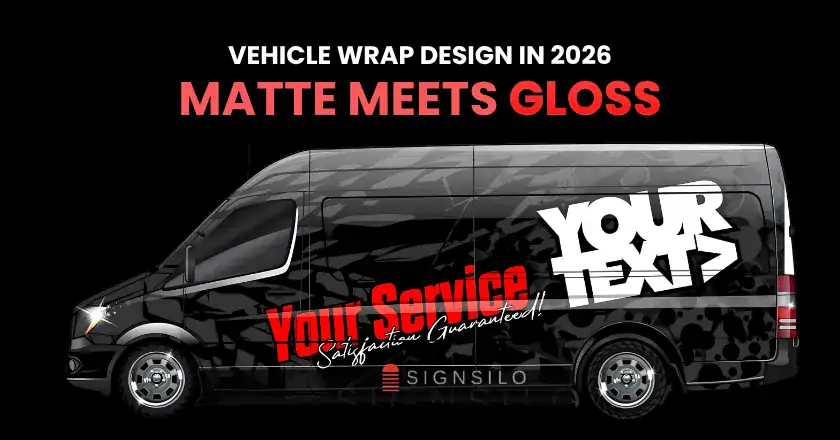
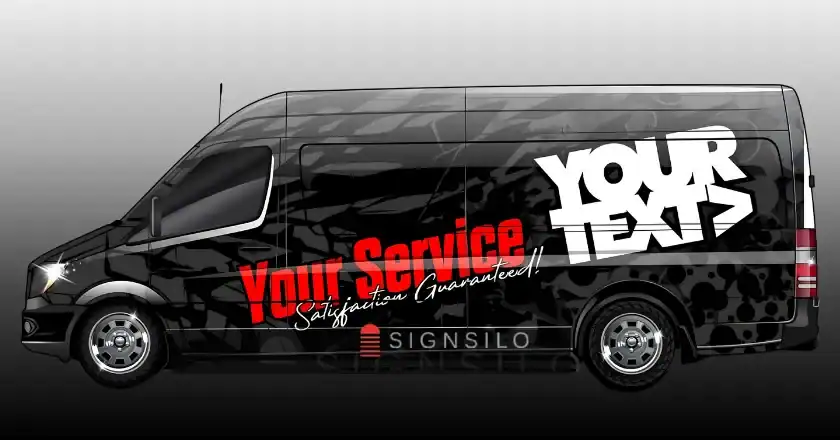
The 2026 hybrid approach solves this dichotomy by using matte surfaces as a non-reflective "base" for the primary vehicle body, while applying high-gloss overlays to specific typographic elements and logos. This creates a tactile, multi-dimensional effect that guides the viewer’s eye directly to the most important information. Industry data suggests that high-contrast texturing can improve the "dwell time" of a viewer’s gaze by up to 25% compared to monochromatic or mono-textured wraps. By strategically placing gloss accents on a matte field, designers are effectively using physics to create a visual hierarchy that remains legible regardless of the sun’s position.
The Evolution of Vehicle Branding: A Chronological Context
To understand the significance of the 2026 shift, it is necessary to examine the technological trajectory of the vehicle wrap industry over the last three decades:
- The Early 2000s (The Rise of Large Format Printing): The industry transitioned from simple cut-vinyl lettering to full-color digitally printed wraps. During this era, gloss was the universal standard, as it most closely mimicked the look of traditional automotive paint.
- 2010–2015 (The Matte Revolution): Driven largely by the luxury automotive aftermarket, matte and "frozen" finishes became a symbol of premium branding. However, durability issues and "burnishing" (where matte surfaces become shiny due to friction) limited their widespread adoption in commercial fleets.
- 2016–2022 (Specialty Textures and Satins): Manufacturers introduced satin finishes and carbon fiber textures. This period saw the first experiments with "spot UV" style effects on wraps, though the process remained cost-prohibitive for large-scale fleets.
- 2023–2025 (The Hybrid Transition): Advancements in laminate technology allowed for the layering of different finishes without compromising the structural integrity of the vinyl. Designers began testing mixed-media approaches on "hero vehicles" within larger fleets.
- 2026 (The Hybrid Standard): The current era marks the democratization of multi-texture design. Improved software workflows and a wider availability of production-ready assets have made hybrid wraps the preferred choice for companies seeking a balance between durability and high-visibility marketing.
Technical Requirements and Production Workflow
Executing a hybrid wrap requires a higher degree of precision than traditional single-finish applications. The process involves a complex interplay between the design phase and the physical installation. Designers must now account for the "seam integrity" where matte meets gloss, ensuring that the transition between textures does not create a point of failure for the adhesive.

For wrap shops, the availability of high-fidelity design resources is critical. The shift toward hybrid surfaces has placed a premium on precise vehicle templates. Because the contrast between finishes highlights any misalignment, installers require templates that account for the exact three-dimensional contours of modern vehicle models, including the intricate curves of electric vehicles (EVs) which have become a staple of corporate fleets in 2026.
This is where specialized resource hubs like SignSilo have become essential to the industry’s infrastructure. By providing vector-based templates and high-resolution graphic elements, these platforms allow designers to "pre-visualize" how light will interact with different textures on a specific vehicle model. This reduces the need for expensive physical prototyping and ensures that the final product meets the client’s visibility requirements.
Supporting Data: Readability and Marketing ROI
Recent studies in the field of outdoor advertising (OOH) highlight the economic justification for hybrid wraps. According to industry surveys conducted in early 2026:
- Visibility Retention: 68% of consumers reported that they found "textured" or "multi-finish" advertisements more memorable than standard flat-color wraps.
- Legibility Metrics: Under midday sun (12:00 PM – 2:00 PM), matte-base wraps with gloss-lettering maintained a 40% higher legibility rate than full-gloss wraps when viewed from a distance of 50 feet.
- Fleet Longevity: Modern hybrid laminates are showing a 15% increase in resistance to environmental stressors, such as UV degradation and road salt, compared to the matte films of five years ago.
For a business operating a fleet of 50 vehicles, each generating an estimated 30,000 to 70,000 impressions daily, a 40% improvement in legibility translates to millions of additional "effective impressions" over the life of the wrap. This makes the hybrid surface not just a design choice, but a strategic financial decision.
Professional Industry Reactions
The reception of hybrid surfaces among industry stakeholders has been overwhelmingly positive, though it has required a recalibration of skill sets.
"We are no longer just ‘sticking’ vinyl on vans," says Marcus Thorne, a senior production manager for a leading European fleet graphics firm. "In 2026, we are essentially acting as visual engineers. The demand for hybrid finishes has forced us to tighten our prepress workflows. If your vector lines aren’t perfect, the gloss-on-matte contrast will show every wobble in the design. We rely heavily on premium template libraries and high-quality vector art to ensure that our production files match the physical reality of the vehicle."

Marketing directors are similarly enthusiastic about the branding potential. "The hybrid look provides a ‘premium’ feel that was previously only available to high-end custom cars," notes Sarah Jenkins, a brand consultant for logistics companies. "It allows a standard delivery van to look like a high-tech asset. It communicates innovation before the customer even reads the company name."
Subscription Models and Resource Accessibility
The transition to complex hybrid designs has also changed the way wrap shops consume design assets. The need for a constant stream of new, high-quality images and templates has made subscription-based models the industry standard. SignSilo, for instance, has structured its pricing to accommodate different scales of operation:
- Professional Plan: Aimed at boutique shops, offering 25 downloads per month for $39, ensuring access to the latest 2026 vehicle templates.
- Business Plan: The most popular tier, providing 50 downloads for $69, catering to mid-sized firms managing regional fleets.
- Premium Plan: An enterprise-level solution offering 100 downloads for $129, designed for high-volume franchises that require a vast library of photos, vectors, and wrap designs.
Furthermore, the introduction of "free tester" files has allowed shops to experiment with hybrid concepts without initial financial risk. This "open-access" approach to high-end design assets has been a major catalyst in the rapid adoption of hybrid texturing across the industry.

Broader Impact and Future Implications
The move toward matte-gloss hybrid surfaces in 2026 is likely a precursor to even more advanced "smart surfaces" in the vehicle wrap industry. As we look toward 2030, experts predict the integration of light-reactive pigments and even thin-film LEDs embedded within the wrap layers. However, for the current market, the hybrid surface remains the pinnacle of practical innovation.
Beyond the marketing benefits, there is an aesthetic contribution to urban environments. As cities become more crowded, the visual "noise" of traditional high-gloss advertising can contribute to light pollution and visual fatigue. The hybrid approach, with its more controlled use of reflection, offers a more harmonious integration into the modern cityscape. It represents a maturation of the industry—a move away from "loudness" and toward "clarity."
In conclusion, the dominance of hybrid surfaces in 2026 vehicle wrap design is a testament to the industry’s ability to merge art with atmospheric science. By leveraging advanced materials and high-precision design resources, fleet owners are now able to transform their vehicles into high-visibility assets that perform consistently across the varying light of the working day. As the technology continues to refine, the line between automotive paint and architectural-grade vinyl will continue to blur, with hybrid textures leading the way.