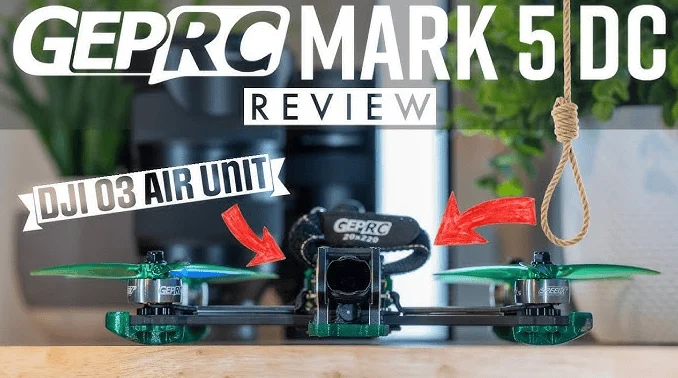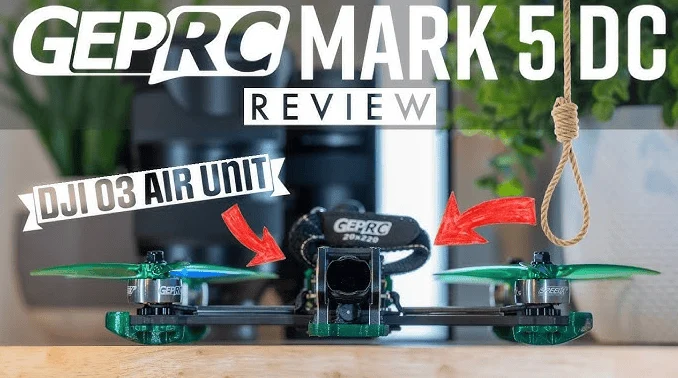
The FPV (First Person View) drone industry has undergone a radical transformation over the last decade, transitioning from niche hobbyist experimentation to a sophisticated sector utilized by professional filmmakers, search and rescue teams, and competitive athletes. At the forefront of this evolution is the GEPRC MARK5 DC HD O3 FPV, a flagship model that represents the culmination of years of iterative engineering and the integration of cutting-edge digital transmission technology. This drone is specifically designed to bridge the gap between high-intensity freestyle maneuvers and the high-fidelity requirements of modern cinematography. By incorporating the DJI O3 Air Unit into a "DeadCat" frame configuration, GEPRC has addressed one of the most persistent challenges in drone videography: achieving an unobstructed field of view without sacrificing the structural integrity or flight dynamics of a 5-inch quadcopter.
The Evolution of the MARK Series: A Chronological Context
To understand the significance of the MARK5 DC HD O3, one must look at the history of GEPRC’s development cycle. The MARK series began as a response to the community’s demand for a "do-it-all" frame that could withstand the rigors of freestyle crashes while remaining light enough for agile flight. The earlier MARK2 and MARK4 iterations focused heavily on frame geometry and weight distribution. However, the introduction of the MARK5 marked a significant departure, moving toward a more modular and reinforced design.
The development timeline of the MARK5 coincided with the release of the DJI O3 Air Unit in late 2022. This technological milestone allowed for 4K/60fps onboard recording and high-definition low-latency video transmission in a single package. GEPRC’s engineering team spent several months optimizing the MARK5 frame to accommodate the specific thermal and spatial requirements of the O3 unit. The resulting "DC" (DeadCat) variant was a direct response to feedback from cinematic pilots who required a frame where the propellers did not encroach upon the camera’s wide-angle view.
Engineering Excellence: The DeadCat Frame and Structural Integrity
The GEPRC MARK5 DC HD O3 utilizes a frame constructed from high-strength T700 carbon fiber. Unlike standard carbon fiber, T700 offers a higher tensile strength and modulus, which translates to better vibration dampening and increased durability during high-impact collisions. The frame features a 5mm arm thickness, providing the rigidity necessary to handle the torque generated by modern high-KV motors.
The "DeadCat" configuration is a specific geometric arrangement where the front arms are swept back and widened. In a traditional "X" or "Squashed X" frame, the propellers often appear in the corners of the video feed, especially when using ultra-wide lenses. The DC layout moves the front propellers out of the camera’s line of sight. While this typically shifts the center of gravity (CoG), GEPRC has compensated for this by adjusting the rear arm geometry and the placement of the electronic stack. This ensures that the drone maintains a balanced flight feel, which is critical for the "locked-in" sensation required during complex aerial maneuvers.
Furthermore, the drone incorporates 7075-T6 aluminum alloy components in the camera mount. This aviation-grade material is CNC-machined to provide a lightweight yet incredibly strong protective cage for the DJI O3 camera. This structural choice is not merely aesthetic; it acts as a heatsink and a roll-cage, protecting the most expensive component of the drone from frontal impacts.
Technical Specifications and Propulsion System
The performance of the GEPRC MARK5 DC HD O3 is driven by a carefully curated selection of internal components. The heart of the propulsion system is the SPEEDX2 2107.5-1960KV motors. These motors are optimized for 6S LiPo battery configurations, which have become the industry standard for 5-inch drones due to their efficiency and reduced voltage sag.
The 1960KV rating provides a high power-to-weight ratio, allowing the drone to reach speeds exceeding 150 km/h in seconds. To manage this power, GEPRC utilizes the GEP-F722-45A AIO (All-in-One) flight controller or a dedicated stack featuring a 45A BLHeli_32 ESC. The F722 processor is significant because it offers higher processing power than the older F4 chips, enabling faster PID loop frequencies and smoother flight performance through Betaflight firmware.
The ESCs (Electronic Speed Controllers) support DShot600 and bidirectional DShot, allowing for "RPM filtering." This technology enables the flight controller to identify and filter out motor-induced vibrations in real-time, resulting in a drone that feels incredibly stable even in turbulent wind conditions or during high-throttle "punch-outs."
The DJI O3 Air Unit: A Paradigm Shift in Imaging
The integration of the DJI O3 Air Unit is perhaps the most defining feature of this model. For years, FPV pilots had to carry a secondary "action camera" (such as a GoPro) to record high-quality footage because the internal FPV feed was too low-resolution for professional use. The DJI O3 changes this dynamic by offering:
- 4K/60fps Recording: The onboard unit records high-bitrate video directly to its internal 20GB storage or an SD card, often eliminating the need for an external camera. This reduces the total takeoff weight (AUW), which in turn improves flight time and agility.
- 1/1.7-inch Sensor: This larger sensor provides superior dynamic range and low-light performance compared to previous FPV camera systems.
- RockSteady 2.0 and HorizonSteady: These built-in stabilization algorithms allow pilots to produce smooth, cinematic footage without the need for post-processing software like ReelSteady or Gyroflow, although the O3 does provide gyro data for those who prefer manual stabilization.
- 10km Transmission Range: Under optimal conditions (FCC), the O3 system provides a 1080p/100fps video link with latency as low as 28ms, giving the pilot an immersive and highly responsive flying experience.
Market Implications and Professional Adoption
The release of the GEPRC MARK5 DC HD O3 has had a notable impact on the commercial drone market. Industry analysts observe that "Bind-and-Fly" (BNF) models like the MARK5 are lowering the barrier to entry for professional production houses. Previously, a film crew would need a dedicated FPV technician to build and tune custom drones. Now, a high-performance, pre-tuned machine can be purchased off the shelf and put into service immediately.
Professional FPV pilot and cinematographer reactions have been largely positive. Many have noted that the MARK5 DC provides a level of "out-of-the-box" tuning that was previously only achievable through hours of manual software adjustment. This reliability is crucial for commercial sets where time is a premium. The drone’s ability to switch between aggressive freestyle flying and smooth, slow-proximity cinematic shots makes it a versatile tool for capturing everything from high-speed car chases to architectural tours.
Regulatory and Safety Considerations
As a 5-inch drone typically weighing between 600g and 800g (including a 6S battery), the GEPRC MARK5 falls into a regulatory category that requires registration in most jurisdictions, including the United States (FAA) and the European Union (EASA).
The industry has seen a push toward Remote ID compliance. GEPRC has designed the MARK5 with enough internal space to accommodate aftermarket Remote ID modules, ensuring that professional operators can remain compliant with evolving airspace regulations. Furthermore, the inclusion of a loud integrated buzzer and bright LED systems aids in the recovery of the craft in the event of a crash in dense foliage or difficult terrain.
Operational Best Practices for Peak Performance
To maximize the lifespan and performance of the GEPRC MARK5 DC HD O3, operators are encouraged to follow specific maintenance and operational protocols:
- Thermal Management: The DJI O3 Air Unit generates significant heat. Pilots are advised not to leave the drone powered on while stationary for extended periods. The MARK5’s frame is designed for airflow; thus, the cooling system is most effective while the drone is in motion.
- Battery Management: Using high-discharge (100C+) 6S LiPo batteries between 1300mAh and 1500mAh provides the best balance of flight time (approximately 5-8 minutes of cruising) and weight.
- Propeller Maintenance: Even minor chips in the propellers can introduce high-frequency vibrations that degrade video quality and stress the motors. Regular inspection and replacement are mandatory for cinematic work.
- ND Filters: To achieve the "motion blur" look characteristic of professional cinema, the use of Neutral Density (ND) filters is recommended. The MARK5 camera cage is compatible with standard O3 ND filters, allowing pilots to maintain a 180-degree shutter rule even in bright daylight.
Conclusion: The Future of the 5-Inch Class
The GEPRC MARK5 DC HD O3 FPV is more than just a hobbyist toy; it is a precision instrument that reflects the current pinnacle of FPV technology. By successfully merging a durable, aerodynamically sound frame with the industry’s leading digital transmission system, GEPRC has set a new benchmark for what a versatile 5-inch drone should be.
As the industry moves forward, the influence of the MARK5’s design philosophy—prioritizing video clarity, structural resilience, and ease of use—will likely be seen in future generations of FPV aircraft. For the professional videographer, it offers a reliable platform for creative expression. For the freestyle enthusiast, it provides a rugged and powerful machine capable of pushing the limits of physics. In the rapidly changing landscape of unmanned aerial vehicles, the MARK5 stands as a testament to the power of integrated engineering and a clear vision of the future of flight.